Japan – current account surplus over 6% of GDP
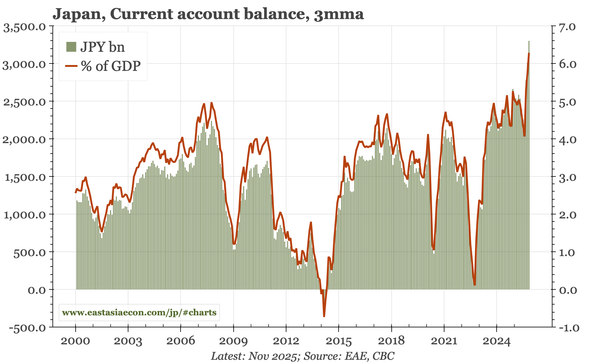
As in the other economies, Japan's current account surplus in widening, reaching over 6% of GDP in the three months to November, bigger than any time since the 1990s. The composition of Japan's surplus is, however, different from elsewhere, being more driven by the income surplus.
Taiwan – overtime still elevated
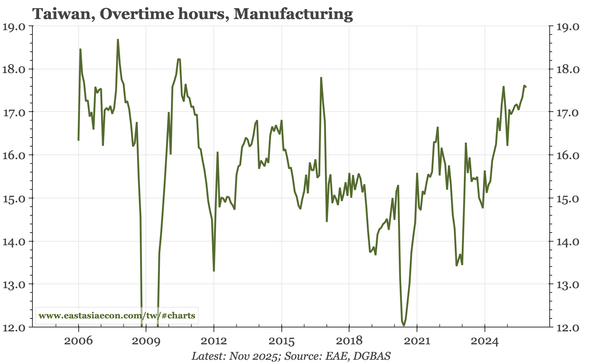
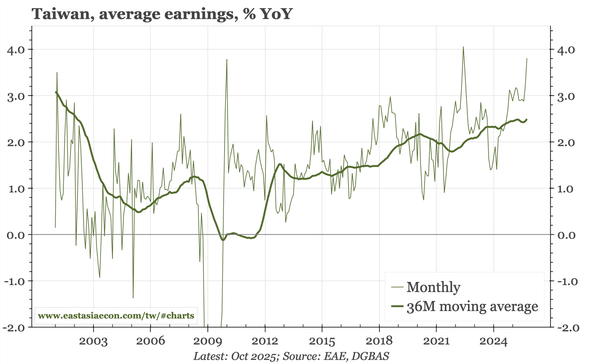
Today's November earnings data continue to show a tight labour market, with manufacturing overtime remaining elevated. That tightness has been feeding into a gradual acceleration in wage growth. That is most obvious in manufacturing, but is also apparent as an economy-wide phenomenon.
Japan – monetary base declines
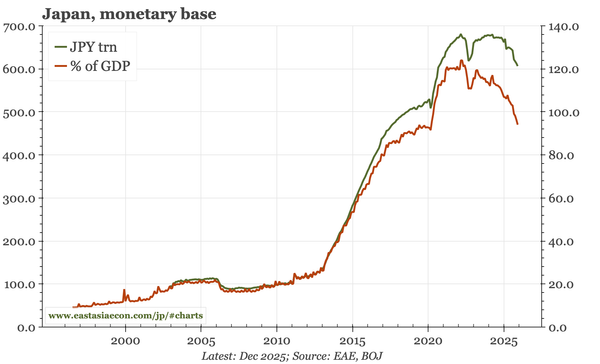
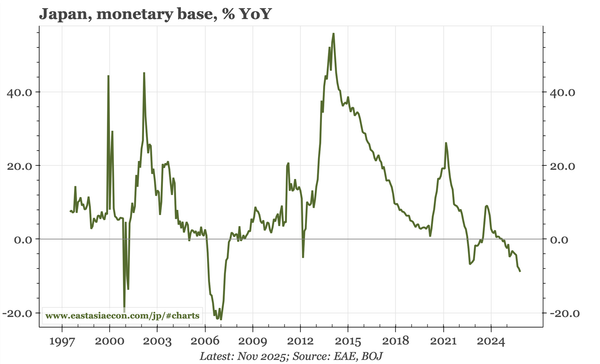
Data for December show the monetary base continuing to decline as the BOJ tapers new JGB purchases, while redemptions rise. Relative to GDP, the monetary base is now smaller than any time since 2020 – but still leaves it four times larger than before Kuroda took office in 2013.
Korea – savings, investment and the CA
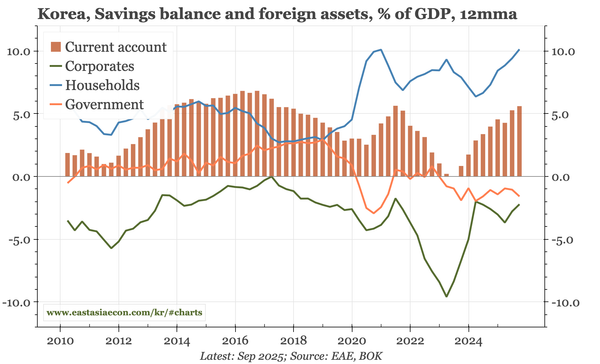
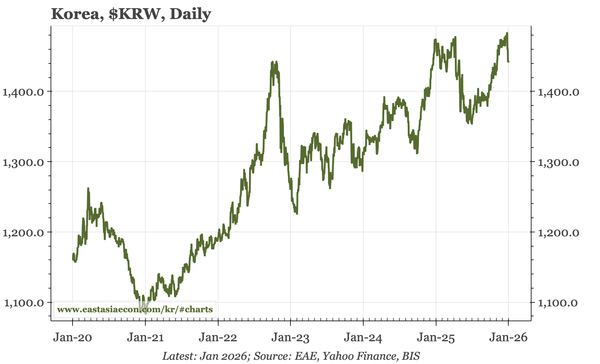
Today's Q3 flow of funds data show that from a savings-investment perspective, the rise in the current account surplus is increasingly driven by household savings. That this surplus hasn't stopped KRW depreciation is because of outflows into foreign assets.
Taiwan – inflation low
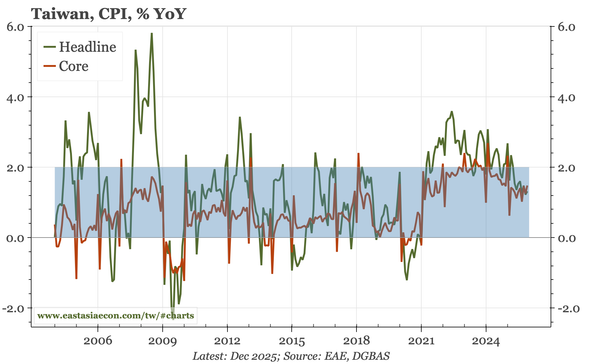
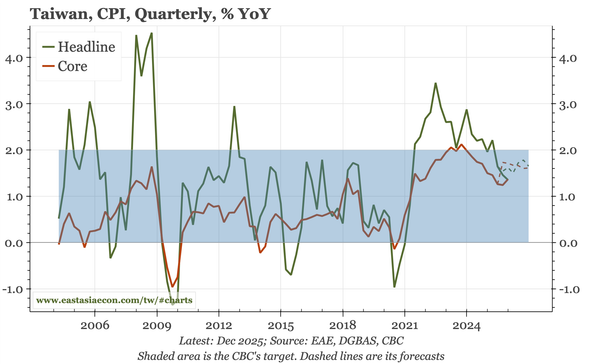
By most global standards, inflation in Taiwan is low, with both headline and core easing in 2025 to finish the year at close to 1.5% YoY in December. However, that is already higher than the near zero rate of core inflation experienced in the 20 years before 2020.
Taiwan – CBC on hold
In what wasn't a surprise to anyone, Taiwan's central bank, the CBC, kept interest rates unchanged at its quarterly monetary policy meeting today. The bank forecasts that growth will slow in 2026 from this year's boom of 7.3%, but will remain respectable at 3.7%.
Taiwan – FDI shifts away from China
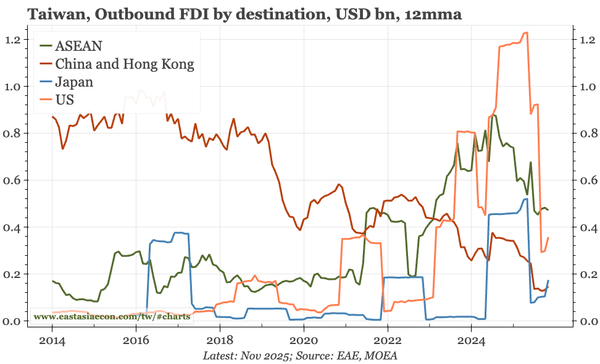
15 years ago, China was by far the biggest destination for Taiwan's FDI. But in the first eleven months of 2025, FDI into China totalled just USD1.4bn, down more than 60% YoY. In the rest of the world, Taiwan's investment this year has reached USD36bn.
China – the CEWC
There's been plenty of commentary about the communiqué from the Central Economic Work Conference. Domestic demand was again made the top target, and the usual talk of risks came lower down the list of priorities. That is encouraging, but unlikely to signal a huge change in economic policy.
Japan – base money contracting
For any monetarists, Japan's policy settings might be starting to look quite tight, with base money growth contracting at the steepest rate since 2007. But paring back the balance sheet is a deliberate BOJ choice; what matters for the bank is how far its policy rate is below inflation.