

Subscribers Only
Japan – household incomes still weak
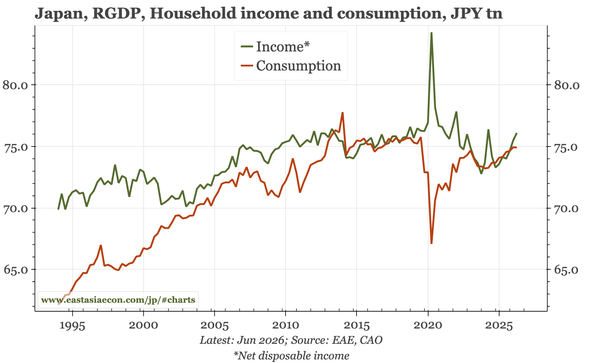
Q2 aggregate consumption was weak because incomes were too. Asset incomes are rising, but wages are soft, and in cash terms, the tax burden has been increasing. But while spending in aggregate terms is constrained, the population is falling, so in per capita terms there is actually recovery.
Subscribers Only
Japan – manufacturing upturn
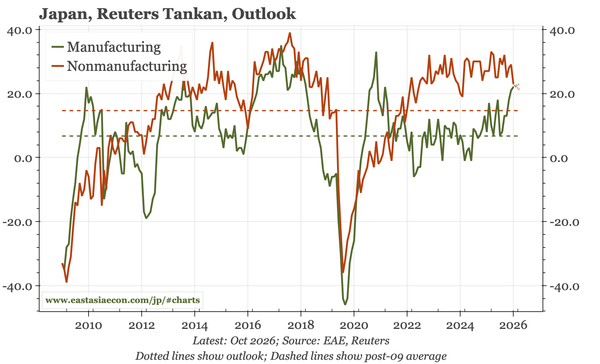
The overall impression from all today's releases is continued inflation pressure supported by a stronger mfg cycle. The signs of a fall-off in services momentum, however, bear monitoring, perhaps showing signs that tightening might actually be biting. If so, the implication is a flatter curve.
Subscribers Only

Japan – stronger inflation
I have been thinking that underlying inflation remains modest compared with headline. That is still true, but today's inflation data were strong. Tankan price measures for all firms were firmer than for large firms alone. And Tokyo September inflation was broad as well as strong.
Subscribers Only

Japan – faster, but not that fast
The Tankan survey suggests nominal growth stronger at the margin, but not gaining a lot of new momentum. The tone of the summary of opinions of the September meeting looks similar: likely faster rate hikes, but no sense of the sort of urgency that would make October a live meeting.
Subscribers Only

Japan – FOF trends
Q2 flow of funds: 1) firms remain net savers; 2) the fiscal deficit is under 2% of GDP, and government assets continue to rise; 3) GPIF, foreigners and households are absorbing JGB supply as the BOJ steps back; 4) household equity holdings are up sharply, but mainly because of valuations.
Subscribers Only

Japan – manufacturing upturn
Japan is now seeing the first real upswing in both manufacturing and non-manufacturing since 2017-18. Rising CPI and the JPY aren't the only factors pushing the BOJ towards hikes.
Subscribers Only
Japan – fiscal guide
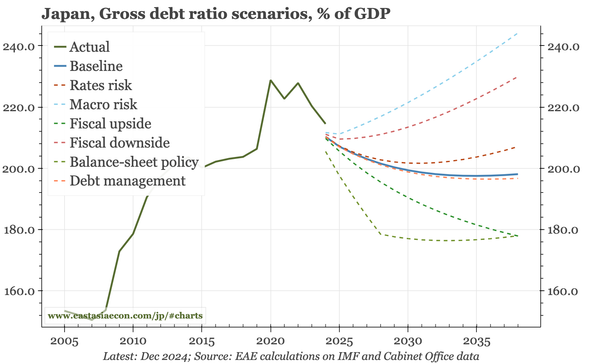
A step-by-step guide to understanding Japan's fiscal position. By using this, you will have a better idea of how to make the assumptions needed for each component of the standard gross debt equation, which can then be plugged into our online model.
Subscribers Only
Japan – mfg mini-boom
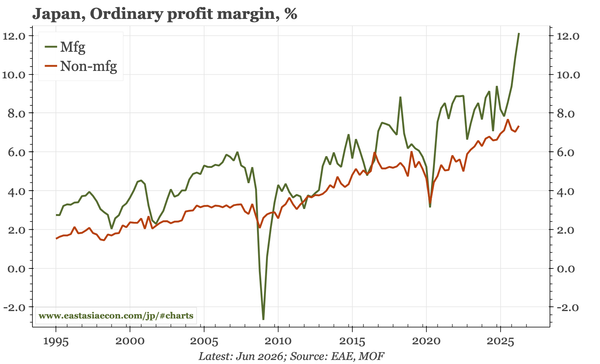
Defying BOJ fears of a slowdown, this year's surge in corporate profits continued in Q2. The big driver this year has been manufacturing, and today's PMI shows the recovery in the sector isn't over yet. Relative to the strength of profits, capex and wages are sluggish.
Subscribers Only
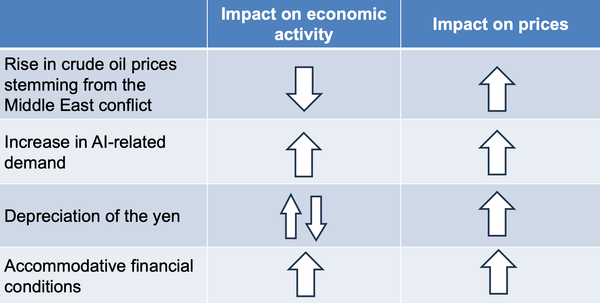
Japan – Himino hawkish
Deputy governor Himino's argued today that all the main macro dynamics are pushing up prices, underlying inflation has been rising, and so there is now a risk of "underlying inflation exceeding 2%". Unsurprisingly, he didn't spell out the policy implications, but it does sound quite hawkish, no?