Paul Cavey
Taiwan – still leading pack
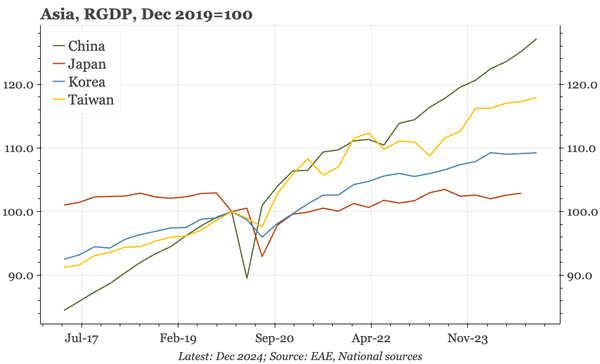
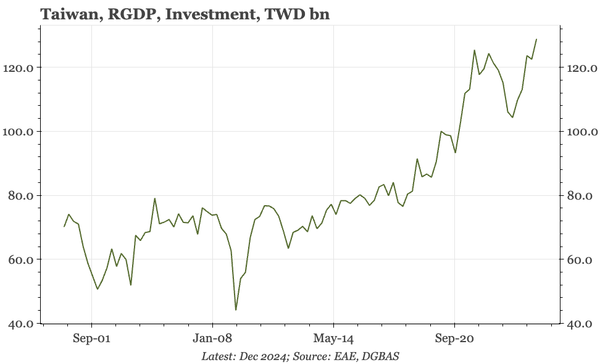
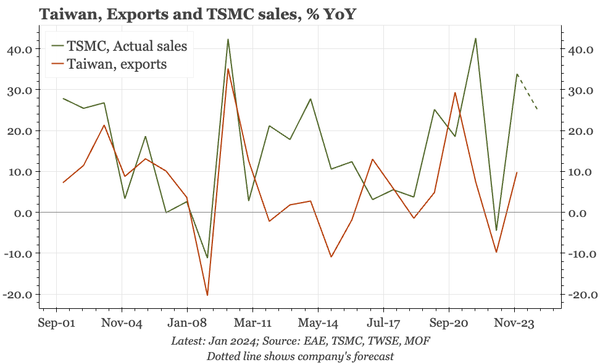
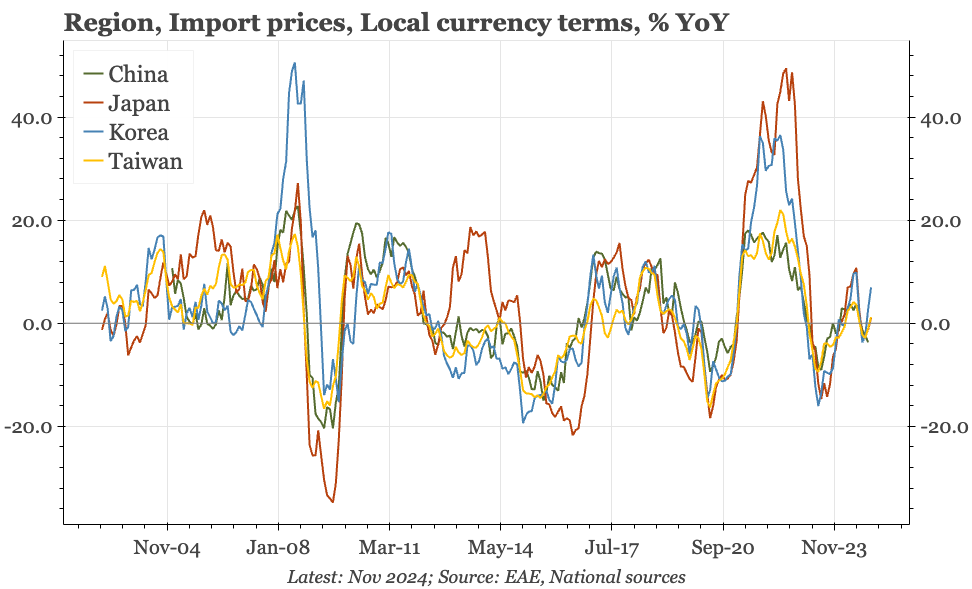
While consumption and the leading indicator have warned of cycle moderation, today's data show GDP growth ticked up QoQ in Q3, led by capex. With TSMC still bullish, Taiwan continues to have one of the strongest cycles, making it unlikely the central bank follows the global trend of rate cuts.
Japan – no surprises from the BOJ
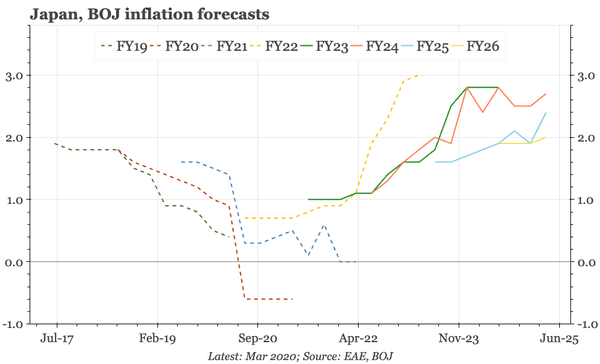
No surprises from the BOJ (yet): the July forecast for underlying inflation to remain around 2% was maintained, as was the policy caution since August that stresses uncertainty in outlook for the US. There's still the press conference and full outlook report to come.
China – PMIs: still a lot to do
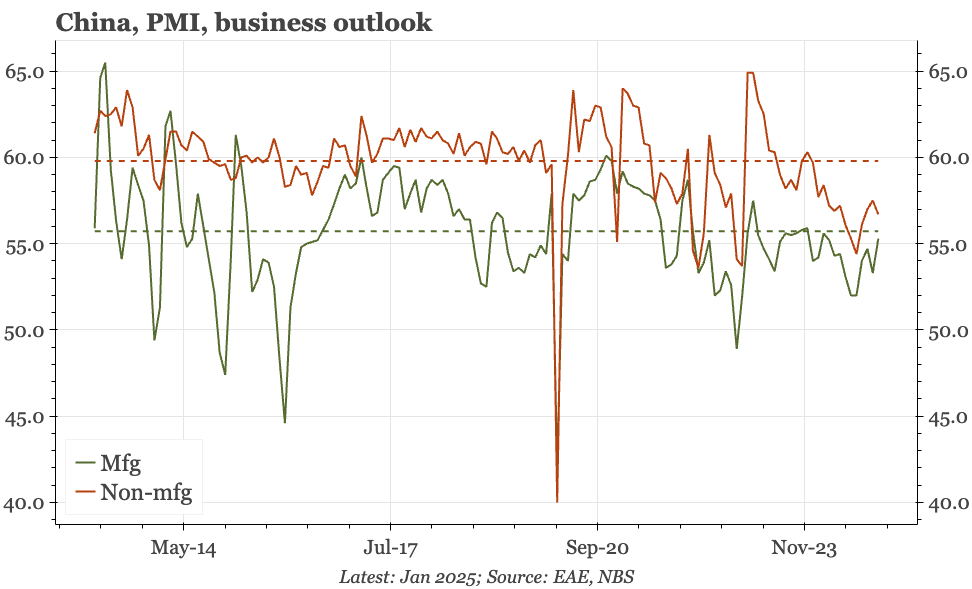
Likely driven by the sentiment-driven rise in prices, the manufacturing PMI bounced back above 50 in October. But there was barely any change in either the services or construction, PMIs, and both will need to improve to think that the economy really is turning around.
China – employment still very weak
We'll find out more with tomorrow's official PMIs, but while the CKGSB survey for October does show an uptick in overall sentiment, the measure for employment remains very weak. With profits terrible in September, it is clear policy needs to do a lot to turn the cycle around.
Japan – high inflation not killing consumer confidence
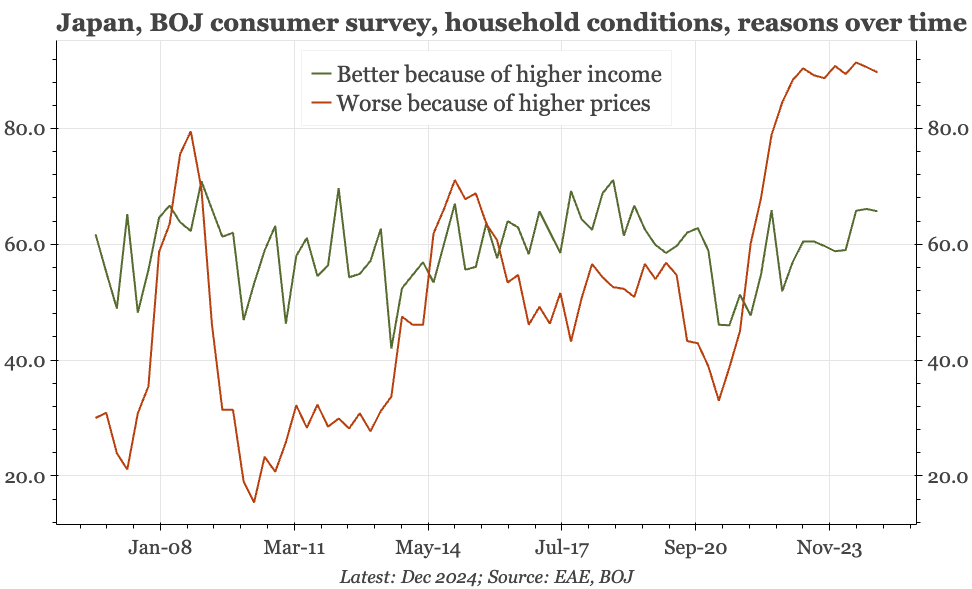
Headline consumer confidence ticked down in October, led by pensioners. But the overall survey continues to send a constructive message for the BOJ. That's because consumer confidence remains relatively firm, even as inflation expectations show no sign of receding.
Japan – supply constrains labour demand
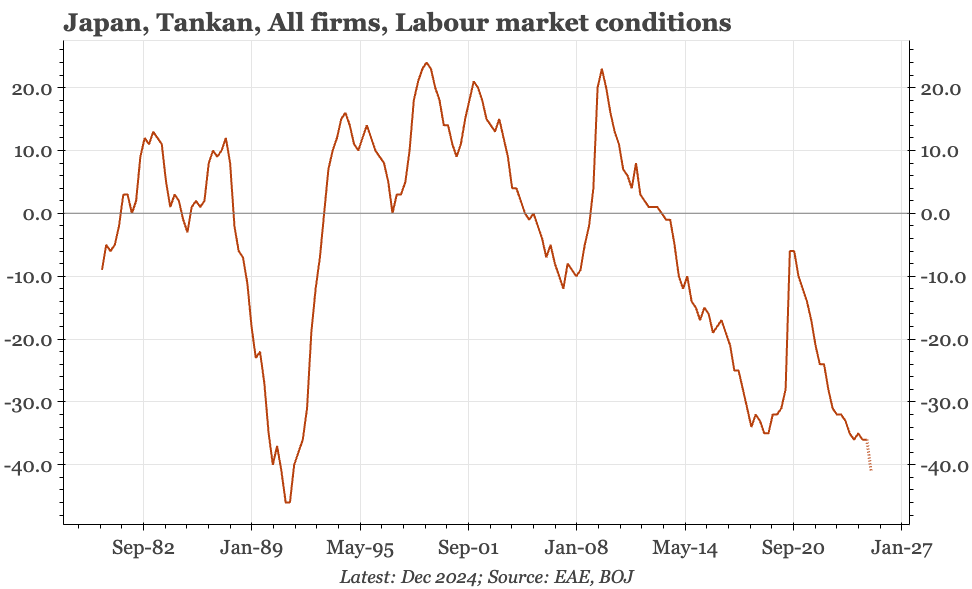
UE ticked down in September as the part rate fell. Employment hardly changed at all. There probably isn't much room for changes on the demand-side, as demographic constraints on supply become more binding. A negative shock will show up as rising UE, but firm demand will materialise as higher wages.
Taiwan – inflation expectations up, consumer confidence down
Shifts in consumer confidence mirror almost exactly changes in inflation expectations. Given that, it is no surprise with data today showing inflation expectations ticking up, so consumer confidence edged down. The details show consumers happy with the economy, but less confident about employment.
China – profits fall sharply in September
The government yesterday published its monthly series for the profits of the industrial sector. I am always a bit sceptical of the quality of these data. But if you want a trigger for the recent macro policy push, then the sharp fall in profits in September fits the bill.
Japan – core inflation still at 2%
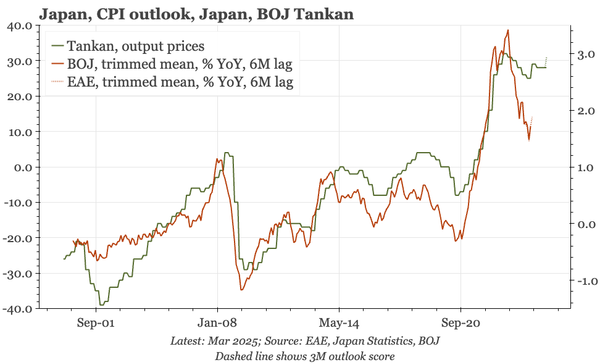
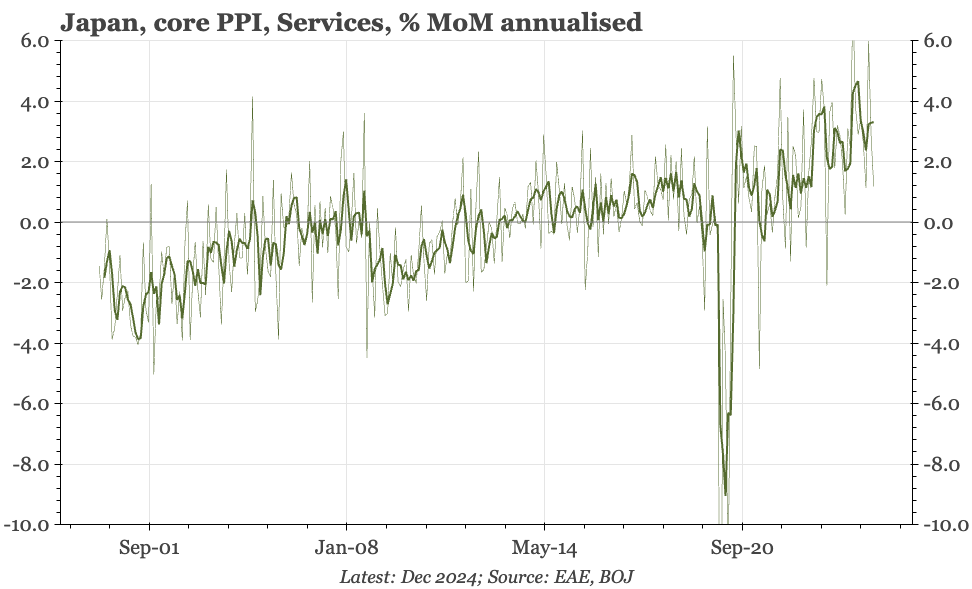
With the BOJ emphasising the twice-yearly patten of service prices hikes, with the second round falling in October, today's Tokyo CPI data are important. They do show services prices rising, and although the details are messy, core sequential inflation in Tokyo is also continuing to run near 2%.
Japan – services PMI drops below 50
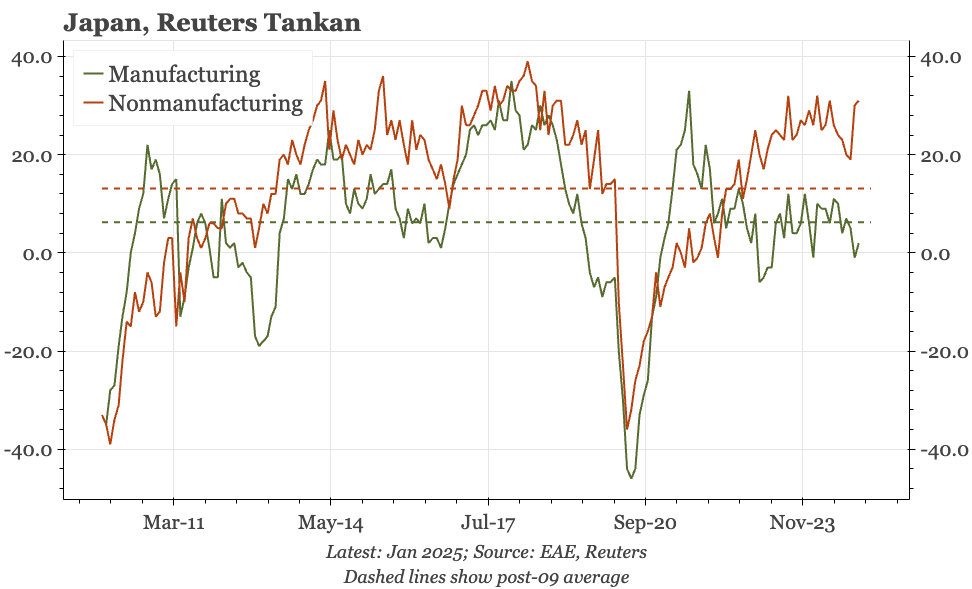
The flash services PMI dropped sharply in October, and with mfg is now below 50. There was a similar drop in June that then reversed, and while the press release doesn't suggest any new factor, the Reuters nonmfg Tankan, which also fell, suggested some noise from unstable weather and a stronger yen.
Korea – sluggish growth, but weakening KRW
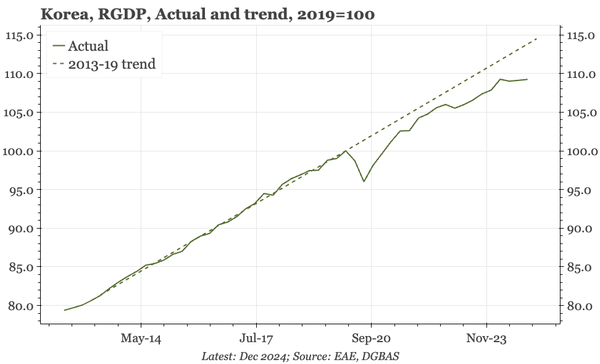
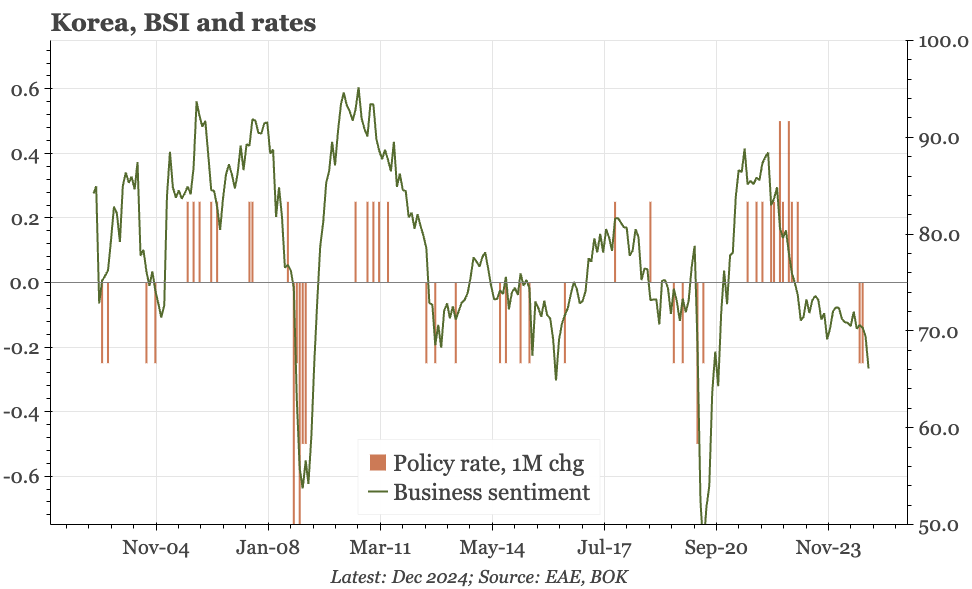
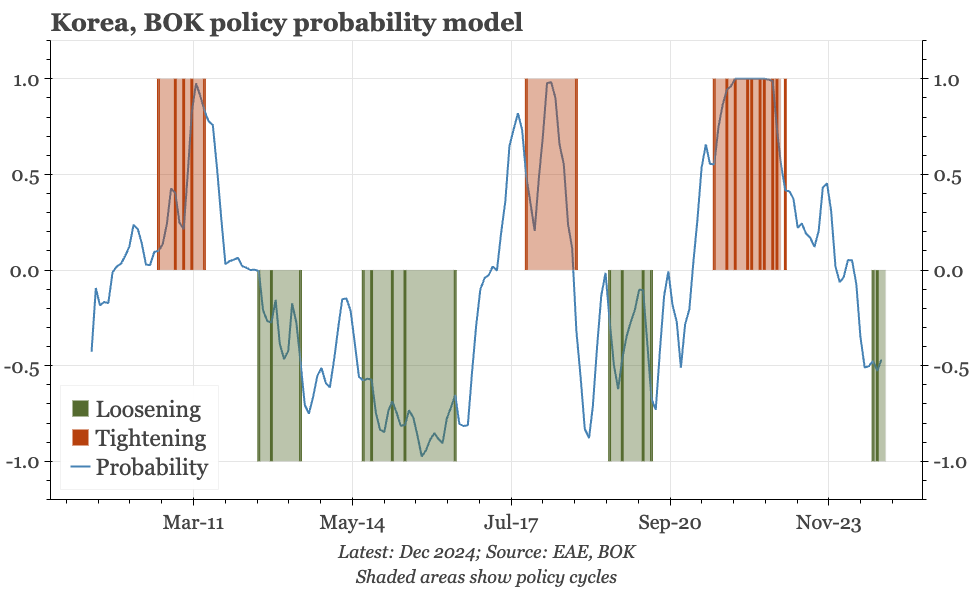
If the BOK was only looking at growth, then data today would give it plenty of room to cut faster, with both Q3 GDP and October business sentiment weak. However, the rise in US rates and consequent weakening of $KRW will be starting to constrain the bank once again.
China – crunch time for consumption
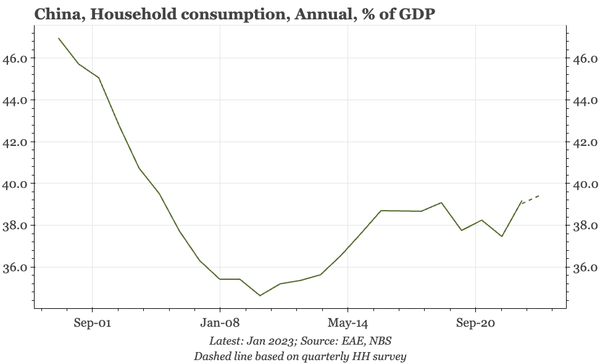
The slump in confidence and retail sales don't indicate a major cyclical weakening of consumption. That's partly because households have been running down excess savings from covid. But with savings now normalising, consumption is becoming more vulnerable to the deterioration in the labour market.
Korea – no surprises in consumer confidence
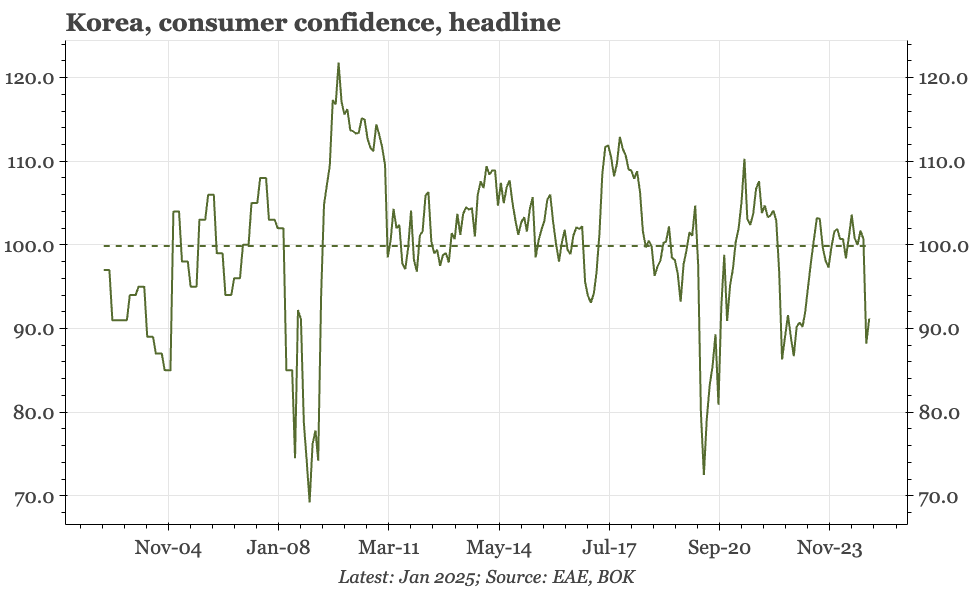
In today's October survey, overall sentiment remained around the long-term average, inflation expectations didn't pick up, and property price expectations ticked down. There's no reason here for the BOK to become hawkish, or to accelerate the gradual pace of cuts that is currently its intention.
China – outside equities, still not much change
Checking in on some of the indicators needed for a cycle turnaround: still not much change in the YC, or much repricing of developer debt. There's been more rate cuts today, but the gap that's opened between activity and nominal rates suggests the key is whether price expectations rise.
Taiwan – will TSMC break the TWD?
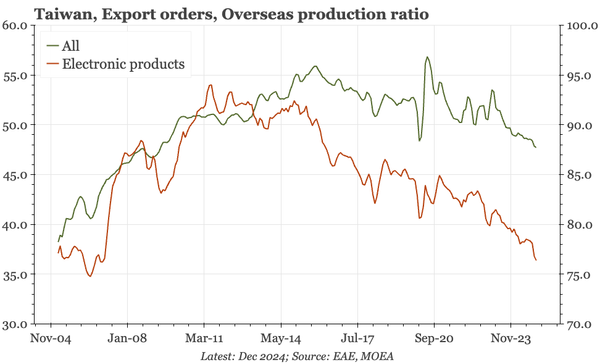
There's a possibility that TSMC's success is pushing Taiwan into unchartered waters, where the CBC needs to sound hawkish, when the external imbalance is as big as it has ever been. If Taiwan's period of zero inflation has passed, there's a good chance TWD undervaluation will be challenged too.
Japan – what can the BOJ say now?
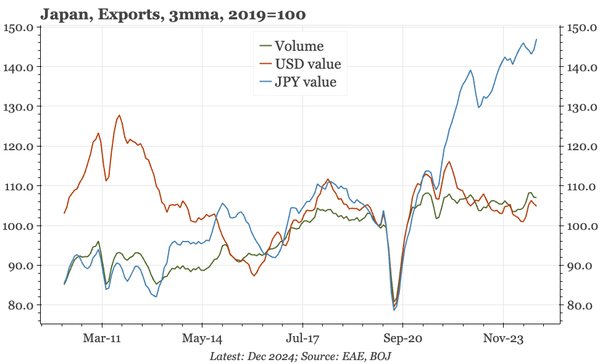
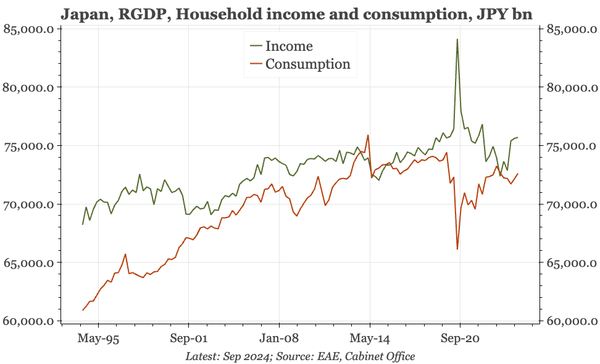
Inflation was softer in September, but the economy still looks on track, with exports and household income up, and early signs of another strong shunto round. At the same time, the JPY is weakening again. This backdrop means the BOJ faces a very tough communication challenge at its October meeting.
China – keep on muddling through
Looking at today's data, the driver of all the recent policy activism is to get growth back to the 5% target. That doesn't suggest a big rebound in the nominal growth that equity investors need. The upside risk is this policy push is happening when there are tentative signs of property stabilising.
China – property pricing weak, but not worse
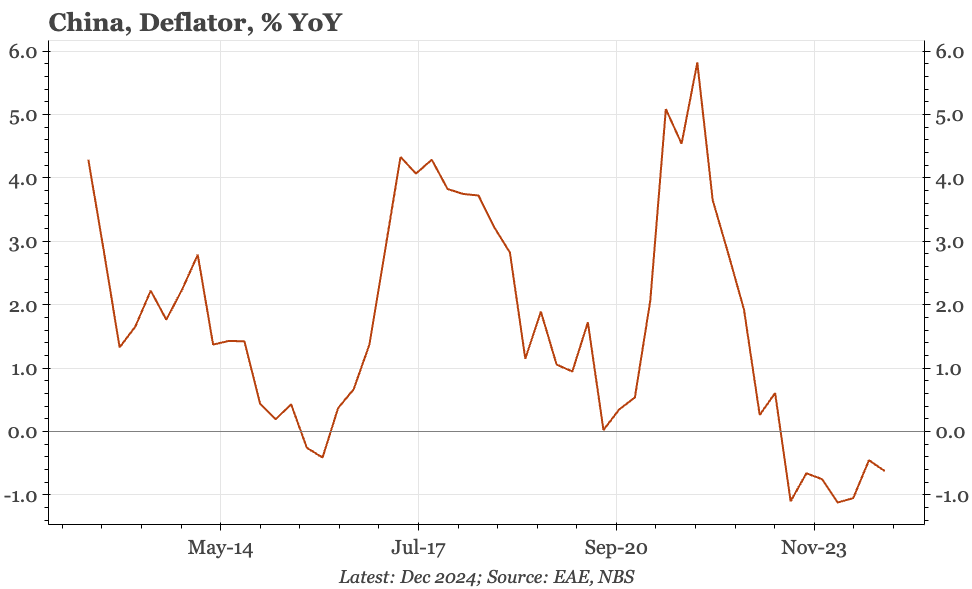
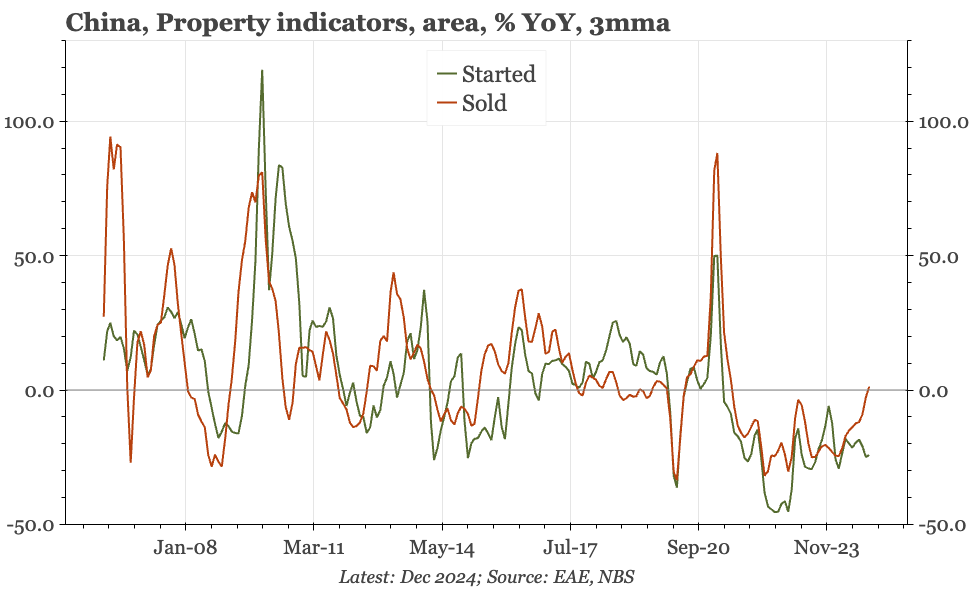
Ni Hong said yesterday that the property market started to improve in October. Today's September price data suggest that the market bottomed earlier in Q3. However, signs of a floor back in Q1 didn't last. And on an all-economy basis, today's data show the economy still in deflation.
China: excavator sales still 70% below the peak
Excavator sales are a good illustration of China's woes. Sales fell more after 2020 than they did following the 2009 boom. It is interesting that they have seem to have now bottomed out, but that still leaves them 70% below the peak. To turn things around, policy has a lot of work to do.