East Asia in Four Charts
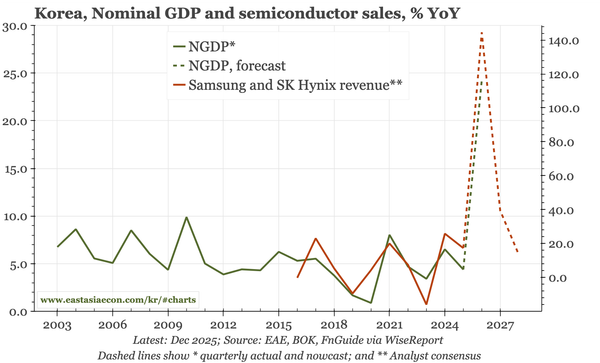
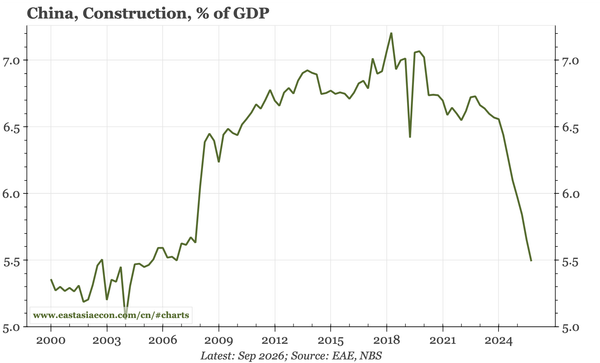
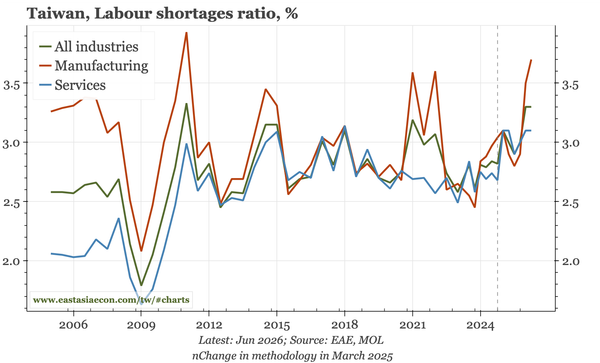
Highlights of last week's indicators: the fall in the consumption share of GDP in China; why JPY depreciation hasn't boosted Japan's export volumes; the prospects for another double-digit rise in nominal GDP in Korea in 2027; and how wage growth in Taiwan is leading the region.
East Asia Today
As expected CPI inflation in Japan picked up in September, and leading indicators point to further upside ahead. Taiwan softened last month, but that is at odds with strong exports. Retail sales, by contrast, were strong, consistent with labour market dynamics explored in a longer note on wages.
East Asia Today
The BOK didn't change rates today, but laid out a much more positive view on the outlook than is being expressed by regional equities. One casualty of the equity sell-off is the TWD, which will further push up inflationary pressure in Taiwan. Also today, the BOJ's senior loan officer survey.
East Asia Today
A note reviewing developments in Korea ahead – just about – of the BOK meeting tomorrow. In addition, some charts showing the continuing gap between weak auto sales in China v strong car exports. That is affecting Japan, though overall exports there in USD terms rose again in September.
East Asia Today
The usual second-day release of more detailed GDP data for China showed investment particularly weak in Q3. In contrast, fx settlement data in September was firm, showing continued capital inflows. In Taiwan, export orders last month don't indicate that the cycle is yet turning down.
East Asia Today
The highlight today was the Q3 GDP release in China. Along with an update of all the usual cycle charts, I've also updated my guide to China's consumption data. In Japan, growth in services activity eased back in August, with a rare contraction in consumer-related services activity like eating out.
East Asia Today
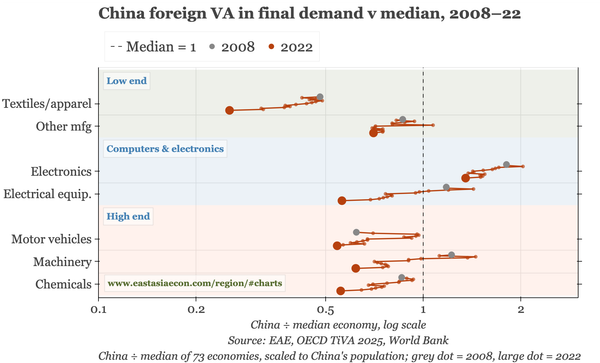
Some highlights of the chart pack I've been working on looking at the China Shock (and China Squeeze). The China Shock isn't over, with data today showing R&D spending reaching a new high of 2.8% of GDP in 2025. In Korea, the TOT rose further in September, and unemployment remained low.
East Asia Today
China's credit data remain weak, and deposit trends point to deflation risk in 2027. BOJ Koeda's speech was hawkish. Korea money supply growth slowed, and with equities falling, FCI has tightened. That market nervousness on AI isn't shared by TSMC management, and the labour market remains tight.