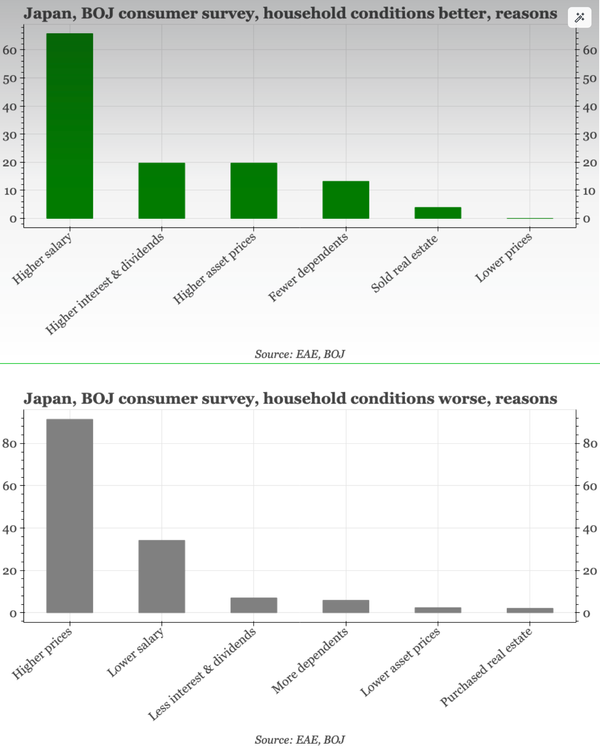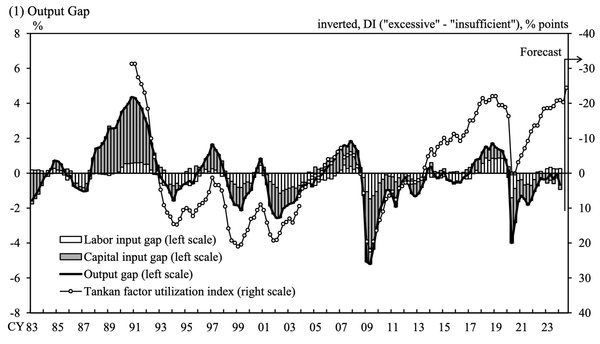
The fall in the EW survey isn't surprising given higher inflation. But it shows the BOJ's dilemma: keep policy loose as aggregate demand is weak, or normalise to try to lift the JPY and real incomes.
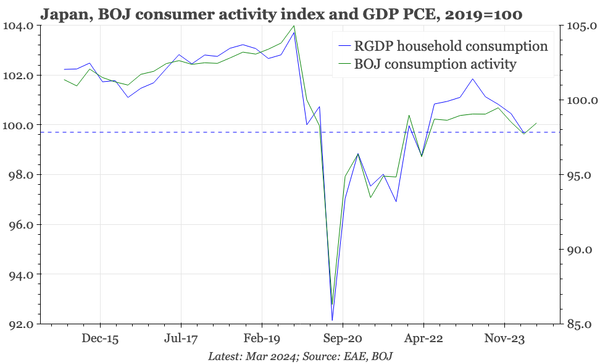
Consumption isn't as weak as consumer confidence suggests: recently released full-year 2023 data show the consumption share surpassing – albeit only slightly – pre-covid levels.
Recently released FoF data for 2022 confirms no big change in household savings. But investment fell as spending on housing dropped. It should be no surprise the CA surplus has been widening.
China has released flow of funds data for 2022. If anything, they show an economy looking even less like one in BS recession, with the corporate finance reaching a record high.
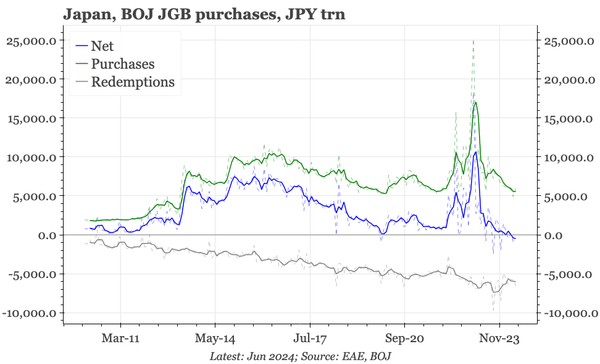
The BOJ might well formally change its bond buying programme next week. However, even before that, net buying of JGBs has already turned negative, as the scale of redemptions rises.
The BOJ's monthly estimate shows consumption a bit higher in Q2 compared to Q1. But that doesn't change the big picture: consumption is still 4% below the pre-covid peak.
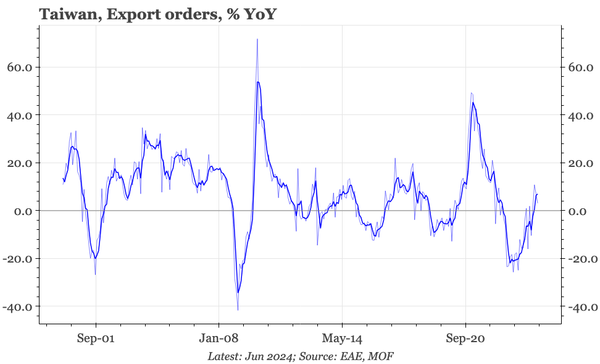
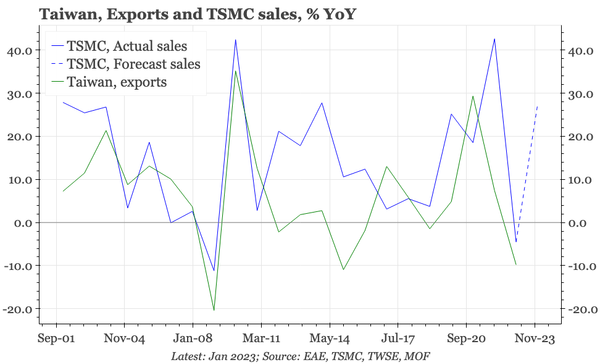
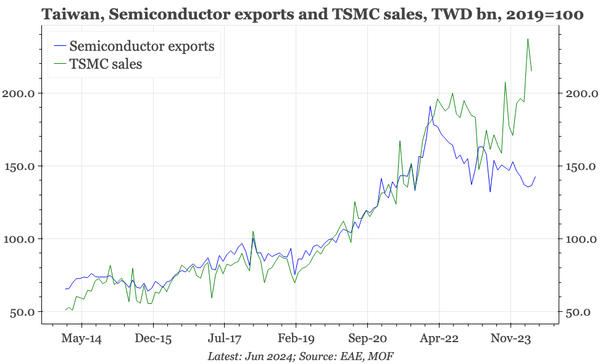
The step-change in core inflation in Taiwan during covid has yet to dissipate. And it seems unlikely to do so, if the export cycle accelerates as quickly as some of the leads suggest.
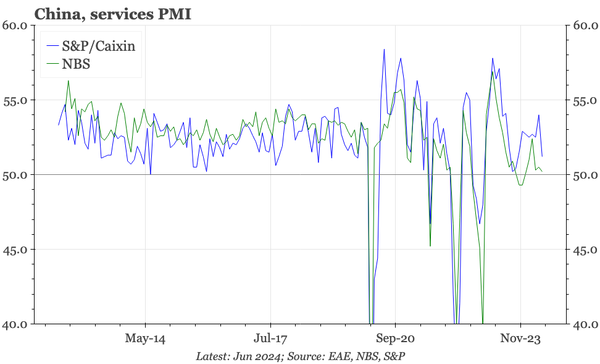
As with mfg, S&P's services PMI for China remains much stronger than the official version. This gap is, frankly, confusing, though supports the two-speed/muddle-though view of the cycle.
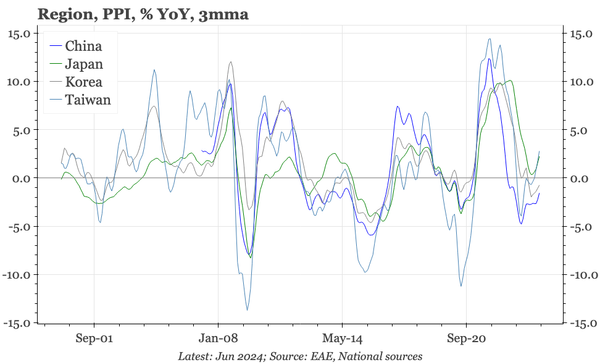
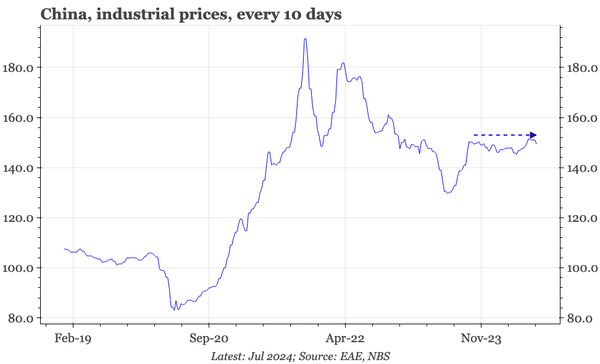
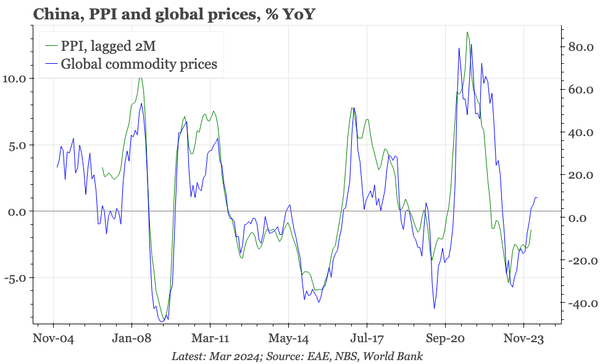
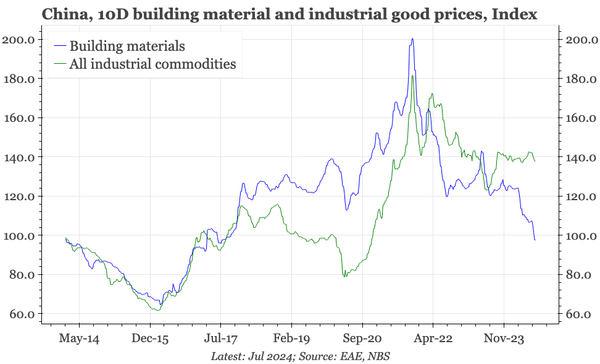
It still isn't clear that PPI deflation is a structural phenomenon. The test will be in the next few months, and whether PPI rises in line with global commodity prices.
Input price data for late May show a rise, validating the increase seen in the PMI. A lot of that is copper, but it should still mean less PPI deflation when data are released next week.
Some of the details of today's CPI release are a little concerning, but overall, inflation is receding, with our measures of trimmed mean now below the BOK's 2% target.
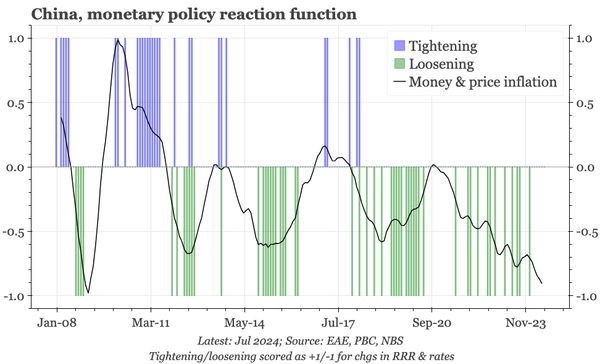
Loosening via Pledged Supplementary Lending was one of the hopes for this year, and is part of the official plan to tackle housing inventories. But net issuance fell in May for the third consecutive month.
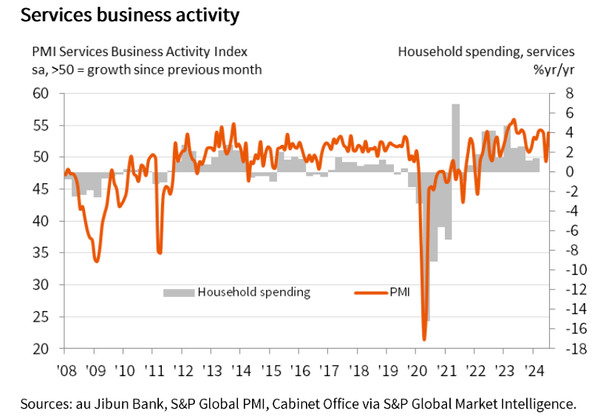
The official PMI shows that services strength is persisting. And in May, finally, some of the robust manufacturing growth that's been priced by equities is showing up in the data.
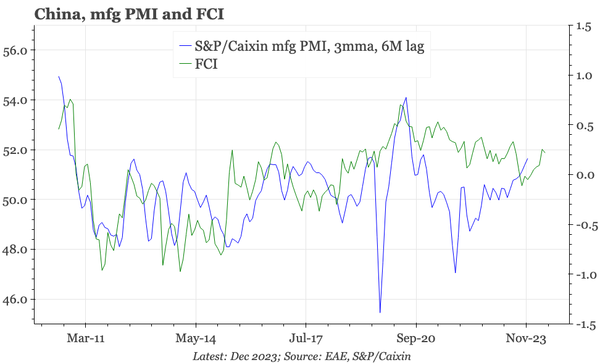
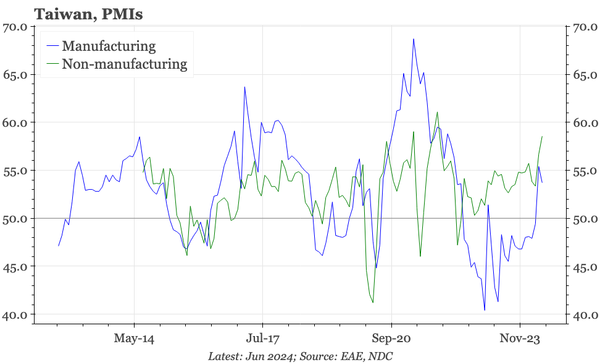
With PMIs in TW and KR improving in May, the gap between the S&P and official mfg PMI is probably export-related. Still, the two PMIs do now give very different messages about the strength of the overall cycle.
The rapid rise in the profit share of 2023 hasn't persisted into 2024. But there also hasn't been a decline, so the wage share remains at the lowest since the 1990s bubble.
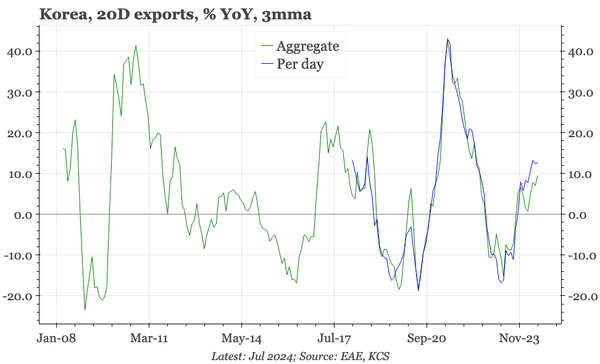
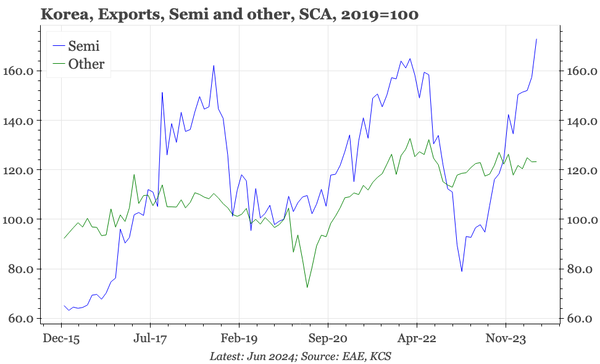
The Asian export cycle feels softer than it should be, with the YoY loss of momentum seen again in Korea's FM data for May. The reason is a faltering of the semi recovery, without other sectors taking over.
IP data show the sharp recovery in chip production from early 2023 has lost momentum this year. That is significant for the overall economy when the 80% of manufacturing that isn't semi hasn't yet started to grow.
The fall in the May NBS PMI was surprising, not because activity is robust, but because it isn't typical for the headline to fall when rising input prices in the survey are pointing to a recovery in PPI inflation.
CPI inflation in May in Tokyo continued at the 2-ish% run-rate of the last 6M. But at a headline level, the composition is shifting, away from services, back towards goods. That will further dampen real incomes.
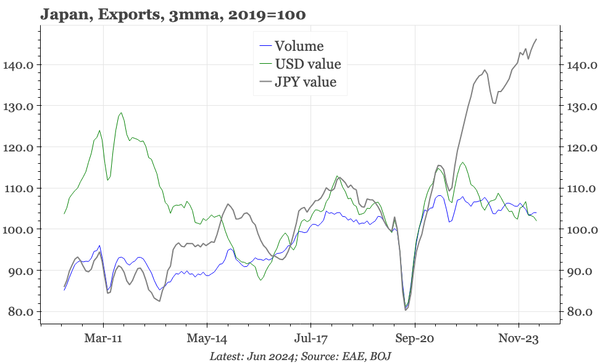
Consumer confidence for May has the same message as the earlier EW survey: the weaker JPY and rise in goods prices is once again eating into real incomes and eroding consumer confidence.
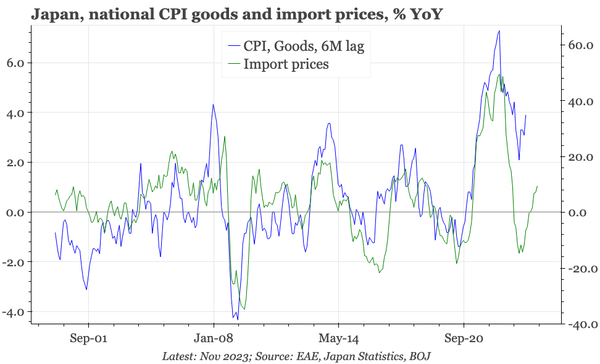
Import prices rose for the second consecutive month in April. It will be a surprise if domestic PPI inflation doesn't now follow suit, and in so doing challenge the idea that China is stuck in deflation.
Services PPI has been one of the best indicators of Japan's structural exit from deflation. The slowdown from mid-2023 had thus been concerning. But a rebound started earlier this year, and today's release for April was very strong.
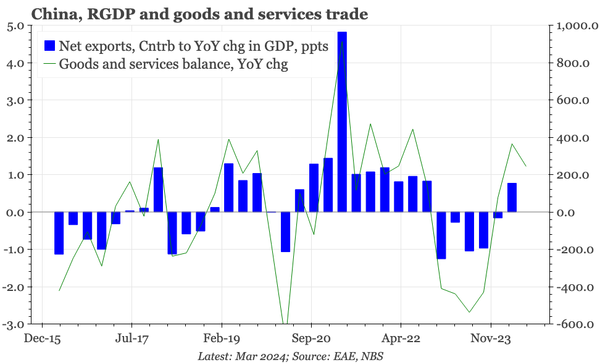
Domestic activity carried the economy in 2022-23 as exports slowed. Exports are now picking up, but consumption is also remaining solid. Consumer confidence isn't particularly strong, but purchasing intentions are.
The summary slide from BOJ Uchida's speech today is complex. The last line of the text was clearer: 'I would like to conclude my speech with this phrase: “This time is different.”'