*
East Asia Econ

East Asia Econ

The platform for tracking and understanding East Asia macro

Asia – the big shift in exports

Asia – the big shift in exports

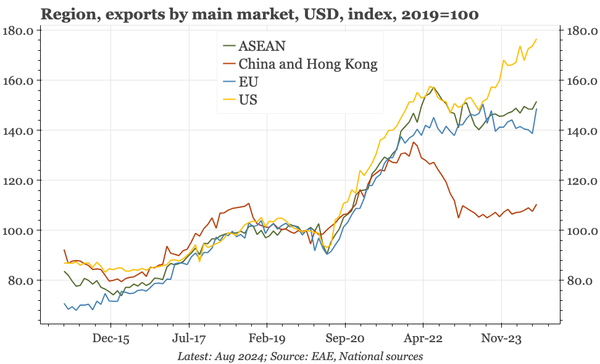
The export data across the region continue to show an enormous shift in the direction of trade. Exports to China haven't recovered following the post-pandemic slump. Where there is growth, it is all about the US.
1 min read

China – outside equities, still not much change

China – outside equities, still not much change

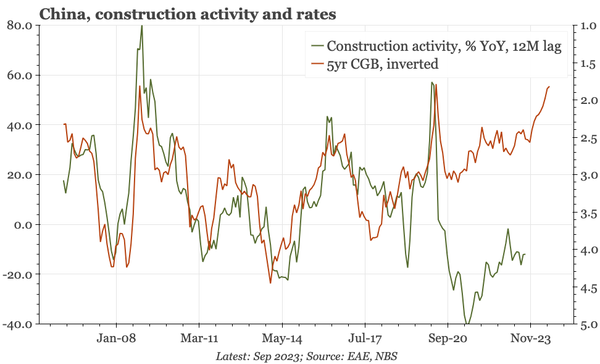
Checking in on some of the indicators needed for a cycle turnaround: still not much change in the YC, or much repricing of developer debt. There's been more rate cuts today, but the gap that's opened between activity and nominal rates suggests the key is whether price expectations rise.

1 min read

Korea – much weaker exports

Korea – much weaker exports

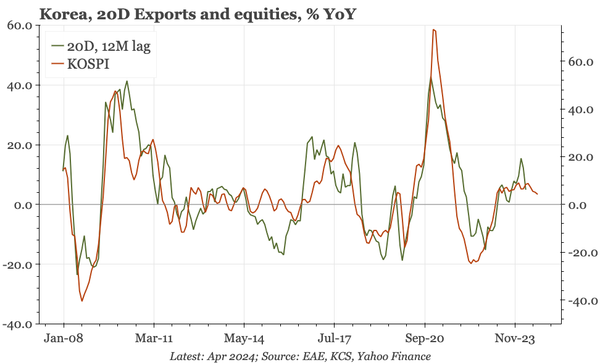
TSMC's strong results complicate the idea of a peak in the regional export cycle. But the trend is very visible in the drop in today's 20-day exports for Korea, in both YoY and sequential terms. Exports are now back to the sluggish path suggested by equities.

1 min read

China – property pricing weak, but not worse

China – property pricing weak, but not worse

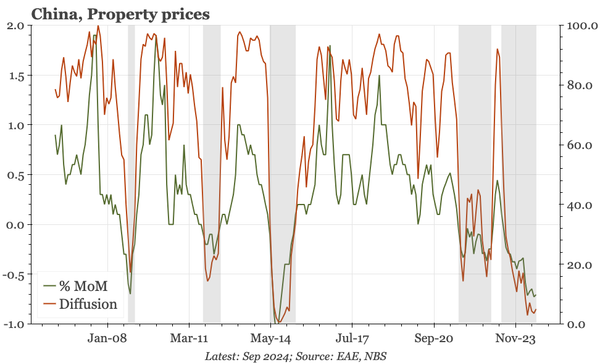
Ni Hong said yesterday that the property market started to improve in October. Today's September price data suggest that the market bottomed earlier in Q3. However, signs of a floor back in Q1 didn't last. And on an all-economy basis, today's data show the economy still in deflation.

1 min read

China: excavator sales still 70% below the peak

China: excavator sales still 70% below the peak

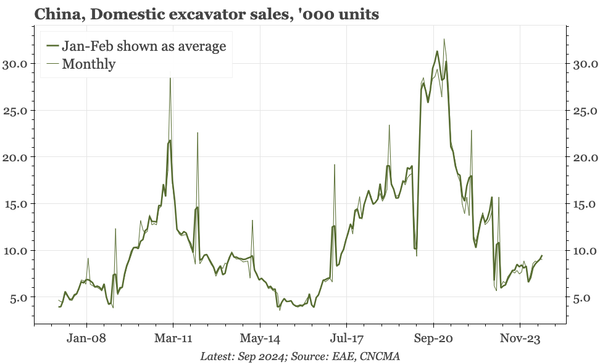
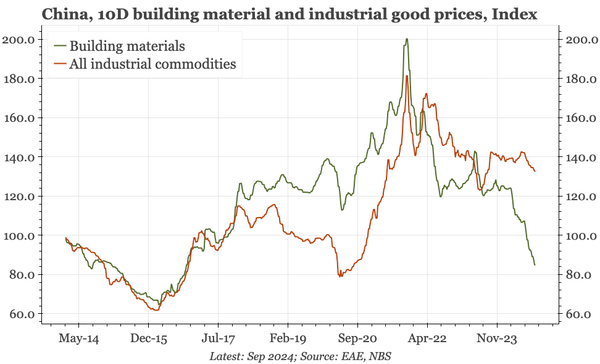
Excavator sales are a good illustration of China's woes. Sales fell more after 2020 than they did following the 2009 boom. It is interesting that they have seem to have now bottomed out, but that still leaves them 70% below the peak. To turn things around, policy has a lot of work to do.

1 min read

Taiwan – TSMC still supporting macro

Taiwan – TSMC still supporting macro

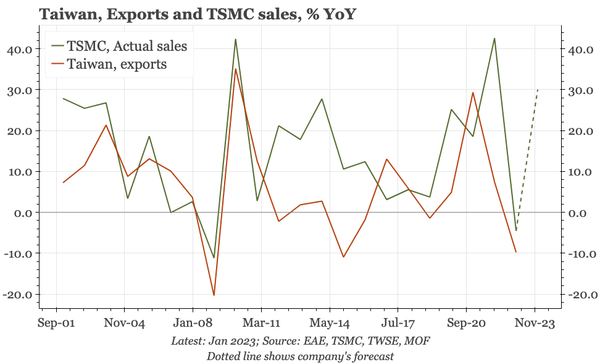
The relationship between TSMC's sales and Taiwan's exports has weakened this year. But with the company remaining bullish into Q4, TSMC remains a big, positive support for Taiwan asset prices and macro into 2025.

1 min read

Japan – finally, an export lift

Japan  – finally, an export lift

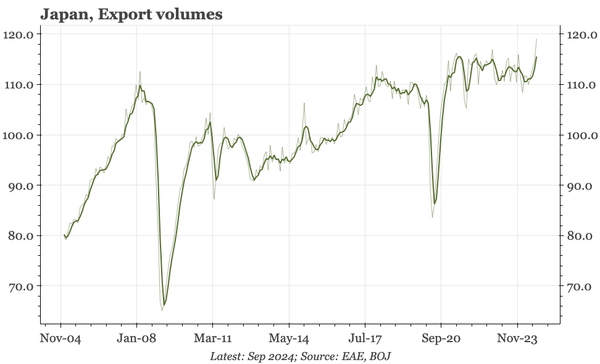
Japan's export volumes in the last couple of months have suddenly broken out of the range of the last four years to reach an all-time high. That's probably not what the BOJ was expecting, given its worries about the July move in the JPY and "uncertainty" on the outlook for the US.

1 min read

China – big supply-chain adjustments

China  – big supply-chain adjustments

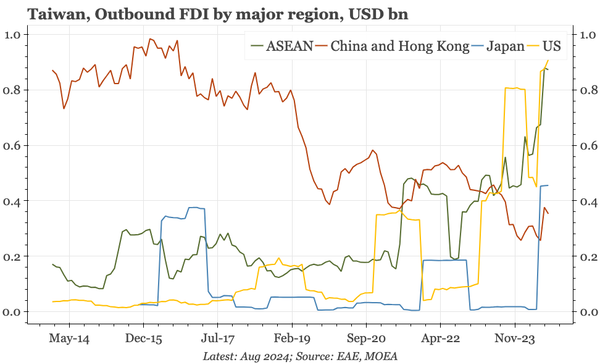
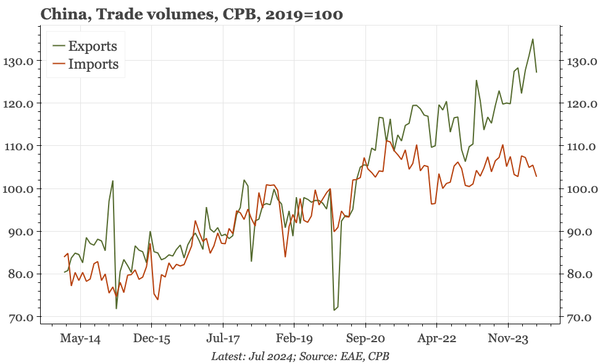
China's continued global market share gains negate the idea of decoupling. But foreign firms are relocating from China, a trend exemplified by Taiwan. How to square that circle? Previously, the ROW was dependent on foreign firms in China. Now the dependence is on Chinese domestic companies.

1 min read

Japan – capex going sideways

Japan – capex going sideways

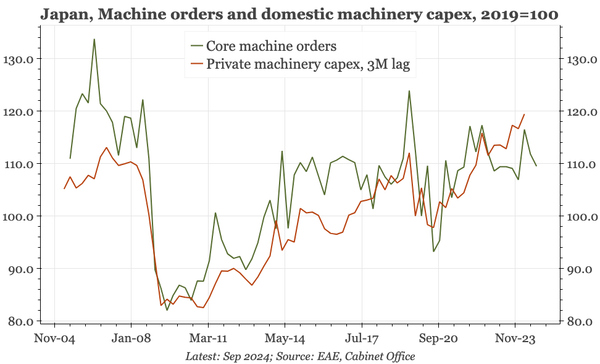
With today's August data, it continues to look like machinery orders are going sideways. That casts doubt on whether the recent upturn in machinery capex in the GDP data can be sustained.

1 min read

Taiwan – wages holding up, CPI should too

Taiwan – wages holding up, CPI should too

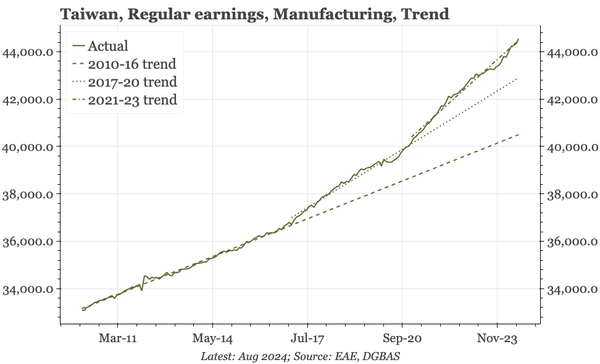
Yesterday's data for August show again that the post-covid stepping up of wage growth in Taiwan is holding. That fits with other signs of stronger inflation, in the form of property prices and core CPI. Rate cuts here still aren't likely.

1 min read

Japan – household incomes bounce

Japan – household incomes bounce

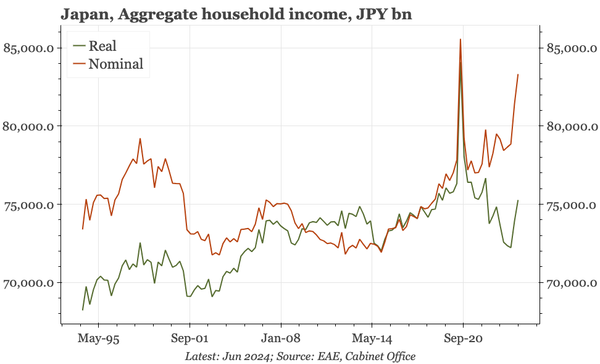
Household incomes bounced in 1H24, boosted by fiscal policy (welfare benefits and Kishisha's tax cuts), as well as property income and solid wage growth. This is an important change, given the big problem with aggergate demand has been the weakness of consumption.

1 min read

Taiwan – US trade surplus now over 10% GDP

Taiwan – US trade surplus now over 10% GDP

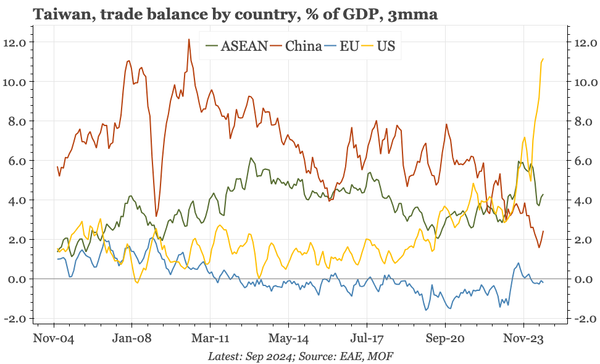
Much has been made of the US overtaking China as Taiwan's biggest market. One consequence is a surge in the trade surplus with the US to over 10% of GDP. That will likely attract a lot more political attention in the event of a Trump re-election.

1 min read

Japan: consumption slows again

Japan: consumption slows again

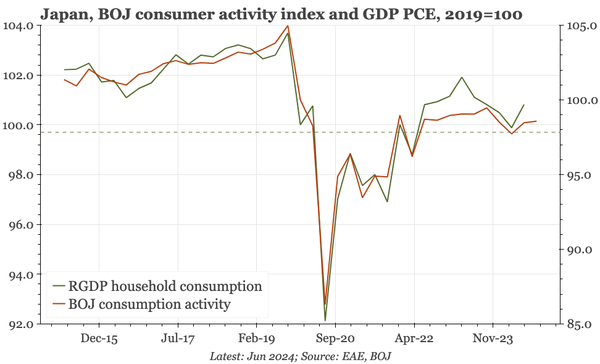
After a better Q2, consumption looks to have basically flat-lined again in July-August, capping any upside in GDP. Consumption isn't falling again, and last week's consumer confidence survey suggests no new deterioration in September. But there is downside risk if the JPY continues to weaken.

1 min read

Asia – PMIs suggest end of recovery

Asia – PMIs suggest end of recovery

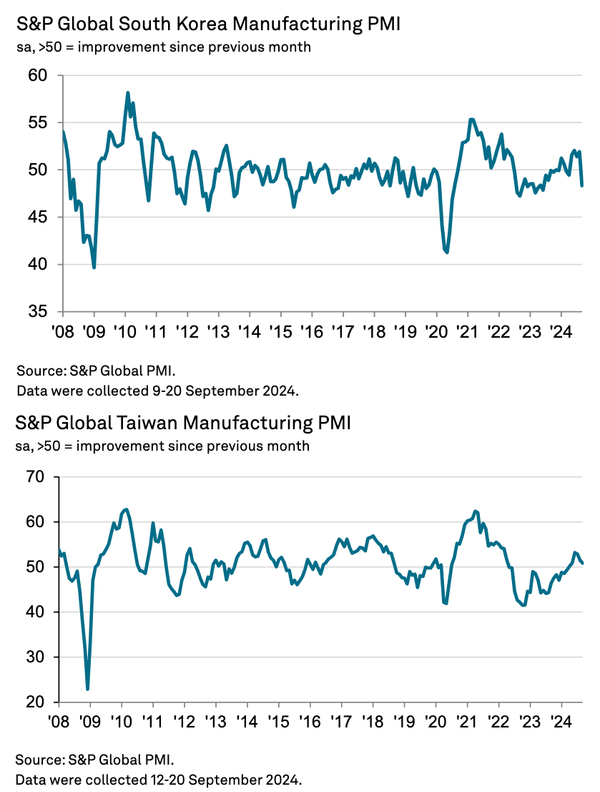
It wasn't just in Taiwan. Korea's PMI also fell sharply last month. The deterioration is puzzling, not being seen in other surveys, nor in Korea's September exports. So probably, it is noise. But data patchiness has been a theme of recent months, suggesting underlying cycles are rather so-so.

1 min read

Korea – private services CPI rises to 3%

Korea – private services CPI rises to 3%

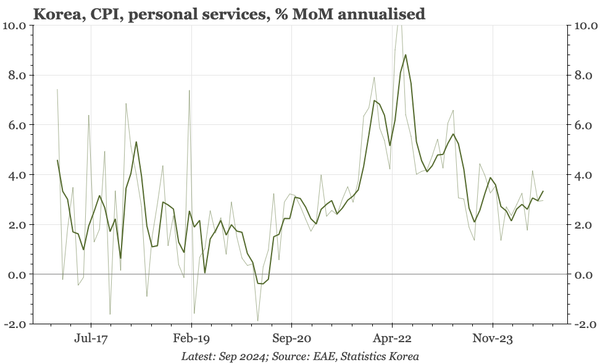
Data today show headline inflation fell below the BOK's 2% target in September for the first time since April 2021. But core inflation isn't continuing to drop. Sequential core looks to be bottoming around 1.8%, and the rebound in personal services inflation is continuing, from 2% in Q1 to 3% now.

1 min read

Taiwan – PMI back below 50

Taiwan – PMI back below 50

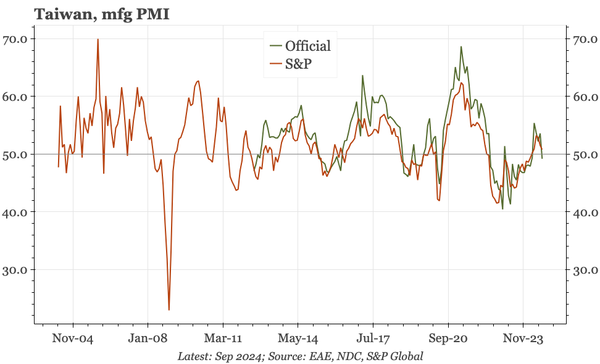
Taiwan manufacturing should be on a big upswing, driven by recovery from the 2022-23 recession, and AI demand for semis. And yet, even before now, data have been patchy, and the PMIs suggest that mfg started to contract again in September. If that's the end of the upturn, it didn't last long.

1 min read

China – Equities, the YC and FCI

China – Equities, the YC and FCI

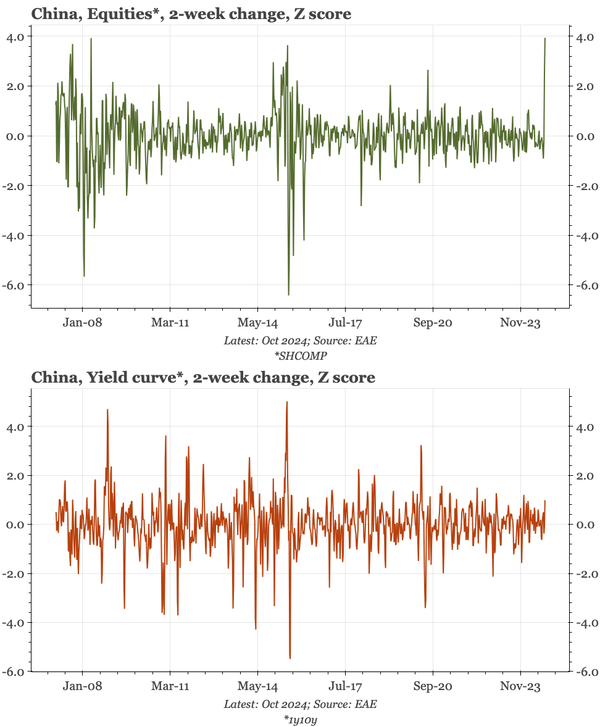
The equities move has been extreme. To argue that this heralds broader economic recovery relies on: 1) the YC moving next as savings get mobilised; 2) the YC mattering less as an indicator than equities. Both are possible, but while the YC has issues as a leading indicator, so does the stockmarket.

1 min read

Japan – Tokyo underlying CPI stable

Japan – Tokyo underlying CPI stable

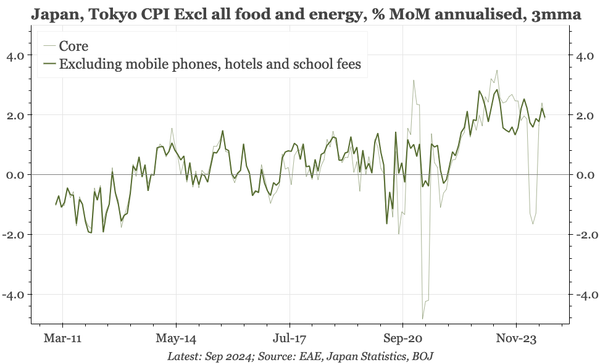
Underlying core inflation in Tokyo in September continued to run at around a 2% annualised rate. The trimmed mean has stabilised at a bit below that, and the proportion of rising items has ticked up. Inflation isn't accelerating, but there's no sign of a slowdown either.

1 min read

China: profit share as low as 2009

China: profit share as low as 2009

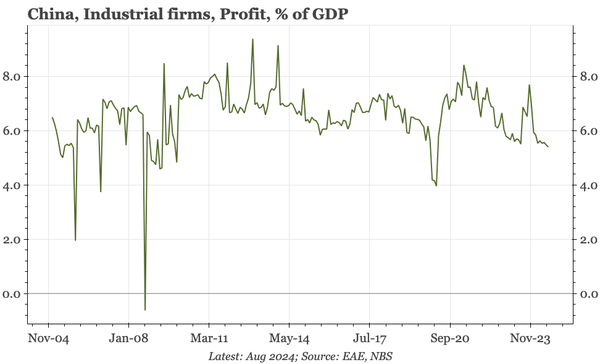
The 17% YoY fall in profits in August is exaggerated by comparison with the spike 12M previously. But the details are sluggish. Corporate revenues haven't yet regained the level of November 2023, and except for early 2023, the profit share of GDP is lower than any time since 2009.

1 min read

Taiwan – much stronger in August

Taiwan – much stronger in August

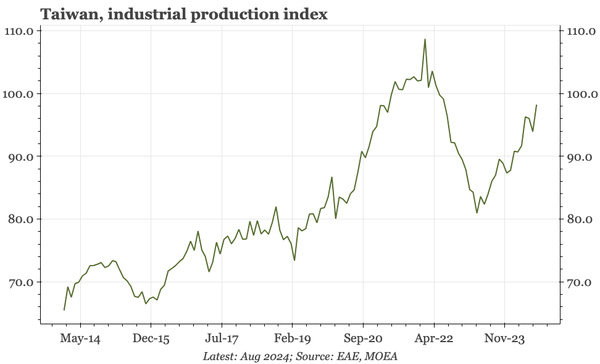
After a sluggish Q2, we'd started to think the best of Taiwan's recovery was over. But IP data today, as well as export volumes, are consistent with the big bounce seen in August export values. Retail sales were weaker, but still suggest much more resilience than consumption in Korea.

1 min read

Japan – upstream services inflation steady

Japan – upstream services inflation steady

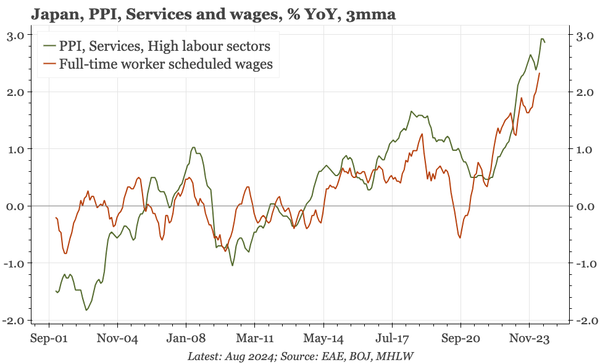
Services PPI inflation eased back in August, but that was partly base effect. The BOJ's new high-labour content measure isn't that different, and remains near 3%. Sequentially, SPPI is running around 2%, but all the volatility since 2022 makes it difficult to discern the underlying trend.

1 min read

Taiwan – mild export upturn intact

Taiwan – mild export upturn intact

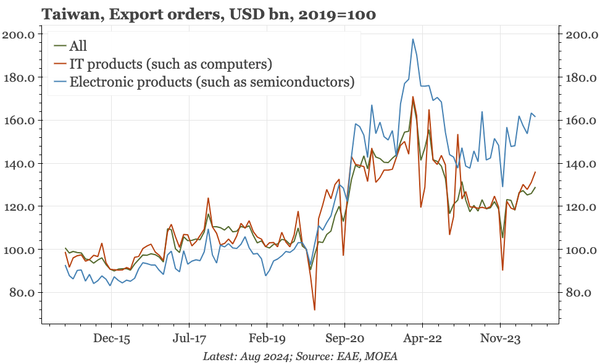
August export order data don't signal any change in direction in the modest export upturn of recent months. The more interesting shifts are structural. China orders are flat, and are now only 60% of US levels. The overseas production ratio is the lowest since 2009.

1 min read

Japan – firm services PMI, higher output prices

Japan – firm services PMI, higher output prices

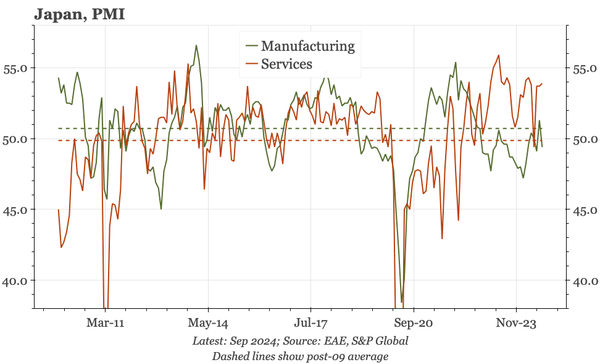
There's still little sign of economic damage from the market volatility of July and early August. Like other surveys, today's flash services PMI was strong. Input prices eased, but output prices didn't as "firms looked to pass higher cost burdens in to clients".

1 min read