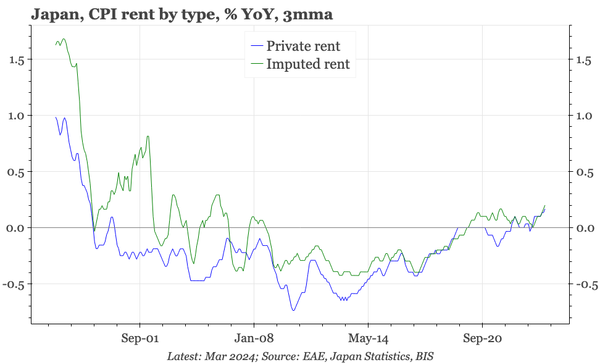
It still isn't even at 0.2% YoY, but rental CPI is now rising the fastest since the 1990s, which is pulling up imputed rent too. Together, they account for almost 20% of the basket.
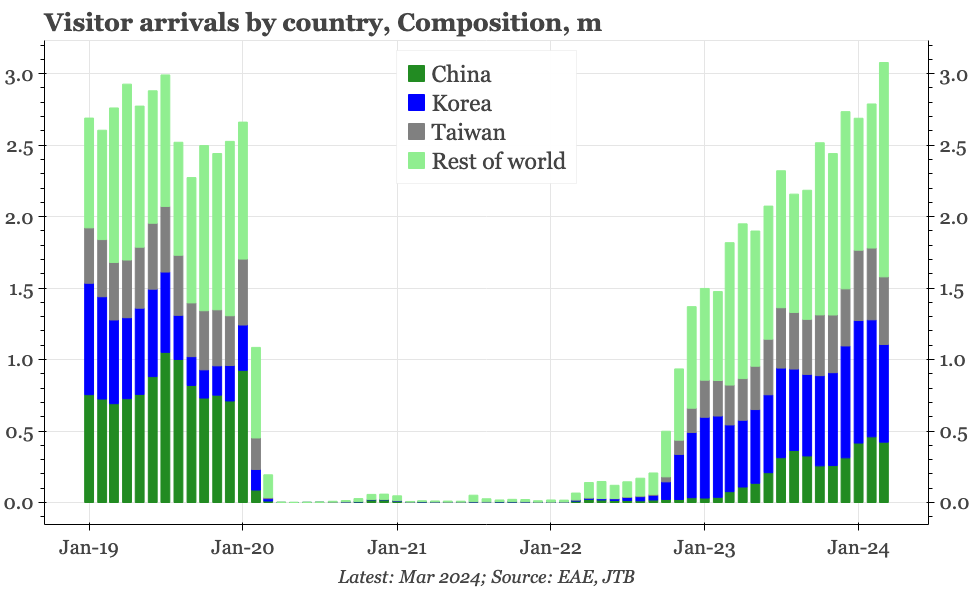
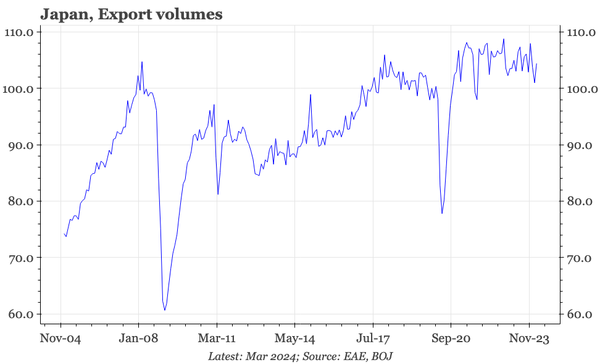
The cheap JPY isn't boosting Japan's merchandise exports, but it has helped with a sharp recovery in tourism, even though arrivals from China remain subdued.
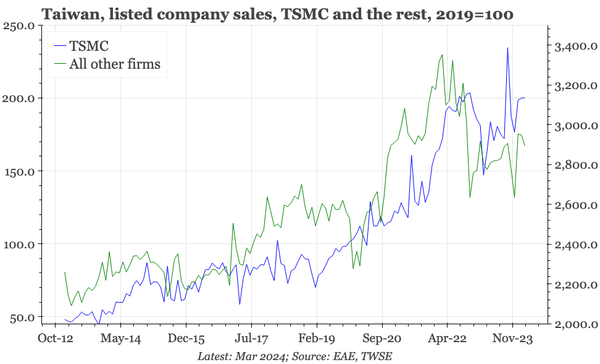
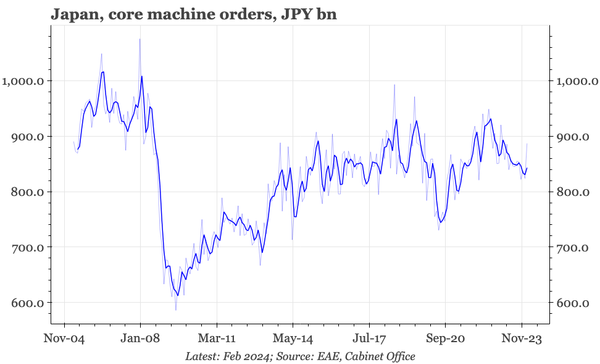
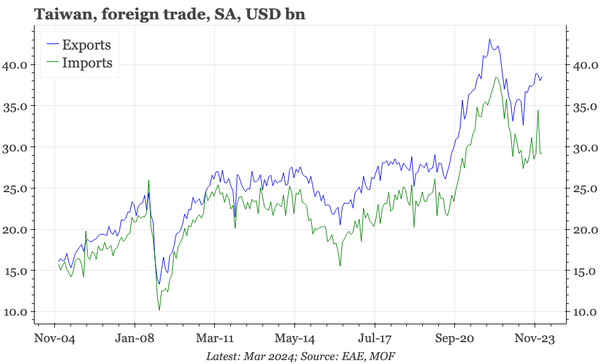
The recent recovery in the mfg cycle has been underwhelming. One reason is its narrowness: sales at TSMC are up, but for the rest of the listed are flat.
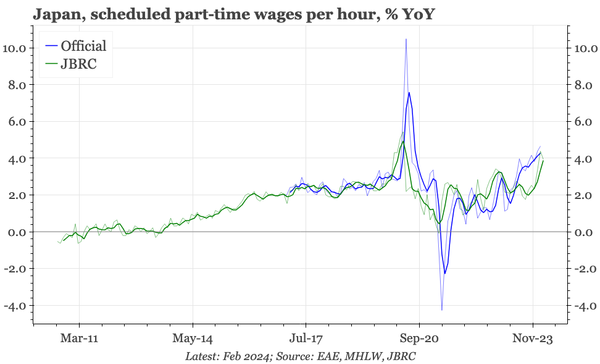
The shunto is important for regular workers, but part-time workers are now also getting decent pay rises, a real sign that the labour market is tightening.
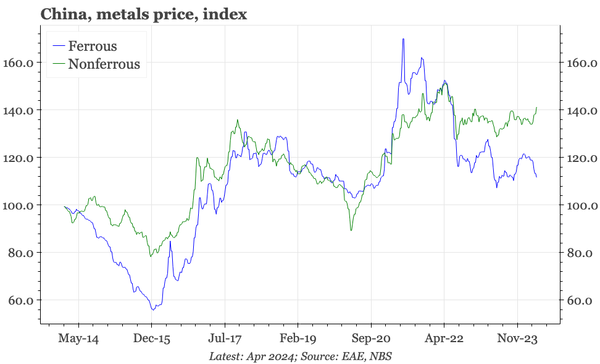
There's a growing divergence between ferrous and non-ferrous metals, and that shows the contrast between weak property and strong manufacturing activity.
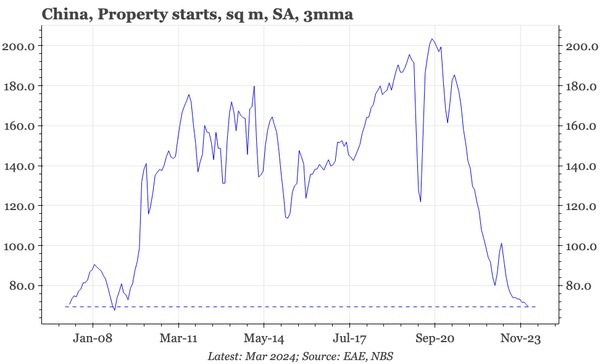
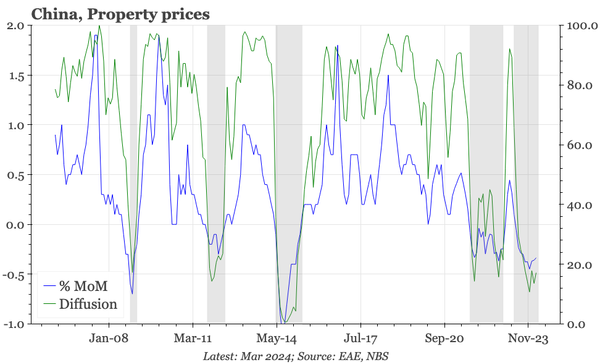
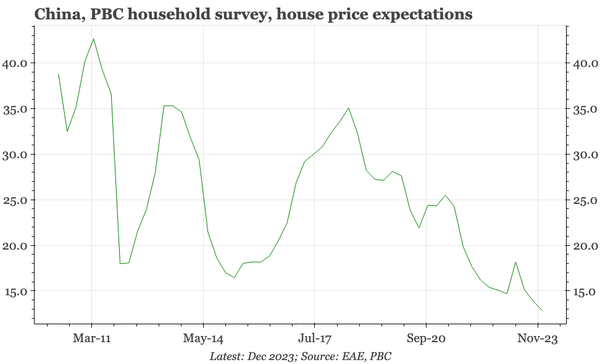
Official data show property price deflation isn't worsening. Private measures suggest the same thing, though anecdotes suggest actual market conditions are much weaker
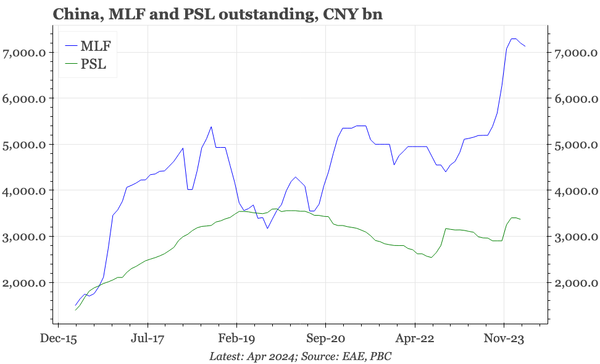
Today's PBC action to drain liquidity for the second consecutive month via the MLF follows a big run-up in 2H23. Still, it does show that the bank remains a cautious easer.
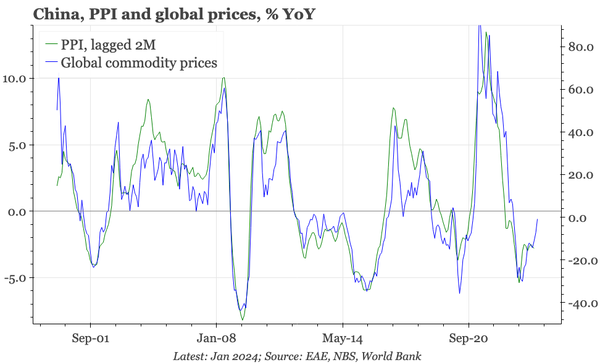
China should be close to an inflection in PPI, but the turn didn't happen in March. PPI fell 2.8% YoY, a rate of deflation that hasn't changed much since August 2023.
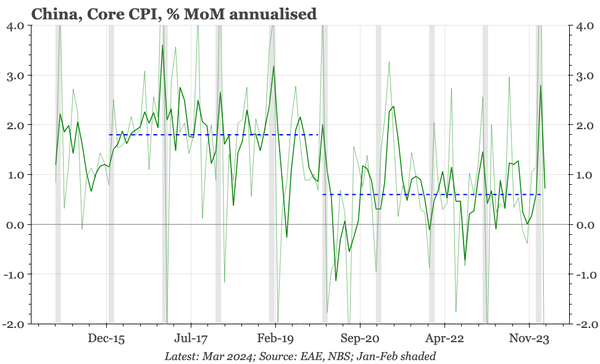
The pick-up in core CPI from late 2023 hasn't persisted, dropping back to +0.7% in March. That is consistent with the post-covid performance, and a step down from the pre-2020 average of nearly 2%.
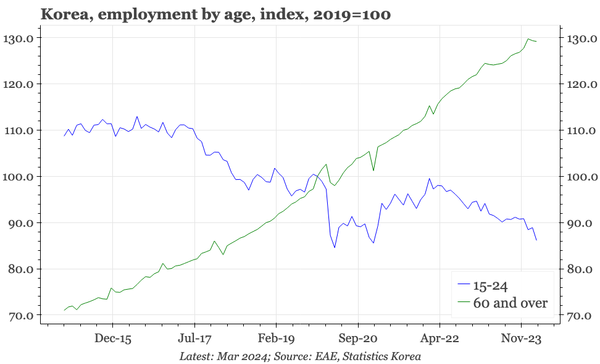
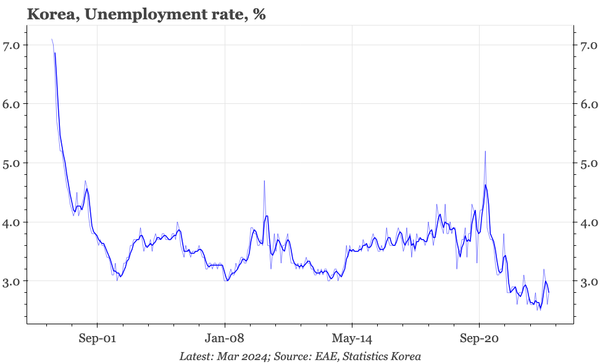
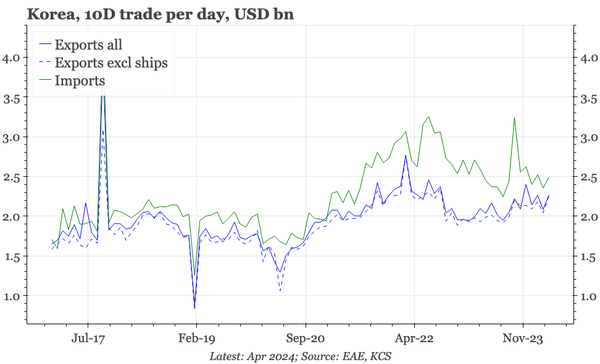
Data for the first 10 days of April don't show an acceleration of the mild export recovery of the last few months. That matters for the BOK when domestic demand is also weak.
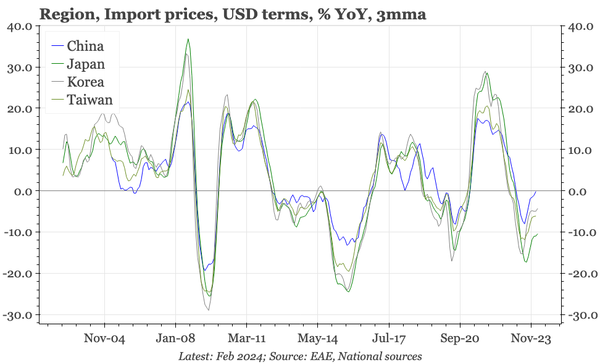
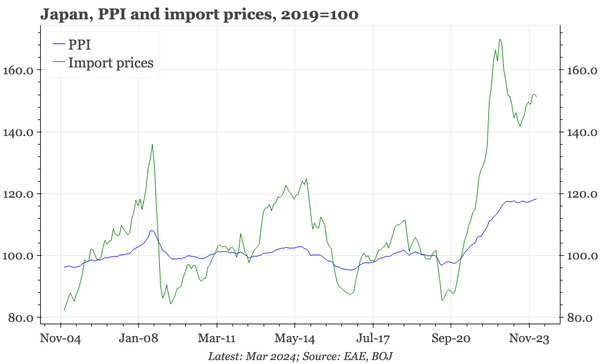
If there was supposed to be goods price disinflation in Japan, it didn't last long, and didn't make much difference to the level of either import or producer prices.