China – core CPI back to +1%
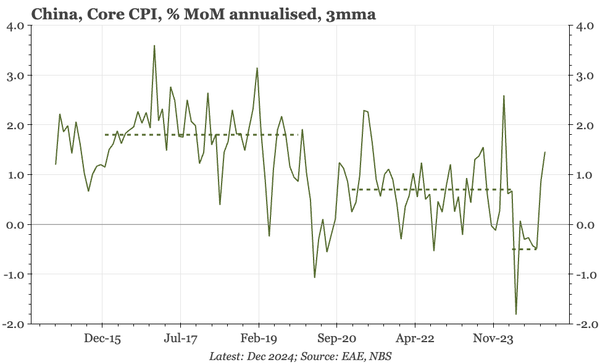
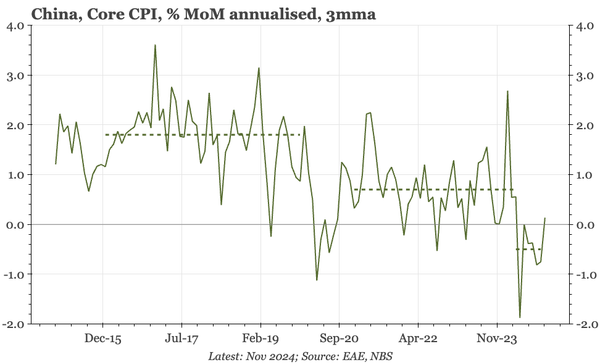
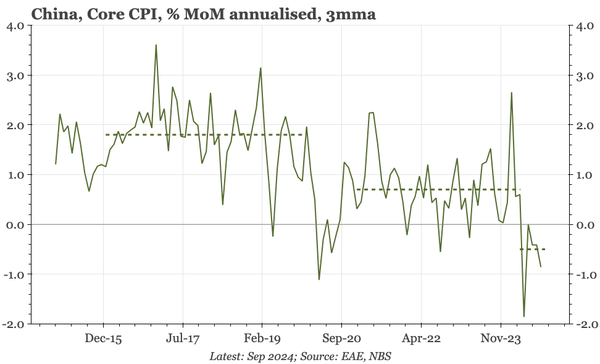
After being -ve for most of 2024, core CPI saar rose in Q4. That seems unlikely to sustain, given the 2024 policy boost is fading. However, that core has picked up is at odds with the consensus interpretation of today's data, while being in line with the relative stability of PMI output prices.
China – neither better nor worse
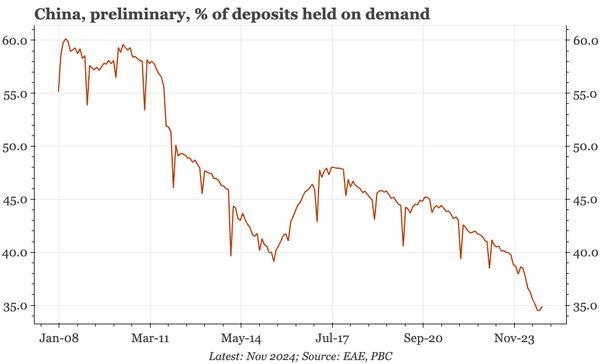
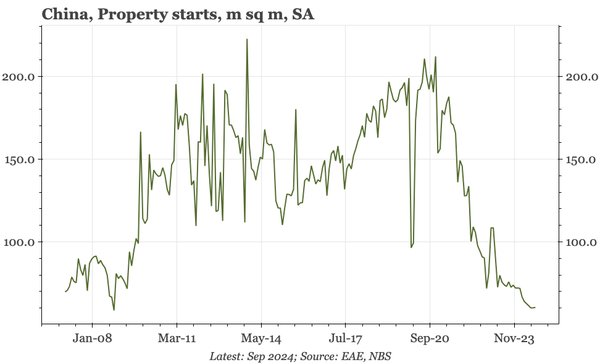
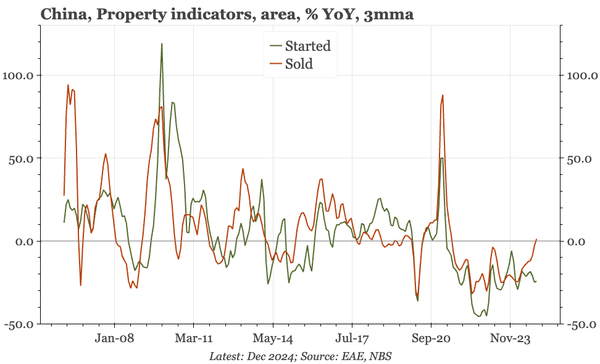
An easing of home price deflation and the decline in narrow money growth keep alive an upside scenario where individual investors buy into the idea that policy is putting a floor under growth. But the continued fall in property sales and weakening of credit dhow any turnaround is tentative at best.
China – a little more encouraging
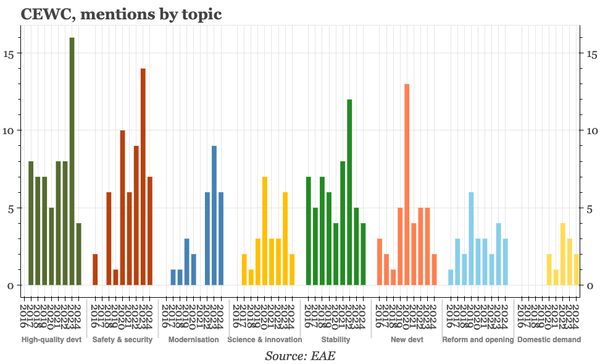
Three things stand out from the CEWC: talk of "insufficient demand"; specific policies for consumption like welfare spending; and urgency towards real estate. The overall message is encouraging, though welfare spending is unlikely to rise much given it wasn't included in the November fiscal package.
China – what might "moderately loose" mean?
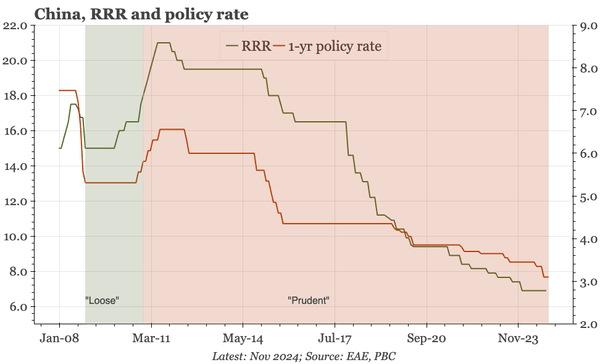
A "moderately loose" stance seems encouraging. But effecting that isn't straightforward, given nominal rates and the RRR are now so low. Rather than nominal, policy needs to work on price. That can be done by PBC BS expansion that addresses property inventories, or fiscal policy that raises demand.
China – CPI details a bit better than headlines
After falling for most of the year, core CPI rose MoM in November. However, the impact on overall CPI was offset by a renewed softening of food prices, and PPI also remained in deflation. PPI will likely strengthen a bit more from here, but overall, deflation is still the bigger risk than inflation.
China – the consumption challenge
As a long-time fan, I was very pleased to have a piece in the latest China Leadership Monitor. It argues that while cyclically, spending hasn't been so bad, that isn't enough given the property bust. Even so, and despite interesting proposals from onshore economists, policy support is still lacking.
China – headline PMI ok, details weak
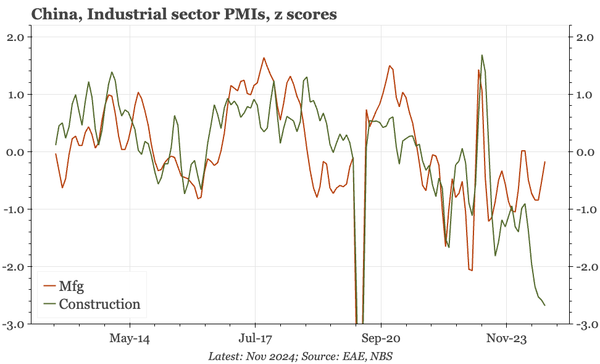
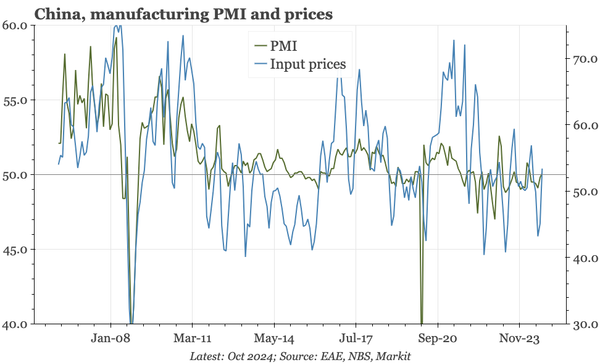
In November, the manufacturing PMI ticked up again, but the construction PMI continued to fall. But it would be optimistic to think this shows industry becoming less dependent on real estate when prices rolled over, the services PMI remains very weak, and employment continues to fall.
China – export-led growth continues
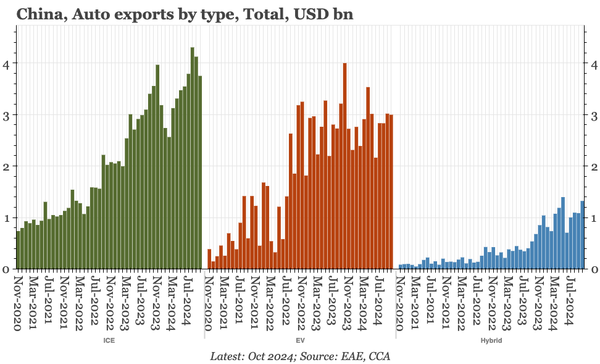
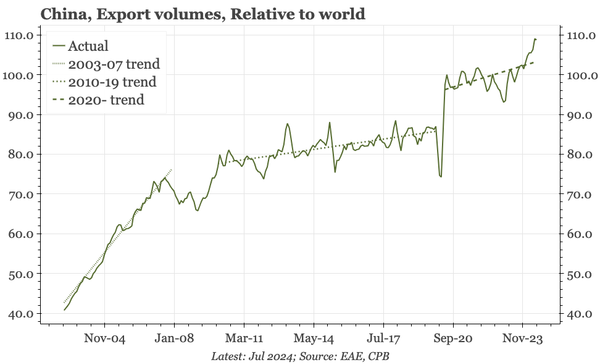
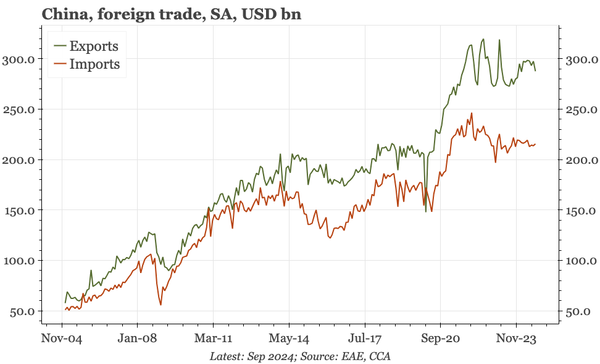
A chart-heavy note updating China's trade trends. Export volume growth remains strong; prices are soft but not falling sharply; EV growth is sluggish but solar stronger; direct trade continues to reorient towards EM; the growing trade surplus helps GDP growth, but not relations with the US.
China – services output up, but not much else
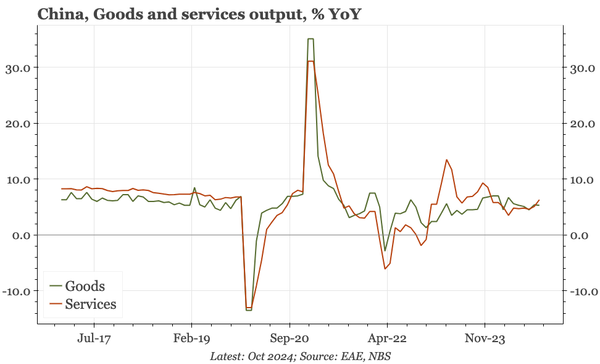
With a bounce in reported retail sales, it looks like economic growth in October got back to the government's 5% growth target. Overall, though, the tone of the data was rather mixed, with real estate activity in particular still extremely weak.
China – what have we learnt?
The bond swap does represent substantive policy. But there still isn't support for consumption, so this does look like an effort to put a floor under growth, rather than produce a new upcycle. And while that will probably be successful, stability will be endangered by a new round of Trump tariffs.
China – the consumption challenge
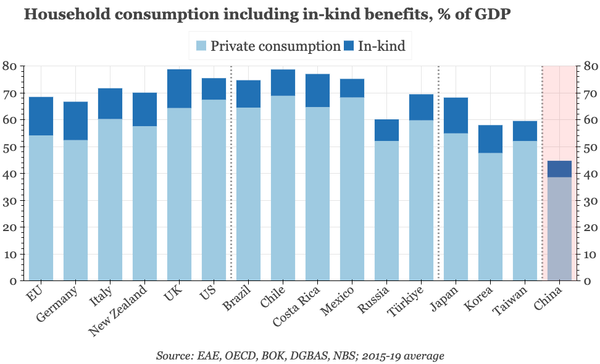
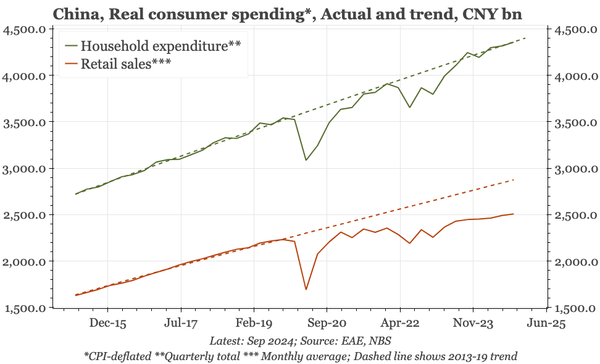
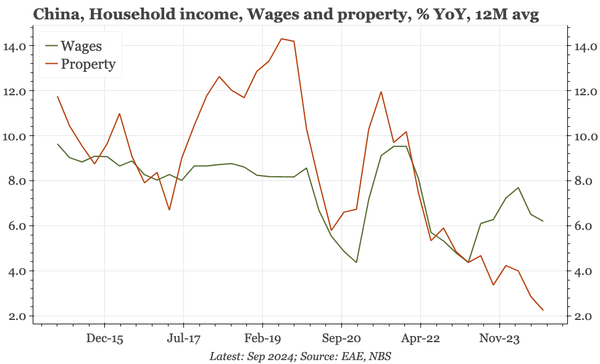
A chart pack arguing that consumption hasn't been as weak as is often imagined, but that downside risks are growing as wage and property income falls. Policy solutions need to overcome the weakness of non-wage incomes, the strength of savings, and the pro-investment official mindset.
China – PMIs: still a lot to do
Likely driven by the sentiment-driven rise in prices, the manufacturing PMI bounced back above 50 in October. But there was barely any change in either the services or construction, PMIs, and both will need to improve to think that the economy really is turning around.
China – profits fall sharply in September
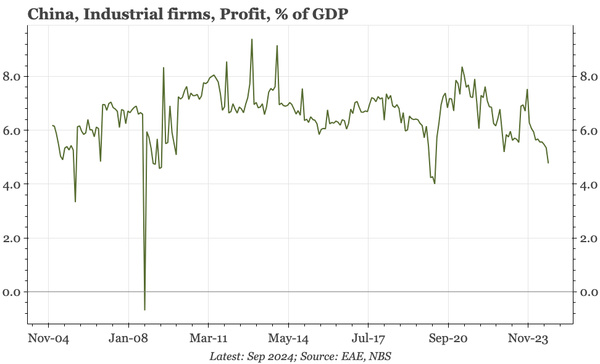
The government yesterday published its monthly series for the profits of the industrial sector. I am always a bit sceptical of the quality of these data. But if you want a trigger for the recent macro policy push, then the sharp fall in profits in September fits the bill.
China – crunch time for consumption
The slump in confidence and retail sales don't indicate a major cyclical weakening of consumption. That's partly because households have been running down excess savings from covid. But with savings now normalising, consumption is becoming more vulnerable to the deterioration in the labour market.
China – keep on muddling through
Looking at today's data, the driver of all the recent policy activism is to get growth back to the 5% target. That doesn't suggest a big rebound in the nominal growth that equity investors need. The upside risk is this policy push is happening when there are tentative signs of property stabilising.
China – credit both too weak and too strong
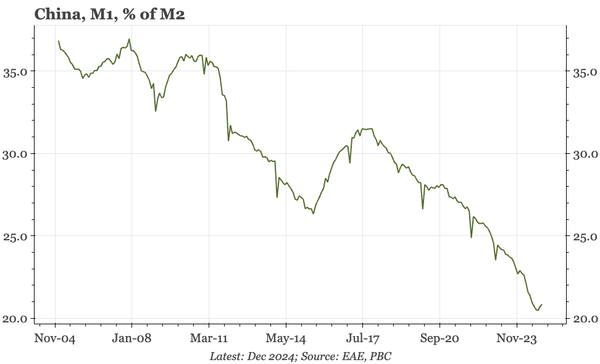
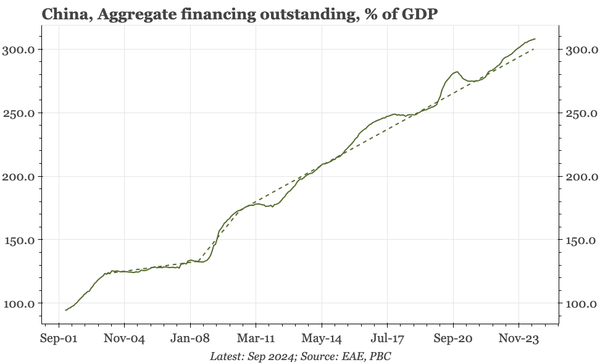
Cyclically, credit is very weak, especially private sector borrowing. But credit is still rising relative to GDP. That's partly because of government borrowing. But it is also because of weak nominal GDP growth, and that is unlikely to change until the sharp fall in M1 relative to M2 reverses.
China – exports drop in September
Exports dropped quite sharply in September. China is still making share gains in autos especially, but this is another sign that the best of the recovery in the regional export cycle is probably now done. That matters for China when exports have been the strongest sector of the economy.
China – core deflation worsens
Core inflation, which took one step-down during covid, has this year dropped again. Indeed, China has now been in sequential core CPI deflation since May. This implies rising real interest rates, and, with PPI turning down again too, a worsening debt burden.
China – 4/10
The MOF presser today was underwhelming, in both quantity and quality. The one real, positive change is allowing fiscal funds to be used to address the supply overhang in property, but only at the local government level (and, it seems, using existing funds). Markets are unlikely to be impressed.
China – what if property is for speculation (part 2)?
My base case - that the economy won't turnaround without fiscal – isn't especially differentiated. But the reports of stronger real estate sales in the holiday highlight a risk case: that the equity rally mobilises household savings and boosts price expectations, lifting the economy without fiscal.
China – has the Fed really been a constraint?
I had an op-ed piece in today's Nikkei Asia. The headline argument is that monetary policy isn't sufficient to boost growth. On its own, that isn't much of a differentiated view. The nuance is the reasoning: China has monetary policy independence, so Fed cuts in themselves don't change anything.
China – What to watch
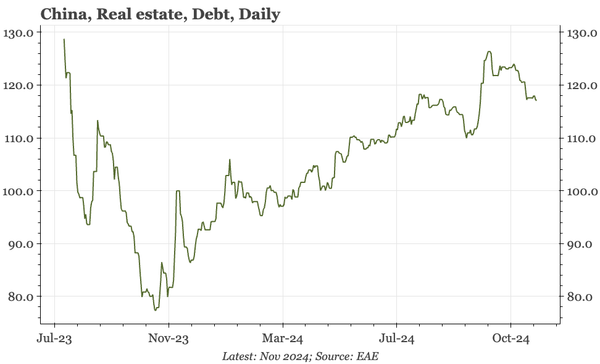
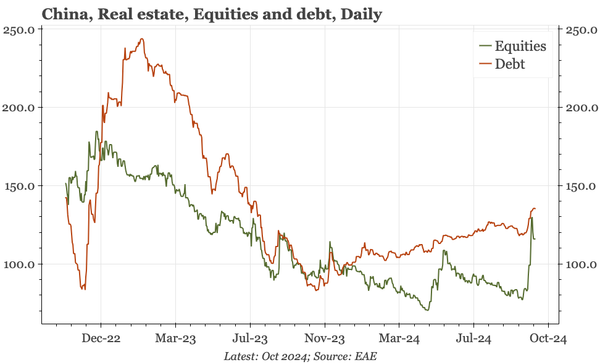
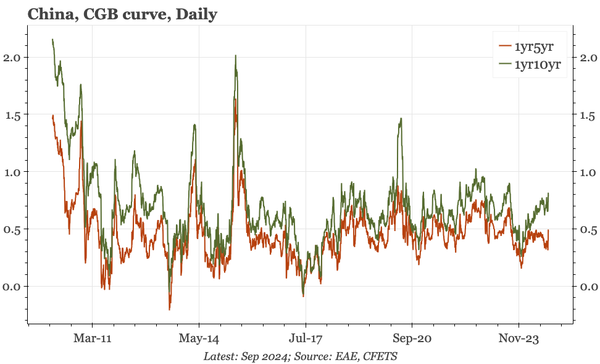
To think the equity recovery is lifting overall growth, things to watch include: the yield curve; real estate debt; PBC base money; and household deposits. Since Friday, the YC and real estate debt have moved, but not significantly yet. Base money and HH time deposit data are lagging.