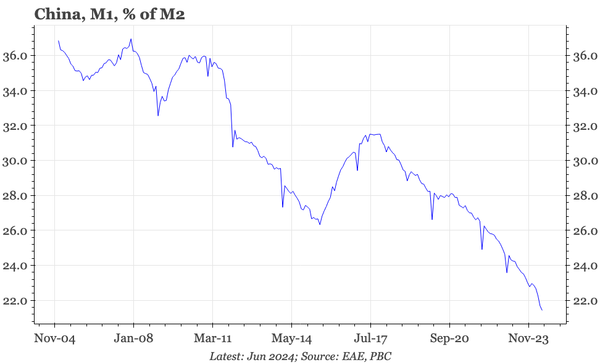
China – the end of the credit cycle?
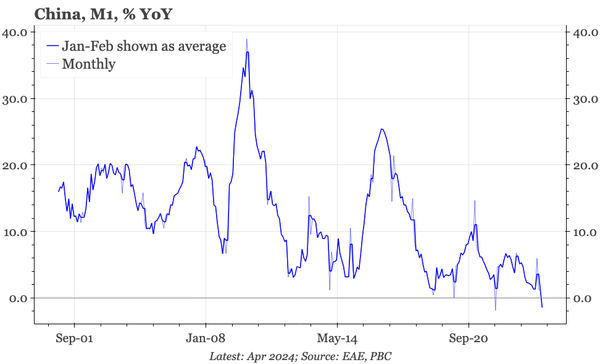
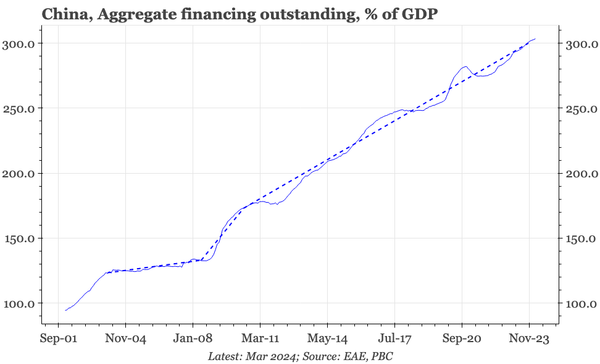
China's monthly monetary release doesn't seem nearly as important as it once did, because a lot of the major indicators are rangebound. The one indicator that looked a bit different last month was M1, but that rebound fully reversed in March back down to just 1.1% YoY.
China – inflation trends unchanged
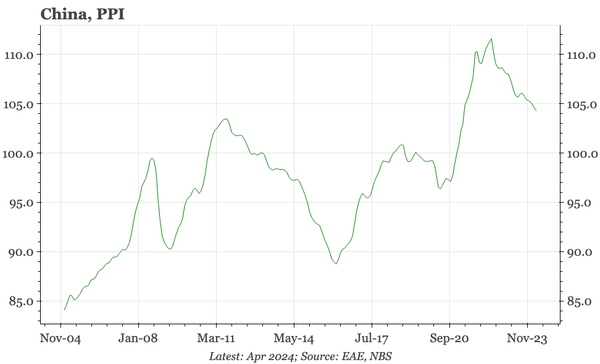
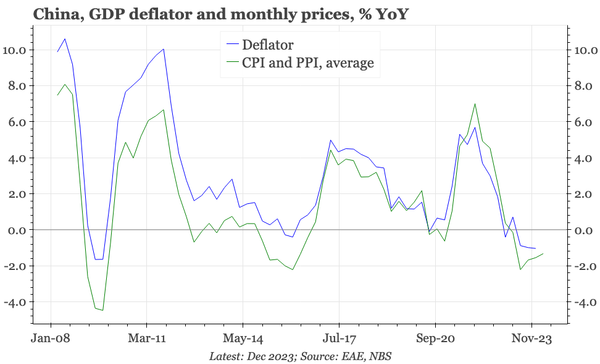
Price trends in China remain range bound, with PPI falling at a 2.5%-3% YoY rate, and CPI fluctuating around 0.7%. Narrow leading indicators for inflation suggest some strengthening from here, but a real change in inflation dynamics needs a change in China's overall macro dynamics.
China – past peak auto?
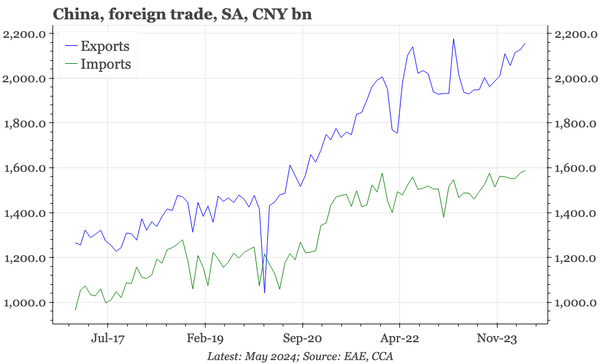
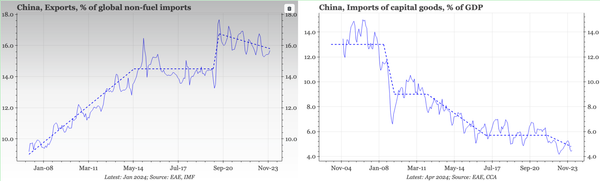
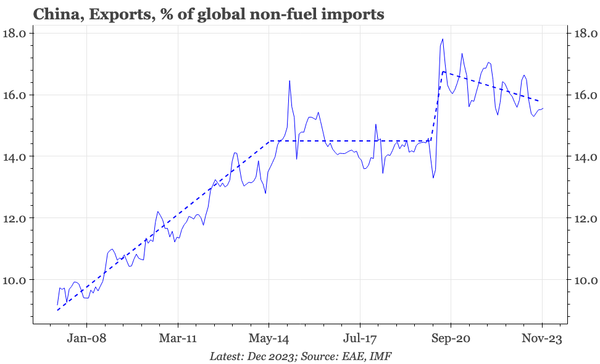
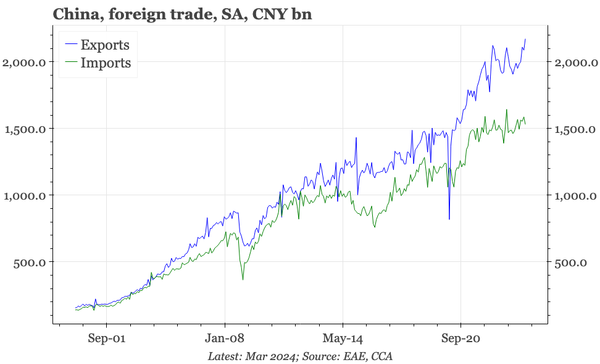
China's rising competitiveness in more capital-intensive manufacturing sectors is an important theme that we still buy into. However, relative to this belief, and the current global concern about China's EV export peril, recent export performance has been a little underwhelming.
China – could it just be a cycle?
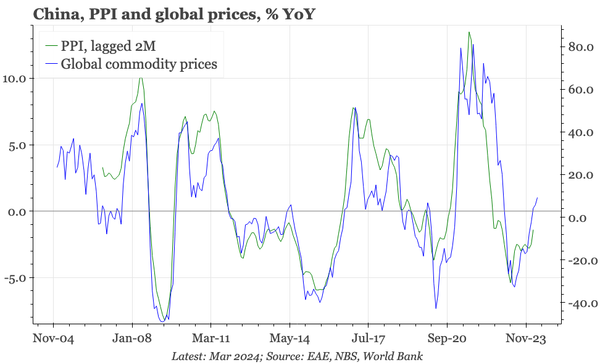
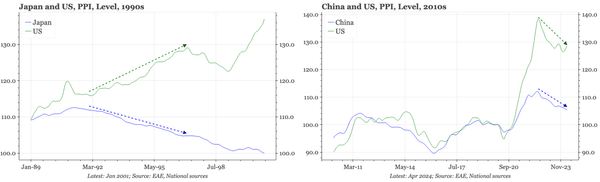
We aren't convinced that falling PPI shows China is stuck in a deflationary trap. China's PPI cycle isn't out of whack with global trends, and unlike Japan in the 1990s, monetary policy isn't reinforcing the drop. There's potential for nominal growth to look better this year.
China – the government's confident narrative
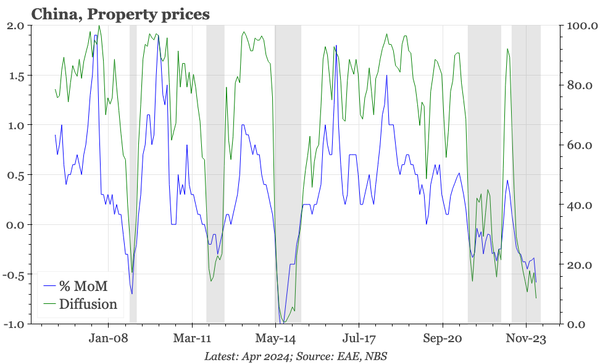
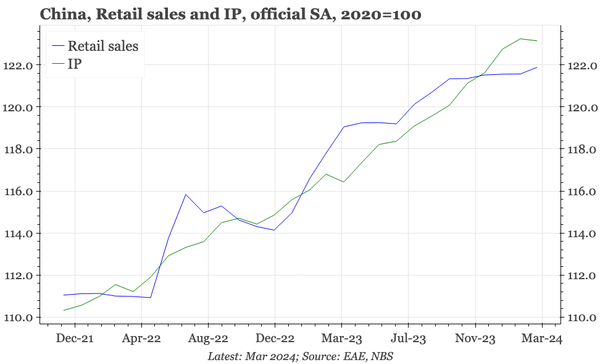
Jan-Feb data validate the idea that the cycle has bottomed. The driver, however, is industry, which doesn't feel consistent with the continued weakness in property. Another leg-up in macro confidence likely still needs a real bottoming of real estate, and a strengthening of consumption.
China – sideways
Our impression from the data released so far for January and February is the underlying economy is going sideways. The credit impulse is soft, but not especially weak; mortgage growth has slumped, but isn't worsening; and both M1 and excavator sales look a bit stronger so far this year.
China – perhaps core CPI hasn't dropped since covid
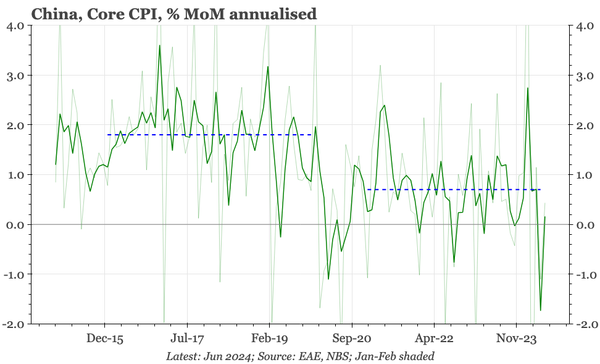
It wasn't surprising that core CPI picked up in February. But the rise took average core in the last three months to 2% annualised, a rise big enough to challenge the idea that there's been a structural shift down in core since covid. That reinforces our view that underlying inflation has bottomed.
China – could it just be a cycle?
We aren't convinced that falling PPI shows China is stuck in a deflationary trap. China's PPI cycle isn't out of whack with global trends, and unlike Japan in the 1990s, monetary policy isn't reinforcing the drop. There's potential for nominal growth to look better this year.
China – confusing PMIs
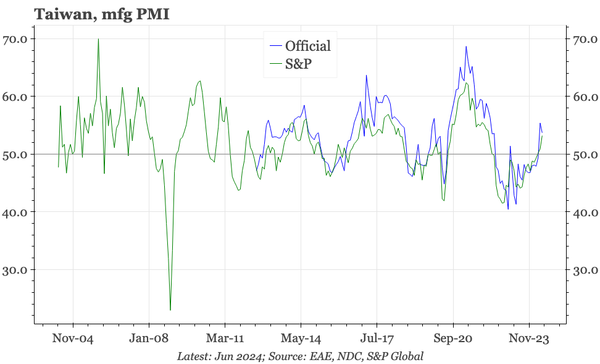
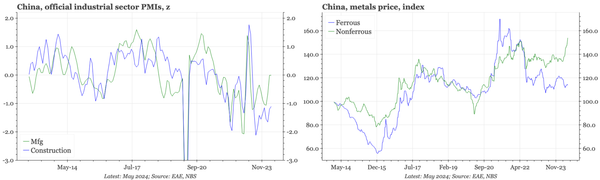
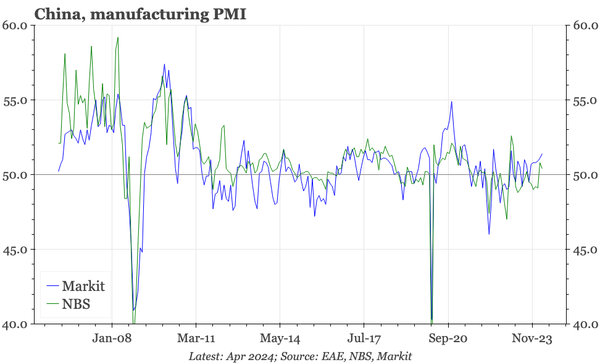
The mfg PMIs continue to tell different stories, with the official survey below 50, and the Markit version above. The gap probably reflects seasonality and the strength of exports versus property. However, there has been policy easing too, so remain mildly optimistic about a floor for the cycle.
China – deflation: an underperforming export
We can't find much evidence of Chinese export price deflation. That's because: price deflation is common across economies when exports weaken; aggregate data don't do well in capturing lower prices in individual products; and China's exporters, being private firms, aren't likely to be so irrational.
China – PBC advice on how to think about "credit"
The PBC's monetary policy report included a box arguing that monetary conditions shouldn't be assessed solely via the quantity of credit, and that the big falls in interest rates matter too. That would be an easily-accepted argument in another economy, but in China remains a hard sell.
China – so-so credit, but an M1 bounce
Credit data are at a level that is awkward for officials, and investors: too strong to be consistent with deleveraging, but not strong enough to think the cycle is about to get a good lift. The one positive surprise in January was a lift in M1, though that might be related to the stockmarket rescue.
China – deflation not intensifying
CPI and PPI continued to fall YoY in January, while core CPI rose. CPI will be firmer in February due to the holiday, and there are also some indications that PPI won't weaken further. However, there aren't any signs of a real pick-up in either, so investor worries about deflation will persist.
Region – as Korea, so the world?
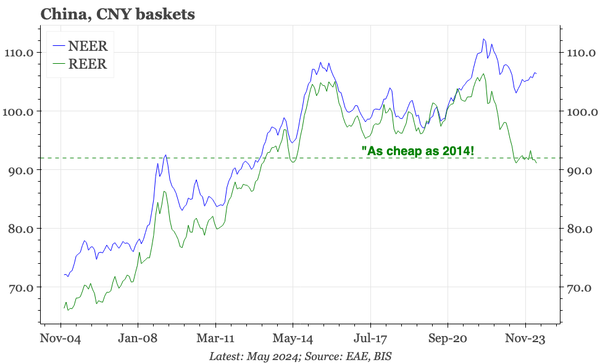
Korea's trade surplus with China has collapsed, taking with it Korea's overall surplus. This offers a clear illustration of China's competitiveness, and argues for CNY strength, not weakness. But it also indicates that the relative fundamentals for the KRW are also deteriorating.
China – PMIs sideways
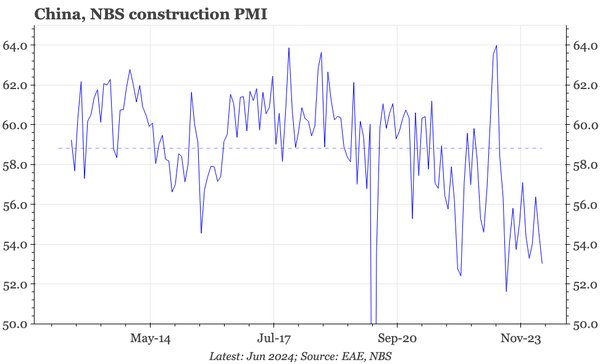
At a headline level, both the manufacturing and non-manufacturing PMIs crept up in January. The details in the manufacturing survey were weaker than the headline. Activity remains soft, but overall, looks to be going sideways.
China – the surprising strength of imports
Equity market sentiment suggests weak domestic demand should be getting weaker still. And yet, import demand has been firm, and is picking up. The two big drivers are resilient commodity demand and rising imports in the semi space. But imports of other capital goods show signs of rising too.
China – not that bad
There remain multiple reasons to worry about China's economy. But it is also possible to argue that the outlook now isn't as bad as current expectations. There are five areas to highlight, with the main substantive change being the notable expansion of the PBC's balance sheet.
China – what confidence crisis?
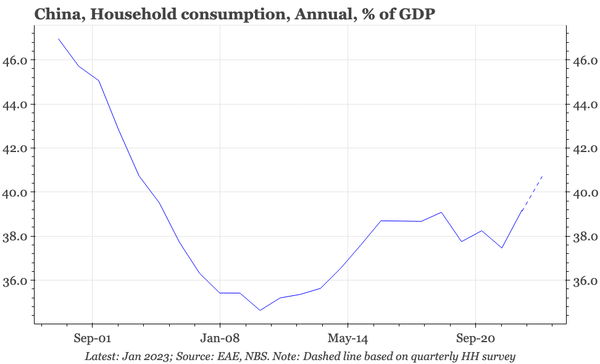
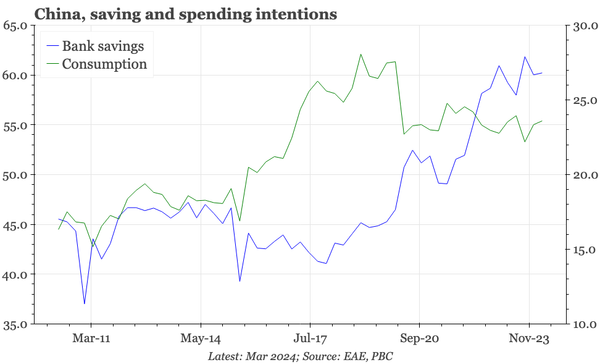
Consumer confidence has collapsed, but corporate sentiment hasn't. Indeed, given the macro weakness, business confidence feels somewhat resilient. That isn't sufficient on its own to lift the macro gloom. But it will be important if and when the consumer and property sectors bottom out.
Lessons from Asia for China
A slide pack from a presentation on the lessons China can learn from the development experiences of other economies in the region
China – PBC, not GDP
Official Q4 data reiterate existing trends: weak consumption and property, but some growth in other sectors. The property data were disappointing, when other data have started to suggest a floor. But we still think there are some upside risks, with the PBC's balance sheet expanding more quickly.
China - monetary impulse remains weak
Government borrowing – and weak GDP growth – continues to generate a modest lift in the credit impulse. Non-official borrowing did tick-up in December, but only marginally. Mortgage lending and M1 remain weak. At best, the data suggest a muddling through on the back of government projects.
China – sideways
China's data continues to be neither good, nor particularly bad. Headline PPI and CPI are both in deflation, but there aren't signs of core CPI falling. Exports are going sideways, and imports have strengthened. The rose in imports has eroded the trade surplus.