*
East Asia Econ

East Asia Econ

The platform for tracking and understanding East Asia macro

Region – consequences of reorienting to the US

Region – consequences of reorienting to the US

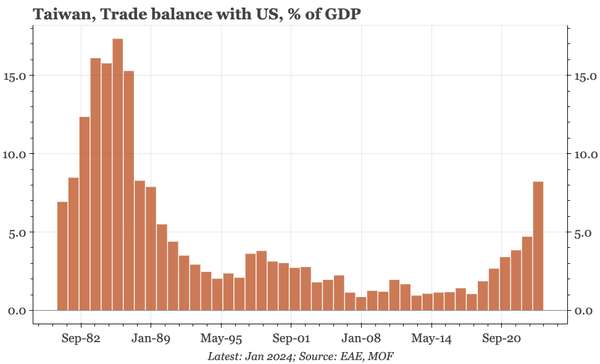
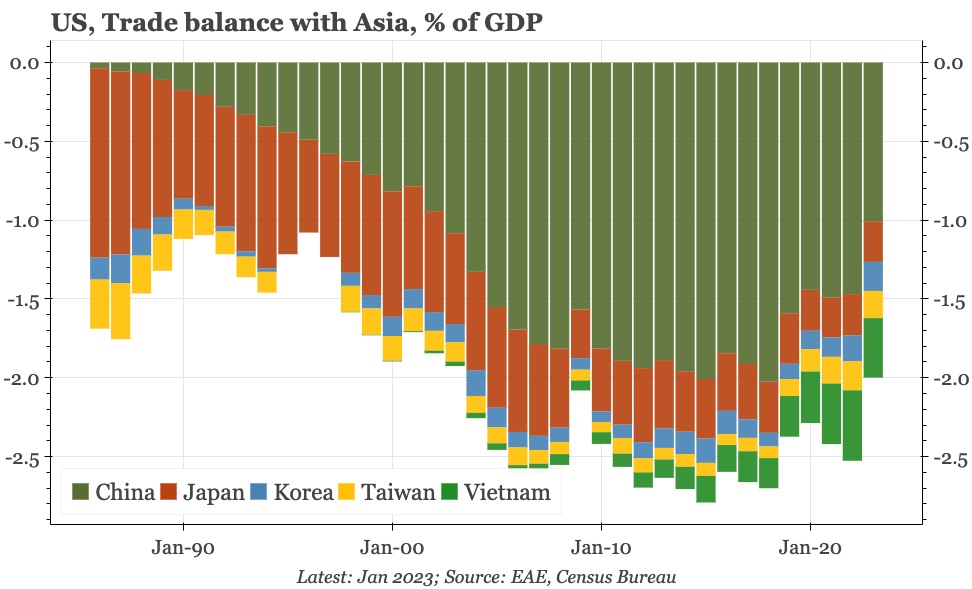
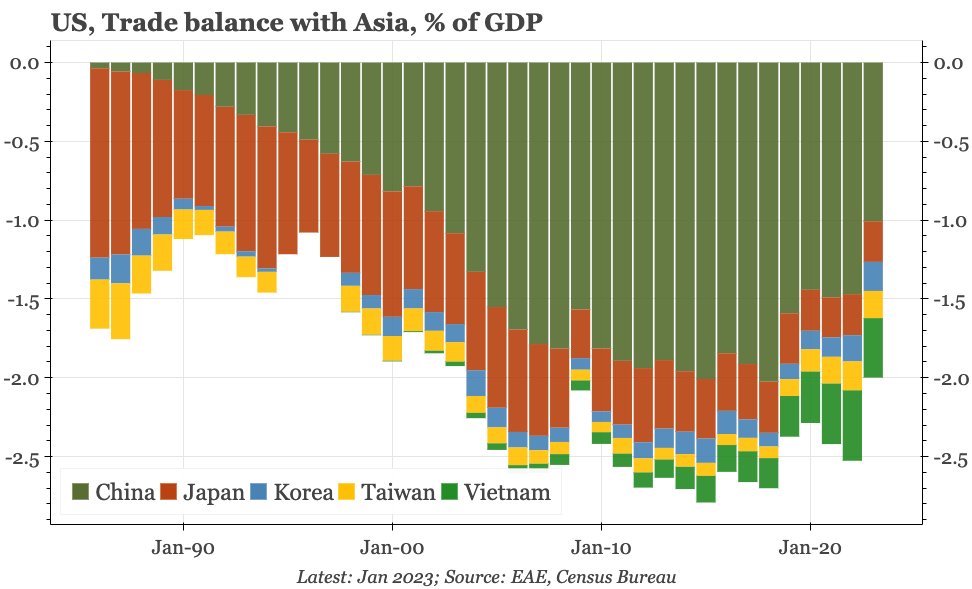
In recent years, trade and FDI flows from Taiwan and Korea have clearly shifted from China to the US. That's what Trump One and Biden wanted, but Trump Two won't like the rising trade deficits, or the CHIPS and IRA subsidies. If he threatens tariffs, will Taiwan offer a stronger TWD in response?

8 min read

China – what have we learnt?

China – what have we learnt?

The bond swap does represent substantive policy. But there still isn't support for consumption, so this does look like an effort to put a floor under growth, rather than produce a new upcycle. And while that will probably be successful, stability will be endangered by a new round of Trump tariffs.

5 min read

China – the consumption challenge

China – the consumption challenge

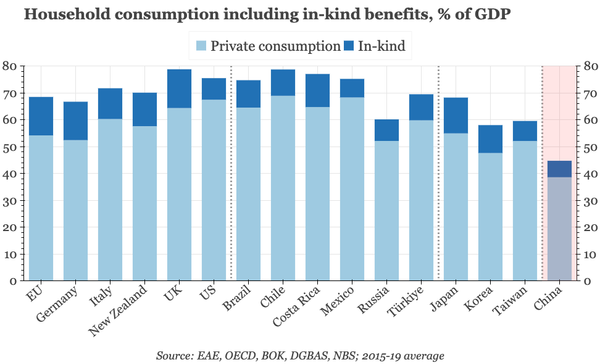
A chart pack arguing that consumption hasn't been as weak as is often imagined, but that downside risks are growing as wage and property income falls. Policy solutions need to overcome the weakness of non-wage incomes, the strength of savings, and the pro-investment official mindset.

1 min read

Japan – BOJ gets back to labour and wages

Japan – BOJ gets back to labour and wages

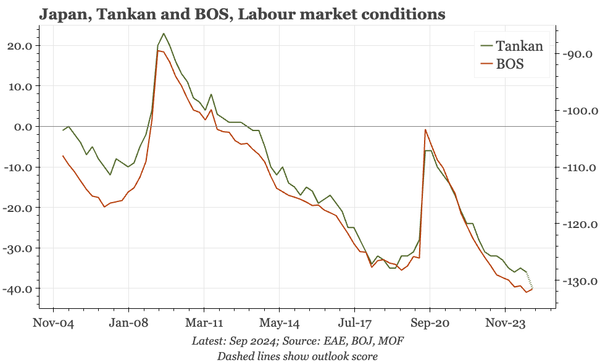
The boxes in the BOJ's full outlook report that look at the labour market and wages don't suggest any weakening of the bank's underlying confidence – increasingly evident before July – that Japan's inflation is sustainable. The implication is that rate hikes remain on the agenda.

3 min read

Japan – no surprises from the BOJ

Japan – no surprises from the BOJ

No surprises from the BOJ (yet): the July forecast for underlying inflation to remain around 2% was maintained, as was the policy caution since August that stresses uncertainty in outlook for the US. There's still the press conference and full outlook report to come.

1 min read

China – PMIs: still a lot to do

China – PMIs: still a lot to do

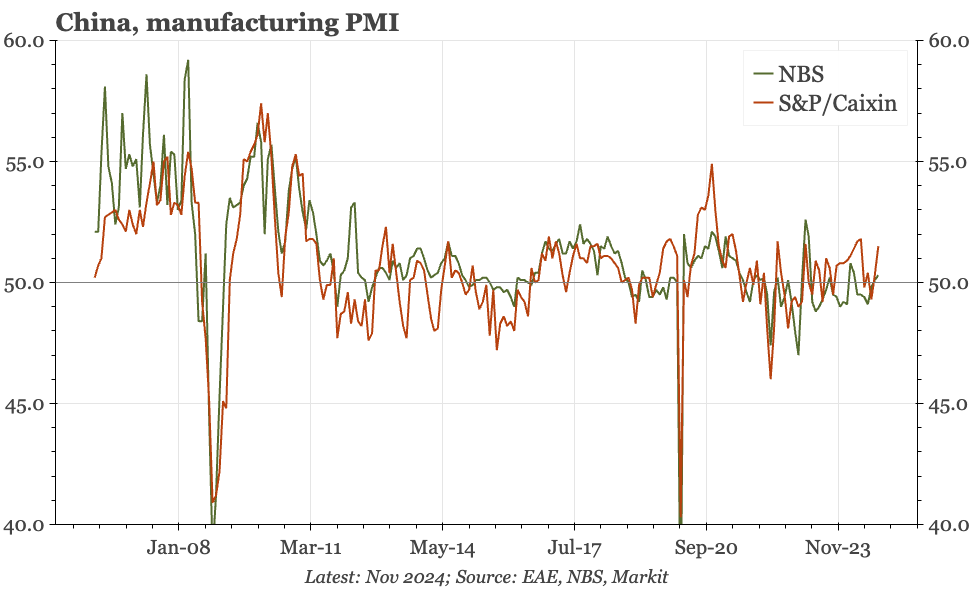
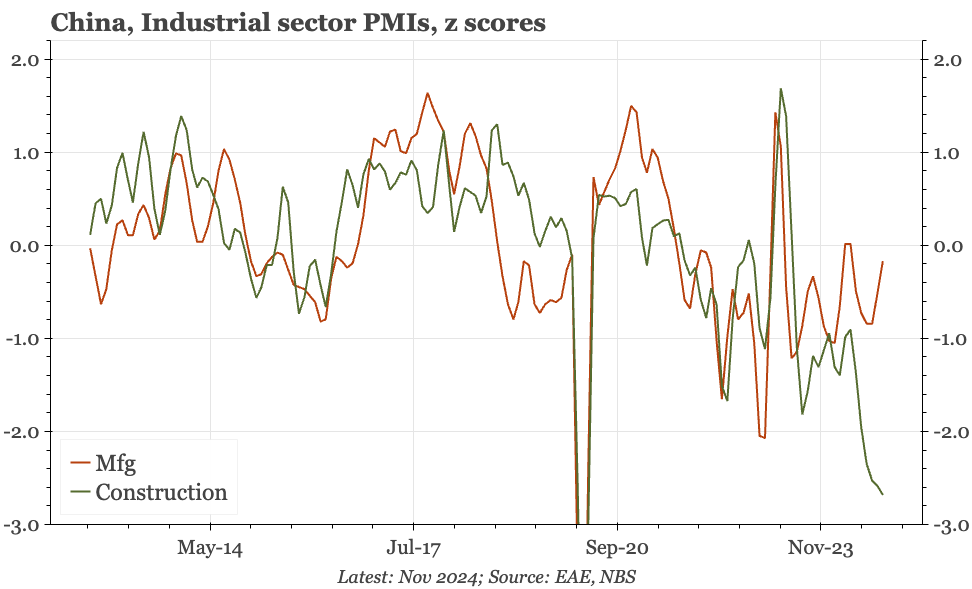
Likely driven by the sentiment-driven rise in prices, the manufacturing PMI bounced back above 50 in October. But there was barely any change in either the services or construction, PMIs, and both will need to improve to think that the economy really is turning around.

2 min read

China – profits fall sharply in September

China – profits fall sharply in September

The government yesterday published its monthly series for the profits of the industrial sector. I am always a bit sceptical of the quality of these data. But if you want a trigger for the recent macro policy push, then the sharp fall in profits in September fits the bill.

2 min read

Japan – core inflation still at 2%

Japan – core inflation still at 2%

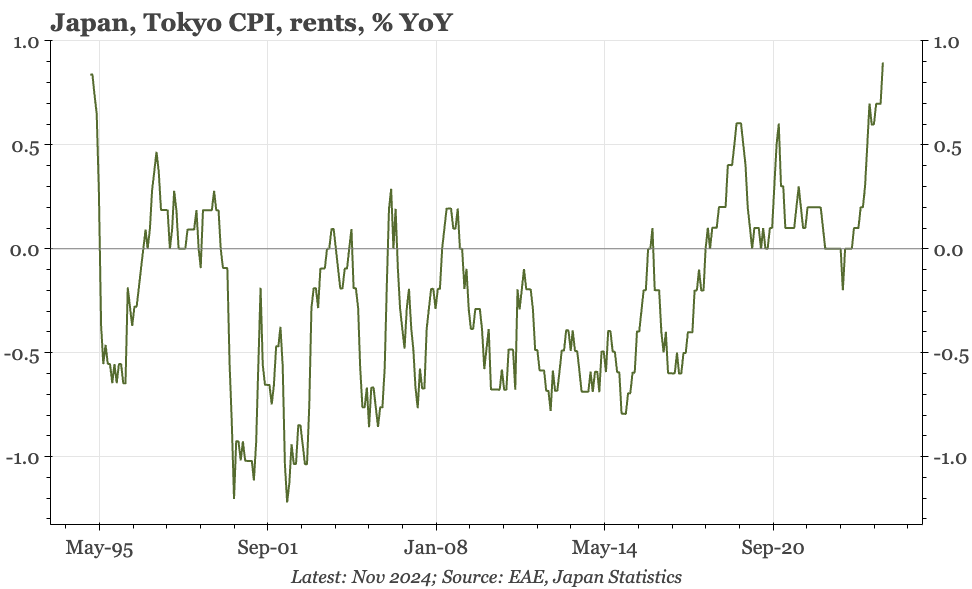
With the BOJ emphasising the twice-yearly patten of service prices hikes, with the second round falling in October, today's Tokyo CPI data are important. They do show services prices rising, and although the details are messy, core sequential inflation in Tokyo is also continuing to run near 2%.

2 min read

Korea – sluggish growth, but weakening KRW

Korea – sluggish growth, but weakening KRW

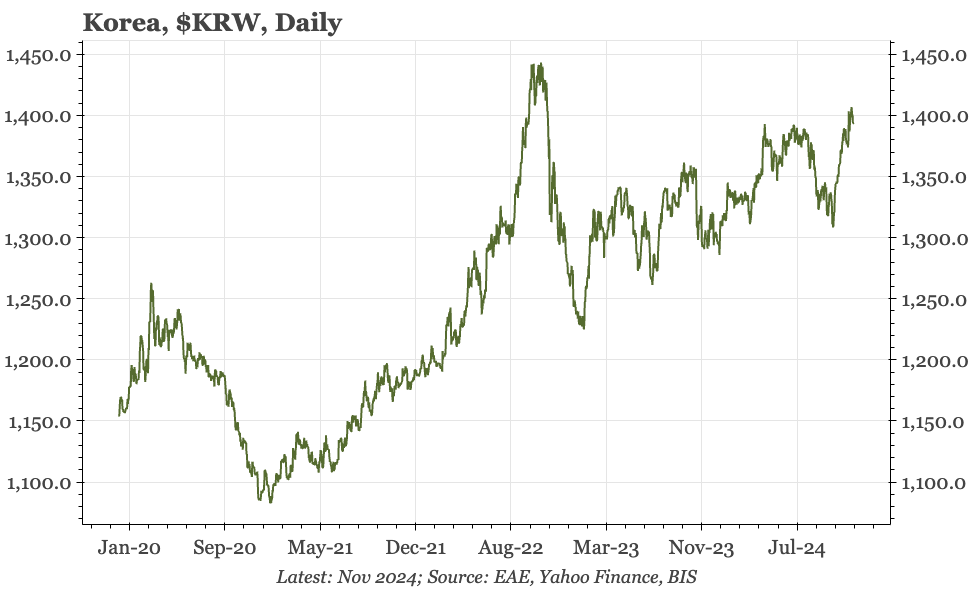
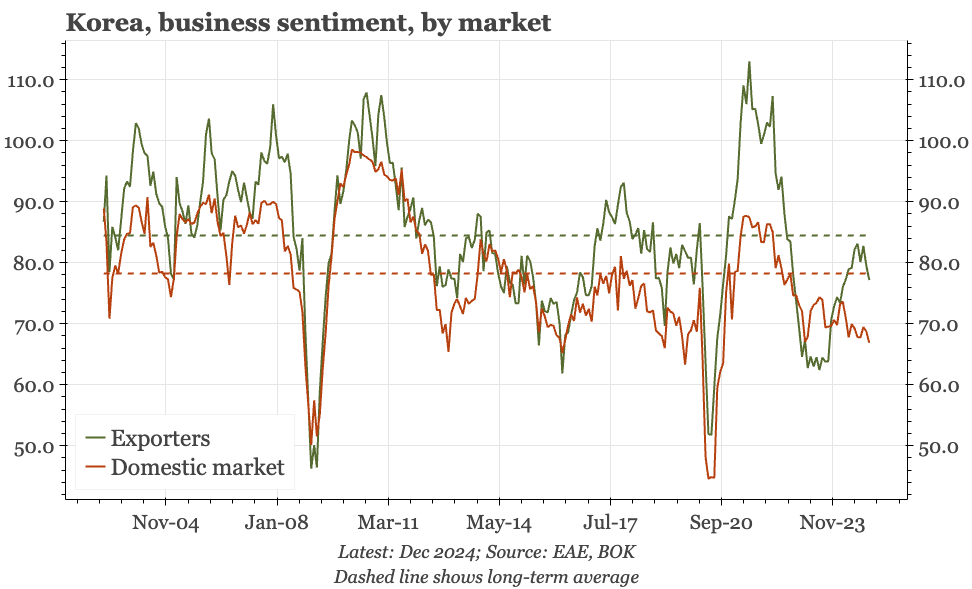
If the BOK was only looking at growth, then data today would give it plenty of room to cut faster, with both Q3 GDP and October business sentiment weak. However, the rise in US rates and consequent weakening of $KRW will be starting to constrain the bank once again.

2 min read

China – crunch time for consumption

China – crunch time for consumption

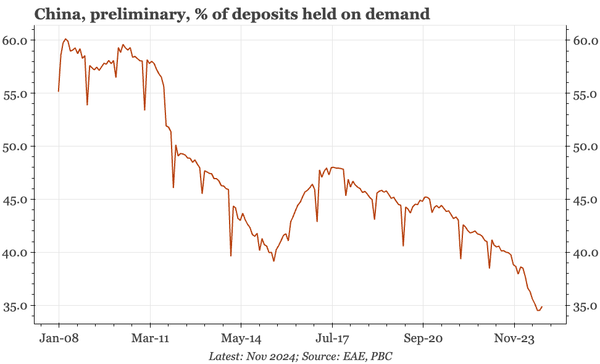
The slump in confidence and retail sales don't indicate a major cyclical weakening of consumption. That's partly because households have been running down excess savings from covid. But with savings now normalising, consumption is becoming more vulnerable to the deterioration in the labour market.

4 min read

Taiwan – will TSMC break the TWD?

Taiwan – will TSMC break the TWD?

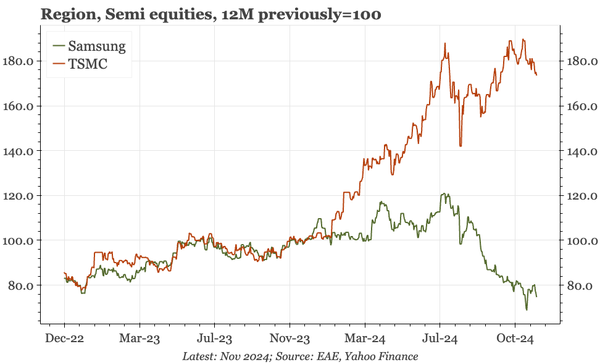
There's a possibility that TSMC's success is pushing Taiwan into unchartered waters, where the CBC needs to sound hawkish, when the external imbalance is as big as it has ever been. If Taiwan's period of zero inflation has passed, there's a good chance TWD undervaluation will be challenged too.

7 min read

Japan – what can the BOJ say now?

Japan – what can the BOJ say now?

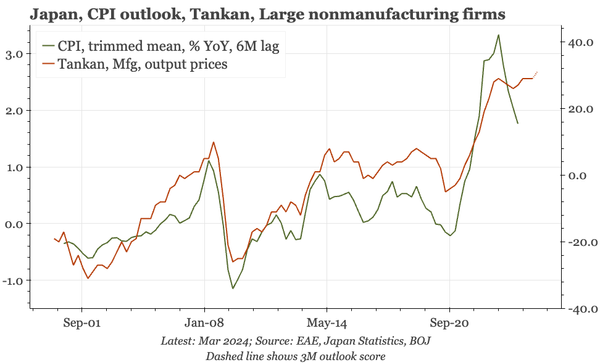
Inflation was softer in September, but the economy still looks on track, with exports and household income up, and early signs of another strong shunto round. At the same time, the JPY is weakening again. This backdrop means the BOJ faces a very tough communication challenge at its October meeting.

3 min read

China – keep on muddling through

China – keep on muddling through

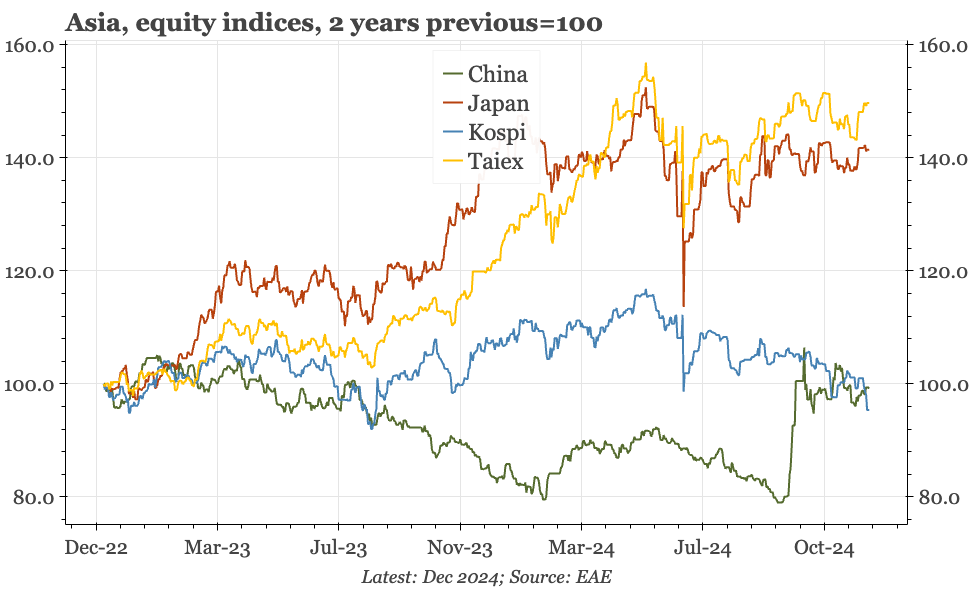
Looking at today's data, the driver of all the recent policy activism is to get growth back to the 5% target. That doesn't suggest a big rebound in the nominal growth that equity investors need. The upside risk is this policy push is happening when there are tentative signs of property stabilising.

3 min read

Korea – labour market still fairly tight

Korea – labour market still fairly tight

Cyclically, the labour market continues to look tight, with the UE rate again near multi-decade lows in September. But assessing the inflation implications is made tricky by big ongoing supply side changes, especially the rise in female part rate. Wage growth looks strong, but isn't accelerating.

2 min read

China – credit both too weak and too strong

China – credit both too weak and too strong

Cyclically, credit is very weak, especially private sector borrowing. But credit is still rising relative to GDP. That's partly because of government borrowing. But it is also because of weak nominal GDP growth, and that is unlikely to change until the sharp fall in M1 relative to M2 reverses.

1 min read

China – exports drop in September

China – exports drop in September

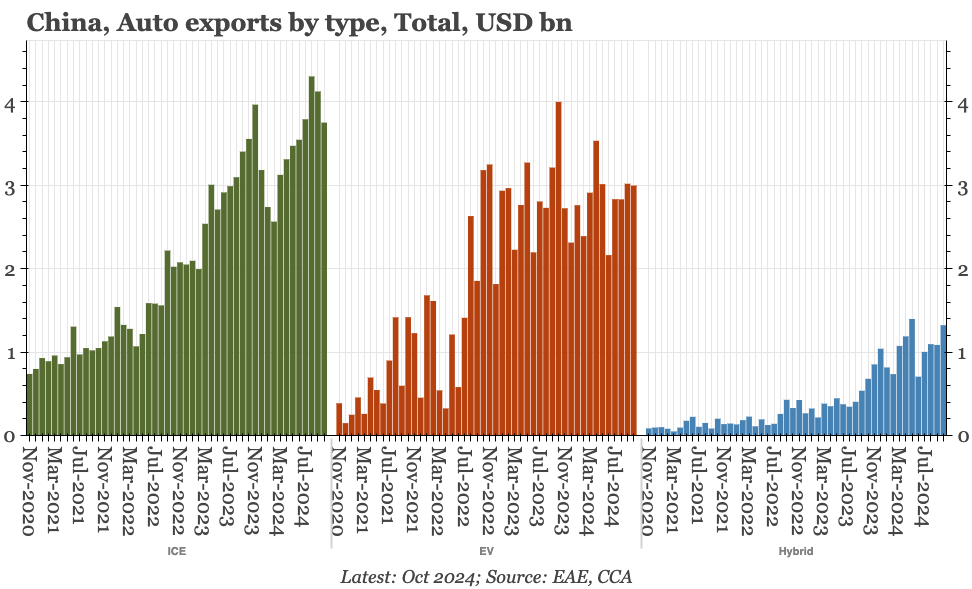
Exports dropped quite sharply in September. China is still making share gains in autos especially, but this is another sign that the best of the recovery in the regional export cycle is probably now done. That matters for China when exports have been the strongest sector of the economy.

1 min read

China – core deflation worsens

China – core deflation worsens

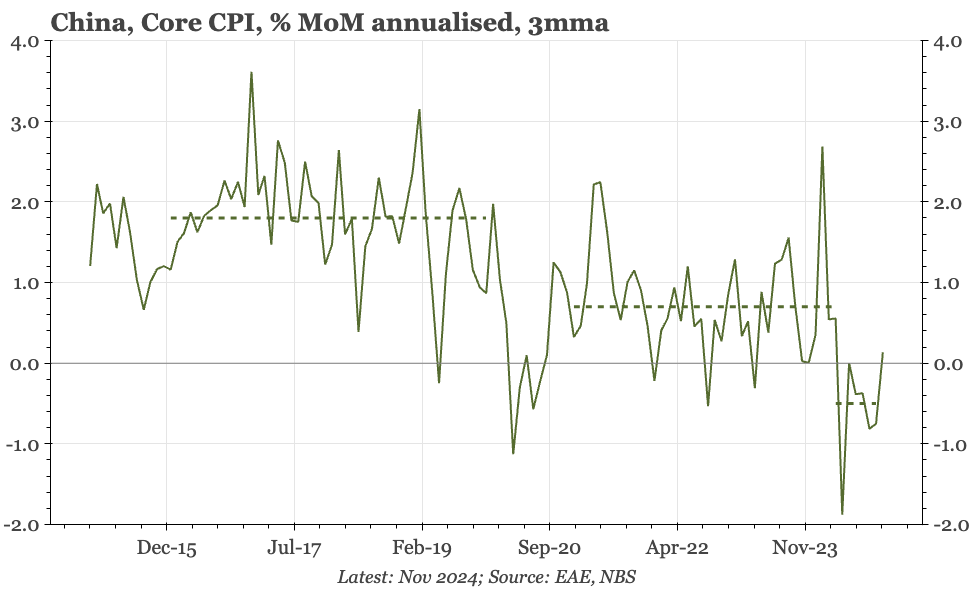
Core inflation, which took one step-down during covid, has this year dropped again. Indeed, China has now been in sequential core CPI deflation since May. This implies rising real interest rates, and, with PPI turning down again too, a worsening debt burden.

2 min read