*
East Asia Econ

East Asia Econ

The platform for tracking and understanding East Asia macro

Korea – yet closer to a cut

Korea – yet closer to a cut

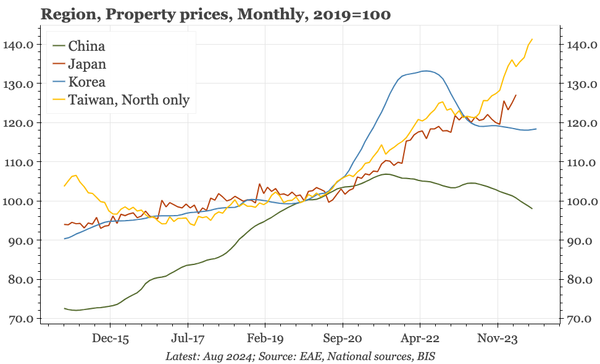
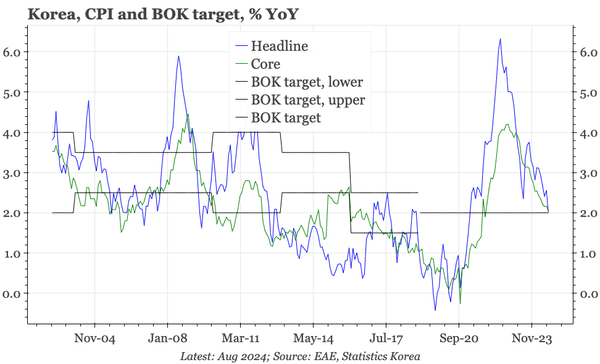
The BOK's slow journey to rate cuts continued today, with further shifts evident in both the statement and the governor's remarks. That makes a rate cut highly likely in Q4. But there are still risk scenarios, with the obvious one being that property doesn't slow in the way the BOK seems to expect.

1 min read

Korea – doveish macro data

Korea – doveish macro data

In today's data releases, business sentiment remained low, export growth stable, and prices soft. Overall, the macro data is giving the BOK more room to cut. The one obvious exception is the housing market, though we are also interested to see if the BOK mentions the resilience of service inflation.

2 min read

Korea – house price expectations up again

Korea – house price expectations up again

This year, the BOK has gradually put rate cuts on the agenda. That makes a near-term change in policy a risk, and the recent strengthening of the KRW gives the bank some justification. But in July, the BOK played up worries about a property rebound, and data show that has continued through August.

3 min read

China – what's with manufacturers going broke?

China – what's with manufacturers going broke?

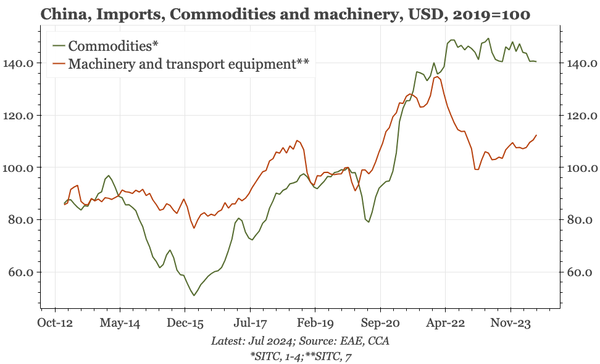
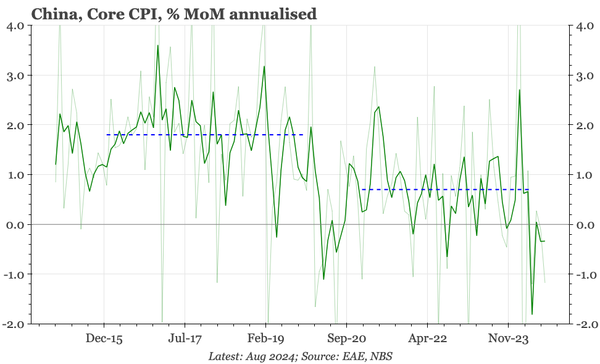
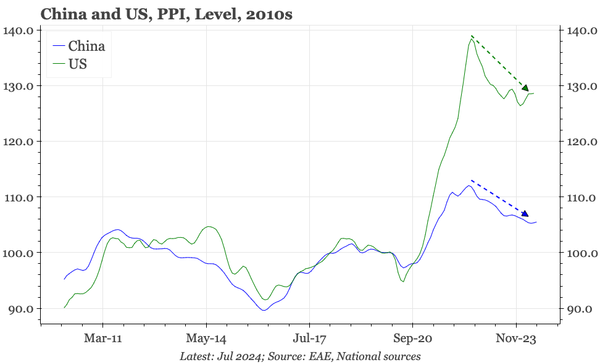
Rather than industrial policy, the better explanation for weak corporate finances is deficient domestic demand. Related to that, the biggest shifts since covid haven't been in export growth or PPI, but in imports and core CPI. Macro policy doesn't suggest this weakness is set to change.

9 min read

China – still muddling through

China – still muddling through

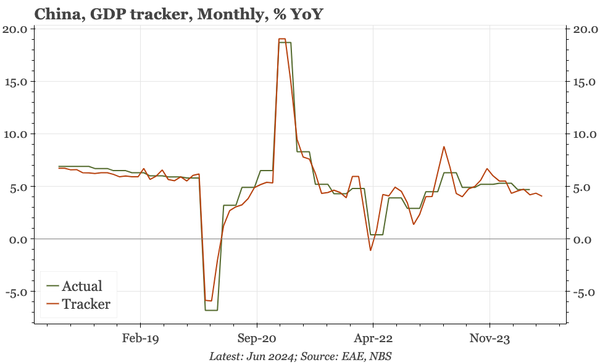
We can't see anything in today's data to shift market sentiment. Property remains in a deep slump, and retail sales are weak. But that's not new, and with some of the pressure coming off the CNY, Beijing will probably think its muddle through approach of incremental easing will continue to work.

2 min read

China – perhaps a positive deflator in Q3

China –  perhaps a positive deflator in Q3

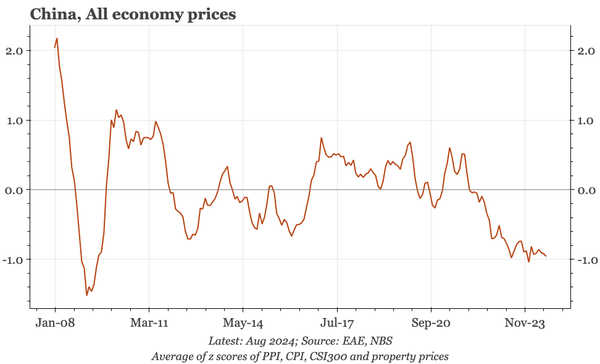
Today's property prices were very weak again, and that is important. But in the real economy, the deflator might still turn positive this quarter, because of the recent stabilisation of PPI, and the weather- and pork-propelled rise in food prices.

2 min read

Japan – signs of recovery in consumption

Japan – signs of recovery in consumption

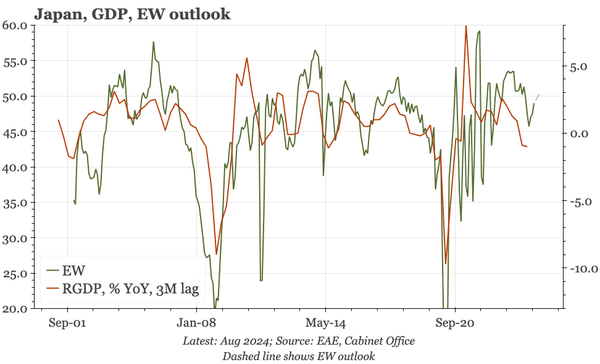
GDP grew in Q2 for the first time in a year. The driver was domestic demand, and with nominal wage growth rising, and a greater probability that the high in $JPY has been seen, it is becoming more likely that this recovery in spending can now continue.

3 min read

Korea – labour market mildly doveish

Korea – labour market mildly doveish

The labour market isn't as tight as the July fall in unemployment suggests. Employment didn't rise last month, with the only change being lower participation. That drop is unlikely to signal a reversal in the structural rise in the part rate, a trend that can be expected to restrain wage growth.

2 min read

Region – exchange rates and inflation

Region – exchange rates and inflation

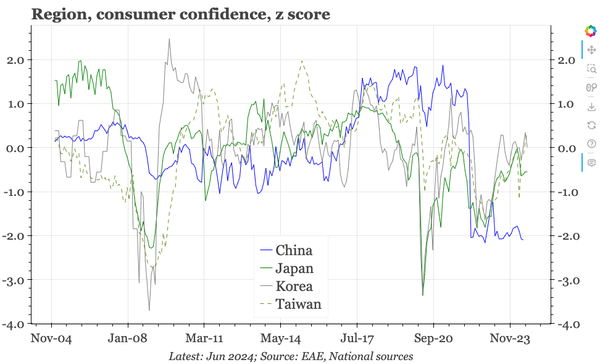
Currency weakness boosting inflation has been a regional theme. But currency strength wouldn't automatically mean a CB policy pivot. That's true in Japan, where other factors have been driving prices, and in China, where currency weakness hasn't yet been an obvious obstacle to policy loosening.

6 min read

China – still the new normal

China – still the new normal

The PBC's Q2 survey shows consumption not especially weak, with the real post-20 changes in household behaviour being a shift from spending on goods to services, and from saving as property and riskier investments back to banks. The corporate survey wasn't bad either, but loan demand fell sharply.

4 min read

China – core CPI deflation again

China – core CPI deflation again

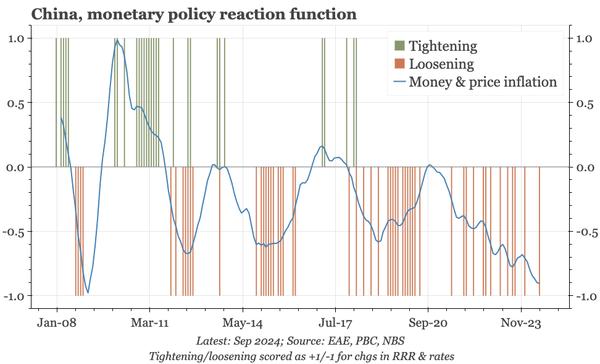
The July price data offer more evidence that the food price cycle has turned. With less PPI deflation too, it is likely that headline CPI gets a bit of a lift. But core CPI inflation in July was once again very weak, which is enough of a reason to assume that the PBC will continue to cut rates.

2 min read

China – imports more interesting than exports

China – imports more interesting than exports

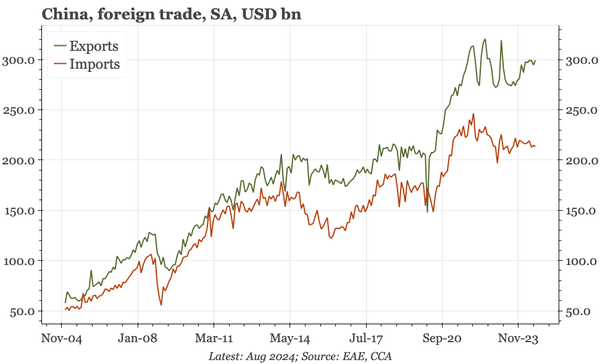
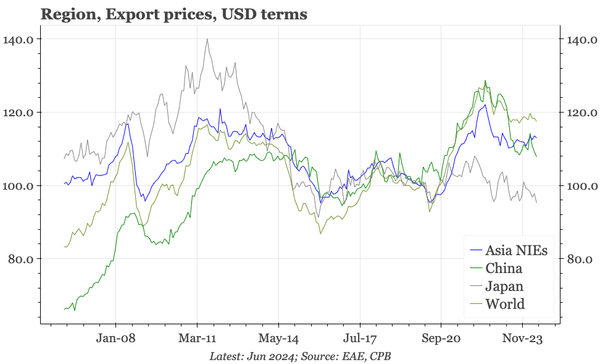
July exports fell, but it is premature to call the start of a downturn. That's partly because of market share gains. These are solid, though not impressive enough to validate over-capacity. In terms of structure, the much bigger shift is in imports, which have completely over-turned pre-20 trends.

4 min read

QTC: China – another sign of softer exports

QTC: China – another sign of softer exports

It doesn't make sense to read too much into a single monthly indicator, but the MoM fall in exports in July does follow weakness in the (presumed) exporter-heavy Caixin PMI. As exports have been the one bright spot in the economy, these shifts increase the sense of growing downside risks.

1 min read

Japan – confident but not dogmatic

Japan – confident but not dogmatic

In the BOJ's first comments since last week, Uchida says that policy is dependent on the economic outlook, which could be affected by market moves, particularly the JPY. However, he also reiterates confidence in the underlying changes that the BOJ has been talking about throughout this year.

4 min read

Japan – solid wage data

Japan – solid wage data

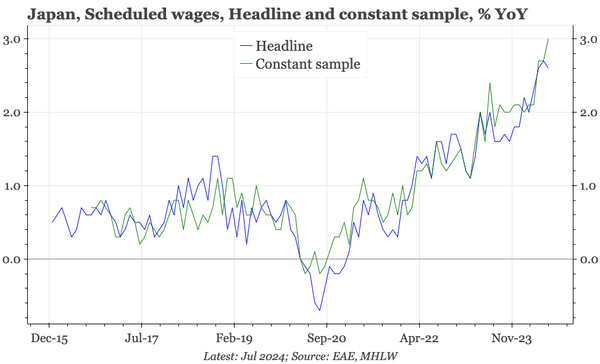
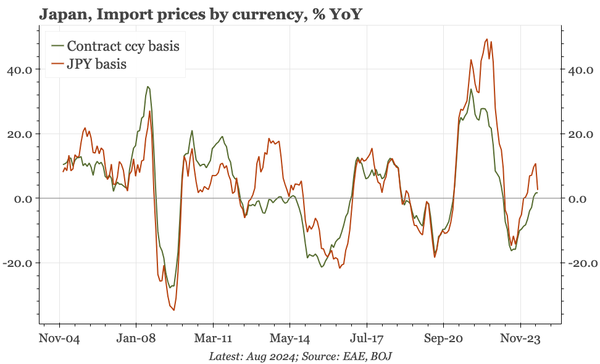
The June jump in earnings was almost all about bonuses. But the details were solid: for full-timers, wage growth didn't slow much, and it accelerated for part-timers. There's also now a greater likelihood of a trend rise in real wags as the less-weak JPY dampens import prices.

2 min read

Japan – taking stock

Japan – taking stock

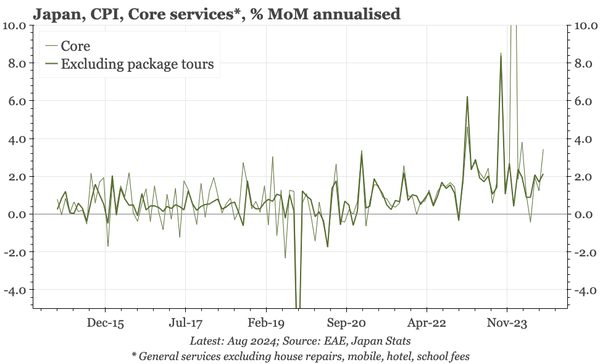
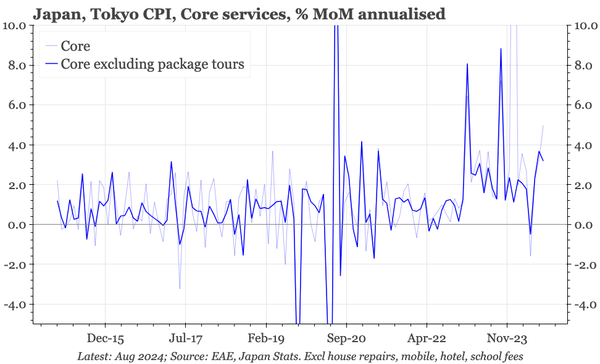
The huge moves in markets may well have an impact on the extent and pace of further BOJ policy normalisation. But when markets settle down, developments in the real economy will also matter. It will be particularly important to track SME wages, service prices, and consumption.

6 min read

Korea – taking stock

Korea – taking stock

Particularly if US policy action reflects a weaker economy, the BOK will likely cut if the Fed does. However, with the rebound in home price inflation that has been a focus for the BOK, and tentative signs of an upturn in services prices that so far hasn't, the BOK likely won't be in a rush.

4 min read

Japan – three quick highlights

Japan – three quick highlights

Apart from the changes in actual policy, three things stood out today: changes to the outlook for prices, a shift in the language used to describe policy, and separate from the BOJ meeting, the latest consumption data, which remain weak.

2 min read

China – no cycle momentum

China – no cycle momentum

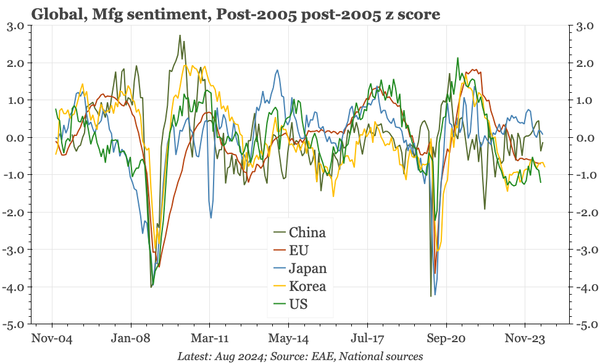
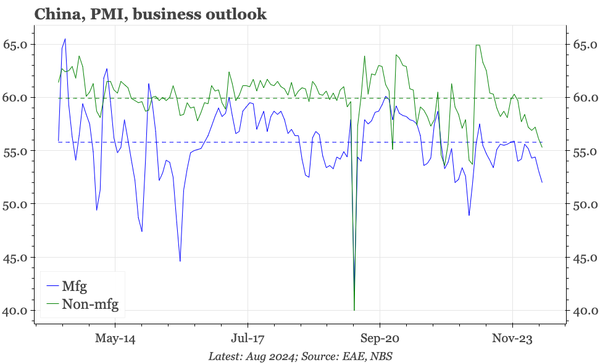
Our China cycle framework is that the muddle through of the last 18M is running out of road. The July PMIs look consistent with that, with weakness in pricing, jobs and confidence. The one remaining contrary indicator is the S&P mfg PMI, which has been strong, and for July will be released tomorrow.

2 min read

Japan – taking stock

Japan  – taking stock

The BOJ became more positive in 1H24, and labour market and price data since should have increased confidence further. So we think the bank hikes next week, with a probability of 60%. That our conviction isn't stronger still is because of the implications of the June non-decision on JGB purchases.

7 min read