

Subscribers Only
Last week, next week
A summary of what happened on East Asia Econ last week, and what to look for in the next seven days.
A summary of what happened on East Asia Econ last week, and what to look for in the next seven days.
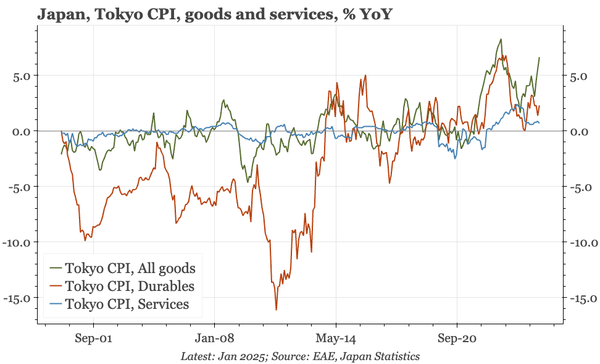
Ideally, the BOJ wants the participation rate to peak, higher wages to make consumers more positive, and both demand-pull and supply-push to drive inflation. Instead, consumption is sluggish as rising goods price inflation outpaces wages, with the part rate continuing to rise.
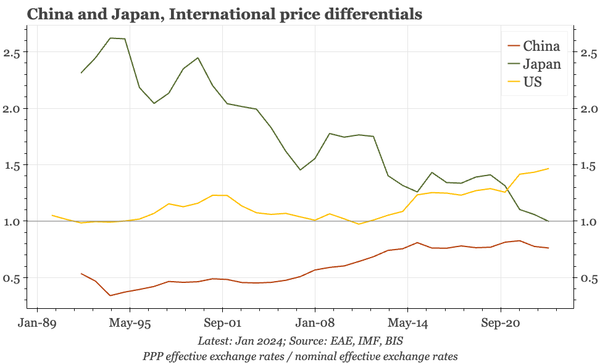
With the BOJ's review of post-1990s Japan, we have an inventory for Japanification. Using this to assess China today, what stands out is not the similarities, but the differences. All told, on my scoring China isn't graduating to Japanification, achieving a mark of only 30%.
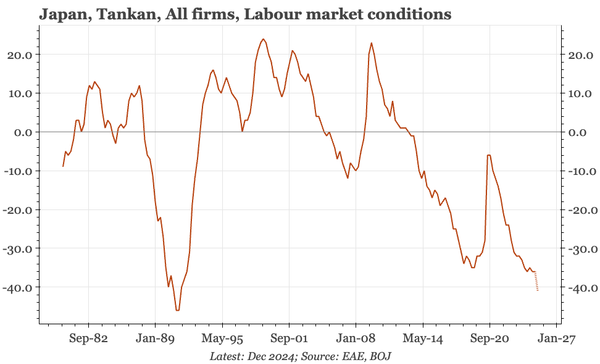
The main change the BOJ made to its description of the outlook on Friday was the mention of a "growing sense of labour shortage". The special analytical boxes in the full outlook report, released today, give a lot more colour on why the BOJ made that adjustment.
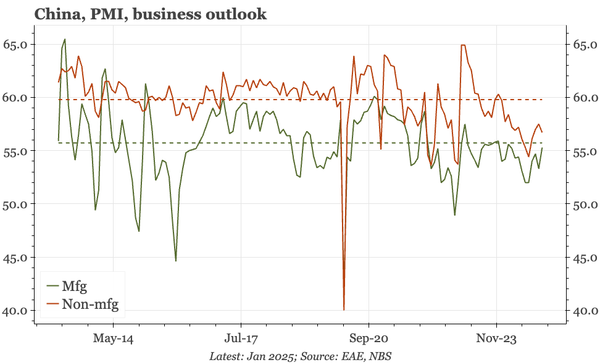
Data today don't help in understanding the cycle. PMI headlines softened, but that isn't unusual when Chinese New Year falls in January. The details didn't drop in the same way, but also don't look strong. Separate data for industrial profits did improve, but that isn't a reliable data series.
A summary of what happened on East Asia Econ last week, and what to look for in the next seven days.
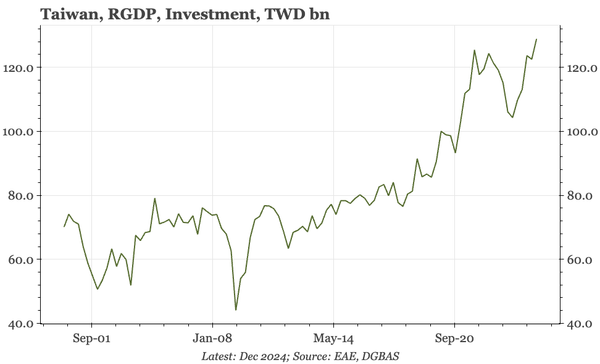
Despite a surge in capex, GDP growth slowed in Q424 to 1.8% YoY, the lowest since September 2023. 2025 as a whole should be better, with modest growth in exports and private consumption. The upside risk is wage growth feeding into stronger consumption. Downside comes from the Trump tariff threat.
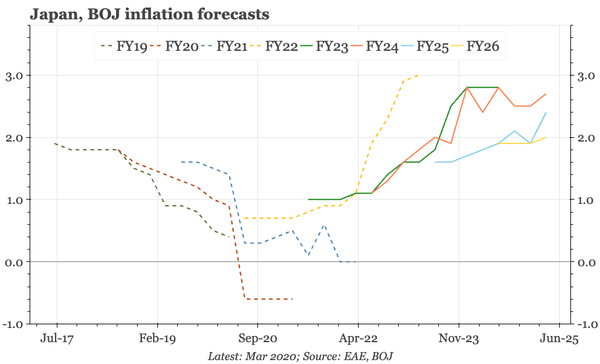
The highlight of today's BOJ meeting, apart from the hike, was the increased confidence around the labour market. That, and the firmness of the dataflow, strongly suggest the bank continues to hike. It doesn't feel aggressive to think of 1% by year-end. Ueda's press conference will give more colour.
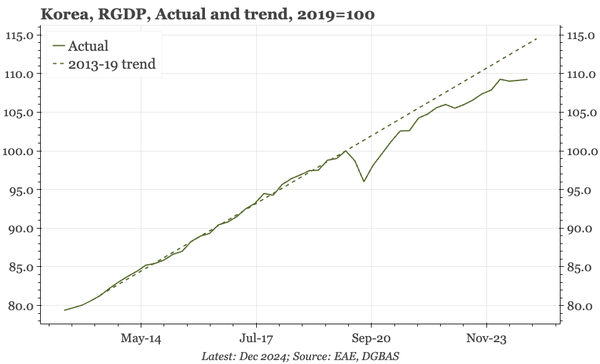
Today's GDP release shows Korea's economy only grew in Q124. After that, activity stagnated. Q125 is likely to be worse, given the collapse of domestic confidence after the martial law fiasco, a deterioration confirmed by the BOK's confidence surveys that were also released the last couple of days.
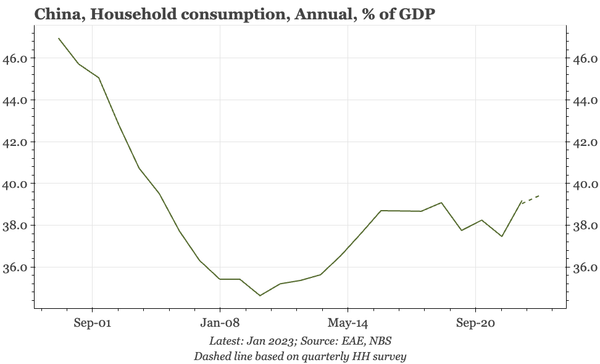
Official data don't suggest weak consumption. The household survey suggests it is back at the pre-covid trend, and rose relative to GDP in 2024. Retail sales don't show this strength because of rising spending on services.

A video discussing Trump 2.0, Plaza and the outlook for East Asian economies.
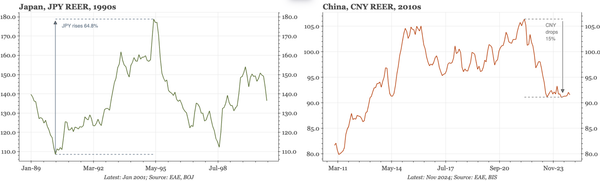
Falling rates and a weakening CNY are causing concern, but I don't think they should be. If CNY weakening was pushing up onshore rates, that would be different. But $CNY rising while rates fall suggests a loosening. That doesn't ensure an economic turnaround, but it is better than a tightening.
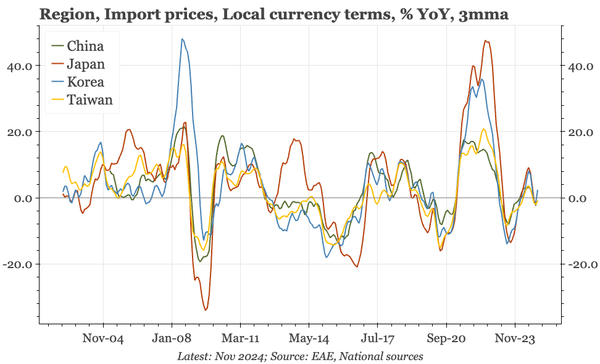
A summary of what happened on East Asia Econ last week, and what to look for in the next seven days.
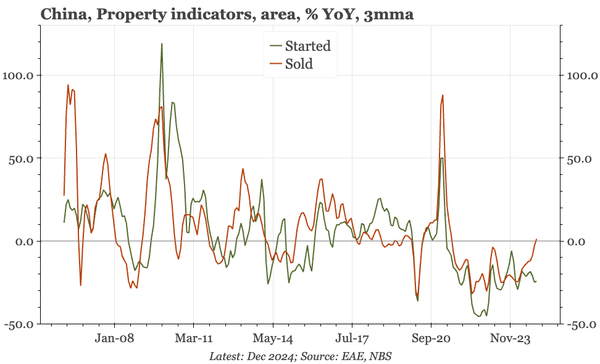
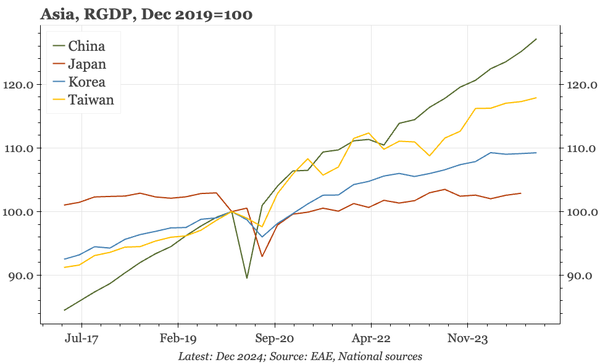
I think the equity market – as of now SHCOMP is up 0.4% – has it about right. There are signs of a bottoming in the underlying cycle, but not the rebound suggested by the pick-up in GDP from 4.6% YoY in Q3 to 5.4% in Q4.
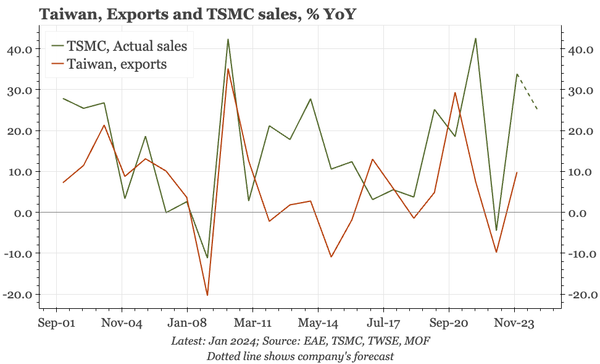
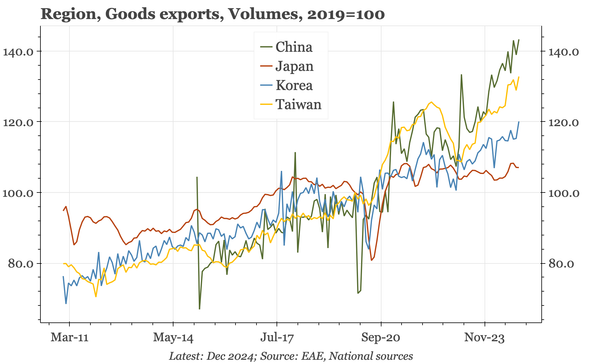
Already Taiwan's dominant firm, strong 2024 results mean TSMC has now doubled in size just since 2021. The firm remaining bullish for 2025 is this a reason to be optimistic about Taiwan's exports, but also to think the domestic cycle can warm up further. The contrast with Korea is huge.
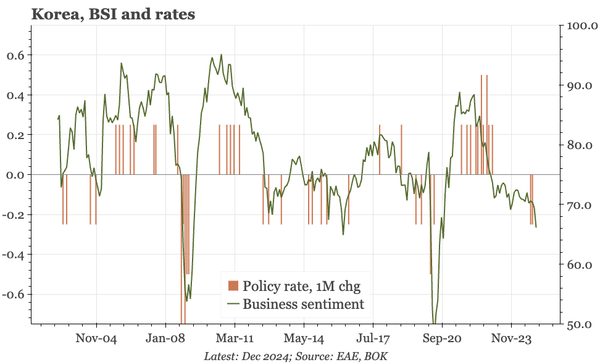
Contrary to my thinking, the bank didn't cut today. The reasoning – KRW weakness and political uncertainty – wasn't a shock. However, the tone of the meeting was very doveish, with the bank talking about "intensified" downside risks to growth. Korea really looks very different to Japan and Taiwan.
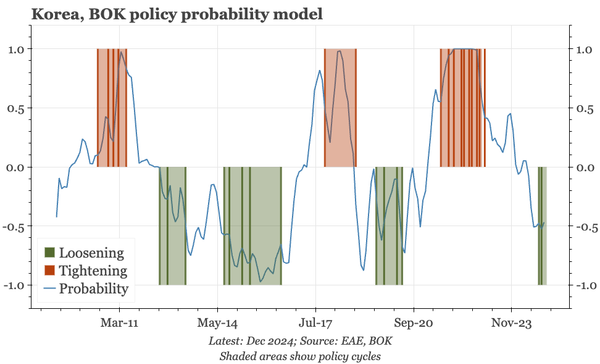
I've revised my model for the BOK's reaction function. That suggests the probability of loosening tomorrow is about the same as the Q4 meetings when rates were cut. Considerations for later in the year are yesterday's SLO survey warning of a rebound in housing, and firm services CPI.
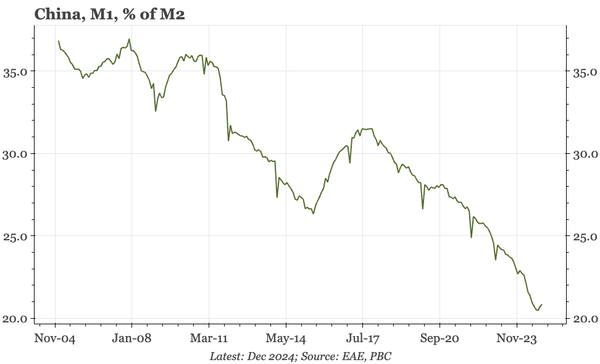
There are signs of a turn in the monetary data. It is tentative, but the rise in M1 relative to M2 is particularly important. If that continues, there would a real reason to feel less negative about the economic cycle.
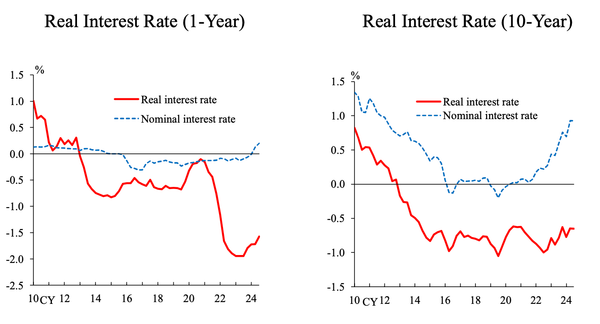
Deputy governor Himino today downplayed the risks from the US that were the BOJ's focus in 2H24. He mentioned plenty of caveats too, not least being that speeches shouldn't be read as telegraphing any MPC outcome. But it feels like the BOJ is getting closer to hiking again.
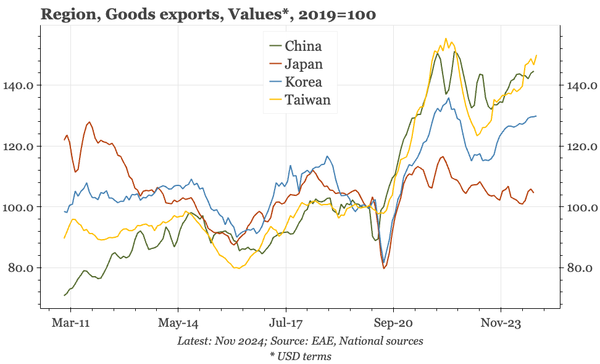
A summary of what happened on East Asia Econ last week, and what to look for in the next seven days.
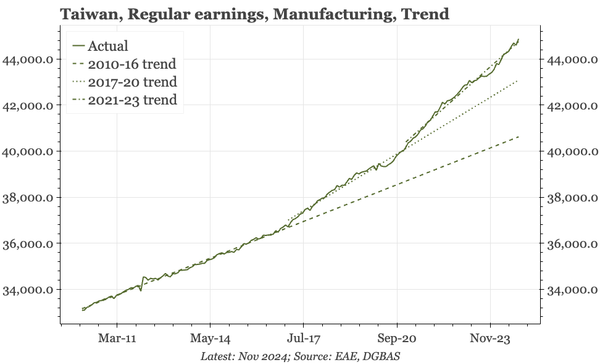
Taiwan has the strongest cyclical picture in the region. It isn't gaining further momentum, so rate hikes aren't likely, but nor are cuts. The other big factor is Trump. He won't like either Taiwan's massive trade surplus, or its modest military spending.
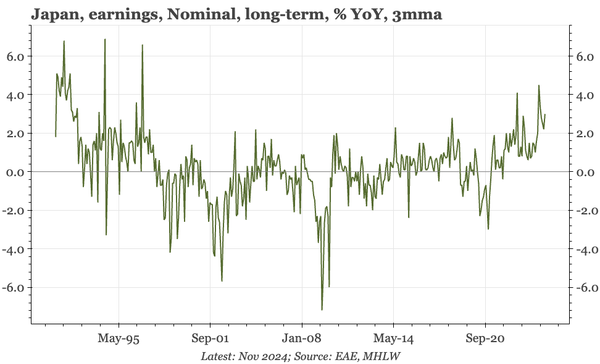
Today's labour market indicators – official wage data for November, and the Q1 regional report from the BOJ – don't suggest that momentum is picking up sharply. But they do indicate that the labour market is tight, and wage growth continuing to trend up.
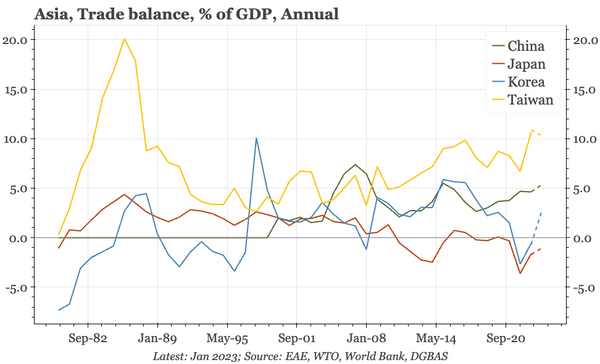
East Asia stands in 2025 for offering two dynamics that are distinct from the global cycle (reflation in Taiwan and Japan, deflation in China) and because the region is central to tariffs and talk of Plaza II.
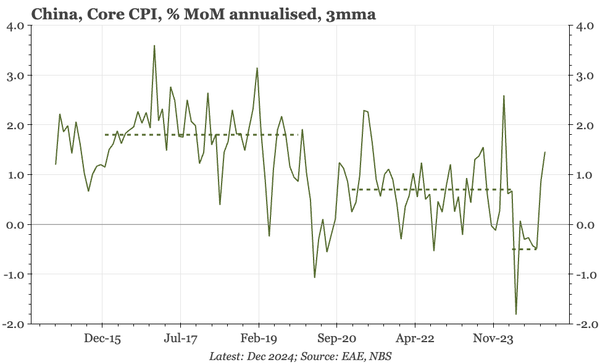
After being -ve for most of 2024, core CPI saar rose in Q4. That seems unlikely to sustain, given the 2024 policy boost is fading. However, that core has picked up is at odds with the consensus interpretation of today's data, while being in line with the relative stability of PMI output prices.
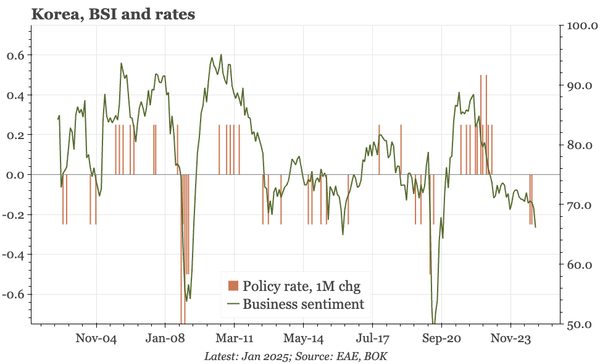
Recent data and the minutes of the November BOK meeting offer a good opportunity to look at Korea in light of the latest bout of political turmoil. The conclusion: a weak cycle is getting weaker, and so exchange rate depreciation is unlikely to stop the BOK cutting further.