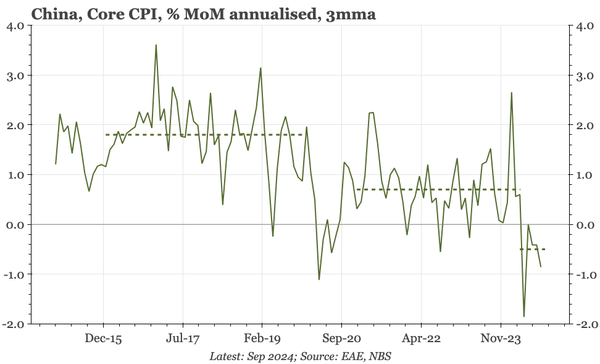
China – core CPI deflation again
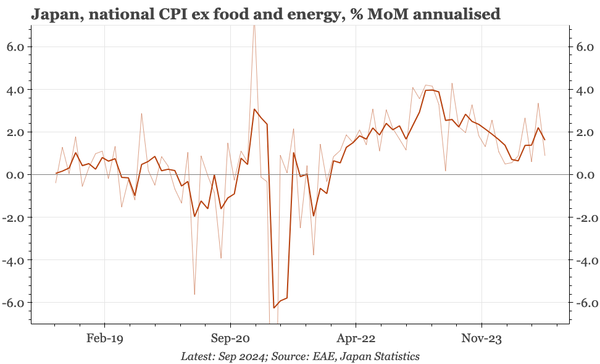
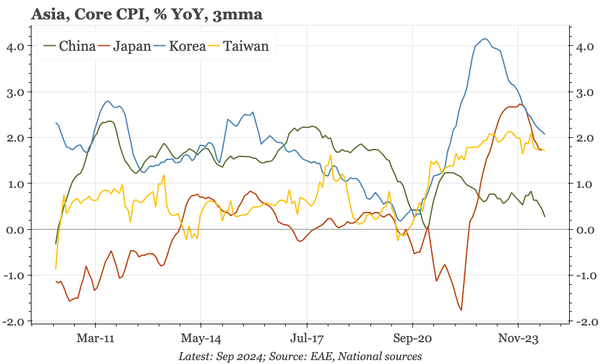
The July price data offer more evidence that the food price cycle has turned. With less PPI deflation too, it is likely that headline CPI gets a bit of a lift. But core CPI inflation in July was once again very weak, which is enough of a reason to assume that the PBC will continue to cut rates.
China – imports more interesting than exports
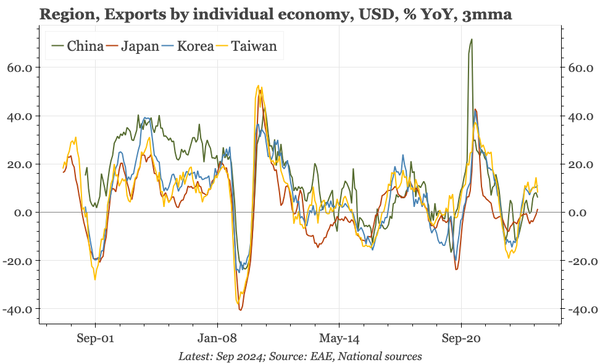
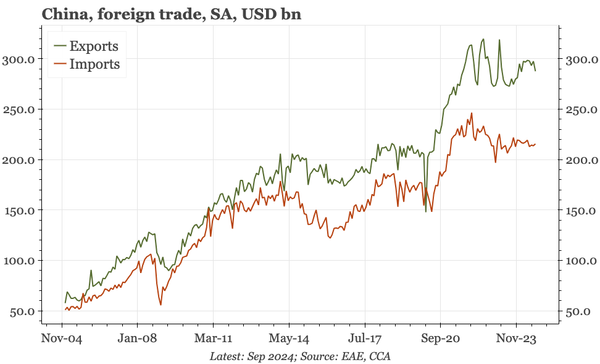
July exports fell, but it is premature to call the start of a downturn. That's partly because of market share gains. These are solid, though not impressive enough to validate over-capacity. In terms of structure, the much bigger shift is in imports, which have completely over-turned pre-20 trends.
QTC: China – another sign of softer exports
It doesn't make sense to read too much into a single monthly indicator, but the MoM fall in exports in July does follow weakness in the (presumed) exporter-heavy Caixin PMI. As exports have been the one bright spot in the economy, these shifts increase the sense of growing downside risks.
Japan – confident but not dogmatic
In the BOJ's first comments since last week, Uchida says that policy is dependent on the economic outlook, which could be affected by market moves, particularly the JPY. However, he also reiterates confidence in the underlying changes that the BOJ has been talking about throughout this year.
Japan – solid wage data
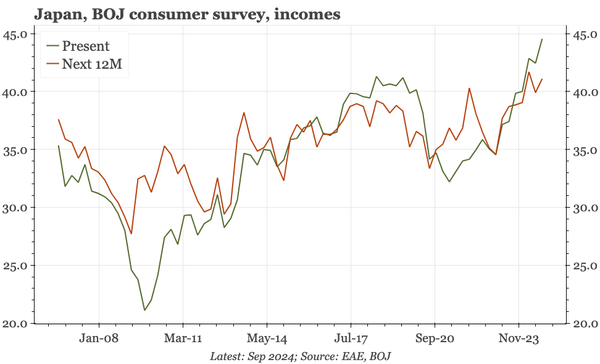
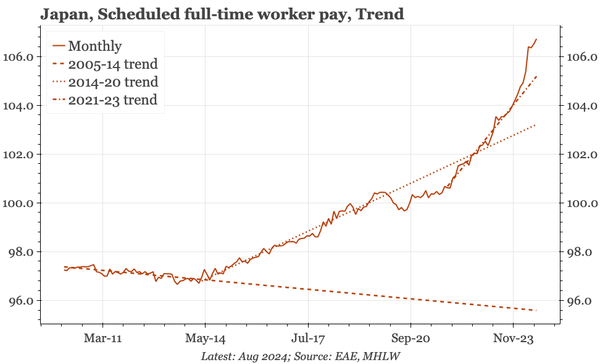
The June jump in earnings was almost all about bonuses. But the details were solid: for full-timers, wage growth didn't slow much, and it accelerated for part-timers. There's also now a greater likelihood of a trend rise in real wags as the less-weak JPY dampens import prices.
Japan – taking stock
The huge moves in markets may well have an impact on the extent and pace of further BOJ policy normalisation. But when markets settle down, developments in the real economy will also matter. It will be particularly important to track SME wages, service prices, and consumption.
Korea – taking stock
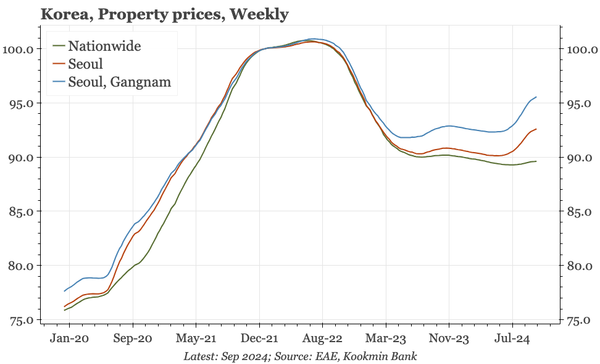
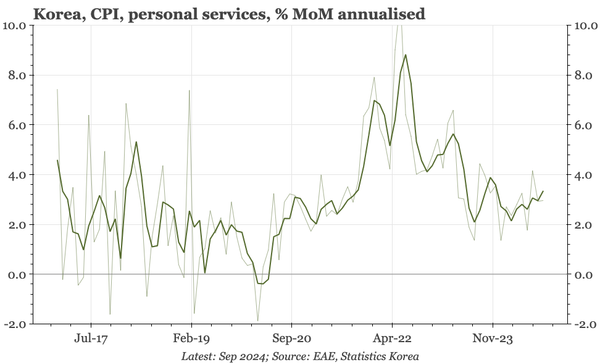
Particularly if US policy action reflects a weaker economy, the BOK will likely cut if the Fed does. However, with the rebound in home price inflation that has been a focus for the BOK, and tentative signs of an upturn in services prices that so far hasn't, the BOK likely won't be in a rush.
Japan – confident on services prices, less so on SME wages
In its full outlook report, the BOJ sounds confident on services prices and wages at larger firms. It is less certain about wage rises at SMEs. Developments at smaller firms, and service price hikes in the traditional (but long-forgotten) price setting month of October, will be important to monitor.
China – no cycle momentum
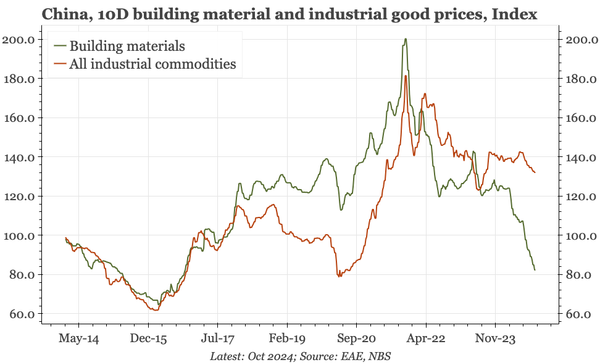
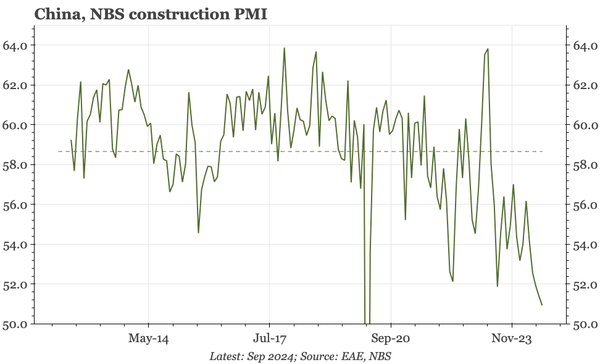
Our China cycle framework is that the muddle through of the last 18M is running out of road. The July PMIs look consistent with that, with weakness in pricing, jobs and confidence. The one remaining contrary indicator is the S&P mfg PMI, which has been strong, and for July will be released tomorrow.
Japan – taking stock
The BOJ became more positive in 1H24, and labour market and price data since should have increased confidence further. So we think the bank hikes next week, with a probability of 60%. That our conviction isn't stronger still is because of the implications of the June non-decision on JGB purchases.
Korea – export recovery, domestic weakness
Recent data suggest an unchanged macro story: a slow moderation in inflation and a weak domestic economy, but export and property recoveries. The first two dynamics point to an interest rate cut, but the second two suggest that still isn't imminent.
China – deposits not as bearish as loans
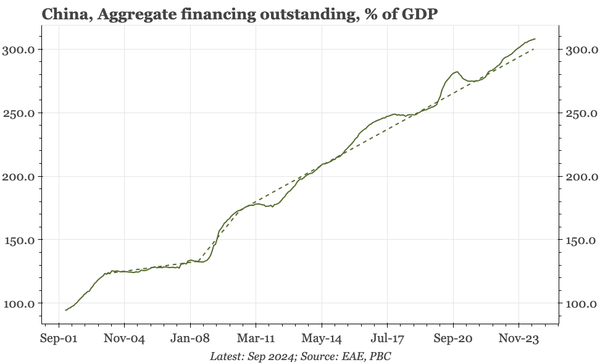
Even allowing for a change in credit intensity, June headline credit and money data are bearish. The one positive trend is data through May showing household demand deposits no longer falling so quickly. That shift continuing would help sustain China's macro muddle through.