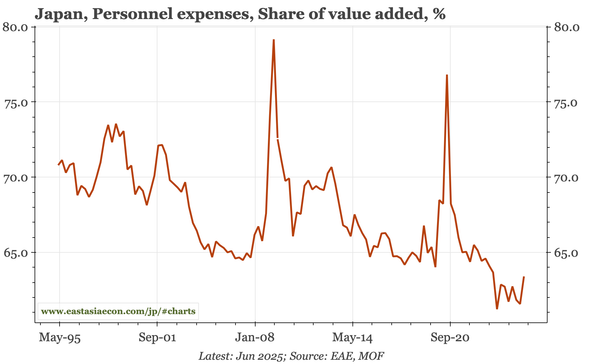
Japan – labour share rebounds
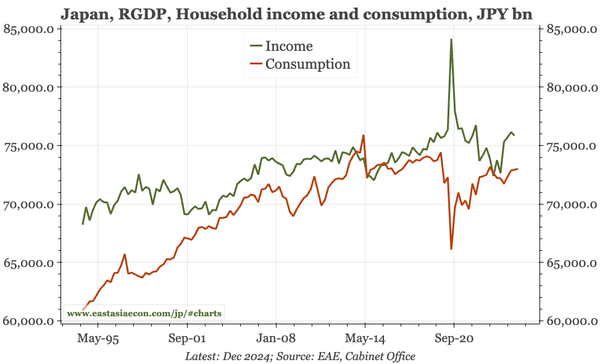
The Q2 rise in the labour share promises support for consumption, but without yet depressing profits. Manufacturing earnings did drop in Q2, and that questions the sustainability of capex. But IT investment was also strong, and the PMI suggests that overall, manufacturing is coping with tariffs.
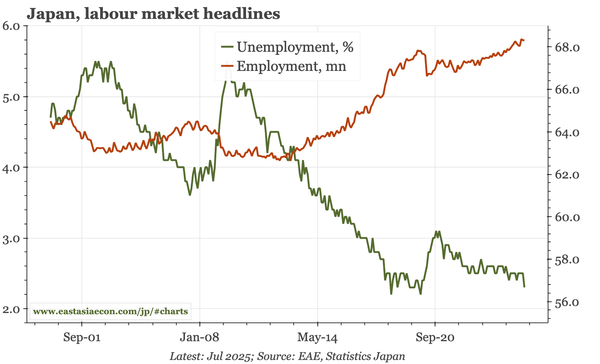
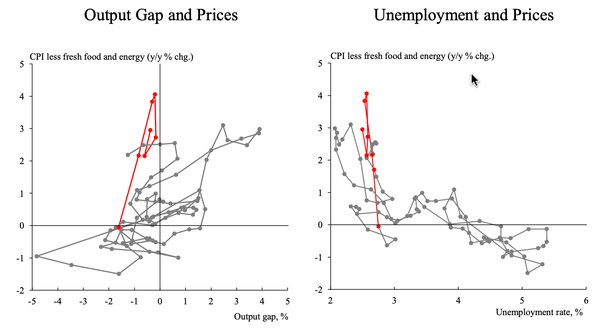
Japan – UE falls to post-covid low
The fall in the UE rate in July to 2.3% isn't substantively important. The mechanics behind it were more noteworthy, in particular a ticking down in the part rate. Other data today show a softening of inflation in Tokyo in August, and nationwide retail sales falling to the lowest level in 2 years.
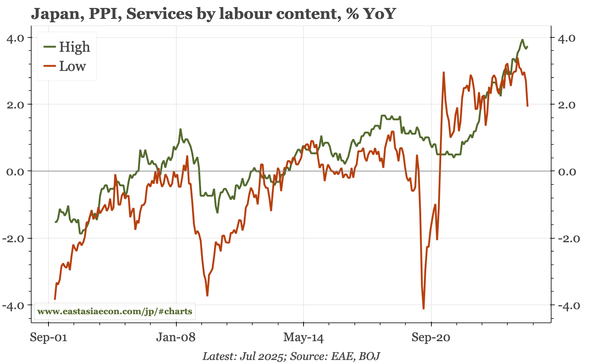
Japan – services PPI down again
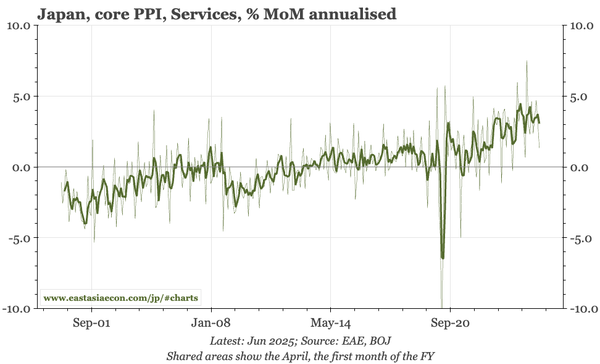
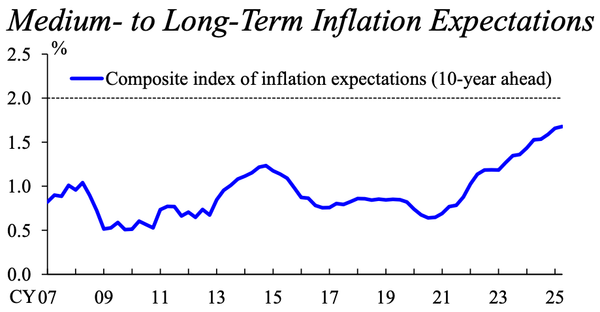
The BOJ's inflation outlook is based on two dynamics: a waning of imported price inflation, but firmness in wages and inflation expectations. Services PPI is consistent with that framework. Headline is softening, but in sectors with high labour-intensity, it remains solid.
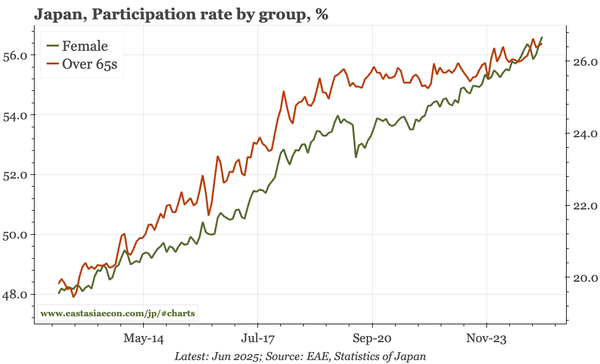
Japan – "acute labour shortages"
Governor Ueda's weekend speech on demographic decline was interesting for the nuance and stress he gave around the BOJ's usual narrative. Given Asian demographic trends, it also has relevance beyond Japan. For the cycle, they show that post the tariff scare, the BOJ remains on track to hike further.
Japan – three inflation rates, three stories
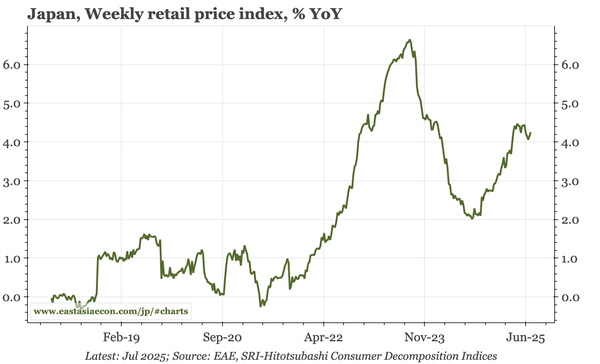
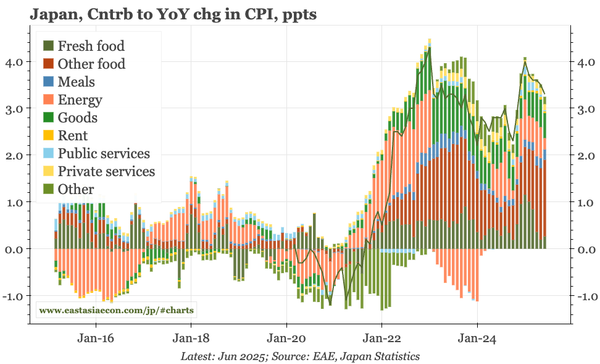
Headline inflation eased in July, BOJ core was unchanged but still higher than 12M before, and international core was stable. High-frequency indicators and recent minimum wage dynamics suggest inflation is here to stay. I'd expect the BOJ to go in October.
Japan – auto export prices down again
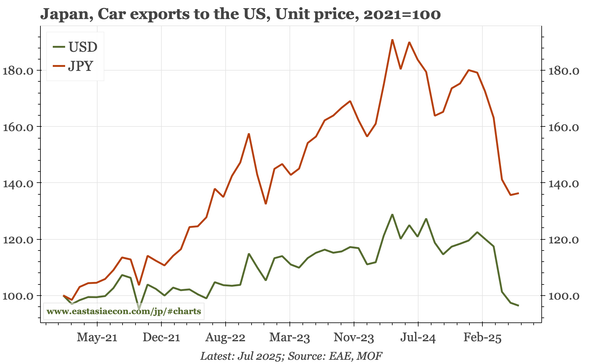
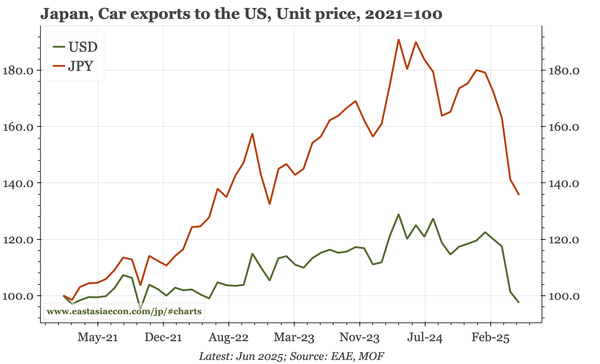
Auto export prices continued to fall in July, although not as steeply as in Q2. Overall export volumes also dropped, though there have been some offsets in recent months from IT sales and stronger shipments to China. Machine orders for July softened, but not by enough to signal a big problem.
Japan – solid GDP
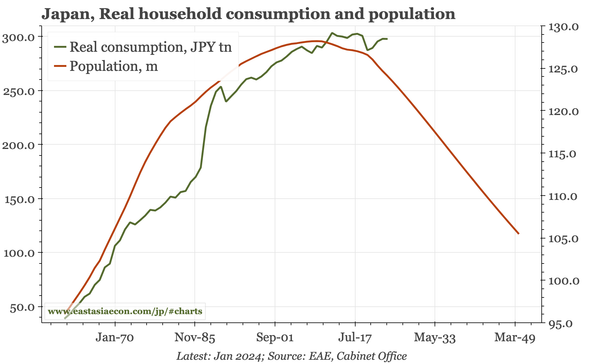
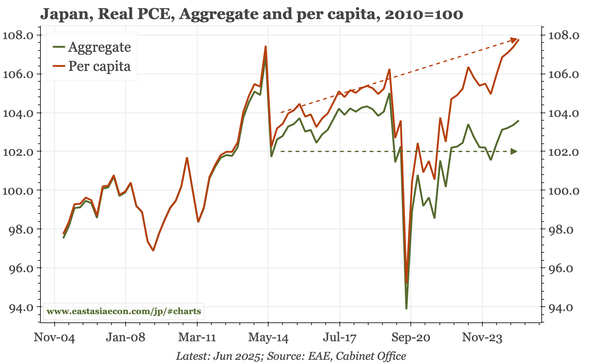
Q2 GDP wasn't particularly impressive at headline level, but the details were firmer, with both consumption and investment rising. The recovery in aggregate consumption does remain sluggish, but that is partly because of population loss. I estimate per capita consumption in Q2 reached a record high.
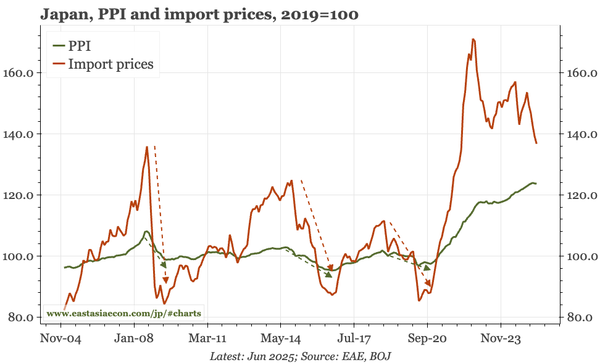
Japan – limited PPI downside without lower import prices
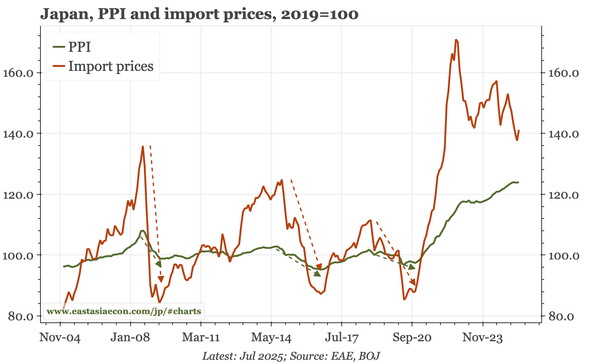
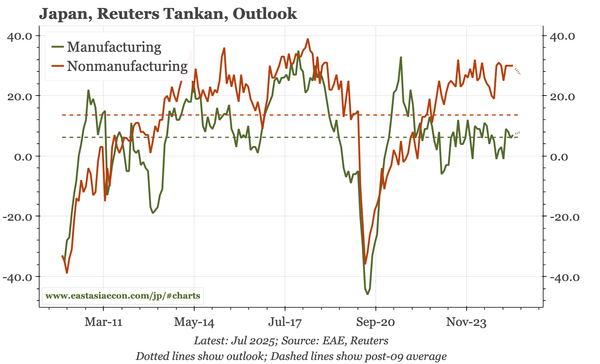
Headline PPI inflation is softening, but a real correction is unlikely without a bigger fall in import prices. In July, import prices ticked up, as did auto export prices, but only slightly. In other data, non-manufacturing sentiment in the August Reuters Tankan remained firm.
Japan – inflation concerns grow
Today's EW survey suggests stabilisation of sentiment following the sharp deterioration through Q1. As that happens and high-frequency price measures stop falling, officials, both on the BOJ MPC and in the wider government, are expressing more concern about the continued strength of inflation.
Japan – consumption growing at pre-covid trend
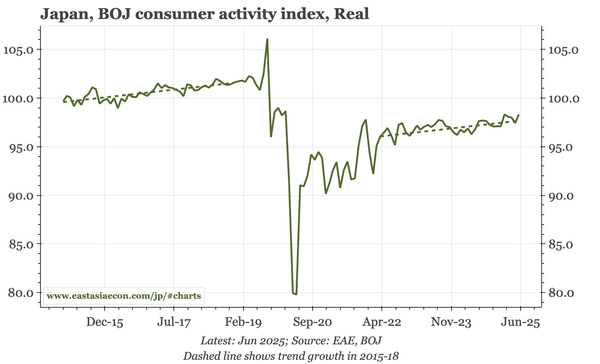
The BOJ's consumption proxy ticked up MoM in June. That followed a dip in May, so in Q2 as a whole consumption is only just higher than Q1. Based on the BOJ's data, in level terms, aggregate consumption is still 7% smaller than at the end of Q319. But the growth run-rate is now similar to pre-covid.
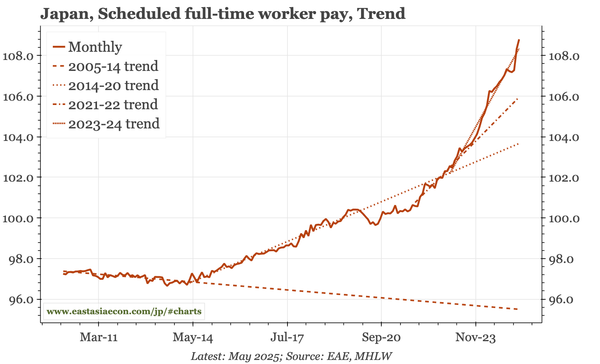
Japan – solid wage data
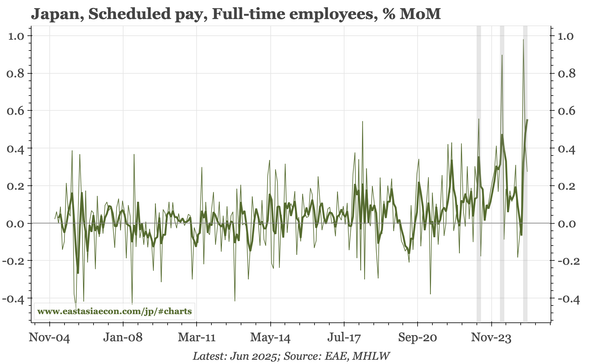
The shunto has boosted full-time regular wages, which increased more quickly in May and June than last year. Part-time hourly wage growth has also picked up again, and will get a further boost from the recently announced hike in the minimum wage. But for now, real overall wages are still falling.
Japan – the BOJ focuses on tariffs and food prices
Unusually, the BOJ's quarterly outlook report doesn't focus on wages and inflation. Instead, it looks at this year's two shocks – tariffs, and food prices. The bank argues that the rise in the part rate, seen again in today's June labour market data, has helped offset the impact of food prices.
Japan – inflation up again
The BOJ today was a bit less worried about tariffs, and a bit surer on inflation. That keeps a rate hike as a probability for later this year. But macro remains messy, with considerable disagreement about the contents of the US-Japan "deal", and consumer inflation expectations ticking up in July.
Japan – underlying inflation isn't accelerating
Services prices in Tokyo CPI for July and nationwide services PPI for June, is firm but stable. I am starting to think that the upside risks for inflation I talked about earlier in the year might have played out, though the fall-out from the Upper House election might change that again.
Japan – trade deal and Uchida
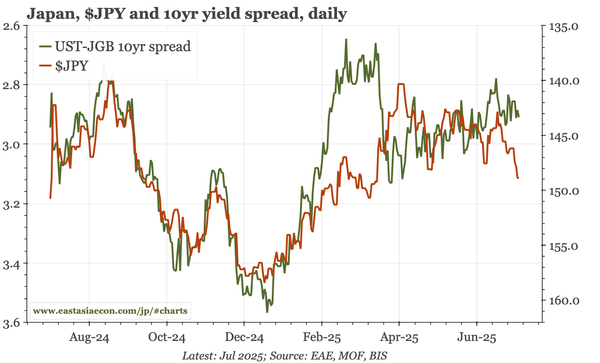
The trade deal sets the stage – again – for a strengthening of the JPY. That's because the BOJ should be hiking rates further, according to the framework set out by Uchida in his speech today: uncertainty this year has been elevated, but the cycle has remained intact, and inflation has been high.
Japan – lots of action in CPI, but few implications
In June, headline fell, BOJ core rose, and international core was flat at 1.6%. So, not a clear message...and then there's the uncertainty about tariffs and politics. Some tariff deal – like a TRQ – I think gets the BOJ engaged again. But I don't expect much dovishness without a US recession.
Japan – car export prices down again
The Q1 tick-up in overall export volumes has ended, but hasn't reversed. That's partly because of the willingness of the auto firms to cut USD prices. However, prices fell less quickly in June than May, and reports suggest the car firms are now starting to raise prices.
Japan – Reuters Tankan remains firm
While there's been jitters around tariffs and inflation, business sentiment overall continues to hold up remarkably well, as shown by today's Reuters Tankan. For mfg, weakness in autos is being offset by an improvement in tech. That theme is visible in equities, but not yet in actual export data.
Japan – three scenarios for the JPY
My latest video, discussing the JPY outlook in the context of this year's two shocks: tariffs, obviously, but also the rebound in inflation that caused a new sharp fall in consumer confidence. The risk from US policy is still growing, but, importantly, the rebound in prices is losing momentum.
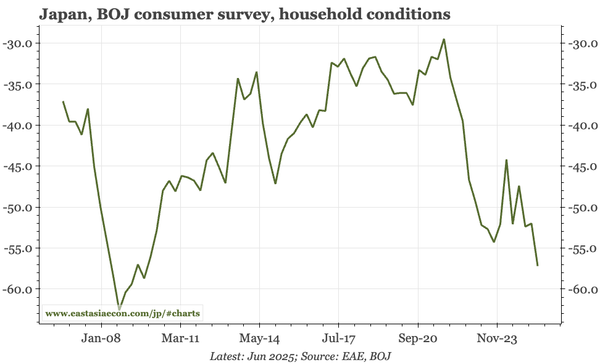
Japan – tariffs a bigger concern than prices and consumption
The drop in sentiment in today's BOJ consumer survey is somewhat backward-looking; more recent consumer surveys point to some improvement as rice prices fall. The tone of Friday's broader regional report from the BOJ was also positive, but with one big caveat: clear anecdotal concern about tariffs.
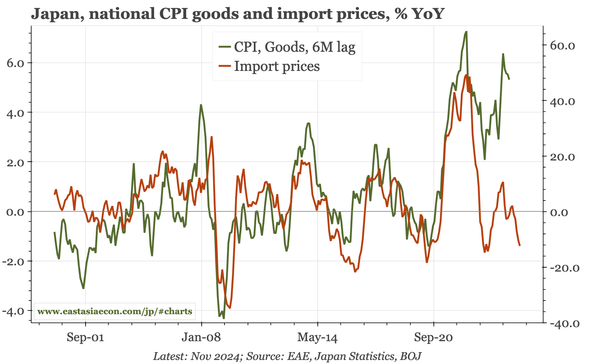
Japan – goods prices starting to reverse
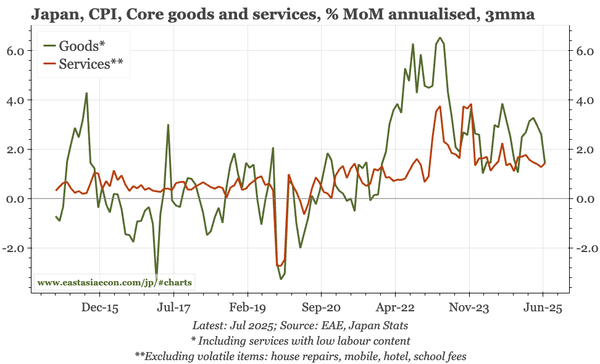
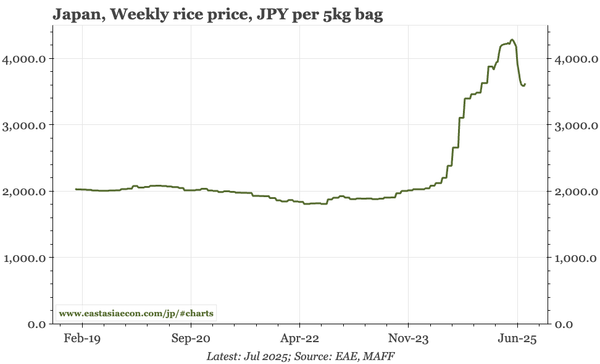
Data today show more feed through into PPI from the easing of import prices. Weekly rice prices have also dropped again. These trends lower goods price inflation, but will boost household spending power. At the same time, the sharp fall in auto export prices shows the negative impact of tariffs.
Japan – still the real wage squeeze
Nominal wage growth remains firm, but real wages to continue to fall. That in turn is weighing on consumption, which other data today show remained sluggish in May. The cycle in 2H will likely depend on goods prices, because that will determine the strength of real wage growth and consumer spending.