Paul Cavey
Korea – 2016/17 again?
The BOK tomorrow will likely remain on hold tomorrow, primarily because of the recent sharp rise in house prices. I think the more important question is whether the bank changes its view about rate cuts into 2026. I don't think it will, but here I outline a scenario that would get that outcome.
East Asia Today
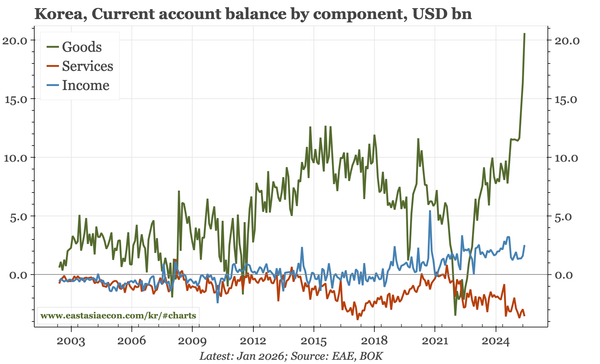
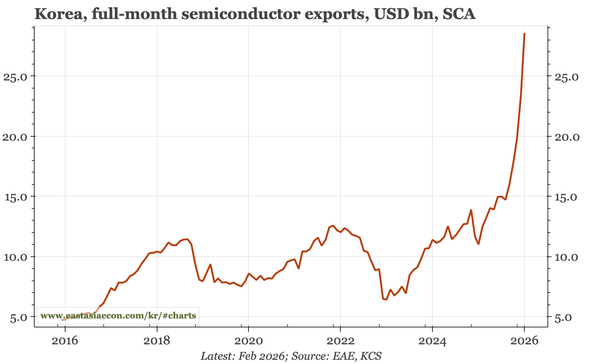
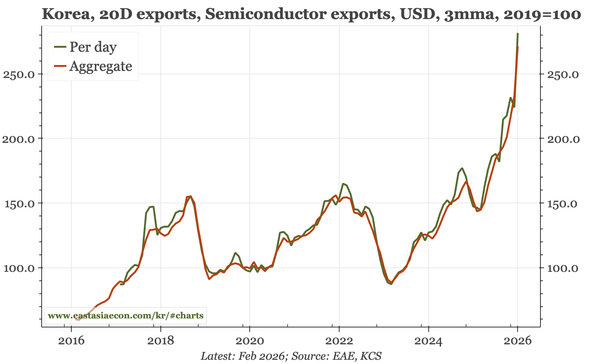
Detailed Q3 GDP data for China don't provide much extra clarity. By contrast, yesterday's speech by Takata of the BOJ was a clear argument of why he thinks the bank needs to hike. In Korea, data for the first 20D of October show strong growth in exports of semiconductors, but not in anything else.
Japan – Takata's case for hiking
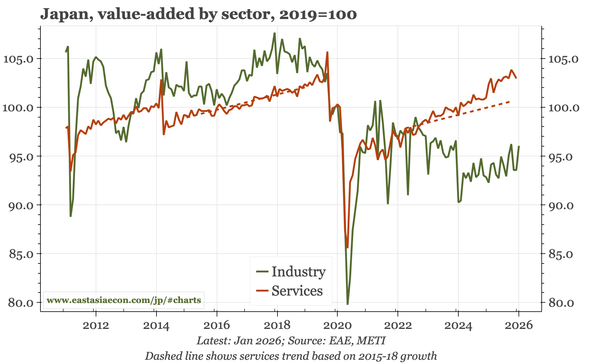
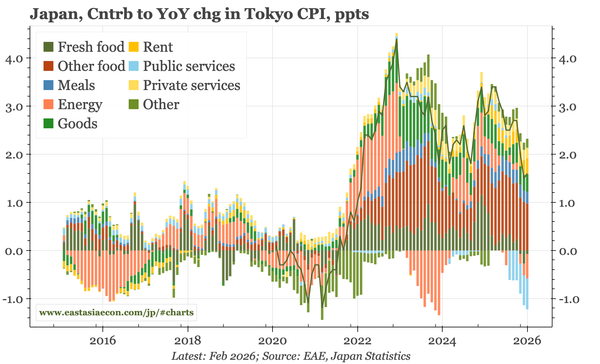
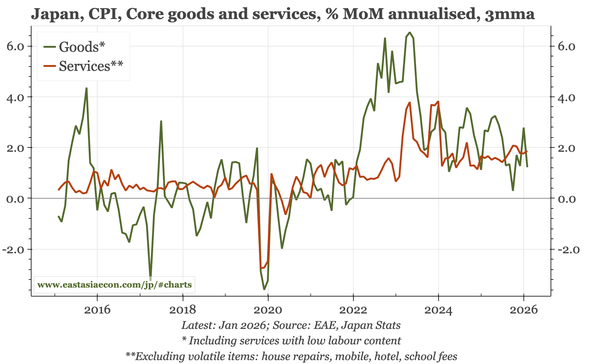
BOJ board member Takata Hajime yesterday likened the downwards revisions to the BOJ's forecasts on the back of tariffs to a typhoon-linked "planned suspension" of public transport that now needs to be lifted. He also argued inflationary pressure is increasingly being driven by domestic factors.
China – more puzzles in Q3 data
Detailed Q3 data include a few puzzles: net export contribution stable when the trade surplus declined; construction dropping sharply when property has looked less bad; and quarterly investment growing when monthly FAI has dropped. The one detail that really adds up: manufacturing remaining strong.
East Asia Today
Little sign of change in today's China macro data. So, while areas like consumption aren't as weak as the headlines suggest, in activity data overall there's little sign of stabilisation, let alone recovery. I discussed some of the issues around China, as well as the region, in a podcast last week.
China – no change in underlying trends
Property is weak, manufacturing FAI has slowed, consumer spending on goods is soft, and price deflation isn't lifting. However, services consumption is better, and output of both goods and services is growing by more than 5%. The government likely still thinks the economy is muddling through.
Last week, next week
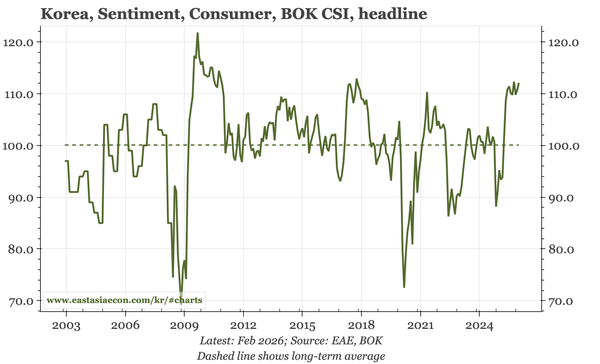
My China theme – signs of stabilisation in the underlying cycle – seems anti-consensus, and, frankly, likely won't be supported by today's data. Elsewhere, the key issues this week will be what hints Takaichi's new government gives about the BOJ, and what confidence the BOK has for the 2026 outlook.
East Asia Today
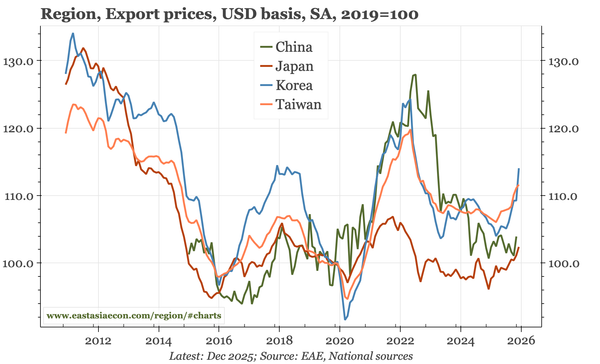
Korea's labour market looks better, though sustainable recovery likely needs stronger business confidence. Other data suggest an end to the sharp price falls for Korean auto exports to the US. Cars are unusual: in neither Korea nor the other economies have overall export prices been as volatile.
Korea – employment perks up
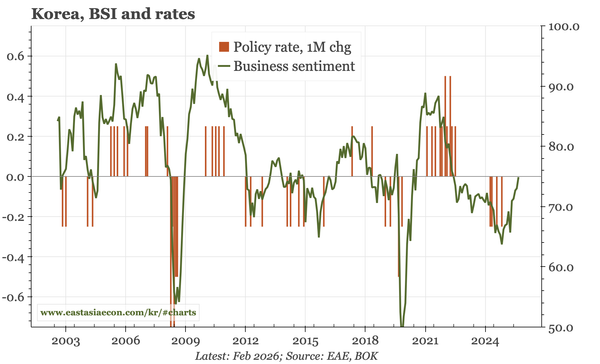
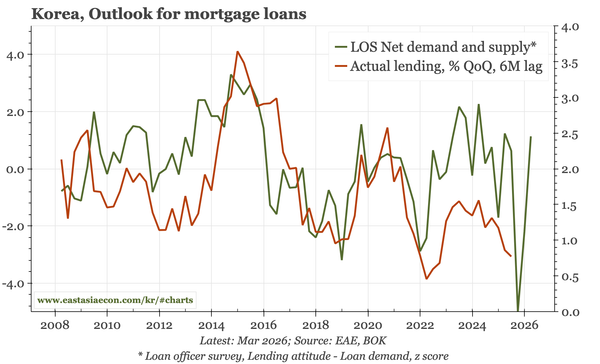
Employment bounced in September, providing more evidence of cycle bottoming. That shouldn't matter much for BOK thinking: in July it raised employment forecasts, and has expected recovery into 2026. I am sceptical that recovery runs far, but there are upside risks if business sentiment improves.
China – incrementally encouraging
Yesterday's monetary and credit data for September weren't bullish, but I do think they were incrementally encouraging: excluding CGBs, credit issuance and the credit impulse ticked up; the firming of M1 growth has continued; and there is more evidence of a floor in the M1:M2 ratio.
Japan – Tamura's upside risks
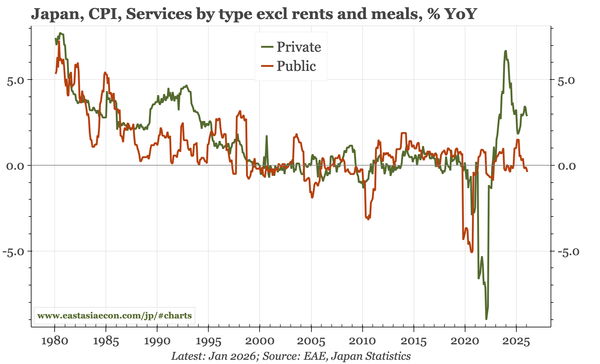
Naoki Tamura's speeches are always clear and interesting. Some of his remarks today overlap with points I've highlighted the last few months: the strength of the Tankan survey and sakura report; repressed inflation in public services prices; the negative impact of inflation on pensioners.
East Asia Today
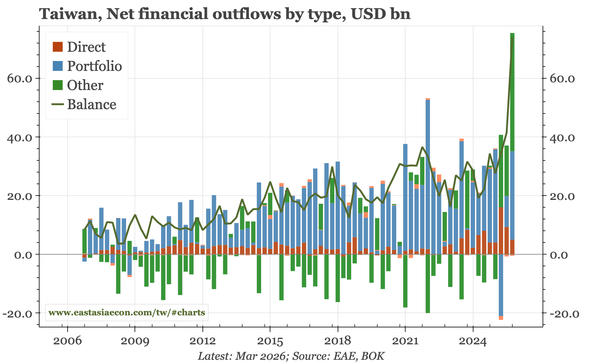
A couple of notes on China today, one covering today's inflation release, and the other a slide pack making the case for higher rates. Elsewhere, Taiwan released FDI data for September. Outflows have eased in recent months, but the clear shift away from investing in China is persisting.
China – the case for higher rates
For the first time since 2021, my models show a fall in the probability of easing. The backdrop is effective monetary policy: inflation is low, but there aren't signs of rising real rates. For now, my base case is rates stop falling. For rates to rise, inflation needs to show up outside of equities.
China – PPI stabilises, but not firmly
The stabilisation of PPI is fragile, with continued sharp falls in some of the sectors targeted by anti-involution, as well as continued weakness in building materials prices. In CPI, falling food prices will eventually reverse, but soft services prices shows underlying CPI inflation remains weak.
East Asia Today
China full-month exports for September (still strong), and Korean exports for the first 10 days of October (including only 3.5 working days, so too few to reach strong conclusions). Also, the new monthly summary of PBC liquidity operations, showing steady balance sheet expansion.
China – export trend still intact
Shipments to the US remain as low as in May. But with exports to other regions continuing to rise, the uptrend in overall shipments that began in mid-2023 remains intact. At the same time, imports in the last few months have risen a bit, so the trade surplus, finally, has eased back.
Last week, next week
The short-term theme is uncertainty, with the ruptures in both the US-China trade truce and the LDP-Komeito ruling coalition in Japan. Both are negative for risk appetite. In terms of the data flow, the highlights in the next few days are China inflation, and TSMC's quarterly earnings.
East Asia Today
Two releases from the BOJ today, one showing PPI inflation remaining firm, and the other, its consumer confidence survey, indicating that the firmness of inflation continues to erode household sentiment. Also today, an update on China's inflation in advance of next week's releases for September.
China – inflation update
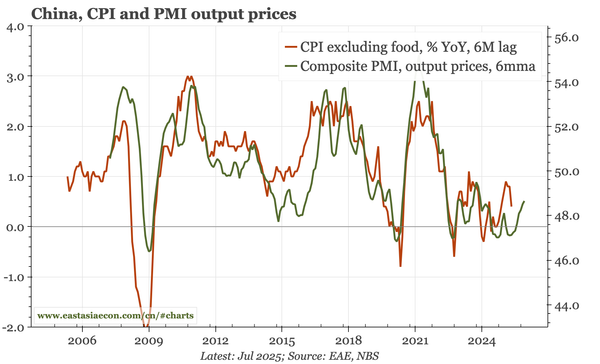
Upstream prices in level terms have stabilised, but as with food prices, are still falling YoY. With aggregate spending and PMI output prices remaining weak, core inflation is unlikely to be rising. The one upside risk is an end to the multi-year trend of households shifting money to time deposits.
Japan – PPI rising again
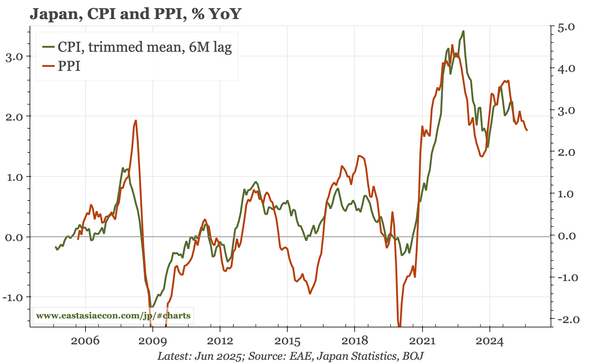
In September, even before the renewed JPY depreciation of the last week, PPI inflation rose. By raising import prices, USDJPY back above 150 will mean input price inflation remains stronger for longer. The (relative) hawks at the BOJ will be becoming more convinced that inflation is sustainable.