Paul Cavey
China – three positive monetary dynamics
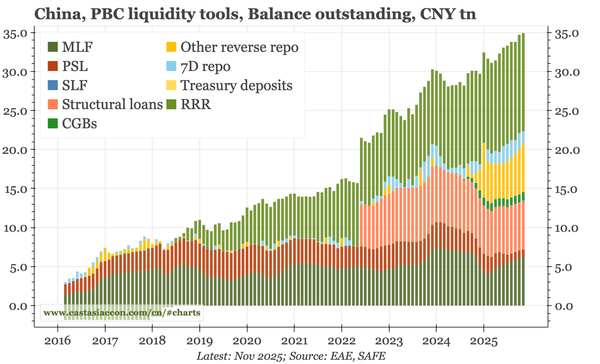
Real economy developments still look negative for inflation. That the deflator nonetheless looks to be turning can be partly attributed to local food prices and global commodity prices. However, I think monetary factors are also playing a role, with three dynamics in particular worth highlighting.
East Asia Today
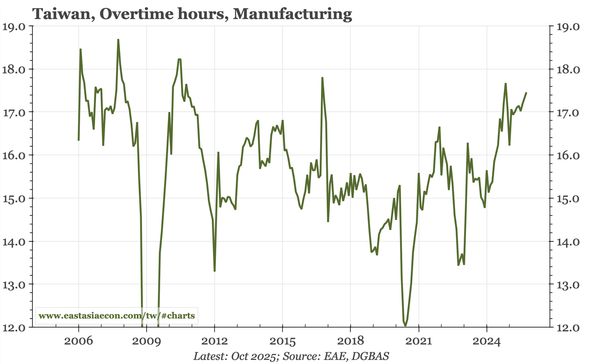
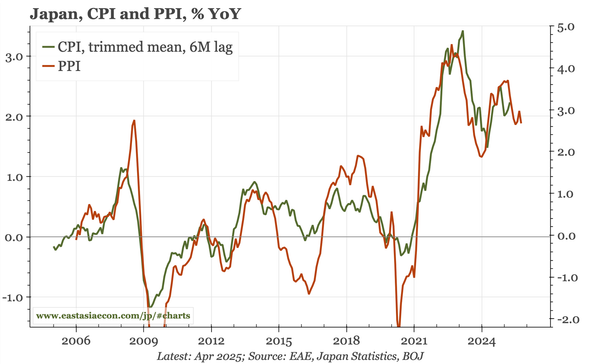
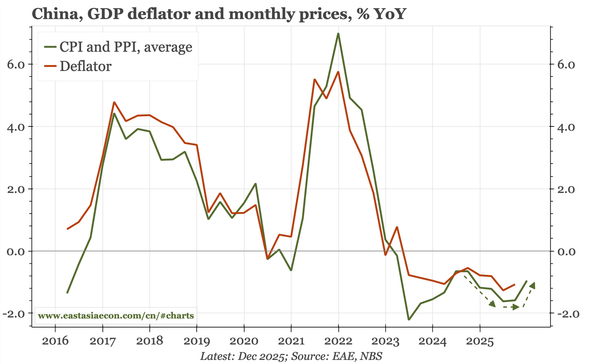
Goods PPI shows upstream inflation pressure in Japan remaining firm, while today's CPI and PPI releases in China point to a further lessening of deflation. Korea's labour market is complicated by supply-side changes. In Taiwan the message is simpler, with wage growth continuing to trend up.
East Asia Today
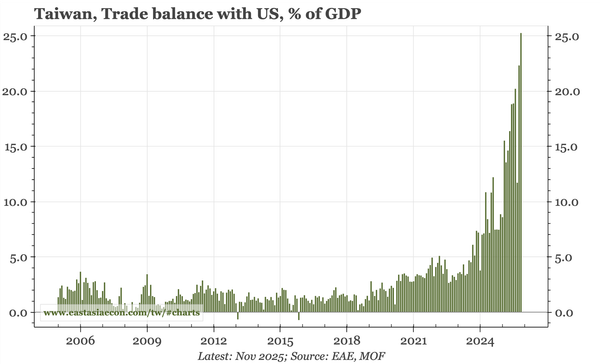
A longer report addressing three misconceptions with Japan's fiscal position. Also, yet another month of very strong export data for Taiwan. The driver is the sale of semiconductors to the US. In November, the bilateral trade surplus with the US reached 25% of Taiwan's GDP.
Taiwan – the export surge continues
There is little growth in exports outside of tech in general, and semiconductors specifically. But the surge in chip exports is big enough to offset all the weakness in other products. The overall trade surplus eased back in November, but the bilateral surplus with the US reached 25% of Taiwan GDP.
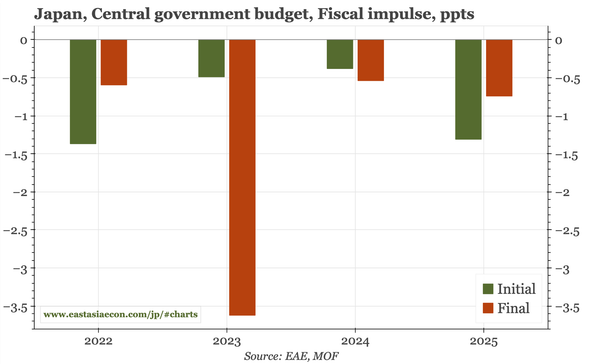
Japan – overcoming fiscal fear
The supplementary budget looks big, but this year's fiscal deficit is still budgeted to narrow. Gross debt is high, but the government's net liabilities have fallen. Interest rates have risen, but before Takaichi took office, net annual interest payments by the government had fallen to near zero.
East Asia Today
China's exports rebounded in November, and so did the trade surplus. In Japan, there is lots of data to discuss today: the second release of Q3 GDP, EW survey, wage growth and BOP. There are some mixed messages, but one theme is stabilising real wages and stronger household confidence.
Japan – real wages stop falling
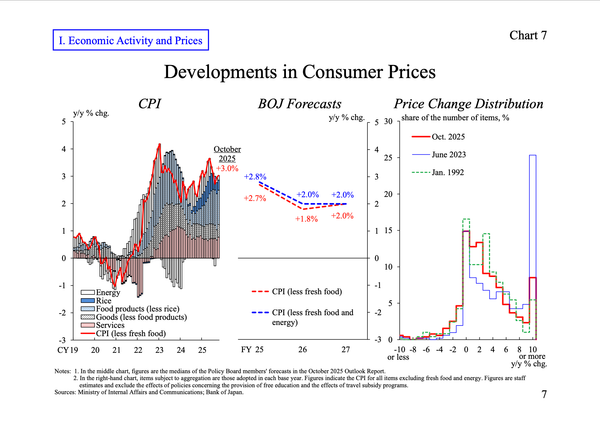
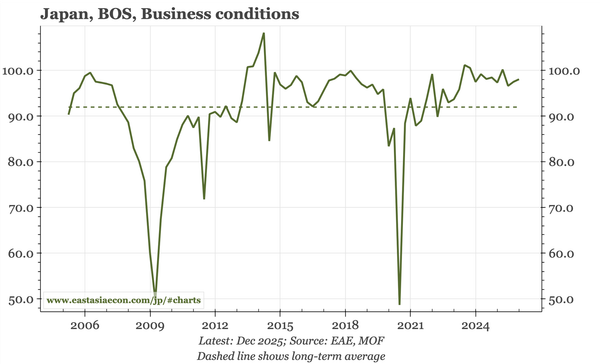
A few releases today – October wages and CA, November Economy Watchers survey, and Q3 revised GDP. The overall picture is mixed, though the acceleration in inflation and drop in real wages into early 2025 has now stabilised, and that is allowing an improvement in household sentiment.
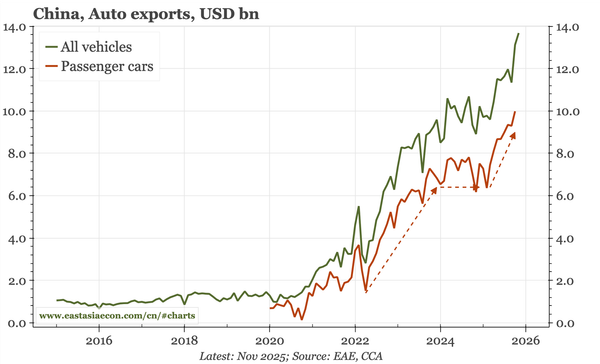
China – exports up again
The weakness in exports of October reversed in November, with a rebound in growth to ROW, and shipments to the US stabilising. Auto shipments reached a new all-time high, and are growing as quickly this year as in the initial take-off in 2023-24. Import demand declined, so the trade surplus rose.
Last week, next week
Regional themes: lessening deflation in China, but no sign of real recovery; the BOJ is likely to hike this month, but the JPY needs a hawkish hike; outflows into overseas equities in Korea change usual exchange rate relationships; inflation risks in Korea and Taiwan if AI chip demand is sustained
East Asia Today
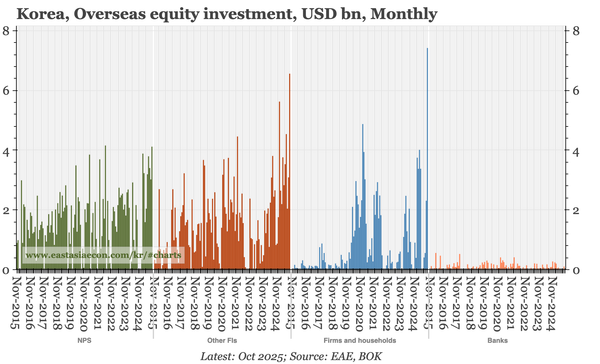
Today's data show another surge in overseas equity buying in Korea, consumption in Japan that is quite strong considering the headwinds of population decline and real income squeeze, and inflation in Taiwan which has now fallen to 1.2%, but I don't expect will drop much further.
China – lessening deflation
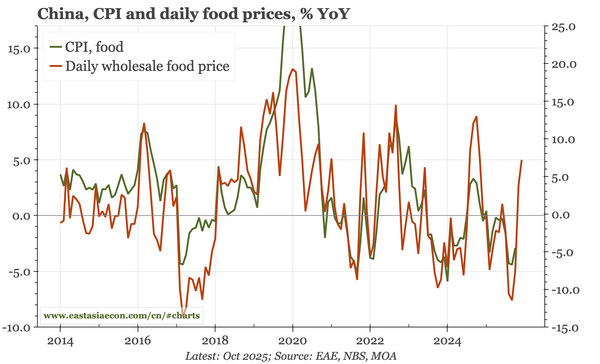
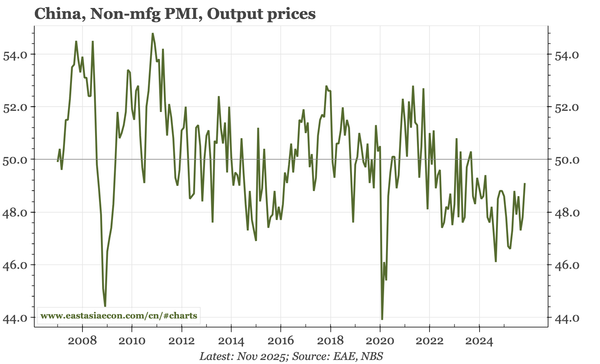
High-frequency data show upstream prices remained stable in November, while food prices have been rising. The combination points to a further lessening of headline deflation. I doubt that signals a real turn in nominal growth, though there are now some upside risks.
East Asia Today
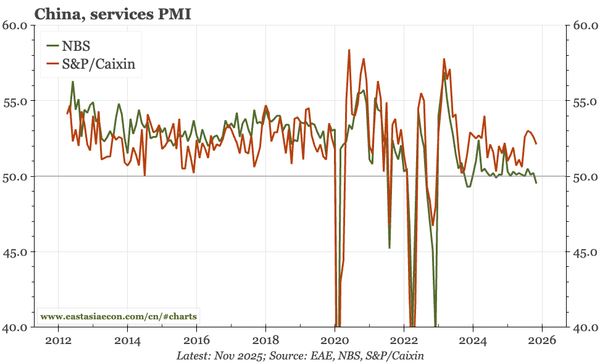
China's November S&P services PMI didn't confirm the weakness seen in the official version. S&P today also released its services PMI for Japan. That sent the same message as other sentiment surveys: far from weakening, economic momentum in Japan is improving. Also today, my latest video and podcast.
East Asia Today
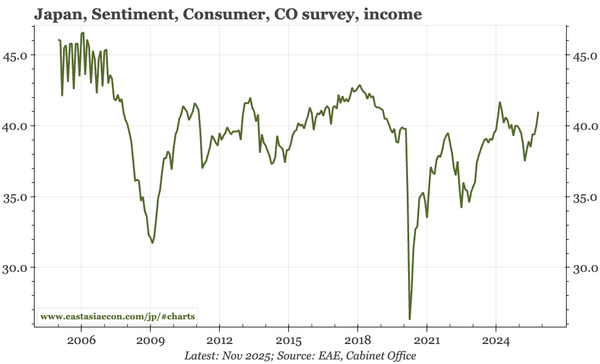
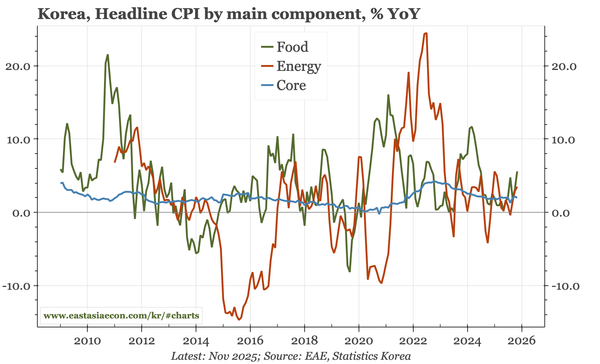
Japan's consumers like what they are seeing of Sanae Takaichi, with another bounce in confidence in November. That removes another reason for BOJ caution. In Korea, inflation remains at around 2%, but services inflation – a better measure of domestically generated price pressures – is higher.
Korea – core inflation stable, but not low
The BOK says the rise in headline CPI inflation to 2.4% the last couple of months is temporary, and that core is stable. That isn't an unreasonable assessment. However, I'd continue to highlight the strength of services inflation, which remains firm reltive to ongoing labour market weakness.
East Asia Today
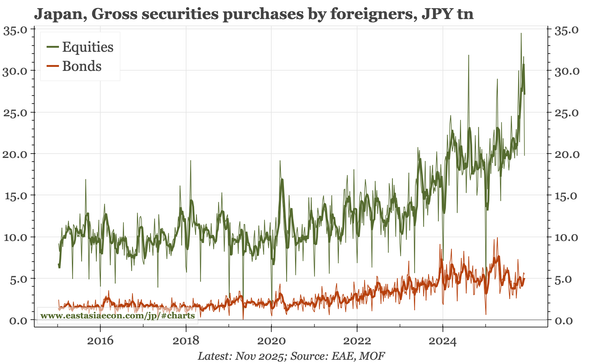
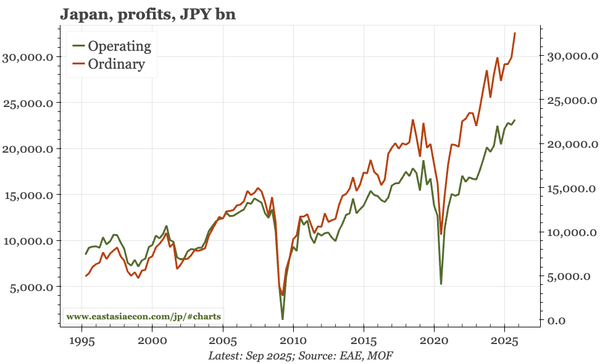
The big policy event today was BOJ Governor Ueda's speech, which further increased the likelihood of a near-term hike. In terms of data, Japan released quarterly profits data (strong in non-manufacturing) and weak PMIs for the region contrasted with strong semiconductor export data for Korea.
Region – manufacturing PMIs and Korean exports
The mfg PMIs across the region mainly remain below 50. That shows that conditions outside of semiconductors remain poor. Semi is strong, and in Korean in export data for November, are departing from a normal cycle. Goods input prices pressures are rebounding, reflecting weak currencies.
Japan – Ueda becomes constructive again
The tone of governor Ueda's speech today suggests a rate hike is close. He claims that risks to the US are receding, identifies five recent positive wage developments, and with firms' price and wage behaviour changing, argues that exchange rate changes are more likely to affect prices.
Last week, next week
The main themes: stabilisation in China, but the picture is muddy; the discrepancy between clear economic boom in Taiwan versus stability in inflation and TWD; upside risks in Korea that still look like risks than reality; the BOJ facing a real fiscal boost when the economy is already recovering.
China – more data puzzles
The official composite output PMI in November fell below 50. That wasn't because of FAI: the industrial PMIs were stable. Rather, it was weakness in services. That is puzzling. For now, the one concrete indicator from today's inflation is actually positive: deflation isn't getting worse.