Paul Cavey
China – profits still weak in October
Profitability ticked up in October, but that was after a big fall the previous month, and the smoothed trend is still down. Relative to GDP, profits have only been lower than they are today in 2008-09 and 2020. The big drag continues to be heavy industry more than manufacturing.
Korea – further cycle deterioration
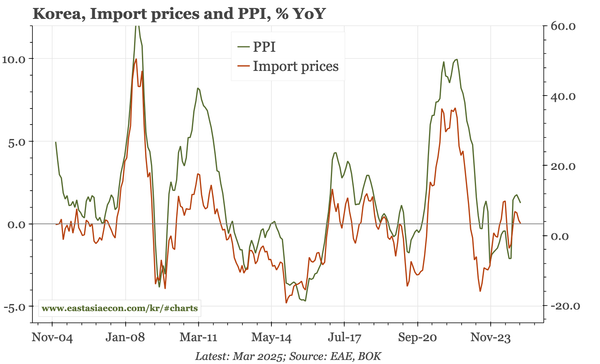
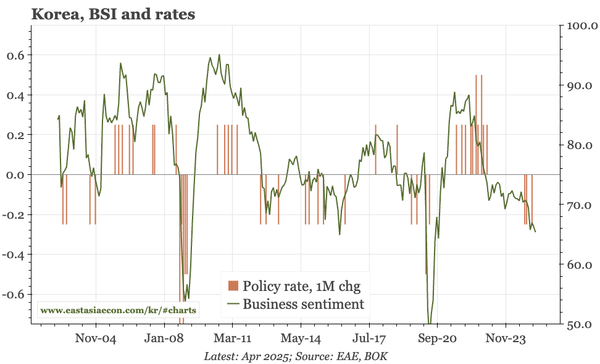
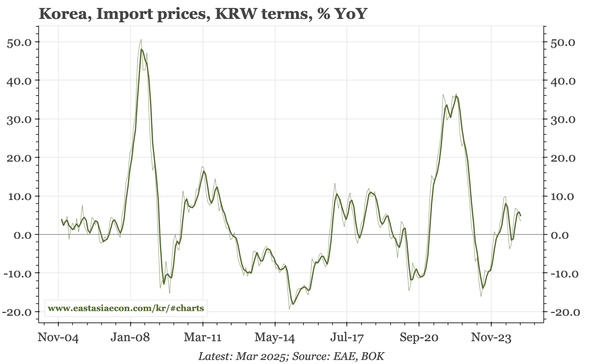
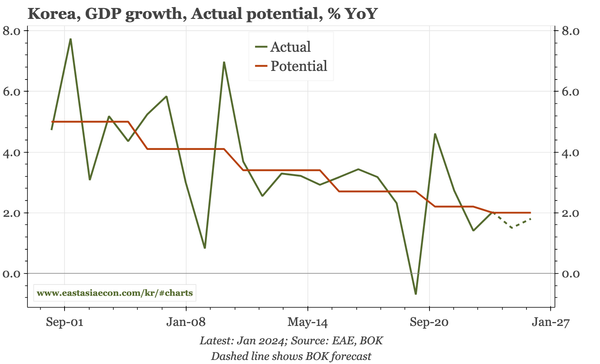
Today's business survey shows activity taking another step-down. The reason is the rolling over of external demand, which matters even more when domestic demand is already so weak. Price data this month aren't so soft, but cycle concerns are likely to become the number one concern for the BOK.
Japan – services PPI inflation stronger again
The trend rise in upstream services PPI isn't faltering. With a decent MoM jump, the YoY ticked back up in November to the all-time high of 3.1%. This steady rise remains the clearest indicator of Japan's structural exist from deflation, and suggests also that the BOJ's cyclical story remains alive.
Korea – no consumer turnaround
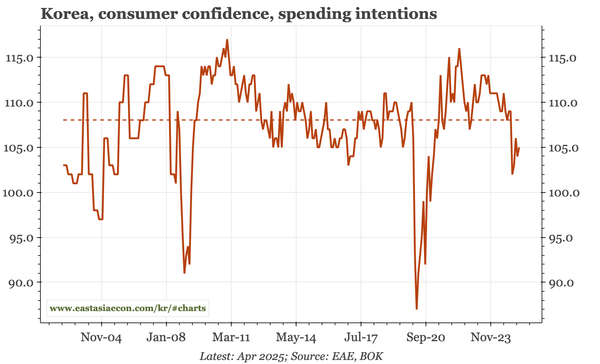
November consumer sentiment remained soft, staying barely above the survey's long-term average. That doesn't suggest consumer spending, which has been weak, is about to revive. At the same time, price expectations, firm all year, ticked up last month, warning that disinflation has run out of steam.
China – export-led growth continues
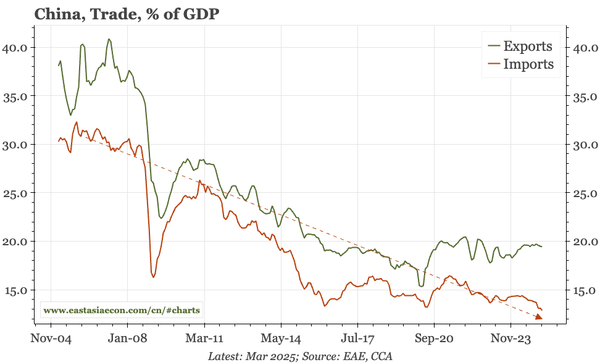
A chart-heavy note updating China's trade trends. Export volume growth remains strong; prices are soft but not falling sharply; EV growth is sluggish but solar stronger; direct trade continues to reorient towards EM; the growing trade surplus helps GDP growth, but not relations with the US.
China – no slowing of export volumes
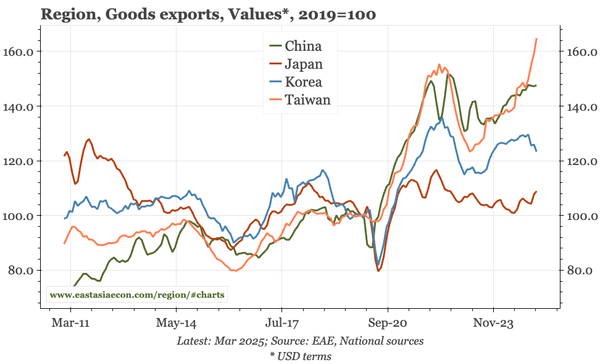
Latest data from the customs administration show no let-up in the export volume surge that began earlier this year. China's exports are growing as quickly they were during the pandemic. That's remarkable, given that in 2021-22 world trade was growing strongly, now it is hardly increasing at all.
Taiwan – unemployment rate still low
It looks like labour market tightness has peaked, but the change isn't big enough yet to impact monetary policy. After ticking up in September, the unemployment rate was stable at 3.4% in October. That keeps it at a level not seen since the early 2000s.
Japan – activity softer, prices up
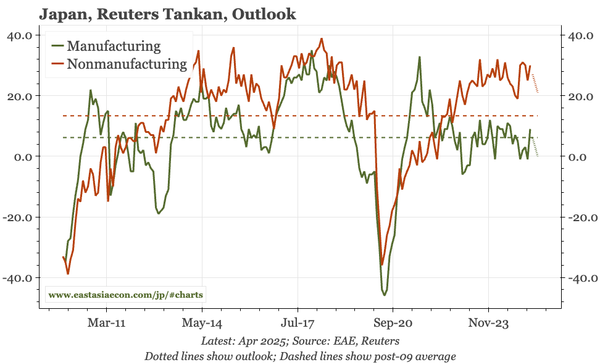
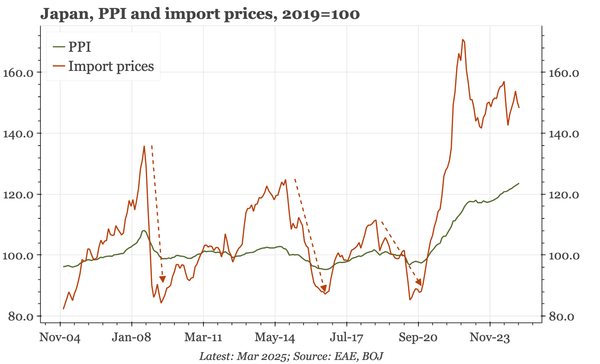
Today's flash PMI was weak, but respondents highlighted JPY-driven price pressures. October CPI data were also firm. Ueda highlighted this week that December is live, but dependent on data before then. The BOJ's assessment of services inflation, and the Q4 Tankan, are particularly important.
Korea – no bounce in November exports
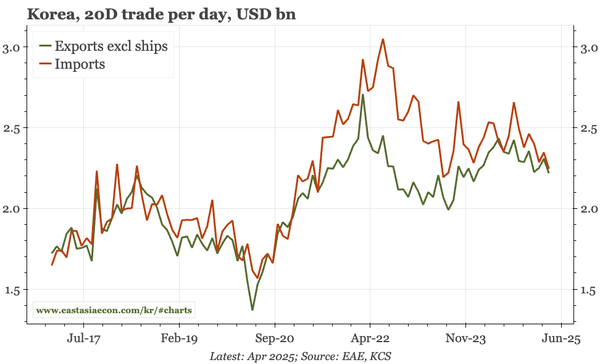
YoY growth in Korean exports in the first 20 days of November didn't do much to reverse the October slump, a decline that feels more significant given the similar drop in the PMI in the last couple of months. Semi exports are still rising, but not much else is.
Taiwan – export leads deteriorate
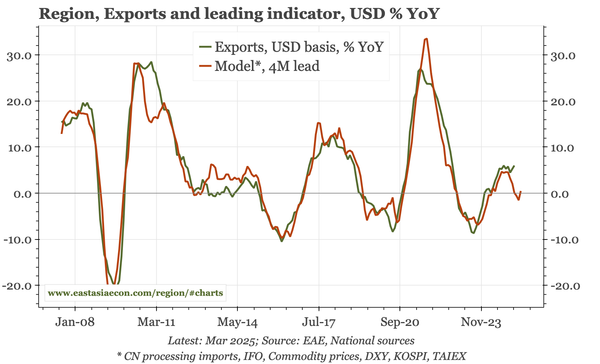
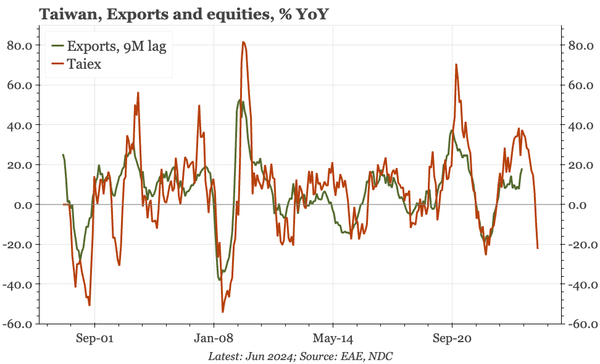
October's export orders continued to creep up, but nothing more than that, and the DI has turned down, warning of downside risk from here. Admittedly, export orders have been tending to lag actual exports, but with the PMI weakening too, we've probably seen the best of the export cycle.
Korea – more doveish, more quickly
The BOK has been slow to cut, and when it finally did in October, its tone was hawkish. Since then, however, growth of both exports and household debt softening. This opens up room for the BOK to become more doveish, with the risks being KRW weakness, and sticky services price inflation.
Taiwan – reorientation to US
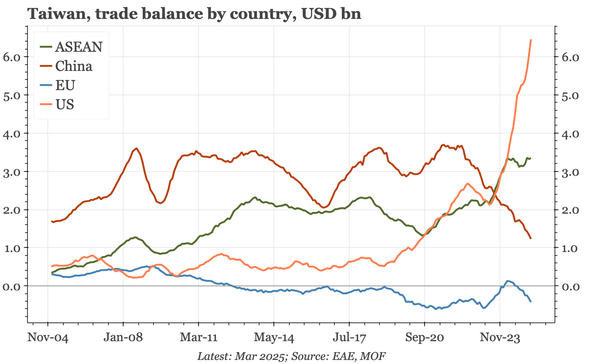
Today's October FDI data once again illustrate the big reorientation of Taiwan's investment and trade flows away from China and towards the US. For FDI that's been encouraged by Biden subsidies, but Trump doesn't like those, nor the big trade surplus that Taiwan now runs with the US.
Japan – consumption at all-time high
GDP grew again in Q3. Much of the rise since Q2 is because of a recovery in consumption, but that continues to be much more visible in per capita terms: aggregate consumption is still below the pre-2020 highs, dragged down by a fall in the population, a decline that the BOJ obviously can't address.
China – services output up, but not much else
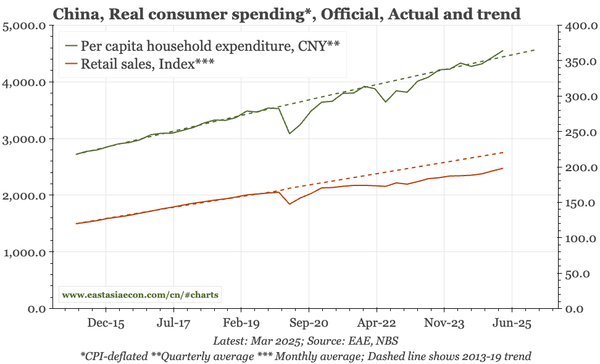
With a bounce in reported retail sales, it looks like economic growth in October got back to the government's 5% growth target. Overall, though, the tone of the data was rather mixed, with real estate activity in particular still extremely weak.
Korea – softer private sector employment
The headlines don't show much change in the labour market in October, with the unemployment rate still comfortably below 3%. But while employment overall was stable, that was because of government jobs. Employment in the private sector fell again and is now the lowest since July 2023.
Region – consequences of reorienting to the US
In recent years, trade and FDI flows from Taiwan and Korea have clearly shifted from China to the US. That's what Trump One and Biden wanted, but Trump Two won't like the rising trade deficits, or the CHIPS and IRA subsidies. If he threatens tariffs, will Taiwan offer a stronger TWD in response?
Taiwan – pick-up in wage growth is holding
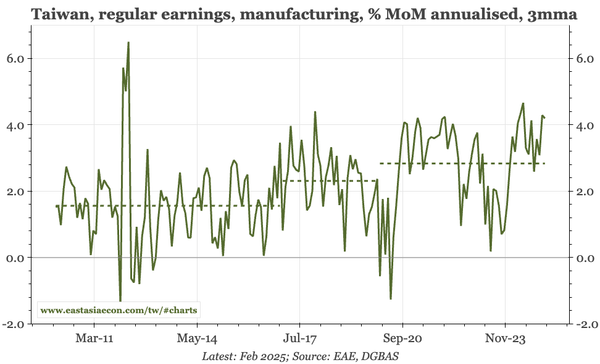
The post-2020 rise in wage growth is holding in manufacturing. In services, it is less obvious, but for the economy overall, the trend in wage growth is still comfortably above 2% YoY, whereas in the 15 years from 2003 it was closer to 1%. This rise, in turn, should raise the floor for inflation.
Japan – BOJ still constructive, despite modestly softer data
The opinions from the October BOJ meeting show a bit less concern about US uncertainty. That seems premature, given the election, but comments on the domestic economy also don't suggest any change in the bank's fundamental view. Survey data have been a bit softer, but not yet uniformly.
China – no change in monetary trends
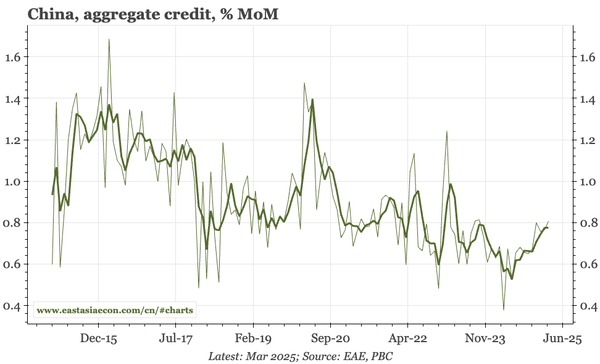
Including CGBs, the credit impulse is weak, but not terrible, and there's been a tick-up in bank lending and mortgages since August. However, there's nothing to suggest any real momentum in the credit cycle. At the same time, the deflationary move into time deposits continues.
Korea – more signs of export weakness
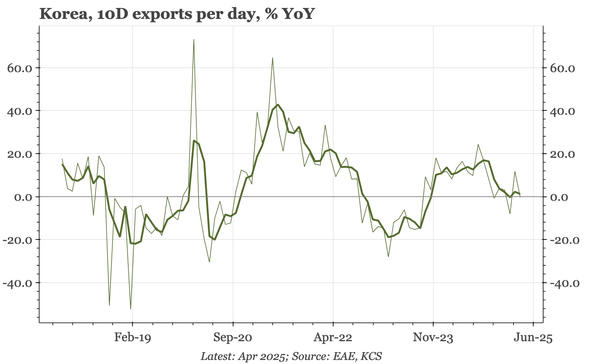
Export growth in the first ten days of November fell to zero. And while the small number of days make this data set volatile, it comes after weakness in broader data for October, both full-month trade, and the PMI. The weakness in exports is a big deal for the BOK when domestic demand is also soft.