Paul Cavey
Taiwan – two accelerations holding
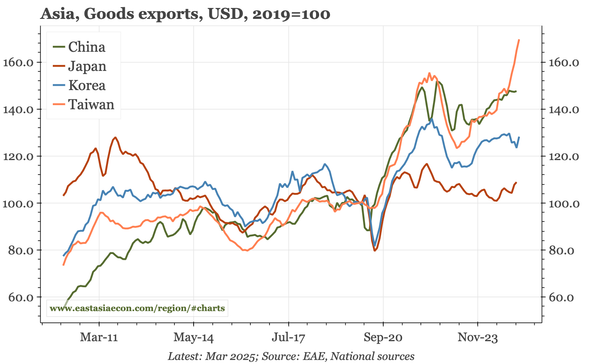
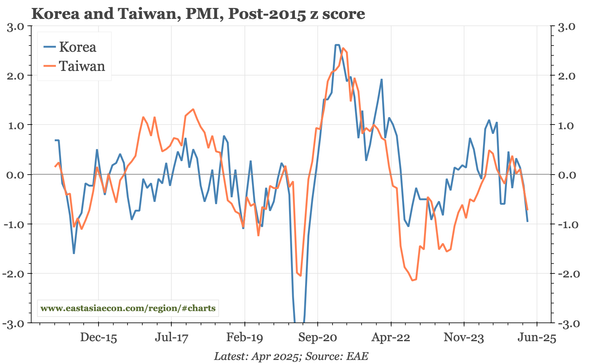
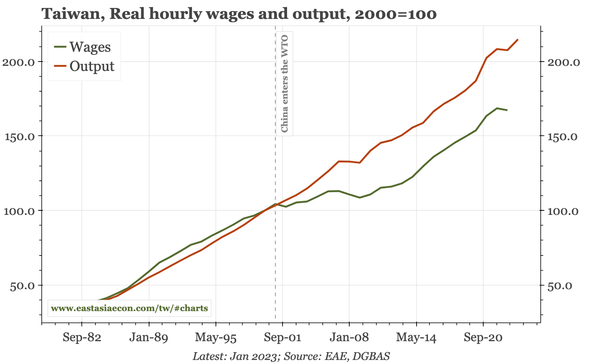
With the strong trend growth in TSMC's sales since the end of 2023 holding, it makes sense that the pick-up in manufacturing wage growth is too. Neither TSMC nor manufacturing are the whole economy, but they are important components, and put Taiwan's cycle in a very different state to Korea.
China – how "loose" can policy be?
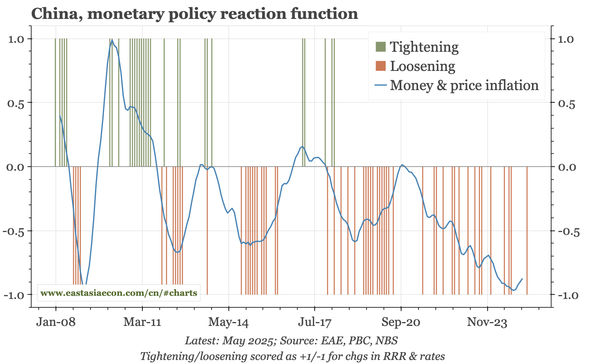
Yesterday's BIS credit data for Q2 show why shifting to "loose" monetary policy isn't simple. The loosening of 2008-09 kicked off a rise in credit that hasn't stopped even though policy since then has been "prudent", and that in turn been a big obstacle to policy officially turning loose again.
China – trade surplus widens again
On my estimate, China's seasonally adjusted trade surplus in November reached a new all-time high. This is partly about firm exports, more evident in volume than values. But it is also about weak imports, which however they are measured, have now been going sideways for almost two years.
China – what might "moderately loose" mean?
A "moderately loose" stance seems encouraging. But effecting that isn't straightforward, given nominal rates and the RRR are now so low. Rather than nominal, policy needs to work on price. That can be done by PBC BS expansion that addresses property inventories, or fiscal policy that raises demand.
Taiwan – export values ok, volumes still strong
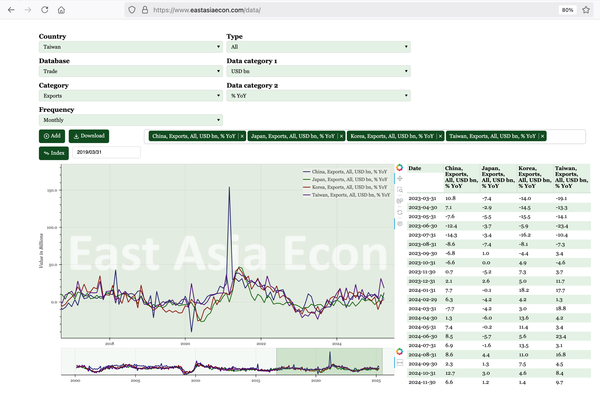
In YoY value terms, November data confirm that the export cycle has peaked. However, there still isn't much slowing yet because in MoM terms, exports are still gradually trending up. Moreover, at least through October, exports volumes remained strong. Semi is leading the rise.
Japan – solid growth in 2H24
Today's 2nd release of Q3 GDP data was revised up to 1.2% saar, on the back of stronger capex and exports, but consumption was revised lower. The rise in today's EW survey suggests growth has improved further in Q4. The cycle is solid more than spectacular, but shows no damage from the July hike.
China – CPI details a bit better than headlines
After falling for most of the year, core CPI rose MoM in November. However, the impact on overall CPI was offset by a renewed softening of food prices, and PPI also remained in deflation. PPI will likely strengthen a bit more from here, but overall, deflation is still the bigger risk than inflation.
Japan – wage data better than consumption
The dip in consumption that began in August is continuing. By contrast, wage growth isn't slowing, and while for full-time workers has only just caught up with inflation, for part-time workers it is comfortably ahead. This should be setting up better consumption, and so aggregate demand, in 2025.
Japan – acceleration in wage growth holding
There's no sign of any faltering in the latest acceleration in nominal wage growth that began in 2023. That's true for both full- and part-time workers. For full-time workers, real wage growth is also improving, though so far, the extent of the change is just that earnings are no longer falling.
Taiwan – core inflation remaining around 2%
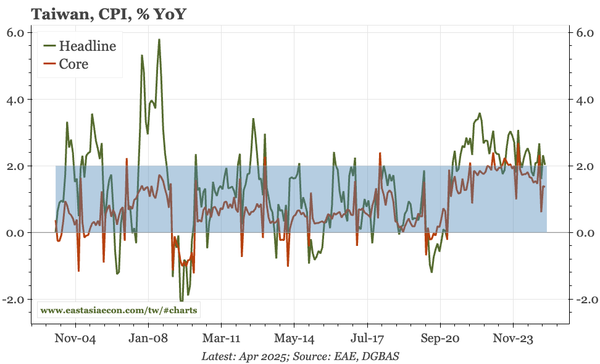
Inflation has eased, but outside of imported prices/goods, still isn't particularly soft. With the cycle also ok, the central bank won't be rushing to cut. So, while it would be usual to compare Taiwan's economy to Korea, in terms of current monetary policy, it has more in common with Japan.
China – prices versus Japan
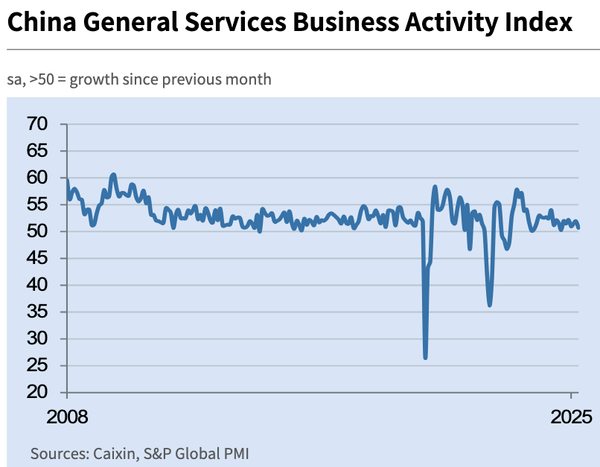
China rates falling below Japan has attracted attention. Commentary in today's services PMIs explain the context. In China, cost inflation in November fell "to the lowest since the current sequence of inflation began in July 2020". In Japan, by contrast, "inflationary pressures remained marked.".
China – M1 versus liquidity preference
The PBC has followed up on earlier hints and announced household demand deposit inclusion in M1. That makes sense, and it will moderate the fall in M1. But while HH demand deposits are rising, time deposits are growing more quickly still, and it is this that needs to reverse for cycle recovery.
China – the consumption challenge
As a long-time fan, I was very pleased to have a piece in the latest China Leadership Monitor. It argues that while cyclically, spending hasn't been so bad, that isn't enough given the property bust. Even so, and despite interesting proposals from onshore economists, policy support is still lacking.
Korea – private services inflation still edging up
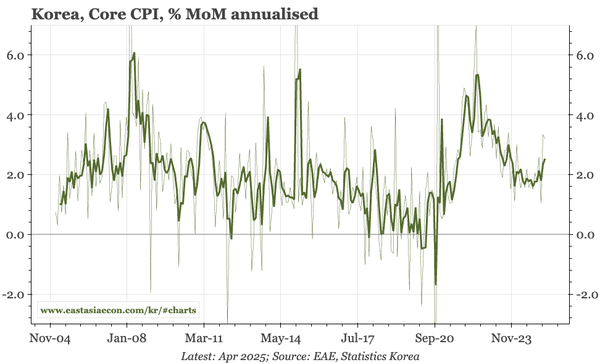
Headline November CPI data don't challenge the BOK's confidence that inflation is under control. But private services inflation continues to creep up, with SAAR now above 3%. That core has remained around 2% is because of cheaper public services. With budget tightening, that seems tough to sustain.
Region – not much momentum
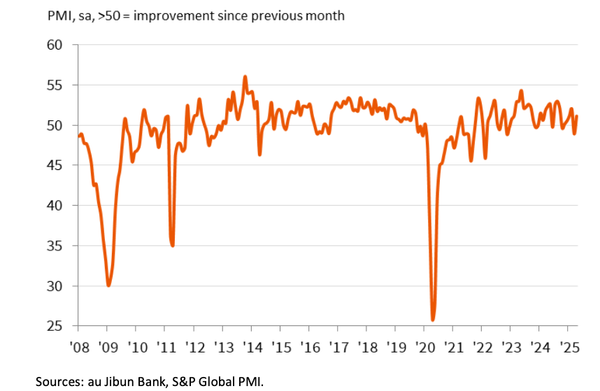
Today's PMI round points to a modest rebound in activity and exports in November, but not by enough to think the manufacturing cycle is really regaining momentum. Price pressures also feel subdued, though in this Japan is an exception, with "intensified" output price inflation in November.
Japan – profitability holding up
Profits ticked down in Q3, but that was after a strong Q3, and there's no change in the uptrend in earnings, margins or capex. In this context of continued strong profitability, the mild rise in the labour share is also constructive. However, trends in smaller firms are much weaker.
China – headline PMI ok, details weak
In November, the manufacturing PMI ticked up again, but the construction PMI continued to fall. But it would be optimistic to think this shows industry becoming less dependent on real estate when prices rolled over, the services PMI remains very weak, and employment continues to fall.
Japan – price-wage story still intact
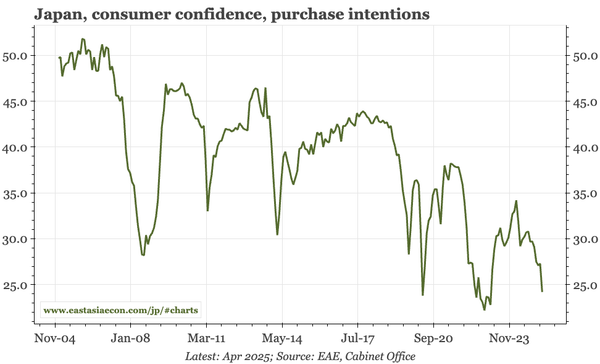
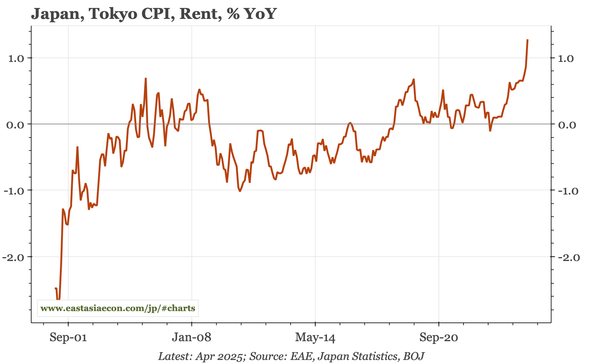
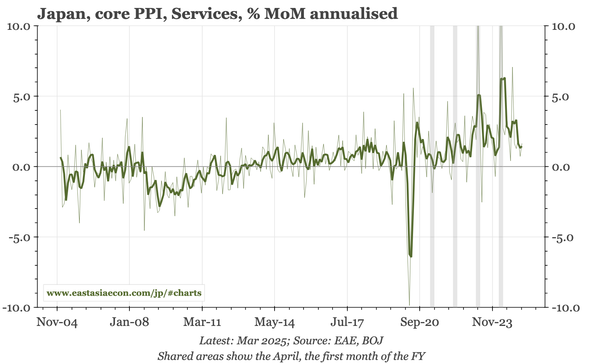
Today's data releases show the labour market remaining tight and consumers continuing to feel more confident than might be expected given price rises. Inflation continues to run at around 2%, and with rentals rising, inflation should have a higher floor from here.
Region – Plaza II
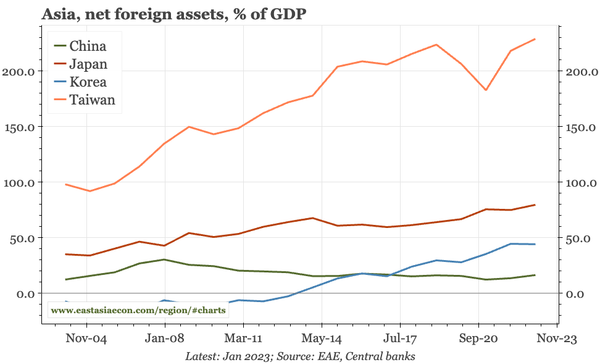
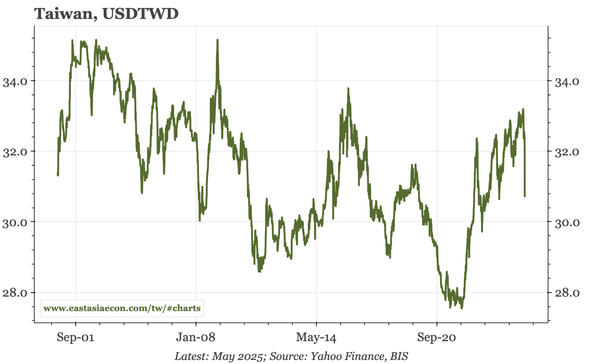
Beijing will be very wary of all the talk of a Plaza II agreement. Plaza I is widely seen as a successful effort to stop Japan's economic rise. That imbalances have nonetheless persisted suggests US macro policy has a role to play, but why would US promises to get fiscal under control be credible?
Region – Taiwan still leading
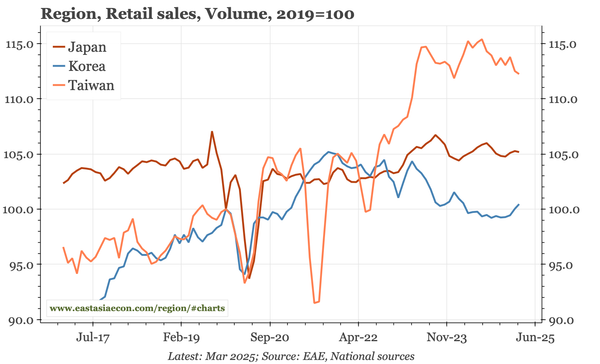
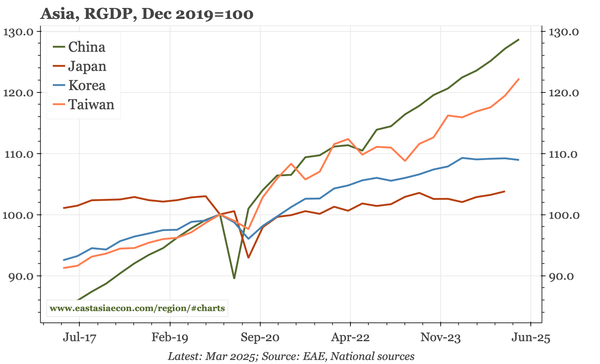
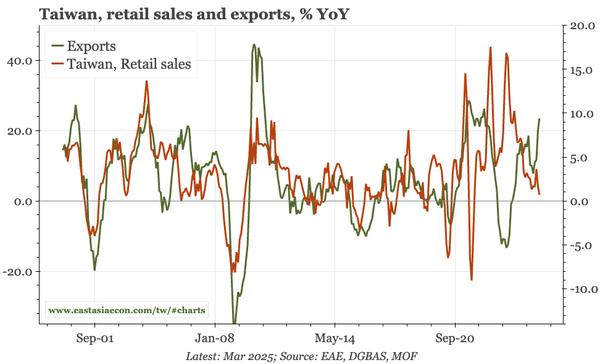
The contrast between the Taiwan and Korean cycles is striking. In Taiwan, retail sales, while now rolling over, have been strong, and the decline is being offset by continued growth in IP. In Korea, weak retail sales aren't getting better, and IP continues to flatline.
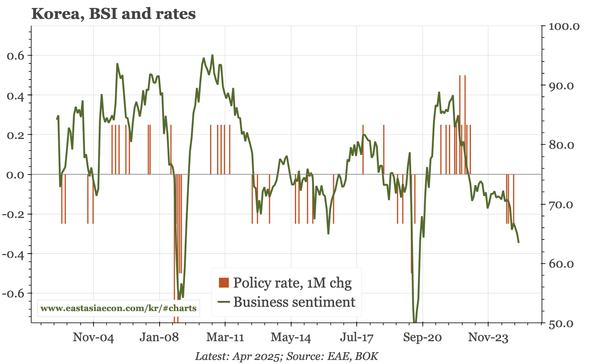
Korea – BOK acts on growth
As expected, weak growth is now the BOK's main concern, with the bank reacting by cutting rates for a second consecutive time. The bank was already feeling confident about CPI, and worries about property have now also receded. If planned measures constrain $KRW upside, further rate cuts are likely.