Paul Cavey
China – Japanification scorecard: part 1
A video discussing why China isn't following Japan's path. This is the first part, looking at the seven demand-side factors that caused Japan's problems, and how China compares. The second video will discuss supply-side issues and the "deflationary mindset".
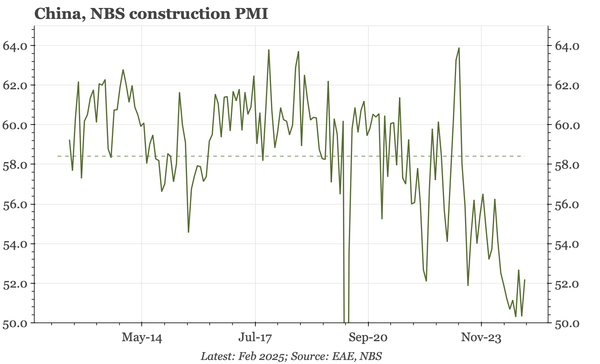
China - PMI details suggest a floor
The PMIs continue to suggest that, overall, there was no lasting improvement in the cycle after the September policy push. There are though some signs that things aren't getting worse any more, with both the construction PMI and employment indicators suggesting a floor.
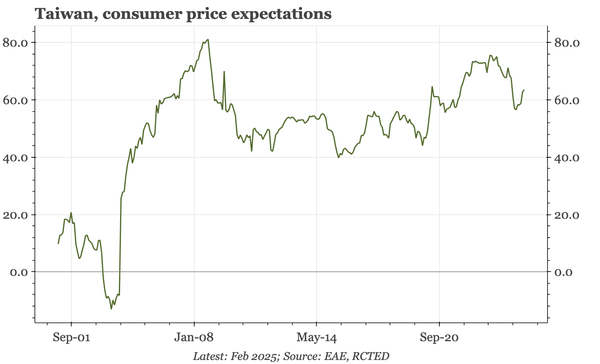
Taiwan – inflation expectations rising again
The rebound in price expectations in Taiwan's consumer confidence survey is starting to look interesting. It isn't just Chinese New Year, with the rise beginning in October last year. Certainly not grounds for the CBC to be cutting rates. Perhaps a reason to hike?
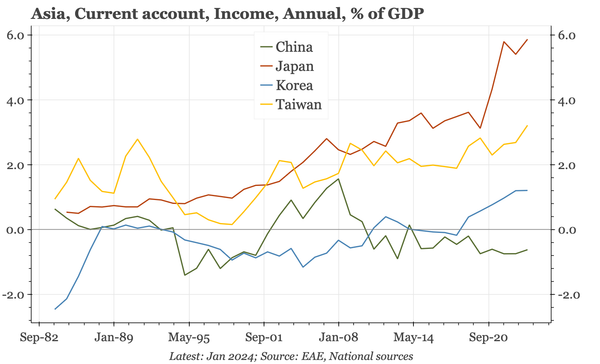
Region – big external surpluses aren't just about trade
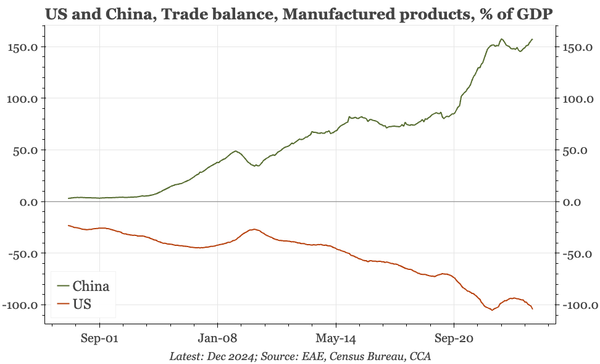
Given US policy, the timing of the rise in current account surpluses in Asia in 2024 is bad. But surpluses aren't just about trade. Indeed, an increasing driver is income generated from overseas investments, which give some resilience to surpluses, an underlying support to currencies.
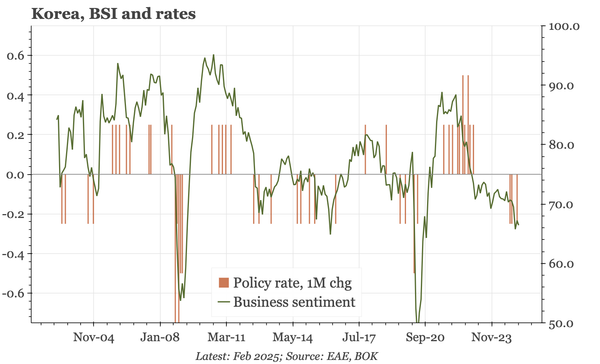
Korea – BOK cuts, and hopes for fiscal
For the third time since October, the BOK cut rates today. It expects to cut rates further, and although one dynamic affecting the scope and timing will be house prices, the bank also hopes for fiscal policy, which is the one driver it can identify that could serve as an "upside factor for growth".
Japan – SPPI inflation peaking?
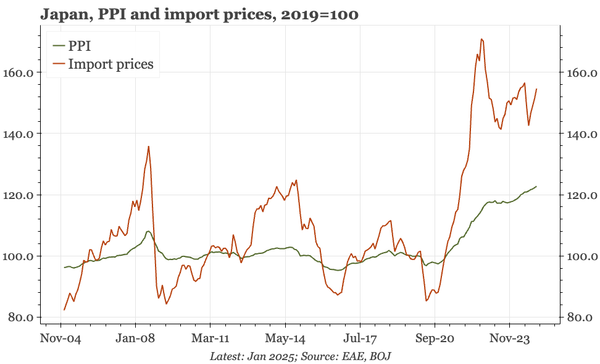
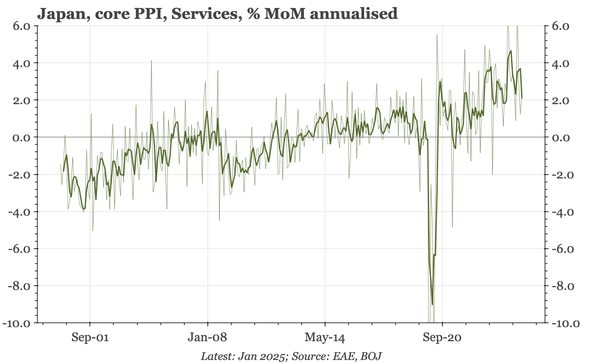
In YoY terms, the trend in services PPI inflation is still up, but sequentially it is starting to look like it has peaked at a bit above 2%. There might get another boost from a strong shunto, but 2% pipeline inflation looks light for getting sustainable CPI of the same rate.
Korea – still in a cutting cycle
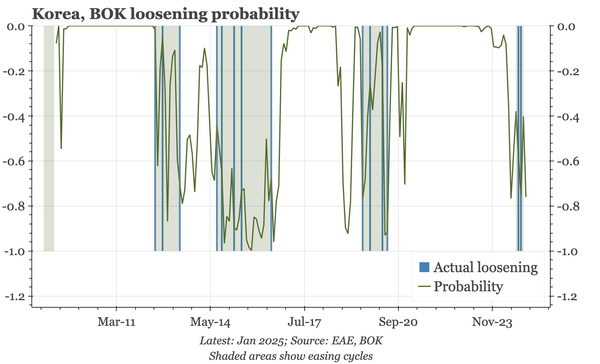
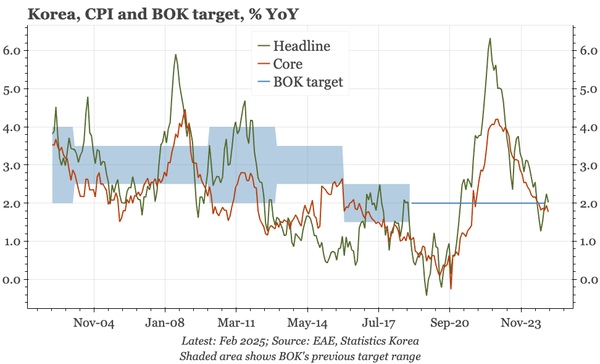
As it did in January, a BOK cut next week seems likely. Of course, the bank didn't cut in January, so this forecast risks whiplash. But to turn market pricing, the bank would need to indicate an end to loosening, which is unlikely unless it highlights household debt or services inflation.
Japan – inflation pain
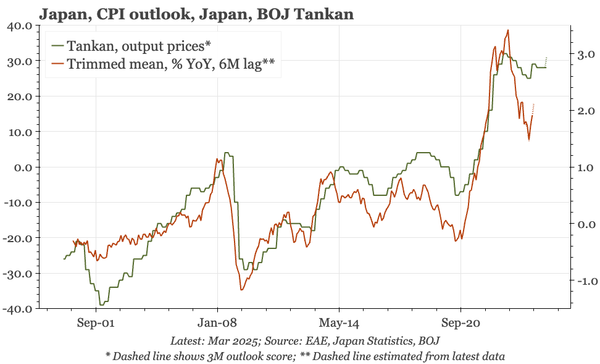
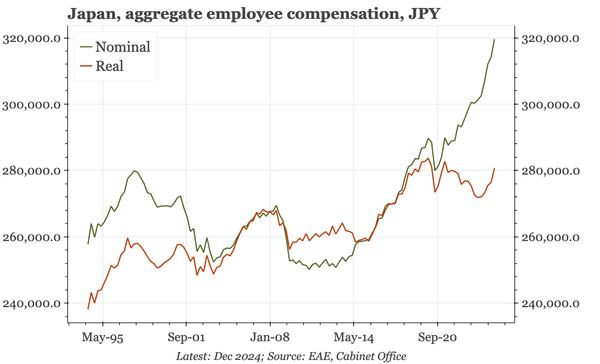
The fundamental inflation story of labour market tightness and wage hikes was seen in today's firm services PMI. But both the PMI and CPI today suggest that dynamic has again been overtaken by prices driven by supply shortages, a phenomenon that is clearly bad for real incomes and so consumption.
Taiwan – another sign of shifting supply chains
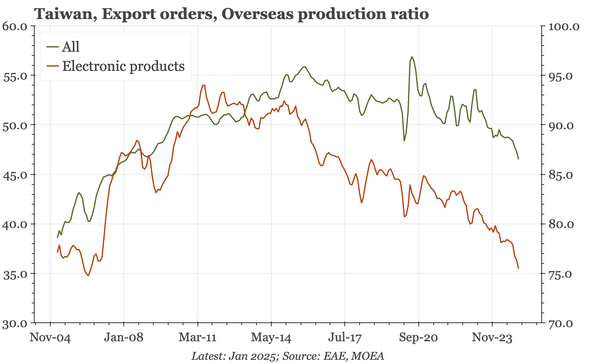
Data today show Taiwan's export orders dipped in January, but that was likely because of the Lunar New Year. Our broader leading indicator shows export growth remaining around 10% YoY in the next few months. More interesting in today's data is the continued fall in the overseas production ratio.
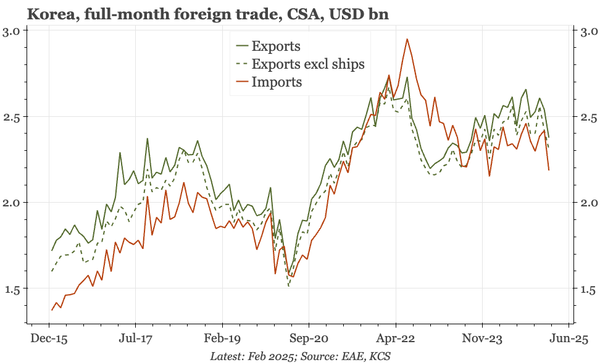
Region – an illustration of Korea's export problems
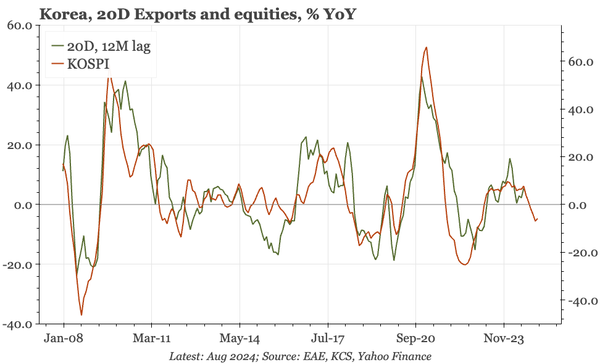
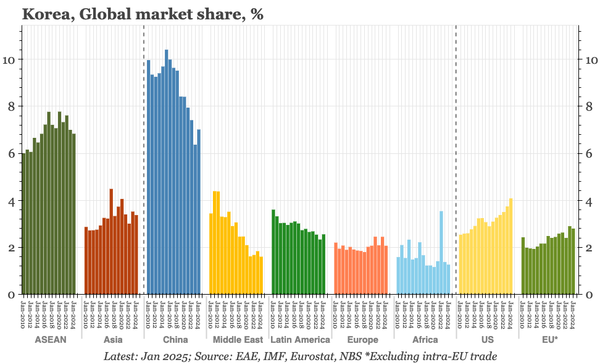
This is a shorter thematic note than usual. In the longer piece last week, I didn't come up with a chart that nicely summarised Korea's export challenge. I think I have it now. While Korea is holding on in DM, it is losing market share just about everywhere else, being pushed out largely by China.
Korea – confidence up, prices down
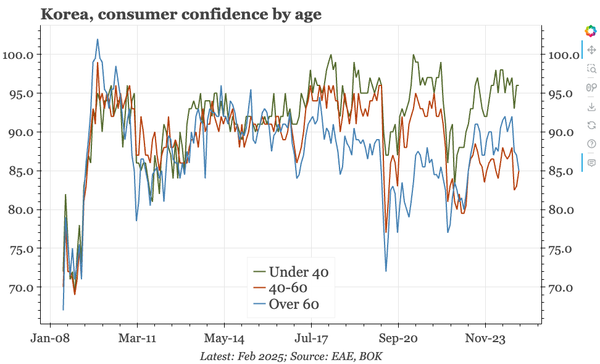
Consumer confidence rose again in February but remains well below the LT average; moreover, the improvement is only being among younger people. At the same time, CPI and property price expectations softened. There will be more news tomorrow with business sentiment.
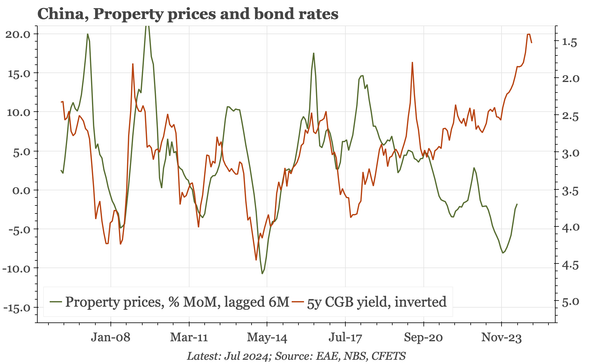
China – less property price deflation, but only just
Deflation eased in January, but only slightly. That's no surprise, given mortgage lending also remained weak last month. The sluggishness is persisting despite low rates, and the failure of rate cuts to revive the quintessentially rate sensitive sector remains a standout feature of this cycle.
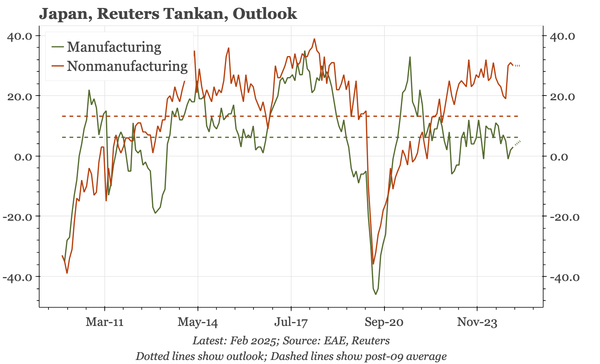
Japan – solid services Tankan
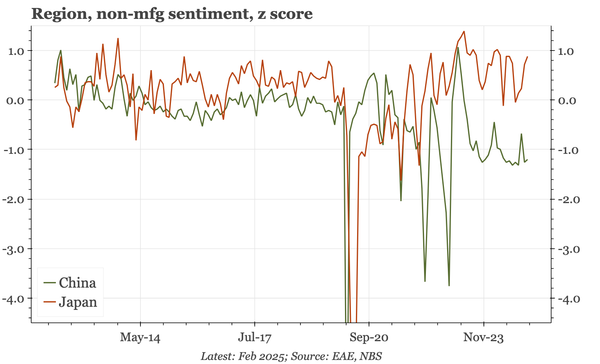
Services sector sentiment in the Reuters Tankan remained elevated in today's February survey. Manufacturing is much weaker, and that remains something to be watching given the extra downside risk from tariffs. But in terms of Japan's cycle, Q1 is likely to be another decent quarter.
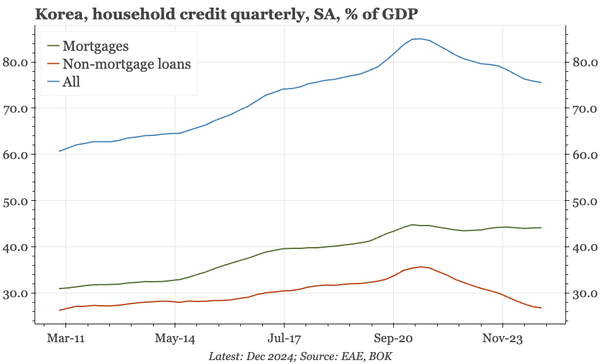
Korea – household deleveraging
Today's Q424 data show a continuation of the pick-up in household lending from the trough of early 2023. But at 2.4% saar compared with 8% before 2020, the rebound is mild, and slower than GDP growth. For an economy where most indicators have been deteriorating, that's one bit of good news.
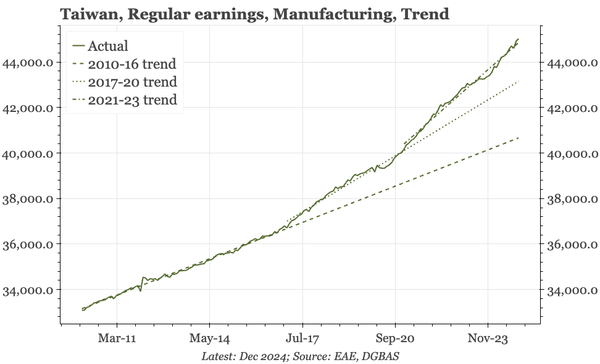
Taiwan – upturn in wage growth holding
Like Japan, Taiwan had years of slowing wage and price inflation. And so, similarly with Japan, the turn in wage growth since the financial crisis is as much structural as cyclical. There's no sign of price inflation becoming problematic, but this wage picture suggests it isn't going back to zero.
China – credit mixed, and need more evidence of deposit turn
Gone are the days when the monetary data can make a big difference to the market mood. Today's release doesn't turn back the clock: the headline is a bit stronger, but mortgage lending wasn't, and there are distortions from Chinese New Year and definition changes.