Taiwan – inflation expectations rising again
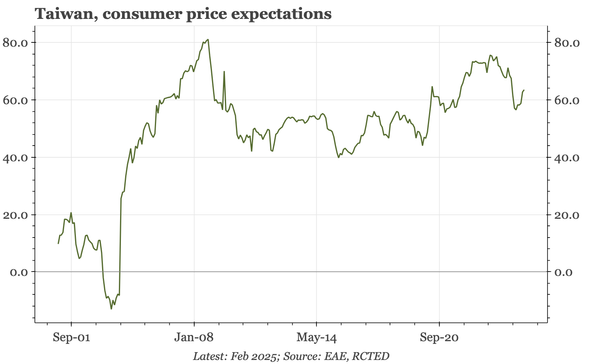
The rebound in price expectations in Taiwan's consumer confidence survey is starting to look interesting. It isn't just Chinese New Year, with the rise beginning in October last year. Certainly not grounds for the CBC to be cutting rates. Perhaps a reason to hike?
Japan – SPPI inflation peaking?
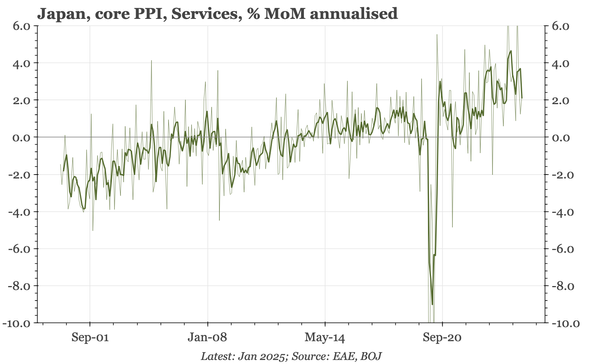
In YoY terms, the trend in services PPI inflation is still up, but sequentially it is starting to look like it has peaked at a bit above 2%. There might get another boost from a strong shunto, but 2% pipeline inflation looks light for getting sustainable CPI of the same rate.
Taiwan – another sign of shifting supply chains
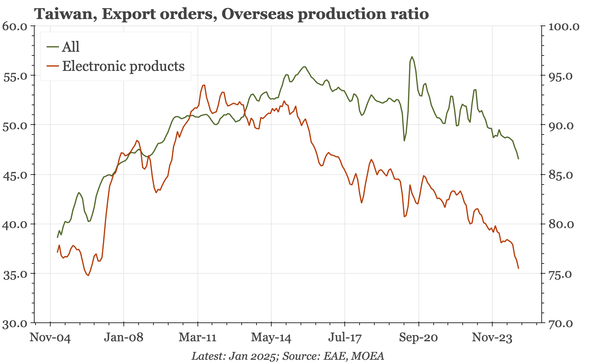
Data today show Taiwan's export orders dipped in January, but that was likely because of the Lunar New Year. Our broader leading indicator shows export growth remaining around 10% YoY in the next few months. More interesting in today's data is the continued fall in the overseas production ratio.
Korea – confidence up, prices down
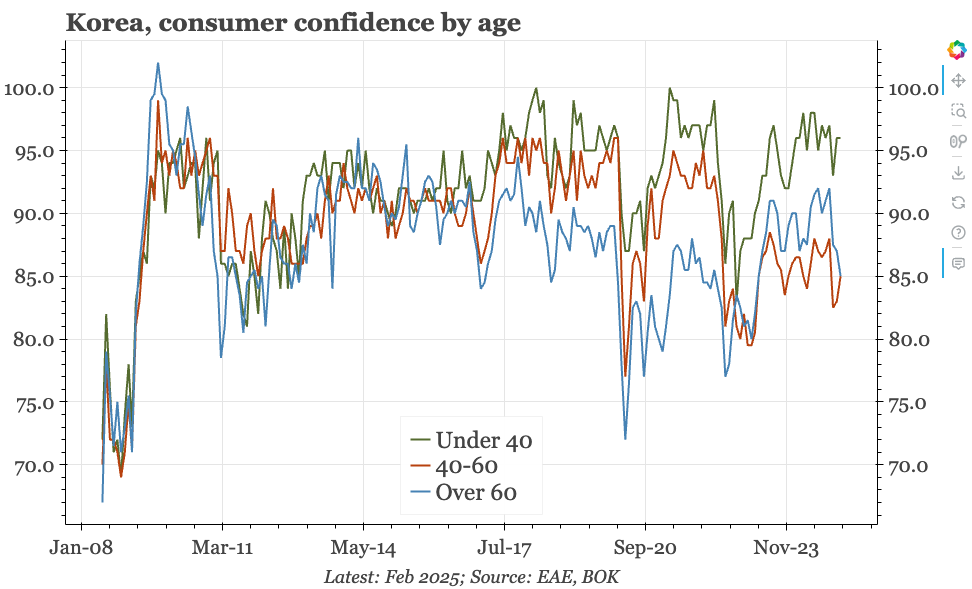
Consumer confidence rose again in February but remains well below the LT average; moreover, the improvement is only being among younger people. At the same time, CPI and property price expectations softened. There will be more news tomorrow with business sentiment.
China – less property price deflation, but only just
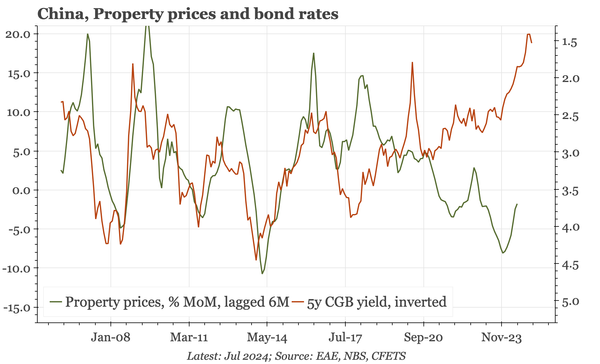
Deflation eased in January, but only slightly. That's no surprise, given mortgage lending also remained weak last month. The sluggishness is persisting despite low rates, and the failure of rate cuts to revive the quintessentially rate sensitive sector remains a standout feature of this cycle.
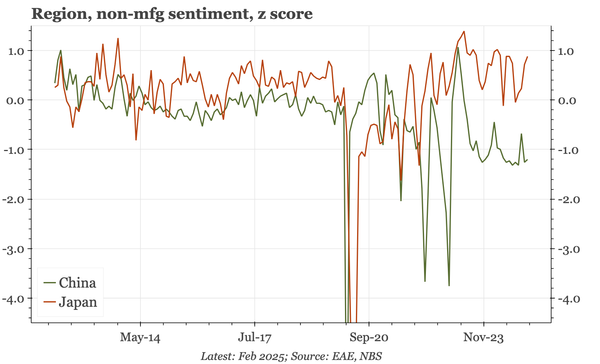
Japan – solid services Tankan
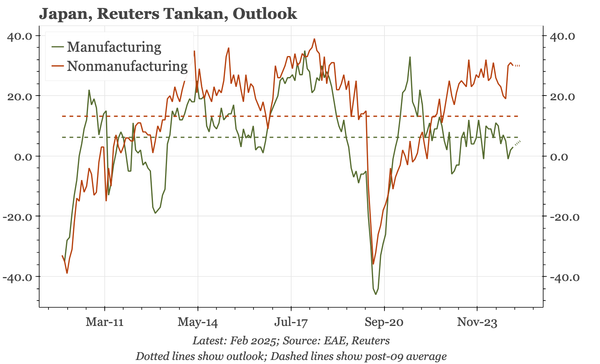
Services sector sentiment in the Reuters Tankan remained elevated in today's February survey. Manufacturing is much weaker, and that remains something to be watching given the extra downside risk from tariffs. But in terms of Japan's cycle, Q1 is likely to be another decent quarter.
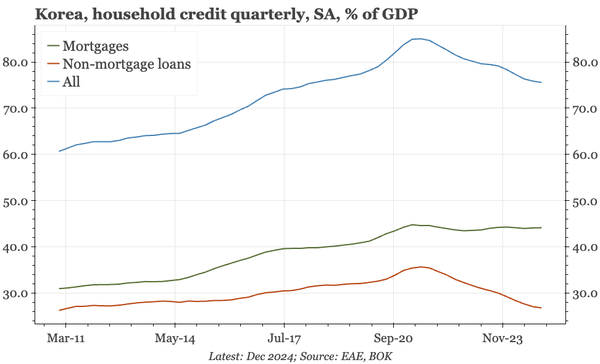
Korea – household deleveraging
Today's Q424 data show a continuation of the pick-up in household lending from the trough of early 2023. But at 2.4% saar compared with 8% before 2020, the rebound is mild, and slower than GDP growth. For an economy where most indicators have been deteriorating, that's one bit of good news.
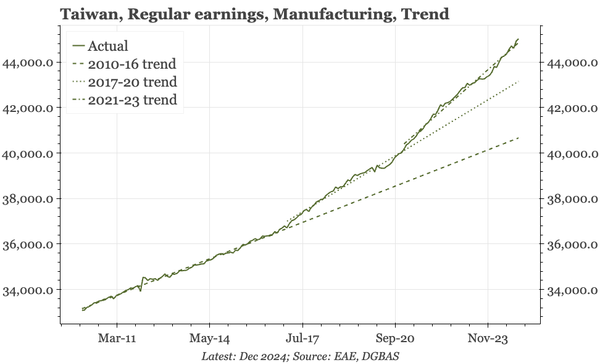
Taiwan – upturn in wage growth holding
Like Japan, Taiwan had years of slowing wage and price inflation. And so, similarly with Japan, the turn in wage growth since the financial crisis is as much structural as cyclical. There's no sign of price inflation becoming problematic, but this wage picture suggests it isn't going back to zero.
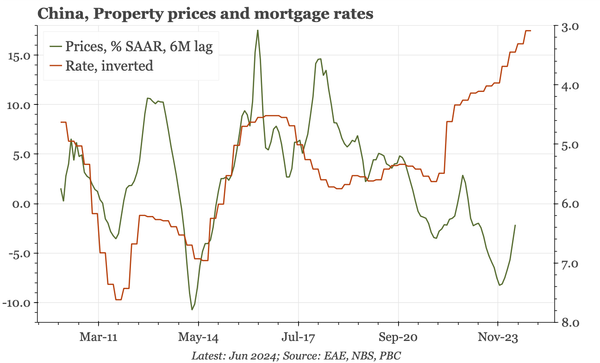
China – real economy rates down again
Today's PBC data show another steep fall in mortgage interest rates in Q4. Rates are still 3%, so can go lower still. However, before 2020, real estate would be booming by now. That there's little reaction this time shows the problems in the real estate market won't be solved by rate cuts alone.
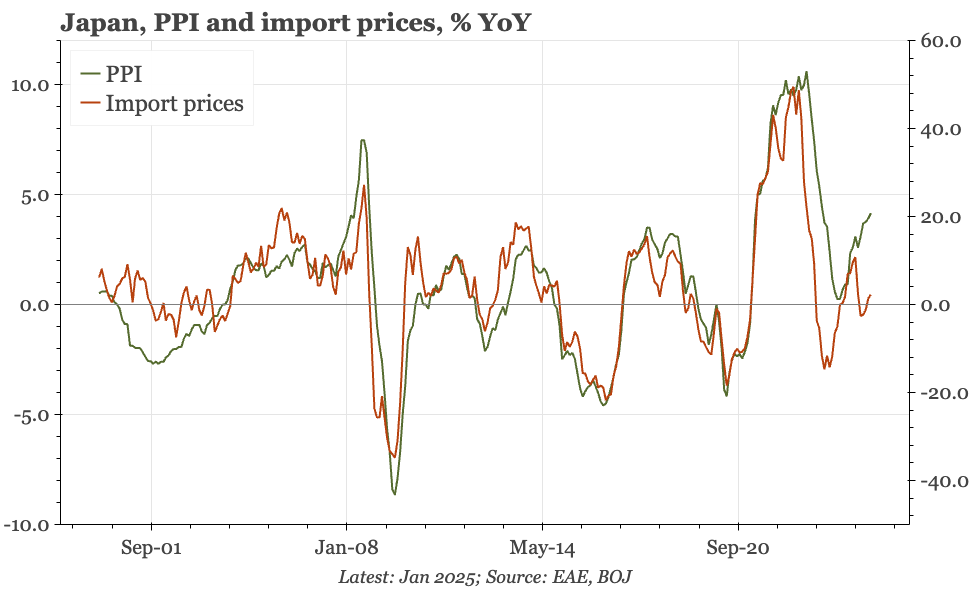
Japan – not simply import prices
Import price inflation did rise in January, but PPI inflation was much higher, and the relationship between the two has clearly weakened. One driver is the cutting back of gasoline price subsidies, a policy that had held back PPI even as import prices surged in 2021-22.
Korea – exports still slowing
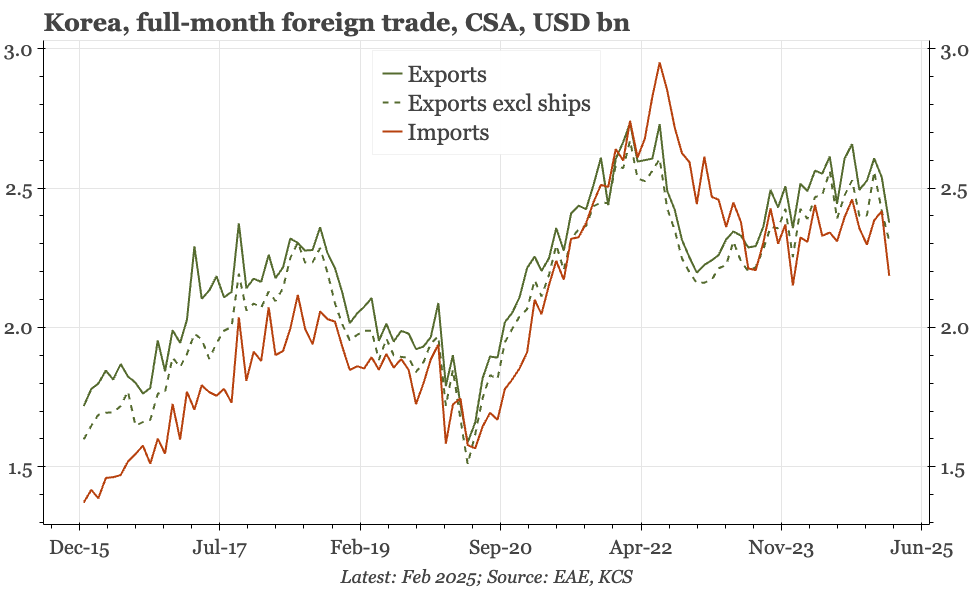
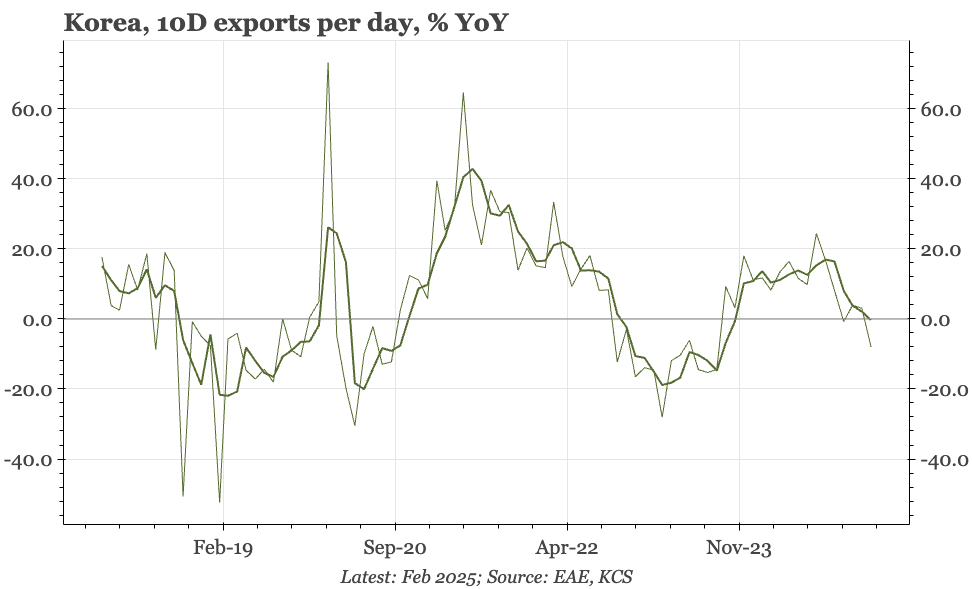
10-day data are never the most robust indicator, and particularly in February given the January holidays. Still, it is notable that there's no turnaround in the export slowdown that began in Q4. Indeed, adjusting for working days, exports have fallen this month for the first time since late 2023.
Japan – EW suggests stable growth
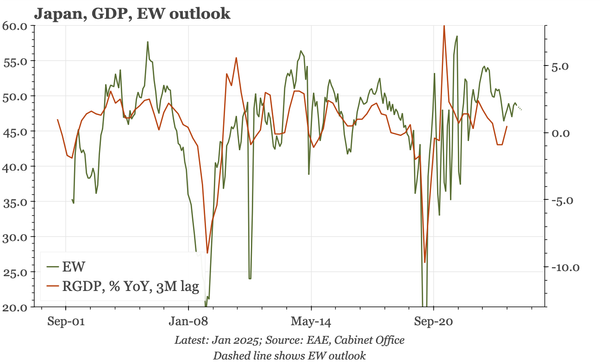
There's plenty of evidence that in nominal terms, the economy is growing strongly. After adjusting for prices, however, growth in real terms isn't nearly so impressive. The Economy Watchers survey today suggests RGDP is expanding, but no more quickly than it was before 2020.
China – holiday affecting PMIs
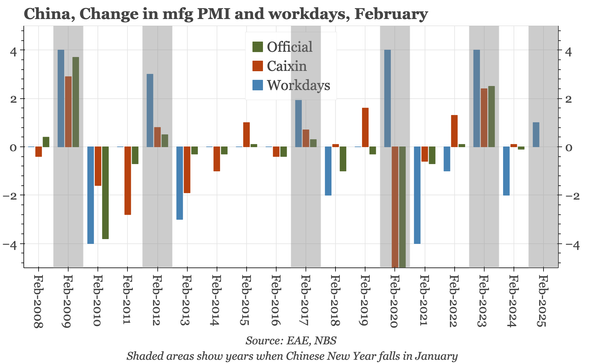
Both the official and Caixin mfg PMIs fell in January. That doesn't tell us much. When Chinese New Year falls in January, it isn't unusual for the PMI to rebound with the rise in working days in February. The sharp drop in jobs in the Caixin is a concern, but wasn't seen in the official version.
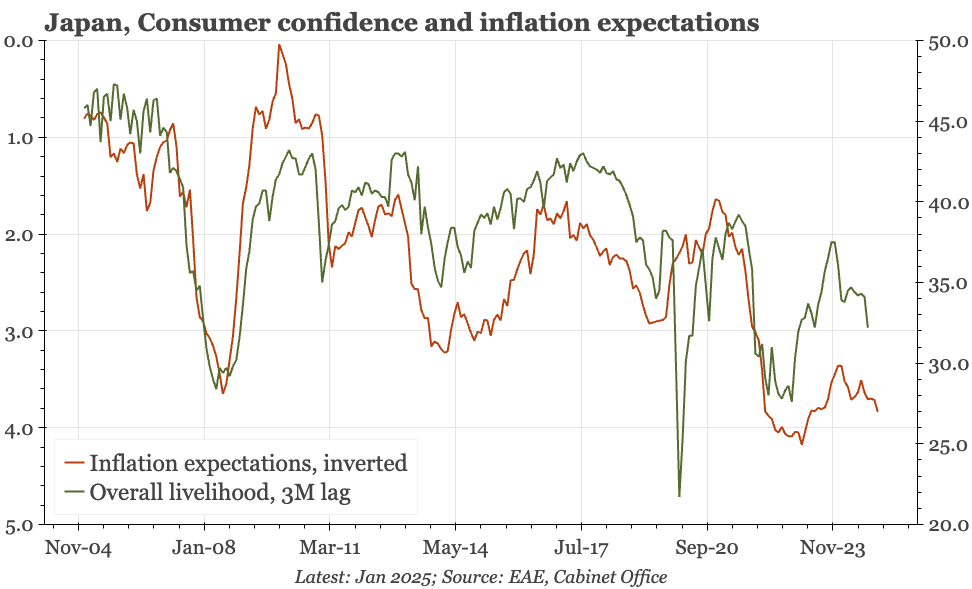
Japan – inflation hits consumer confidence, again
The link between consumer confidence and prices has weakened in the last 18M. But it hasn't broken, as January data show: consumer confidence fell quite sharply this month, as price expectations rose. The implication is that while nominal wages are rising, they still aren't going up quickly enough.
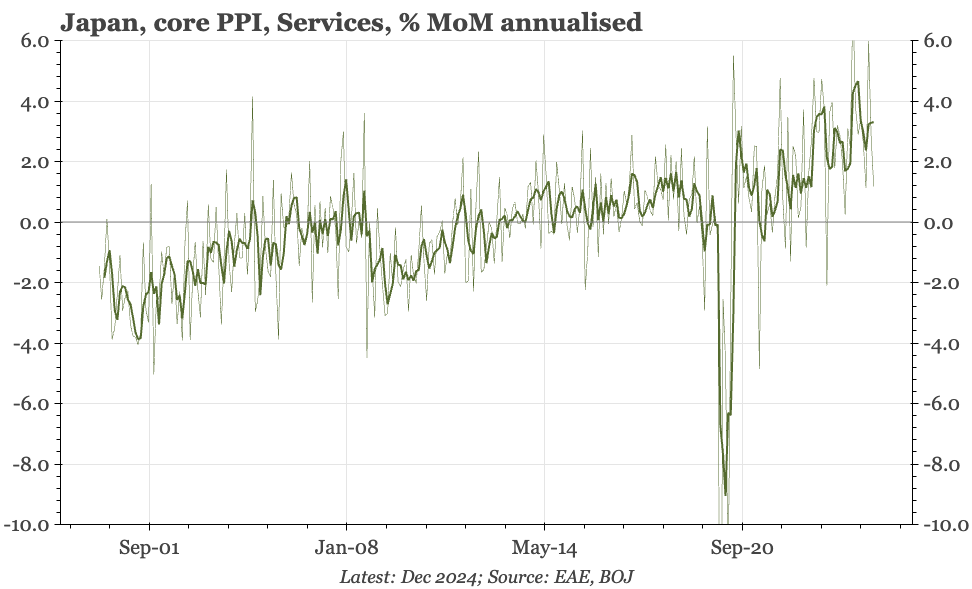
Japan – upstream services inflation still rising
SPPI inflation remains in an uptrend, and is now running around 3.5% saar. A few months ago the BOJ rejigged the data to include a breakdown by labour content, and that shows SPPI rising most quickly in high-labour industries. This will give the bank further confidence in its price-wage story.
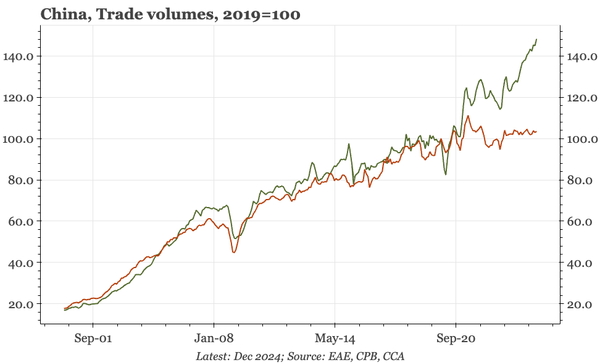
China – exports remarkably strong, imports notably weak
Export volume strength sustained through end-24. From the low of early 2023, shipments have risen by 30%. That's a growth rate rarely topped in the last 15 years, despite today's headwinds of tariffs and a global market share that is already large. Import growth, conversely, has rarely been weaker.
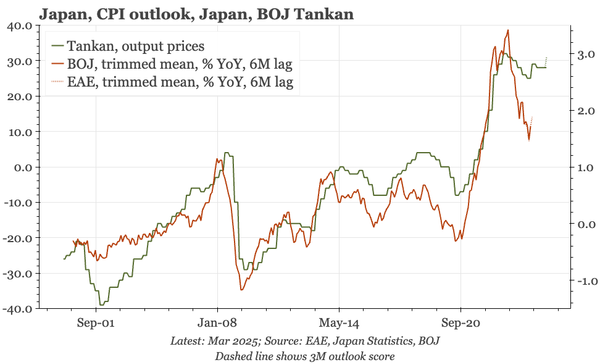
Japan – inflation moving up
My estimate of YoY trimmed mean inflation ticked up for the second consecutive month in December. That matters when the Tankan's measure of output prices has been warning the fall-back in inflation since was overdone. The backdrop is international core inflation settling at 2% saar since August.
Japan – no JPY boost to export volumes
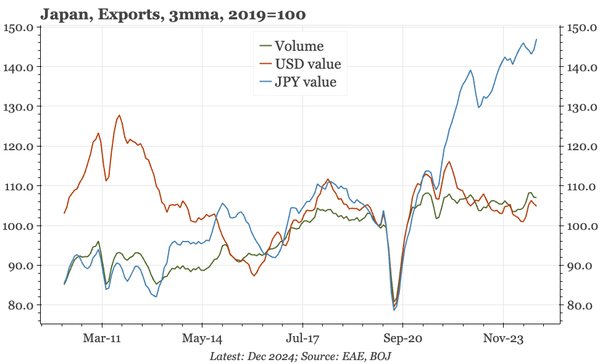
Firms haven't responded in textbook fashion to the weaker JPY. While the currency is down 35% since 2019, export volumes have risen just 7%. The reason is export prices haven't been cut, with the weaker JPY instead flowing straight to the bottom line. In JPY terms, exports rose 50% in 2019-24.
Japan – household incomes up again in Q3
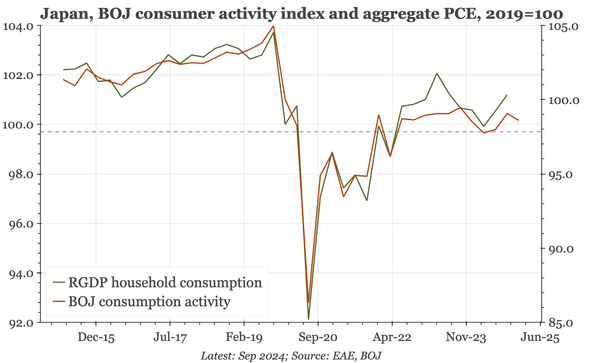
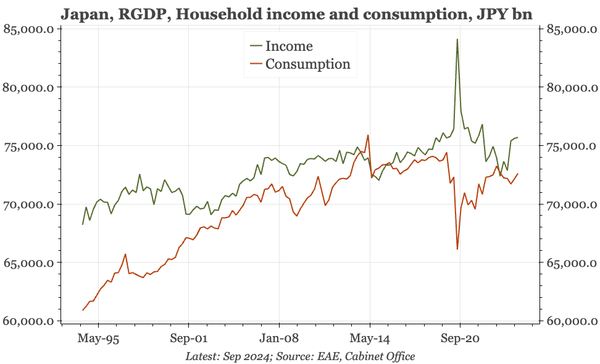
Today's household sector details of Q3 GDP show real incomes rose for a third consecutive quarter. That seems to bring to an end what had been a terrible period for incomes, and with the labour market remaining tight, suggests last year's recovery in consumption should continue.
Korea – consumers still depressed
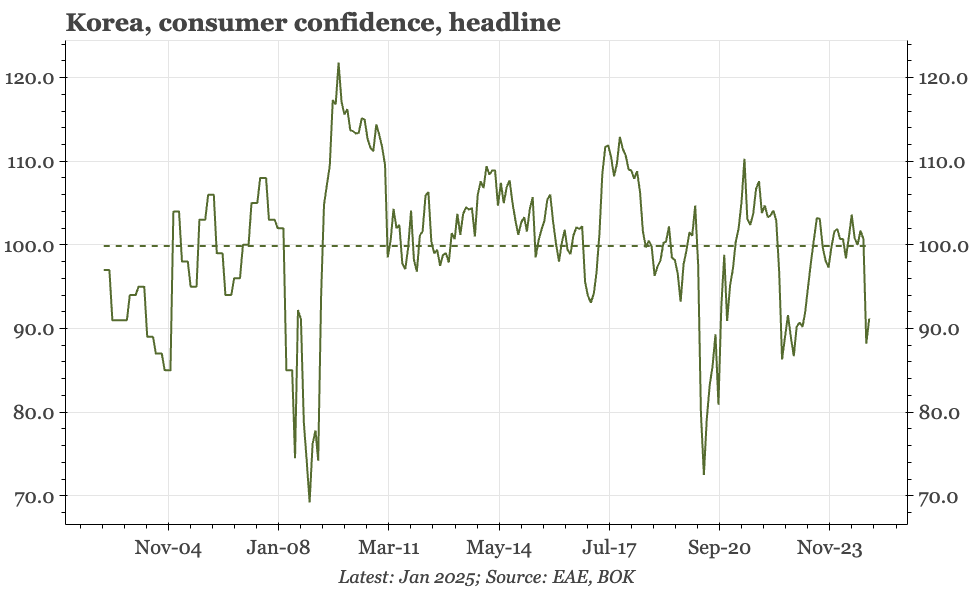
After diving in December, consumer confidence rose in January, but not much. For the BOK it was good news that expectations for property prices softened again, and ticked down for overall inflation. Near-term price expectations rose, but that likely reflects food prices at the beginning of the year.
Taiwan – overseas production ratio lowest since 2007
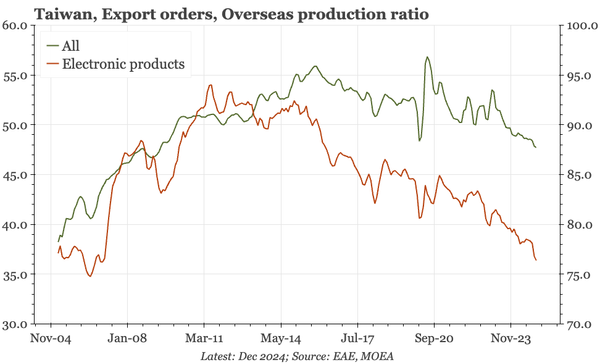
If you want evidence of supply chain shifts away from China, Taiwan's data provides it. Exports and FDI show a big move towards the US and other Asia. In today's export order data for December, the overseas production ratio for IT products fell again, and is now at the lowest level since 2007.