With PMIs in TW and KR improving in May, the gap between the S&P and official mfg PMI is probably export-related. Still, the two PMIs do now give very different messages about the strength of the overall cycle.
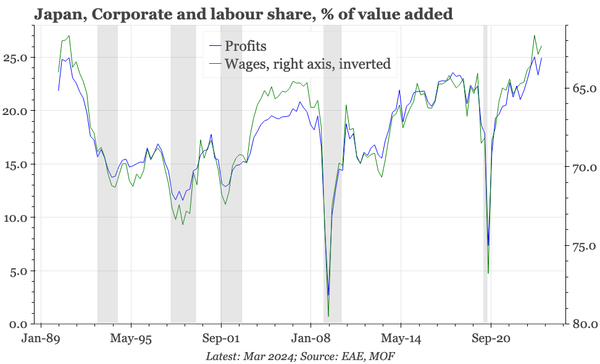
The rapid rise in the profit share of 2023 hasn't persisted into 2024. But there also hasn't been a decline, so the wage share remains at the lowest since the 1990s bubble.
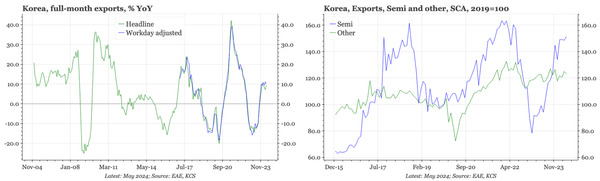
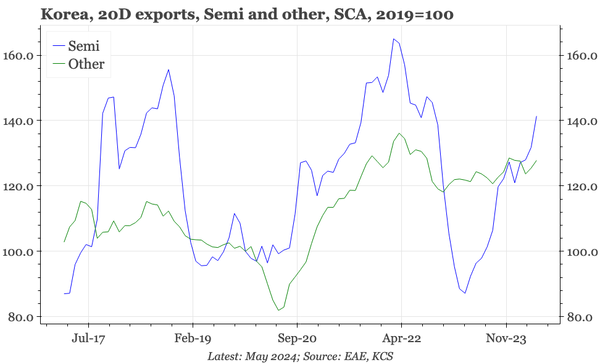
The Asian export cycle feels softer than it should be, with the YoY loss of momentum seen again in Korea's FM data for May. The reason is a faltering of the semi recovery, without other sectors taking over.
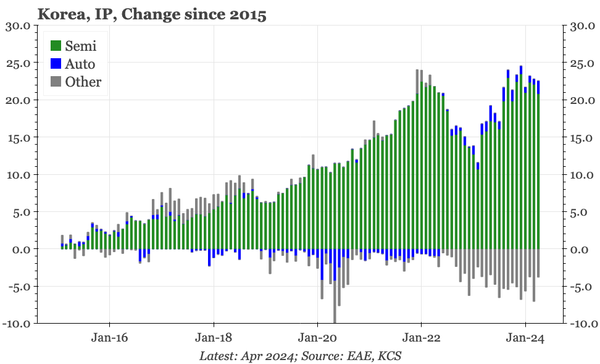
IP data show the sharp recovery in chip production from early 2023 has lost momentum this year. That is significant for the overall economy when the 80% of manufacturing that isn't semi hasn't yet started to grow.
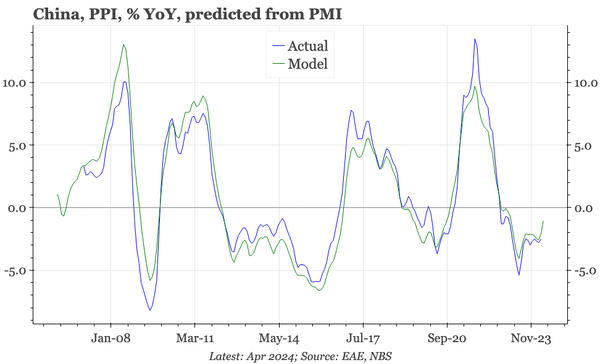
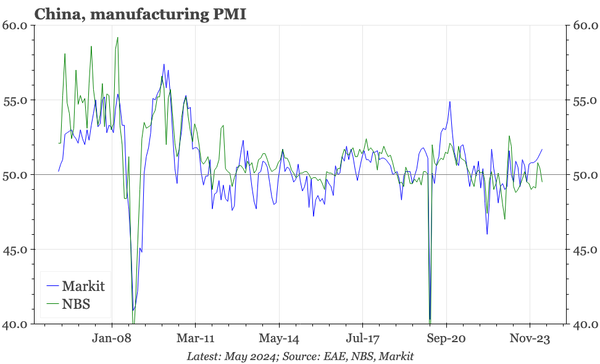
The fall in the May NBS PMI was surprising, not because activity is robust, but because it isn't typical for the headline to fall when rising input prices in the survey are pointing to a recovery in PPI inflation.
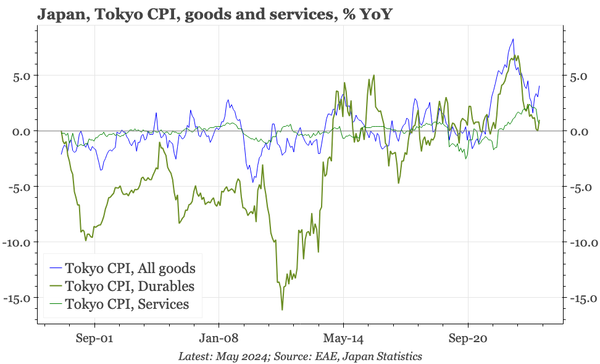
CPI inflation in May in Tokyo continued at the 2-ish% run-rate of the last 6M. But at a headline level, the composition is shifting, away from services, back towards goods. That will further dampen real incomes.
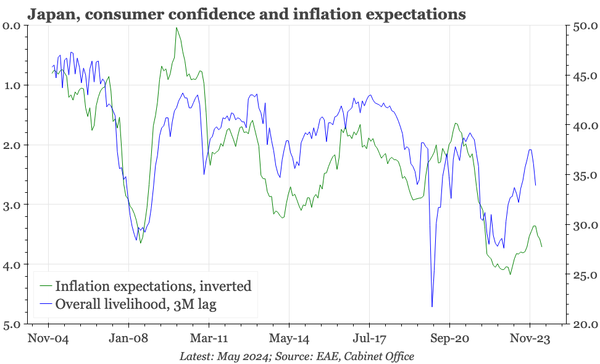
Consumer confidence for May has the same message as the earlier EW survey: the weaker JPY and rise in goods prices is once again eating into real incomes and eroding consumer confidence.
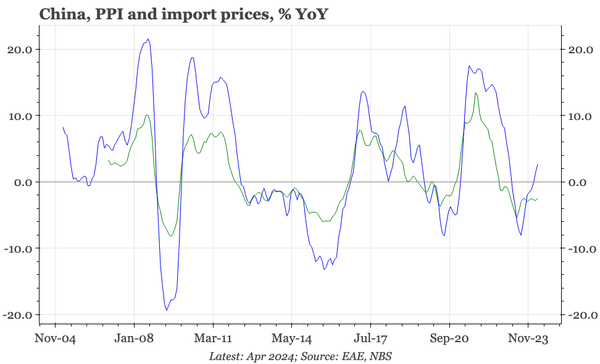
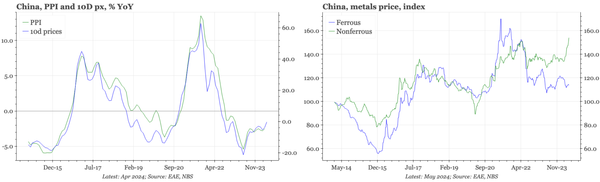
Import prices rose for the second consecutive month in April. It will be a surprise if domestic PPI inflation doesn't now follow suit, and in so doing challenge the idea that China is stuck in deflation.
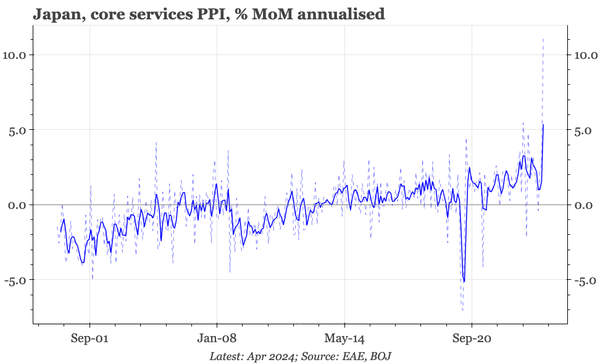
Services PPI has been one of the best indicators of Japan's structural exit from deflation. The slowdown from mid-2023 had thus been concerning. But a rebound started earlier this year, and today's release for April was very strong.
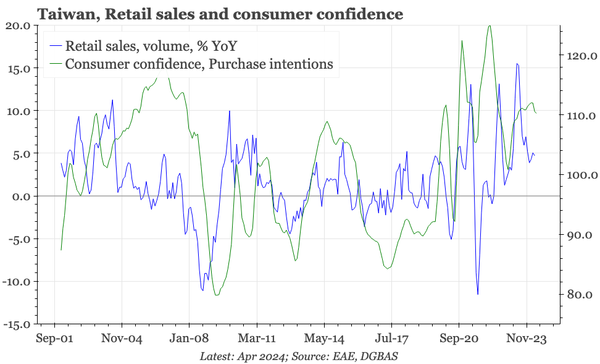
Domestic activity carried the economy in 2022-23 as exports slowed. Exports are now picking up, but consumption is also remaining solid. Consumer confidence isn't particularly strong, but purchasing intentions are.
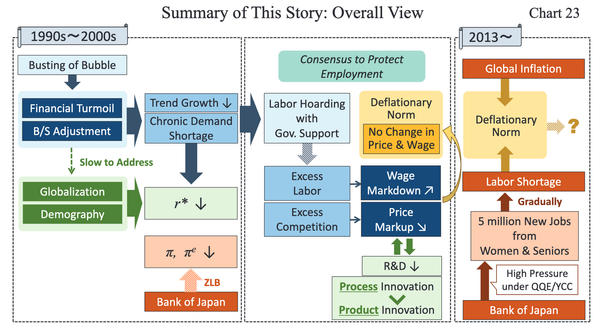
The summary slide from BOJ Uchida's speech today is complex. The last line of the text was clearer: 'I would like to conclude my speech with this phrase: “This time is different.”'
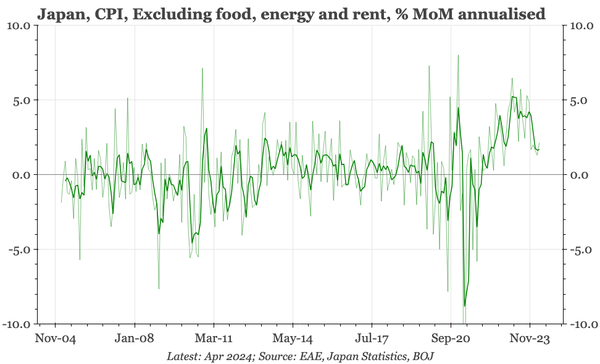
The uptick in underlying inflation in April wasn't much, but is still important, as it fits with the BOJ's idea of transition from import prices to services prices.
Covid disrupted the usual synchronisation between exports and domestic demand. Recent resynchronisation is positive for the outlook, happening not by domestic demand slowing, but exports picking up.
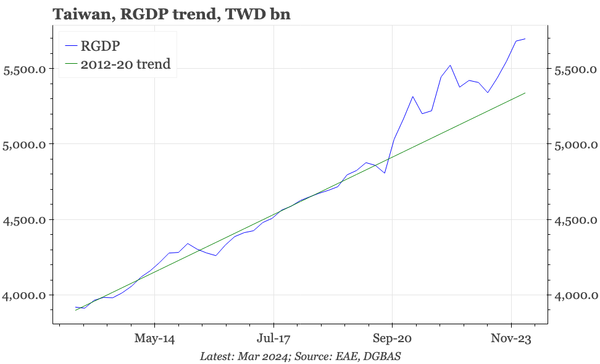
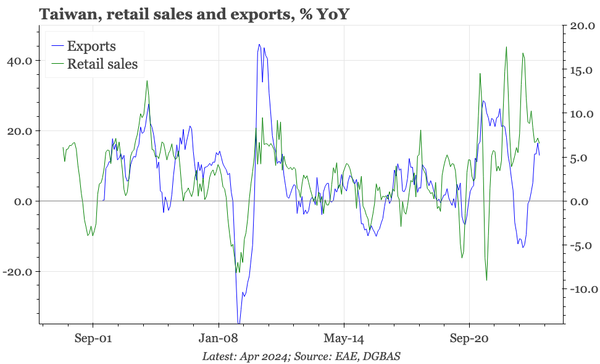
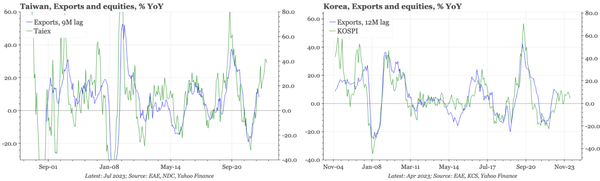
Updating these charts after Nvidia's results. Semis account for almost 50% of Taiwan's exports, compared with 20% in Korea. For now, that looks like a good dependence to have.
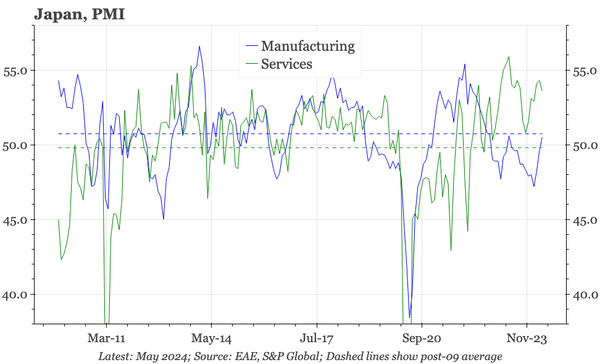
At 53.6, S&P's flash services PMI for May dipped a little from April, but remains well above the long-term average of 49.8. At the same time, the mfg PMI rose above 50 for the first time in a year.
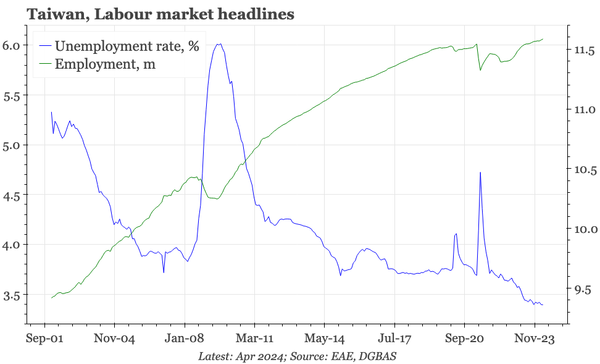
Employment rose to another all-time high in April, keeping unemployment below 3%. This labour market tightness is striking when the mfg PMI has been below 50 for most of the last 2 years.
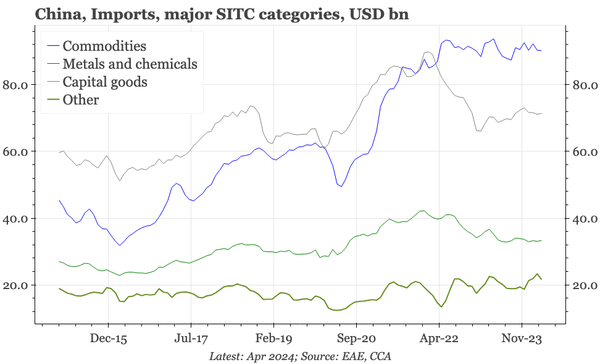
You might think that with property activity collapsing and a mfg boom, China would import fewer commodities and more capital goods. But what's actually happened is almost exactly the opposite.
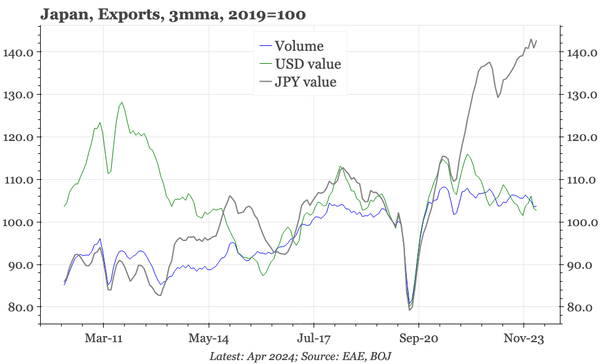
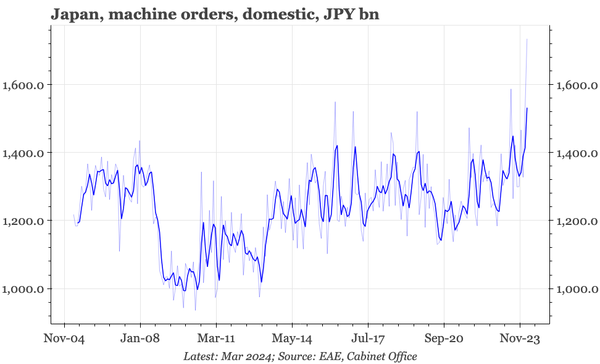
Data today continue the theme of export sluggishness v domestic strength. Exports underwhelmed in April, but the post-covid pick-up in domestic machine orders continued through March.
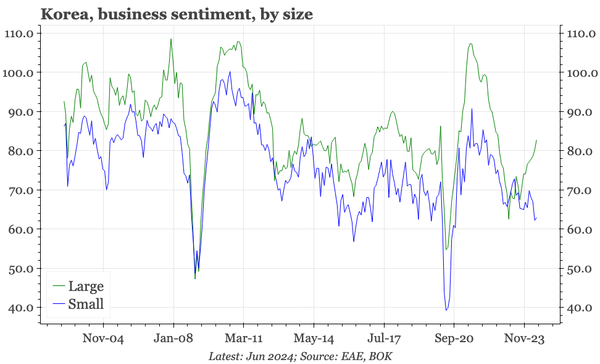
Chaebol dominance isn't new. But at least cyclically, what's good for large firms usually lifts the small too. But that hasn't been true in 2024, and the gap complicates the BOK's task.
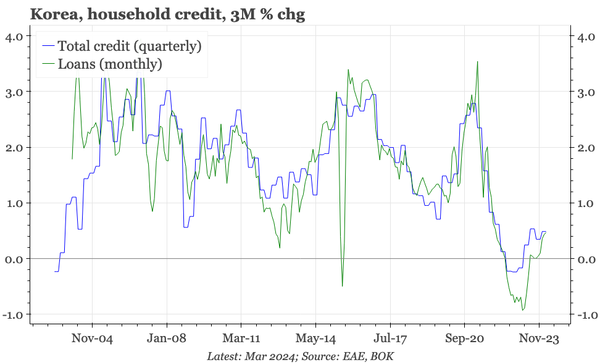
Household borrowing is consistent with the BOK's on-off contention of a soft landing. It is now rebounding, but much less quickly than it was growing before 2020.
Export performance has been stronger in May. Workday-adjusted growth in the first 20 days was almost 20% YoY, a recovery that continues to rely solely on semiconductors.
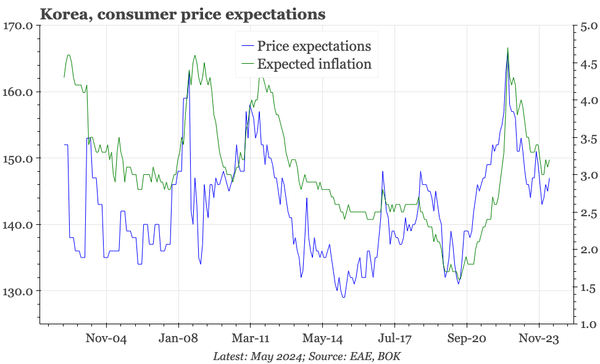
Consumer confidence fell in May, which would reinforce BOK concern about domestic demand. But the bank seems stuck for now because inflation expectations also rebounded.