China – perhaps core CPI hasn't dropped since covid
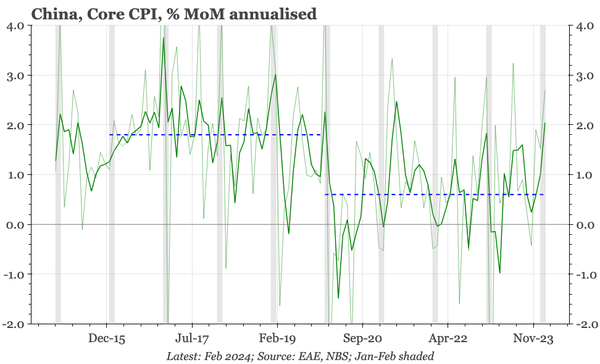
It wasn't surprising that core CPI picked up in February. But the rise took average core in the last three months to 2% annualised, a rise big enough to challenge the idea that there's been a structural shift down in core since covid. That reinforces our view that underlying inflation has bottomed.
Taiwan – everything but exports
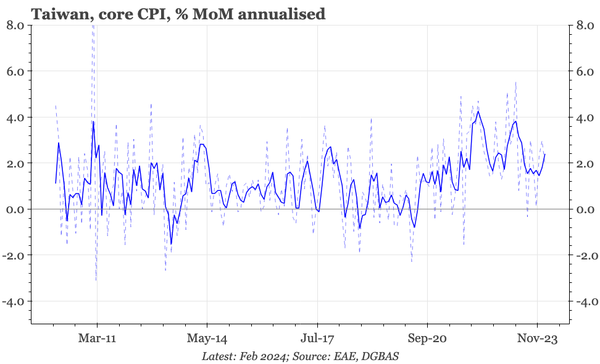
Exports and manufacturing remain sluggish, but the leading indicators look strong. At the same time, services activity remains firm, unemployment is at 20 year lows, and inflation at 20 year highs. If exports do kick in as the leads suggest, it is easy to imagine the central bank having to hike.
Japan – strong sentiment and wages, not consumption
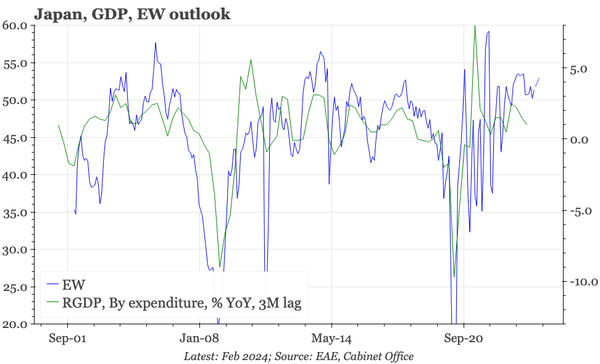
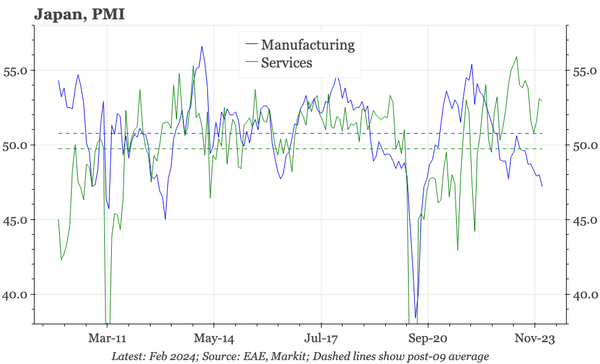
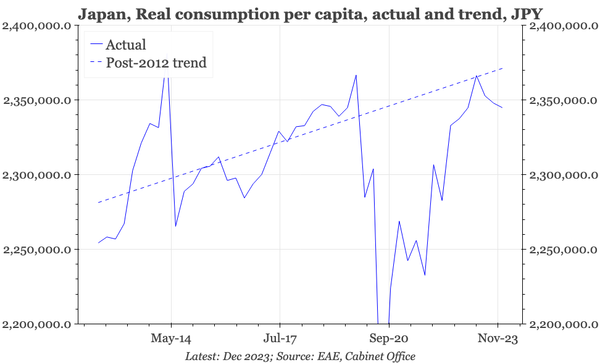
Even more than the PMI, the EW survey points to Japan's cycle having decent momentum. There is upside risk around that, because consumption has yet to recover, while it looks like the shunto wage round will be strong. That is the backdrop for increasingly confident commentary from the BOJ.
China – could it just be a cycle?
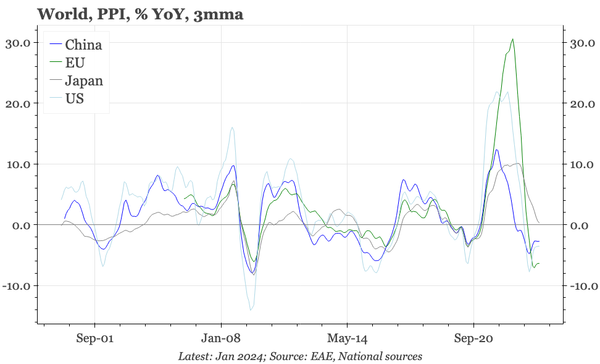
We aren't convinced that falling PPI shows China is stuck in a deflationary trap. China's PPI cycle isn't out of whack with global trends, and unlike Japan in the 1990s, monetary policy isn't reinforcing the drop. There's potential for nominal growth to look better this year.
Korea – headline CPI up, details not
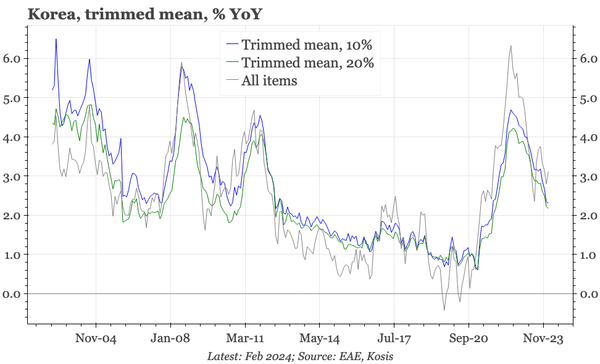
Inflation ticked up in February. That was expected by the BOK, and the details don't look particularly strong, with core stable, and trimmed mean continuing to fall. There is still an argument that inflation will be sticky, with personal services inflation remaining over 2%.
Japan – inflation stable, cycle firm
Headline inflation in Tokyo in February rose from 1.8% YoY to 2.6%. So inflation isn't disappearing. But underlying measures don't suggest that inflation really is accelerating either, with core settling around 2% annualised. At the same time, the PMI shows services momentum remaining firm.
Region – manufacturing cycle
It is always tricky to get a real sense of the manufacturing cycle early in the year when the data are so distorted by the LNY holiday. From what we can tell, it doesn't look like there's been a big pick-up yet, though leading indicators continue to point to upside ahead.
Japan – consumer confidence up again
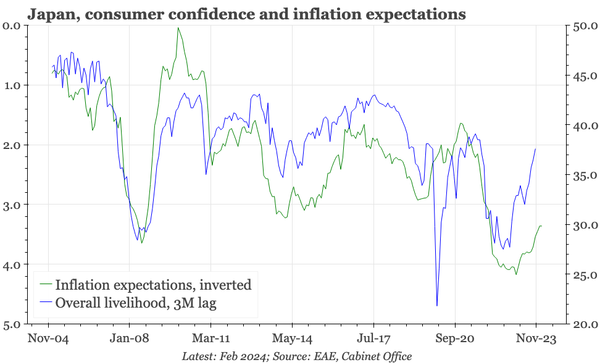
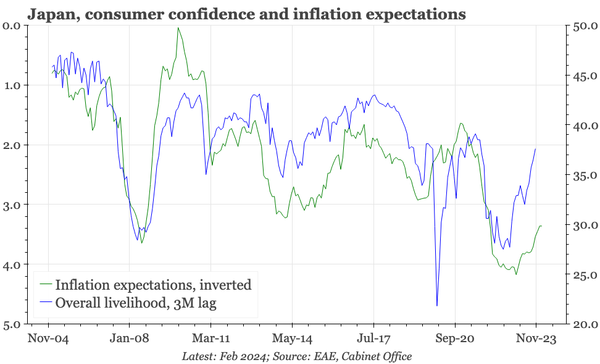
Consumer confidence rose again in February, despite inflation expectations in the survey staying high. That hints at rising real wages. This makes a recovery in domestic consumption more likely, and if that occurs, the economy this year will be stronger this year than the BOJ expects.
China – confusing PMIs
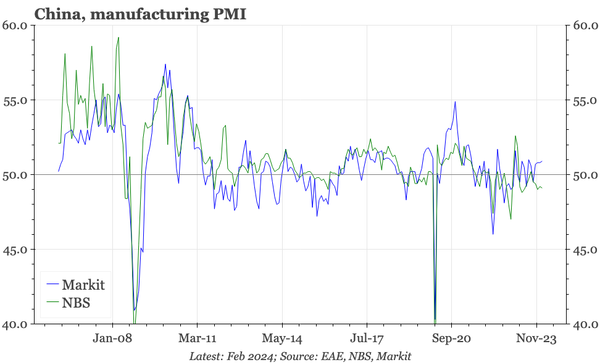
The mfg PMIs continue to tell different stories, with the official survey below 50, and the Markit version above. The gap probably reflects seasonality and the strength of exports versus property. However, there has been policy easing too, so remain mildly optimistic about a floor for the cycle.
Japan - stable inflation
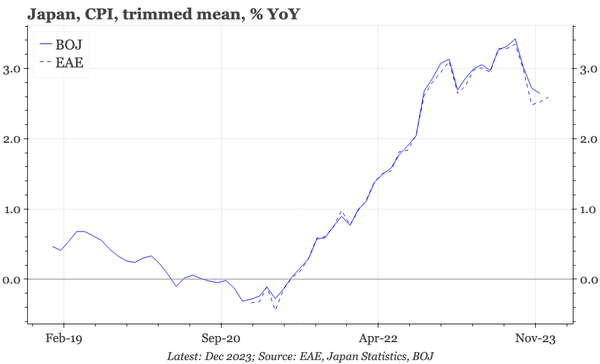
Headline CPI dropped in January to the lowest in a year. Sequential core also continues to ease. That, however, remains above 2%, and our calculations of the BOJ's measures of underlying CPI ticked up in January. Overall, inflation looks stable, but with the one caveat of the drop in services PPI.
China – deflation: an underperforming export
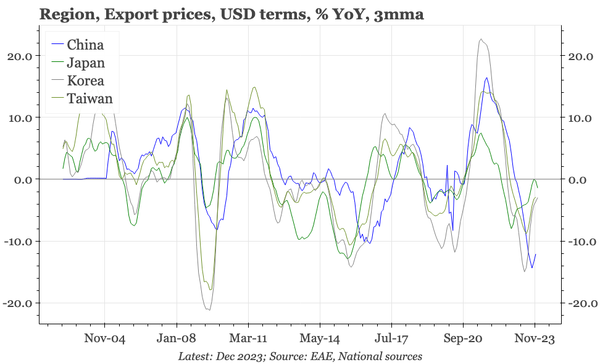
We can't find much evidence of Chinese export price deflation. That's because: price deflation is common across economies when exports weaken; aggregate data don't do well in capturing lower prices in individual products; and China's exporters, being private firms, aren't likely to be so irrational.
Korea – incrementally doveish again
The BOK's official stance didn't change in February. However, the tone today still became incrementally more doveish, with the governor revealing one member being open to a rate cut in the next few months.
Region – the end of secular depreciation
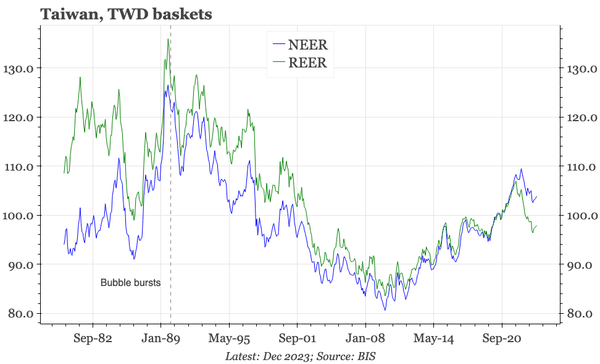
A chart pack presenting a framework for regional currencies. We use secular JPY and TWD depreciation to lay out the framework; apply that to the CNY today; and finally, argue that there are reasons to think the structural weakening of the TWD and JPY is likely ending.
Korea – sideways
Our view has been that the BOK would remain on hold, and that the extent to which improving manufacturing took over from services as the driver of activity in Q1 would determine the next step. That recovery in exports has been soft, which in turn increases the downside risks to rates.
Last week, next week
A summary of what happened on East Asia Econ last week, and what to look for in the next seven days.
Korea – supply-side shifts not big enough yet
Employment rose in January, and unemployment remains low. Recent BOK research focuses on supply-side changes that mean the labour market isn't as tight as these headline data suggest, with the participation rate high and big increases in part-time jobs. However, wage growth has also been quite firm.
Japan – negative consequences of JPY weakness
GDP contracted again in Q4. One driver is JPY weakness, which is boosting services exports, but cutting into consumer purchasing power and consumption. With nominal wage growth looking firm, this backdrop makes it more likely the BOJ moves on policy, with one aim being to stabilise the JPY.
Korea – the job-rich recovery
The BOK has issued another research report looking a labour market dynamics after the pandemic. The report focuses on: the rise in female and hospitality employment, which have reduced wage pressure; and labour market tightness, that is reducing labour reallocation and so dampening productivity.
Last week, next week
A summary of what happened on East Asia Econ last week, and what to look for in the next seven days.
Japan – the BOJ's increasingly consistent line
Deputy Governor Uchida's speech this week reiterated the BOJ's confidence that the economy is nearing a virtuous cycle between wages and prices. He added interesting detail on four specific areas: consumption, wages, policy, and the outlook for potential growth.