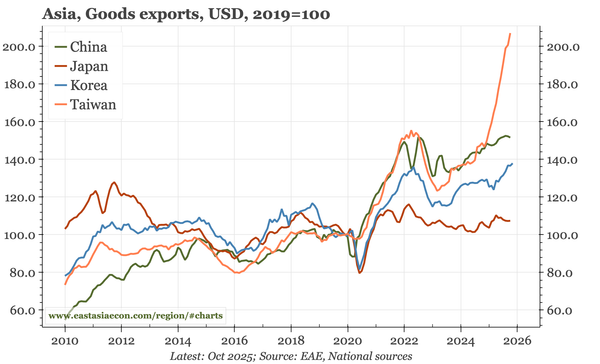
Taiwan – the export surge continues
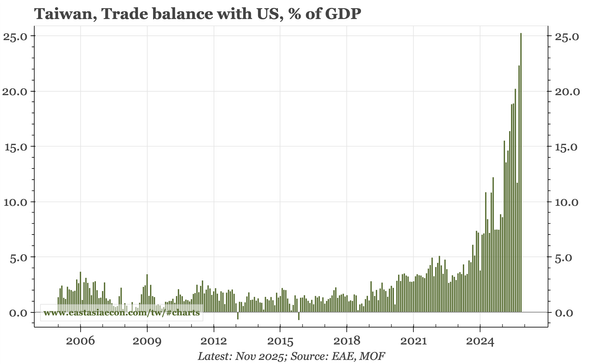
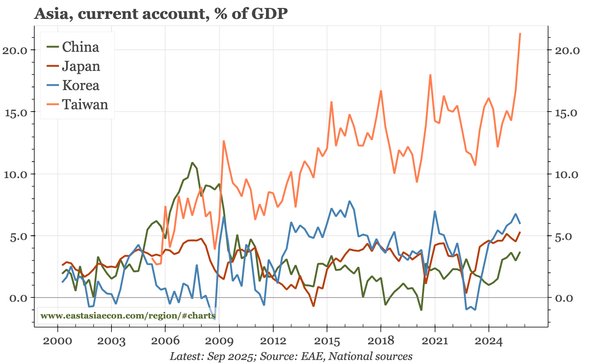
There is little growth in exports outside of tech in general, and semiconductors specifically. But the surge in chip exports is big enough to offset all the weakness in other products. The overall trade surplus eased back in November, but the bilateral surplus with the US reached 25% of Taiwan GDP.
Japan – overcoming fiscal fear
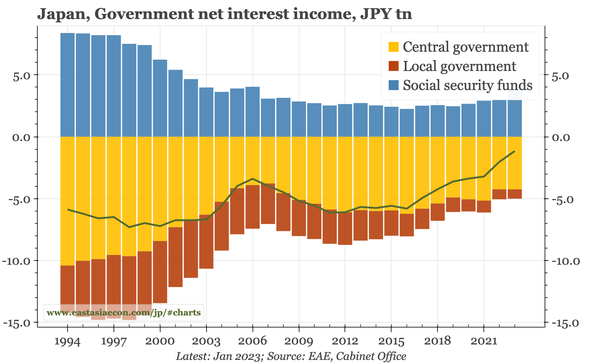
The supplementary budget looks big, but this year's fiscal deficit is still budgeted to narrow. Gross debt is high, but the government's net liabilities have fallen. Interest rates have risen, but before Takaichi took office, net annual interest payments by the government had fallen to near zero.
Japan – real wages stop falling
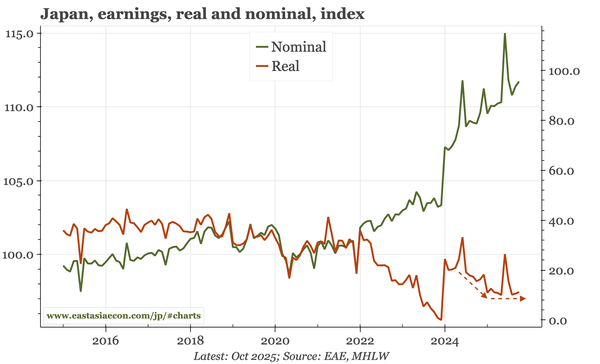
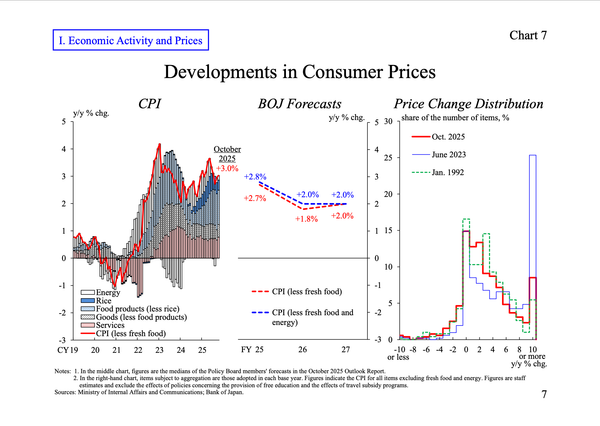
A few releases today – October wages and CA, November Economy Watchers survey, and Q3 revised GDP. The overall picture is mixed, though the acceleration in inflation and drop in real wages into early 2025 has now stabilised, and that is allowing an improvement in household sentiment.
China – exports up again
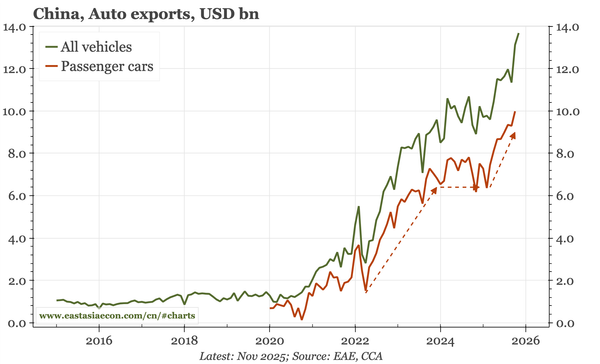
The weakness in exports of October reversed in November, with a rebound in growth to ROW, and shipments to the US stabilising. Auto shipments reached a new all-time high, and are growing as quickly this year as in the initial take-off in 2023-24. Import demand declined, so the trade surplus rose.
Last week, next week
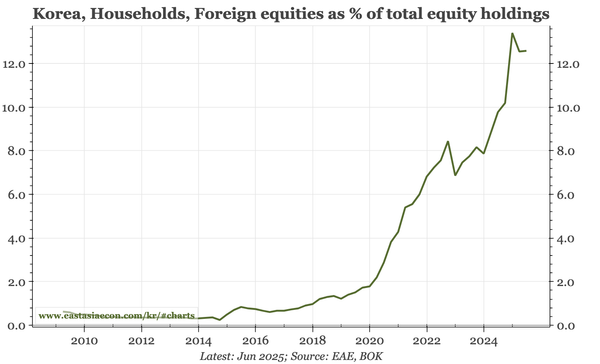
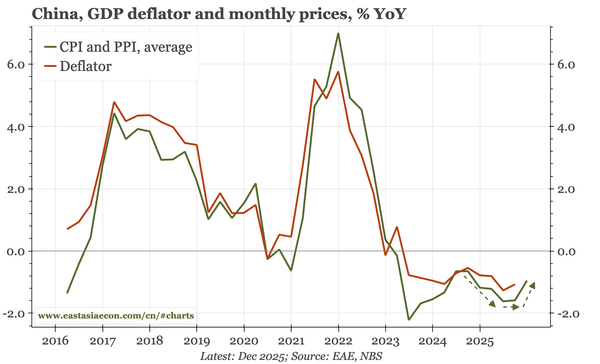
Regional themes: lessening deflation in China, but no sign of real recovery; the BOJ is likely to hike this month, but the JPY needs a hawkish hike; outflows into overseas equities in Korea change usual exchange rate relationships; inflation risks in Korea and Taiwan if AI chip demand is sustained
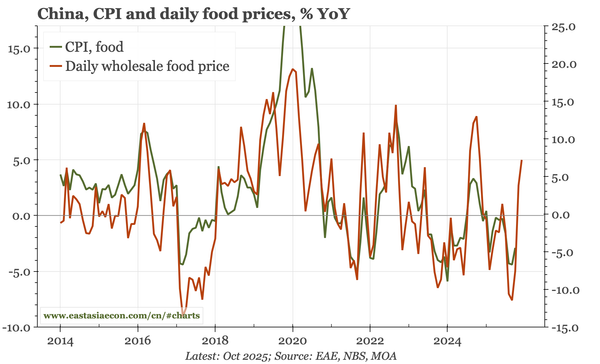
China – lessening deflation
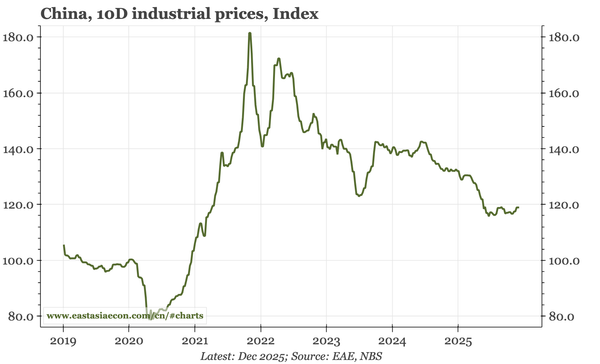
High-frequency data show upstream prices remained stable in November, while food prices have been rising. The combination points to a further lessening of headline deflation. I doubt that signals a real turn in nominal growth, though there are now some upside risks.
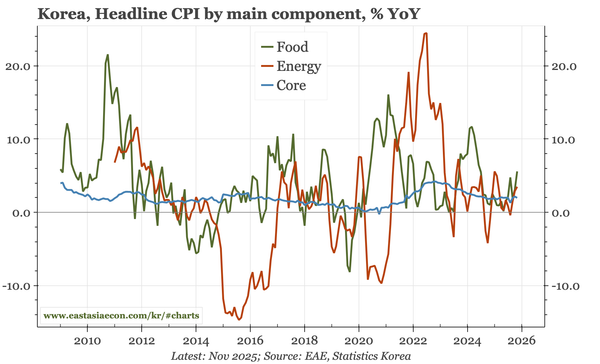
Korea – core inflation stable, but not low
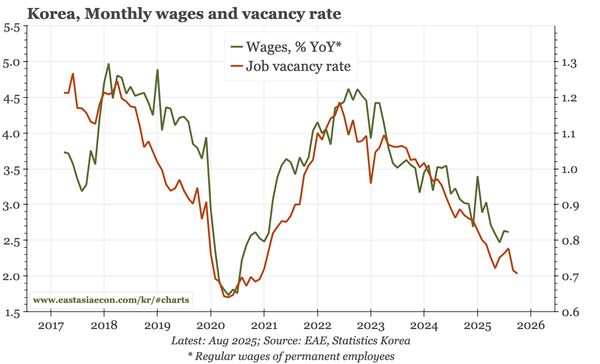
The BOK says the rise in headline CPI inflation to 2.4% the last couple of months is temporary, and that core is stable. That isn't an unreasonable assessment. However, I'd continue to highlight the strength of services inflation, which remains firm reltive to ongoing labour market weakness.
Region – manufacturing PMIs and Korean exports
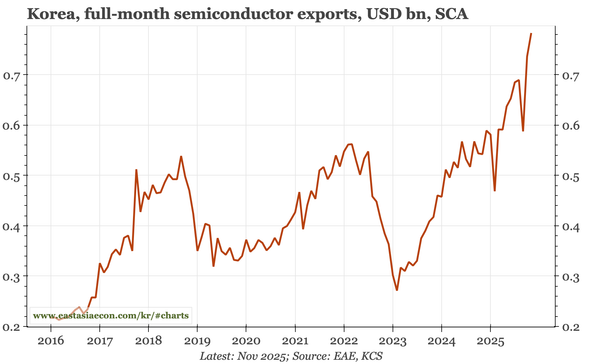
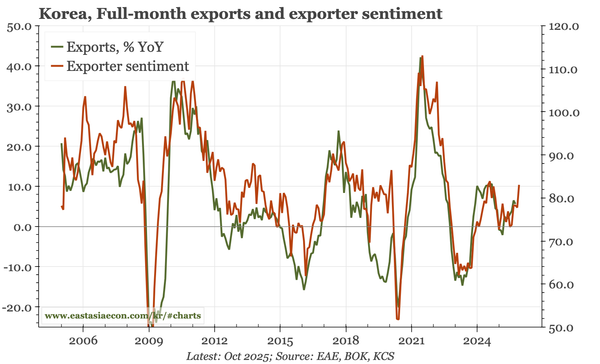
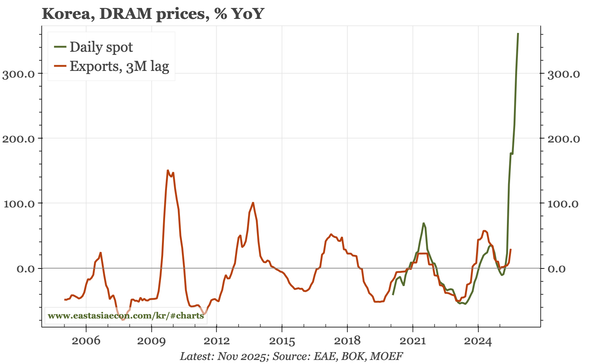
The mfg PMIs across the region mainly remain below 50. That shows that conditions outside of semiconductors remain poor. Semi is strong, and in Korean in export data for November, are departing from a normal cycle. Goods input prices pressures are rebounding, reflecting weak currencies.
Japan – Ueda becomes constructive again
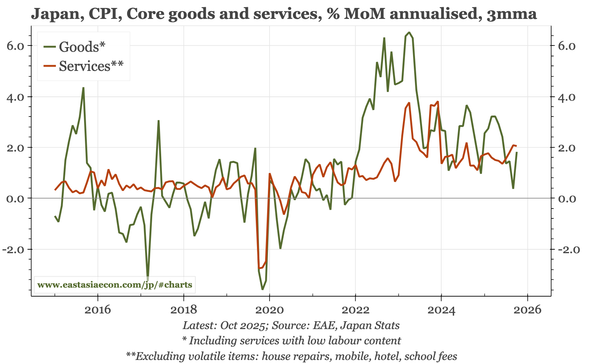
The tone of governor Ueda's speech today suggests a rate hike is close. He claims that risks to the US are receding, identifies five recent positive wage developments, and with firms' price and wage behaviour changing, argues that exchange rate changes are more likely to affect prices.
Last week, next week
The main themes: stabilisation in China, but the picture is muddy; the discrepancy between clear economic boom in Taiwan versus stability in inflation and TWD; upside risks in Korea that still look like risks than reality; the BOJ facing a real fiscal boost when the economy is already recovering.
China – more data puzzles
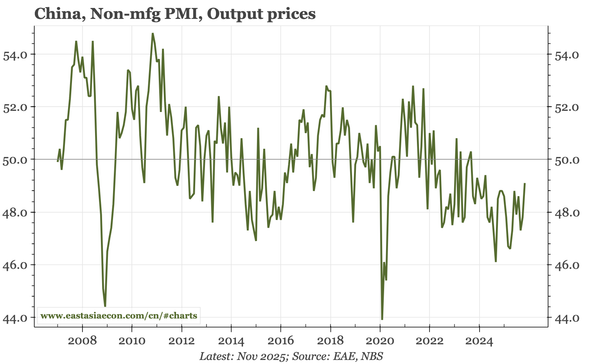
The official composite output PMI in November fell below 50. That wasn't because of FAI: the industrial PMIs were stable. Rather, it was weakness in services. That is puzzling. For now, the one concrete indicator from today's inflation is actually positive: deflation isn't getting worse.
Taiwan – everything revised up, except inflation
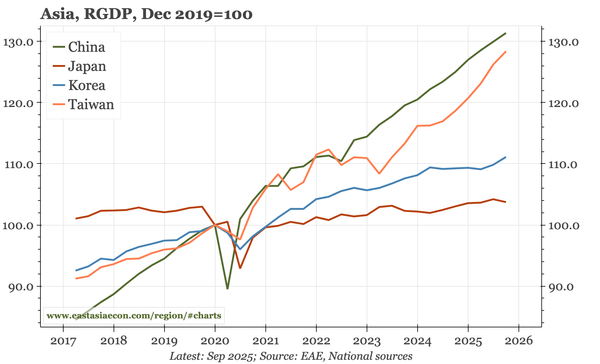
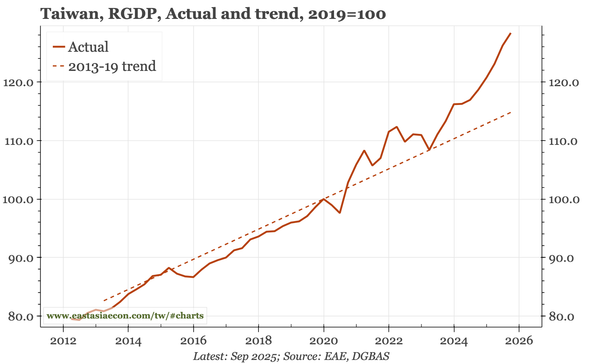
In today's GDP release, the government raised estimated growth for Q1, Q2, and Q3. The FY forecast was raised by almost 3ppts to 7.4%. But because of AI, officials remain bullish about the outlook, and so raised the forecast for 2026 as well, And yet, none of this is expected to impact inflation.
Korea – still no clear lift in growth
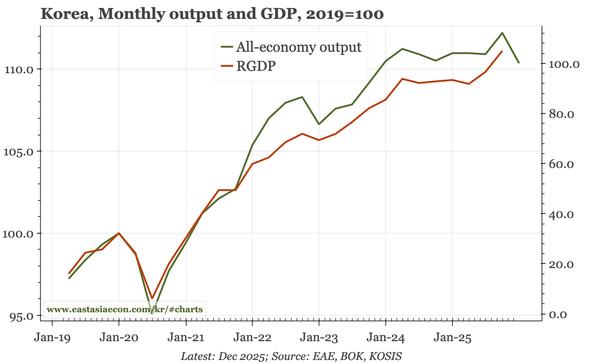
The BOK's revisions to the GDP outlook yesterday were modest. But in today's October output data, there's little sign of any improvement at all. The data are affected by the long Chuseok holiday, and will likely look better through year-end. Still, it is clear the economy still faces headwinds.
Korea – was when, now also whether
The BOK didn't raise growth forecasts above potential, but still signalled some concern about the resilience of inflation. That sounds a touch stagflationary, and was used to justify a step back from its loosening stance. Growth only gets above potential in its chip-driven upside scenario.
Japan – SPPI inflation soft in October
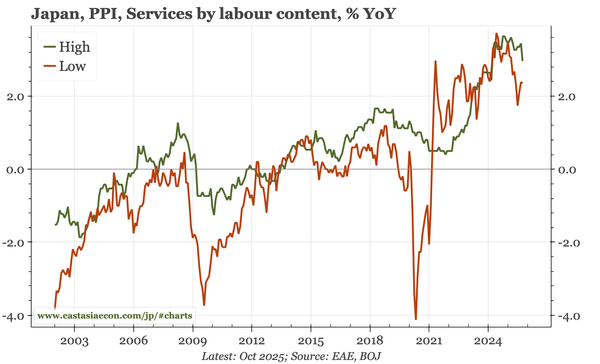
Headline SPPI inflation was stable in October, but weak for high labour-intensive sectors, while part-time wages were strong, likely on the back of the minimum wage hike. That's an unclear picture. But right now, with the JPY so weak, the BOJ will focus more on headline CPI than these messy details.
Korea – below potential, but are risks skewed to the upside?
I doubt the BOK can raise '26 growth forecasts above its estimate of potential and so shift its loosening stance. What's the wriggle room around that? 1) It says the memory cycle means risks are skewed to the upside 2) Citing financial stability risks, more members suggest rates won't change.
China – prices and demand deposits stable
The FAI data point to the economy hitting a wall. But price data don't bear that out. Indeed, upstream prices show the recent stability of PPI is likely persisting. That is also true for the demand:time deposit ratio. The cycle as a whole remains both weak and messy, but there are some green shoots.
Last week, next week
Japan is doing macro stimulus when the cycle really doesn't need it. China isn't doing any when the cycle still does. The first keeps the JPY weak. The second prevents the CNY from appreciating. Both in turn weigh on the KRW and TWD, despite substantial current account surpluses across the region.
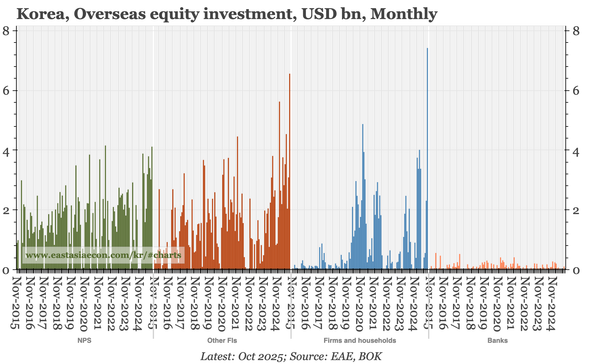
Korea – household offshore equity buying and the KRW
Global factors like US rates and JPY weakness are dragging down the KRW. But there are also local drivers, particularly Korea's big buying of overseas equities. For both the NPS and households, I would expect that to slow, with the reversal likely to be sharp if global markets really sell off.