Last week, next week
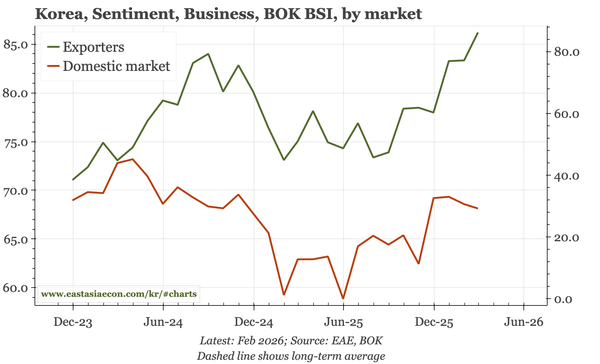
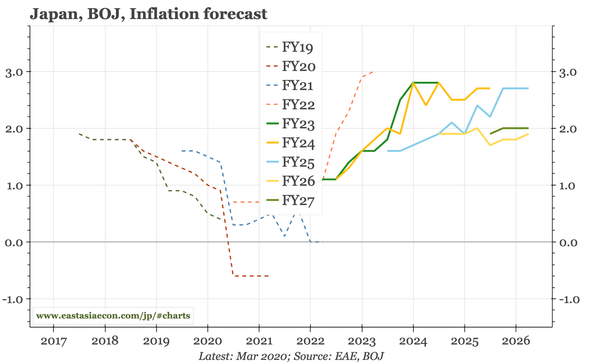
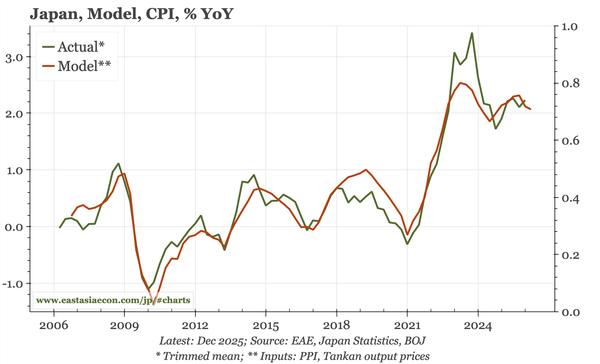
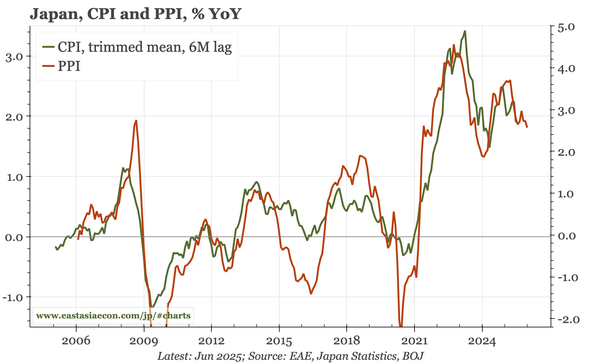
Last week's BOJ meeting reinforced my expectation for an October hike, as did the firmness of August CPI. The next inflation update will be the SPPI release on Thursday. However, the focus the next few days will be Korea, with the September consumer and business confidence surveys.
Japan – will consumption ever grow again?
My latest video, discussing the important question posed in a report of a few weeks ago. Japan's population peaked in 2010, and aggregate consumption stopped growing shortly after. With the number of people continuing to shrink, can consumption – and thus the broader economy – ever grow again?
Japan – the BOJ gets closer, with inflation remaining firm
While the BOJ remained on hold today, the two dissenting votes to hike are important signals in the direction of travel. The context is inflation that remains firm, with today's August national CPI data showing some signs of underlying inflation starting to creep higher again.
Taiwan – calmer macro, CBC on hold
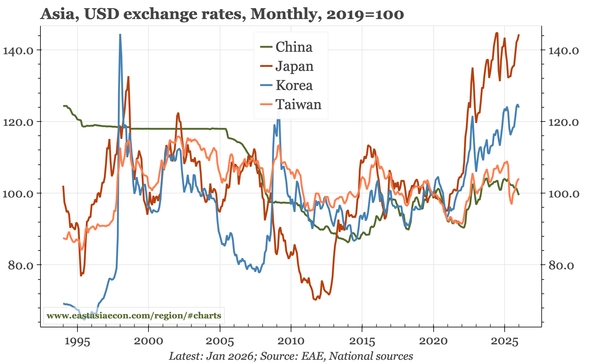
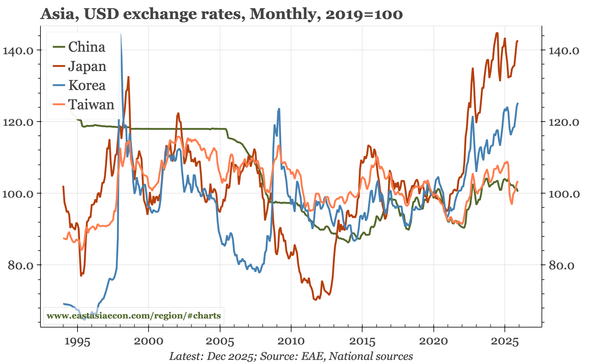
Macro volatility – in inflation, growth, property prices and the TWD – eased in Q3, and it was no surprise that the CBC was on hold today. That won't change if AI demand growth slows. But the AI cycle has proven tough to forecast, and I'd expect the CBC will also be faced with more TWD strength.
Japan – still no tariff-dislocation in manufacturing
Manufacturing sentiment in the EW (Aug) and Reuters Tankan (Sep) surveys is back above the long-term average. Export volumes have softened the last couple of months, but are still above end-2024 levels. This is probably a lesser impact from tariffs than the BOJ had expected.
Last week, next week
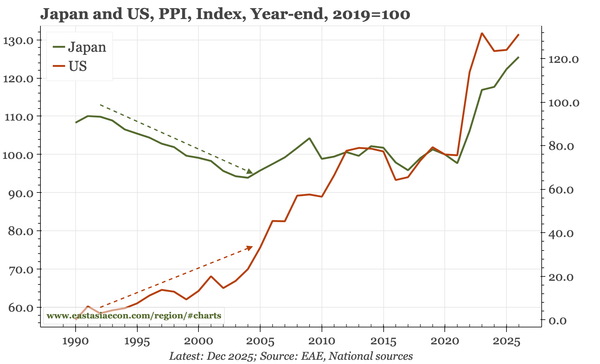
The major themes: the ending of the first stage of China's post-2020 forced structural adjustment; in Japan, peaking of inflation but BOJ still to hike; BOK cuts but inflation higher than I would have expected; expecting renewed TWD strength. I am now away for a few days, back on September 16th.
Taiwan – import prices up, core CPI up more
August data today show the impact of the weaker TWD since July: fx reserves fell, import prices ticked up MoM, and CPI inflation rose. The lesson is that without currency strength, the step-change in economic growth since 2020 is more likely to show up in domestic prices.
Japan – softening in July wage release
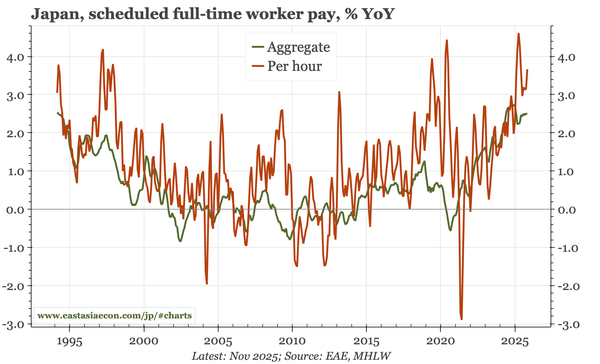
Headline full-timer wages data were strong in July. But the details of the overall wage release were softer, and warn of some lessening of labour market tightness. In other data today, consumption was soft in July, and exports in the first 20 days of August also weakened.
Korea – NPS still a big overseas buyer
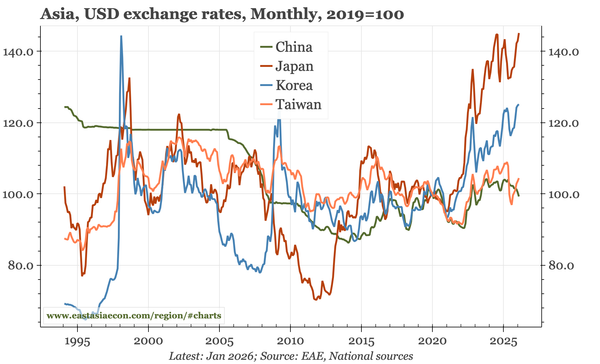
July BOP data show that KRW appreciation continues to be restrained by substantial buying of overseas assets by the NPS. But the tone of capital flows has started to change as foreigners buy onshore equities, and should shift more later this year with Korea's entry into the FTSE Russell's WGBI.
Korea – wage growth still slowing, floor should be close
The breakdown of income in the detailed Q2 GDP data shows the labour share falling, but remaining well above the pre-covid level. That implies wage growth has slowed to a bit over 2%. Bottom-up wage data for June look similar. A floor is probably close, but there's no sign of a re-acceleration yet.
Korea – no change in underlying CPI
Two shocks affected CPI in August: bad weather that pushed food prices up, and big cuts in mobile phone bills. The latter impact was bigger. Excluding all that and core remains around 2%, and the BOK expects that to continue. I would have expected more downside risk, but there's no sign of that yet.
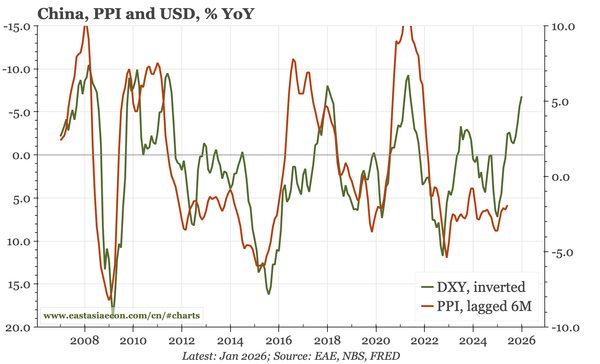
China – will deflation end?
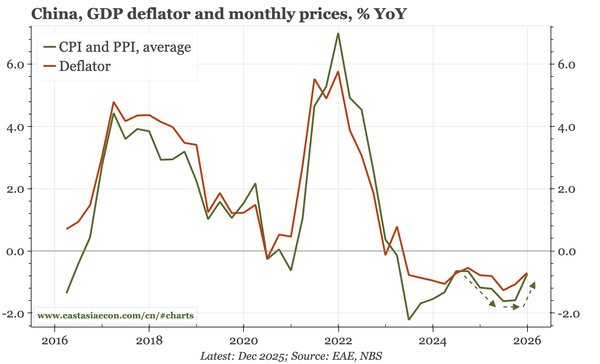
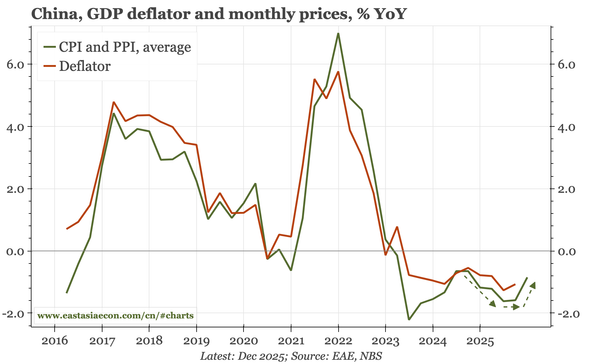
My latest video discussing the inflation outlook. Apart from the anti-involution drive, the stabilisation of demand deposits and property do ease the downwards pressure on prices. But the weakness of aggregate demand remains, and as yesterday's PMI suggested, the outlook for prices remains subdued.
Korea – exports ok, PMI weak
Full-month exports in August were firm, but that still leaves growth in single digits, and neither data nor commentary from the business sentiment surveys suggest that is about to change. Indeed, today's August PMI remained well below 50, and reported a "sharp decrease in incoming business inflows".
Japan – labour share rebounds
The Q2 rise in the labour share promises support for consumption, but without yet depressing profits. Manufacturing earnings did drop in Q2, and that questions the sustainability of capex. But IT investment was also strong, and the PMI suggests that overall, manufacturing is coping with tariffs.
Last week, next week
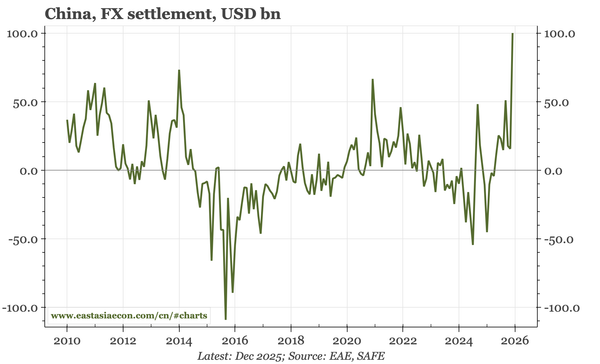
China's structural downturn since 2021 has likely bottomed. But I think real recovery is needed for a further rally in equities. Japan's growth and inflation have survived the tariff hit, putting the BOJ back in play. For Korea, I am questioning the BOK's outlook for inflation and thus rates.
China – a weak nominal upturn
While the PMIs don't point to any real improvement, in nominal terms there's been a lift, with input prices above 50 again. That's in line with the credit impulse. But the credit impulse might already have turned, and while PPI deflation has lessened, output prices don't suggest stronger CPI.
Japan – UE falls to post-covid low
The fall in the UE rate in July to 2.3% isn't substantively important. The mechanics behind it were more noteworthy, in particular a ticking down in the part rate. Other data today show a softening of inflation in Tokyo in August, and nationwide retail sales falling to the lowest level in 2 years.
Korea – retail sales up, overall output still rangebound
There's been enough data on Korea already this week, so just briefly on today's end-of-month July data. There was a nice bounce in retail sales, reflecting the impact of fiscal policy. But IP was flat, and construction ticked down, so all economy output remains range-bound.
Korea – on hold, but not done
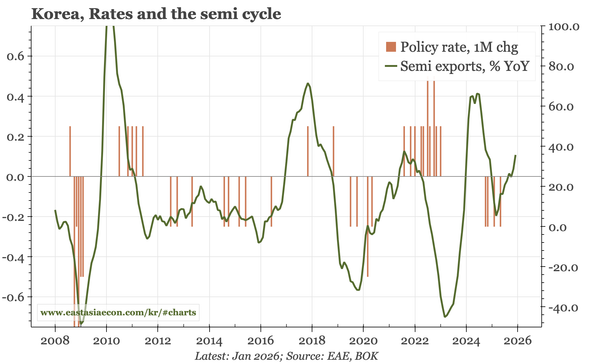
The BOK didn't change rates today. It did note signs of cycle improvement, a sense reinforced by separate labour market data reported today. But it only raised its GDP forecast by 0.1ppt, one member voted for a cut, and the governor said the easing stance was likely to persist through 1H26.
Korea – structure, cycle, and financial imbalances
Slightly in advance of the BOK meeting tomorrow, a review of the economy and policy. My base case is the bank ends up cutting below 2%, because cycle stabilisation is tentative, and structural downside risks loom large. In monitoring that, my key indicators are business sentiment and services CPI.
Korea – a floor, but not much recovery
Business sentiment in today's BOK survey for August improved again. The DI also rose, suggesting the bounce is not yet completed. Some of the details were encouraging, but the sharp rise in confidence in the accommodation sector warns the overall rise is vulnerable to the ending of fiscal handouts.