East Asia in Four Charts
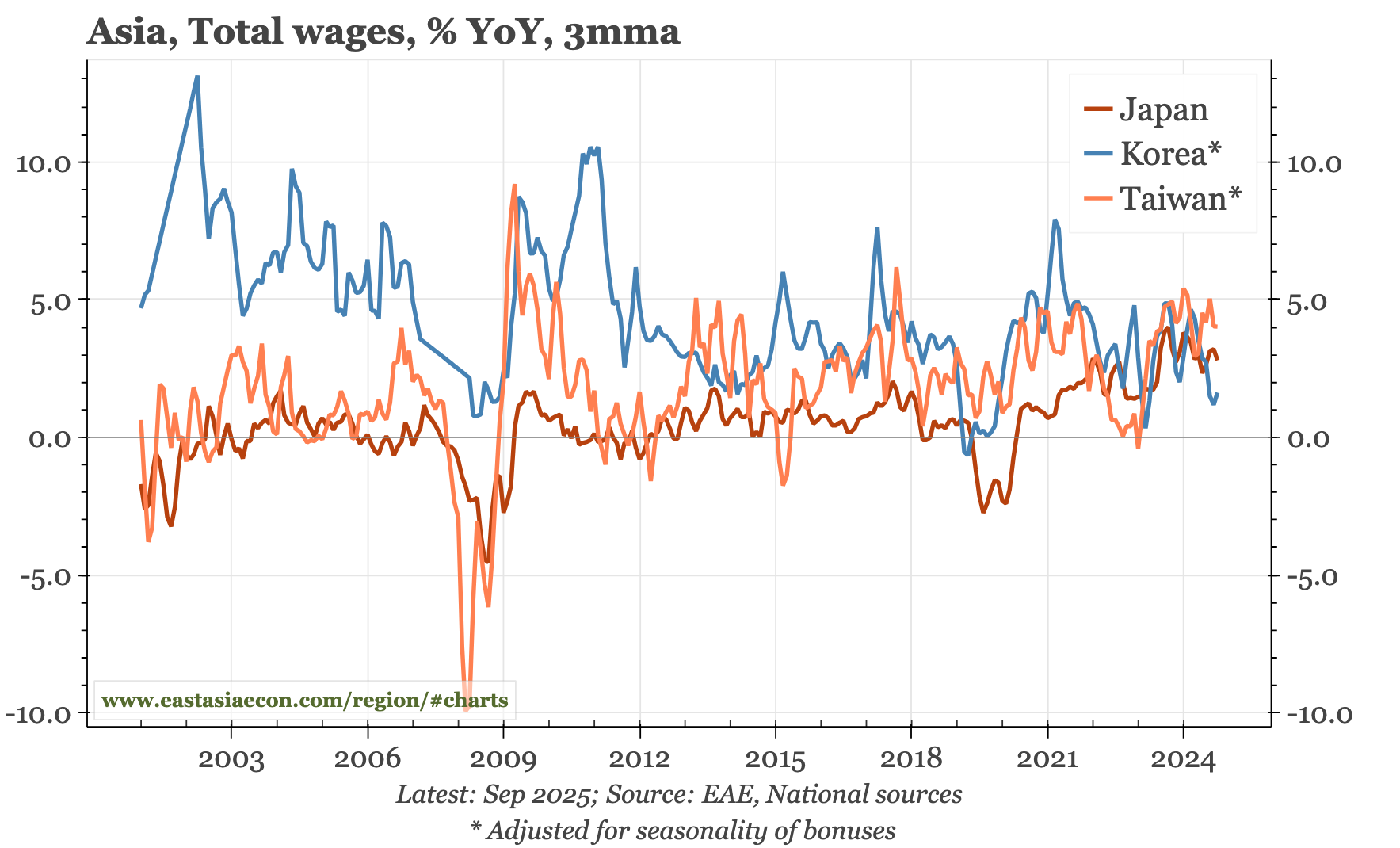
Highlights of last week's indicators: the fall in the consumption share of GDP in China; why JPY depreciation hasn't boosted Japan's export volumes; the prospects for another double-digit rise in nominal GDP in Korea in 2027; and how wage growth in Taiwan is leading the region.


China's current five-year plan calls for a "notable increase in the household consumption share of GDP". There's not much progress yet: with consumer spending growth remaining in low single digits even as rising PPI boosts nominal GDP, the consumption share so far this year has actually fallen.

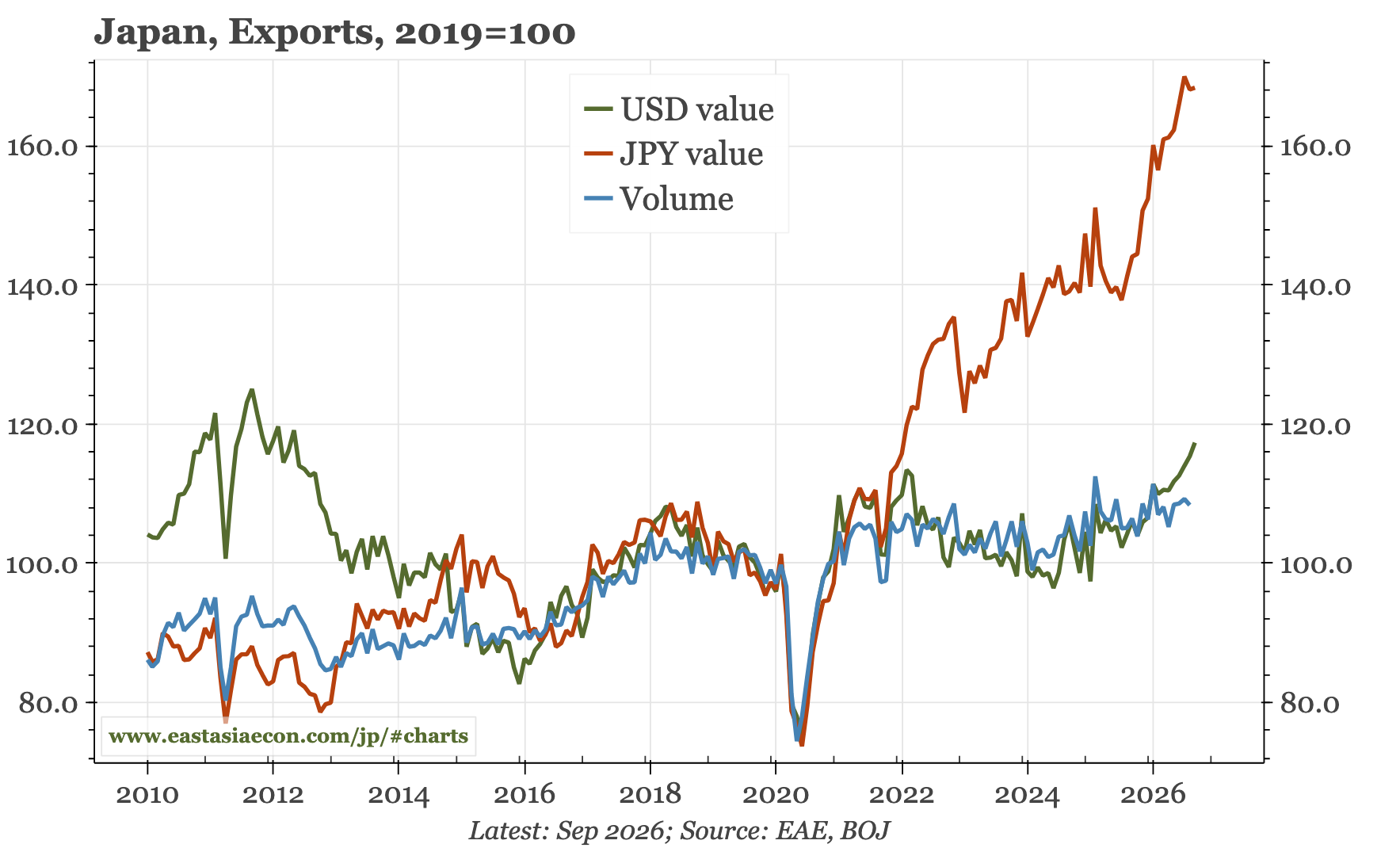
Yen depreciation hasn't produced the export volume boom that conventional exchange-rate models predict. Japanese exporters haven't cut USD prices to boost sales. Neither prices nor volumes moved much before end-2025. Since then, USD prices have risen, but that's largely the chip cycle. This export dynamic is part of the reason why Japan's nominal GDP has risen so much, but real GDP hasn't.
It is a bit spurious to chart nominal GDP for Korea as a whole against revenue of just two companies, both of which are export-dependent. The point that is makes is, however, a valid one: the big move in macro so far has been nominal GDP, and that is largely because of the price increases achieved by the semiconductor firms. So, I wouldn't dismiss the implication that Korean nominal GDP, after growing 25%-ish this year, will rise another 10% in 2026, or the idea that the rise in nominal GDP is an income boost that will increasingly spill over into real GDP.

Total wages in Taiwan grew 4.5% YoY in the first eight months of this year. That matches the strongest since 2010. That is partly because of bonuses, but given the strength of corporate profits in 2026, bonus payments are likely to be even stronger in 2027. Wage growth isn't the only indicator where Taiwan now leads the region: the same is true of import prices and PPI. And yet, while Japan and Korea have raised interest rates, Taiwan has yet to do so.