Korea – BOK still hawkish
The BOK governor today did acknowledge the fall in core inflation in June, but otherwise the tone of the today's policy meeting remained rather hawkish.
*
The platform for tracking and understanding East Asia macro
The BOK governor today did acknowledge the fall in core inflation in June, but otherwise the tone of the today's policy meeting remained rather hawkish.
Headline inflation dropped in June, but there was also a first significant easing in core. That justifies the BOK being on hold, with the direction from here being dependent on external demand: does that now rebound on the back of AI demand for tech, or is DM about to take a dive into recession?
Business sentiment is going sideways. The weakest sector remains exporters, which suggests companies aren't seeing the recovery in external demand indicated by the equity market. The survey also gives the first hint that the goods price disinflation that began in early 2022 is coming to an end.
In June the consumer confidence rose again; property price expectations picked up; and CPI expectations didn't fall. This probably isn't enough on its own to turn the BOK more hawkish. But if it is combined with better business sentiment and exports, then the bank will likely be back to hiking.
Employment rose and the unemployment rate fell to a new multiyear low of 2.5% in May. These aren't the sort of developments that will make the BOK fell more confident that the stickiness of core inflation is about to give way.
Headline CPI inflation is now coming down quickly, and could drop below the BOK's 2% target by the end of Q3. But core inflation continues to hold up, and the BOK is unlikely to shift policy before that changes.
It was no surprise to anyone that the BOK didn't change rates today. As things currently stand, we doubt it moves soon. It downgraded GDP forecasts today, but also revised up the outlook for core CPI. The combination obviously makes it difficult to hike, and hard to cut.
The BOK will likely remain on hold tomorrow. Falling headline inflation will create some space for the bank from here, but we think the labour market and core inflation need to soften to get rate cuts on the agenda. If the recent stabilisation of activity persists, that becomes less likely.
CPI expectations are falling, but consumer confidence and house price sentiment are rebounding. The easing of CPI expectations is another indication that further rate hikes are less likely. But it is unlikely the BOK will cut if the recent improvement in sentiment shows that the cycle is rebounding.
The labour market went sideways in April, keeping the unemployment rate at 2.6%, the lowest since the 1990s. Non-manufacturing business sentiment suggests employment will remain around current levels for the next 6M. That doesn't seem likely, on its own, to bring down core inflation.
The case for BOK cuts is simple: the cycle has weakened, headline CPI is falling, and core will follow. But so far, our model suggests only a modest easing of tightening pressure, and there are now signs of activity bottoming. The missing ingredient remains a slackening of the labour market.
Business sentiment remains weak enough to suggest BOK cuts, and the fall in consumer inflation expectations indicates some easing of headline inflation pressure. But there's also signs in both surveys of an upturn in the cycle, creating a risk that core inflation won't fall so far.
Driven by private consumption, Korea avoided technical recession through March. The strength of consumer spending was a surprise, so we'd assume that downside risks remain. But it isn't clear that today's data will affect the BOK's view of 2H recovery, which is based on the idea of stronger exports.
The labour market continues to look quite tight. While the unemployment rate was stable, that was because of a rise in participation; employment rose again last month. These data don't give confidence that core inflation will fall.
In a unanimous decision, the BOK voted to keep rates unchanged in April. The hurdle for another hike from here seems high, but it will depend on the path of core inflation.
We thought some of the pressure to tighten might have come off the BOK by now, but our model instead suggests it remains high. The bank likely wants to assess the impact of previous hikes, so might well leave rates unchanged tomorrow. But it will be difficult for BOK rhetoric to become less hawkish.
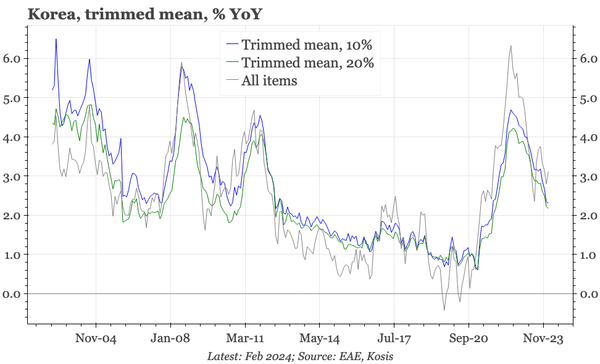
Headline CPI inflation slowed in March, but core didn't, continuing to run at around 3.5% annualised. One of the drivers is services inflation, which at the margin has re-accelerated. Updating our BOK model with these and other data suggests the risk of further tightening remains high.
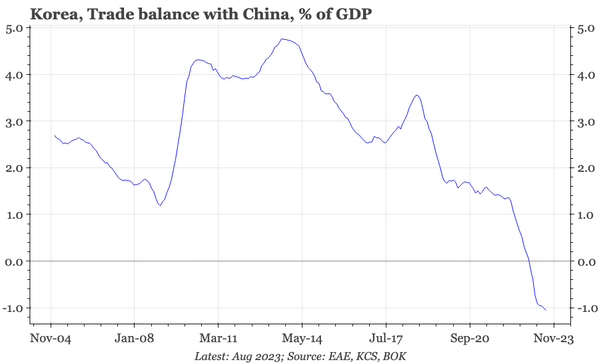
Full-month export data for March were firmer than the numbers for the first 20 days of the month. From this latest release, it looks like exports are bottoming out. That's because shipments to China are no longer falling, though they haven't yet started to rise.
Korean business sentiment is improving. This is led by domestic firms, with exporters more cautious. The level of overall sentiment also remains weak. The sentiment survey shows a material fall in inflation pressure in manufacturing, but the BOK needs to see that in services too.
Both overall consumer confidence in March, and the price expectations components, show some resilience. Consumer sentiment is weak, but not falling further, and CPI expectations remain around 4%. Neither suggest the BOK is about to turn doveish.
Exports weakened in March. That comes after some mild outperformance in January and February, and our leading indicator suggests a floor should be close. That said, it was a surprise that exports to China continued to fall in March, which is a warning that the recovery there still isn't strong.
Import price inflation continues to slow, as does consumer lending, but there was a sharp bounce in employment in February. That doesn't look cyclically driven, but still, it means the BOK will likely remain hawkish for the moment.
Inflation eased in February, and probably a bit more quickly than the BOK was expecting. However, the details weren't so weak, with sequential core and private services inflation remaining elevated. Our model for the BOK suggests tightening pressure, while lessening a bit, remains high.
Headline CPI is likely to decline. But a sharp drop to 2% seems unlikely. Cyclically, the percentage of items rising in the basket rose to a new high in January. Structurally, wage growth suggests Korea still isn't entering a demographically driven deflation.
Korean exports continue to fall, but there are sighs that a short-term floor might be near. The driver of that is recovery in China, which is happening when exports to DM have yet to decline.