Korea – business sentiment highest since 2022
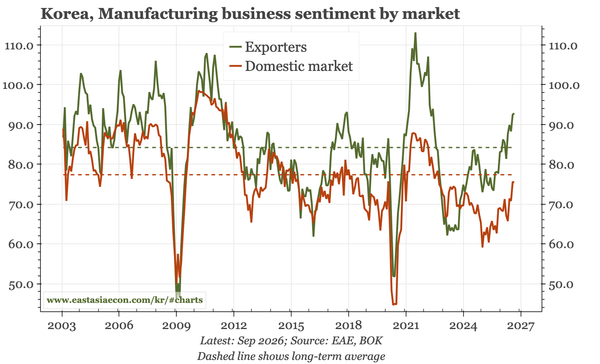
Business sentiment in today's BOK survey rose to the highest level since October 2022. Given the chip boom, it isn't a surprise that the improvement in sentiment continues to be led by exporters, and in that sector confidence is well above the survey's long-term average.
Japan – services PPI near record
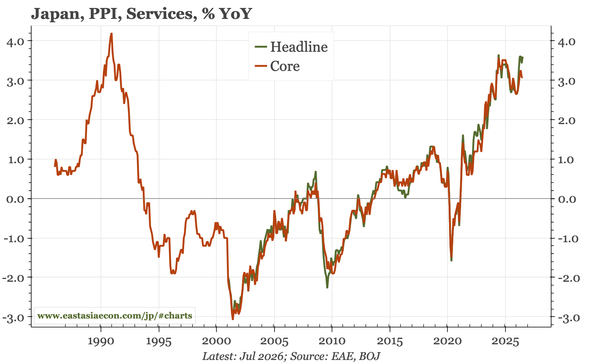
Services PPI inflation ticked up to 3.6% YoY in July. Upstream prices have only risen this fast in three other months since the early 1990s. Most of the recent strength looks to be feedthrough from Iran and the exchange rate; inflation in industries with high labour intensity, which should be a…
Korea – consumer confidence dips
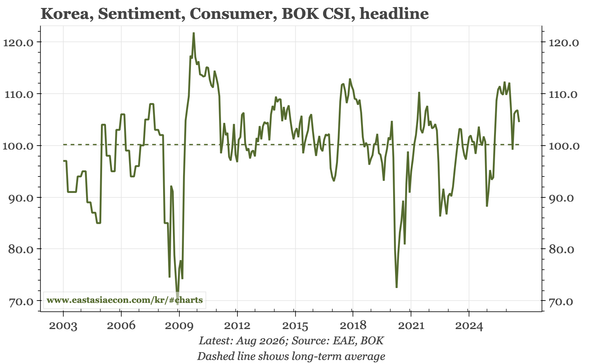
Korean consumer confidence ticked down in August. But it remains comfortably above the neutral level of 100, and so consistent with a continuation of the recent recovery in retail sales growth. Inflation expectations were unchanged in today's survey.
Japan – BOJ core inflation eases
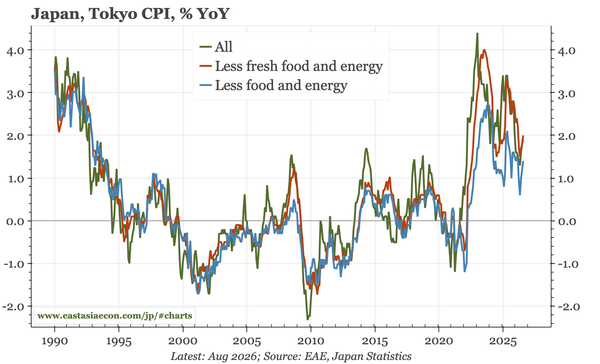
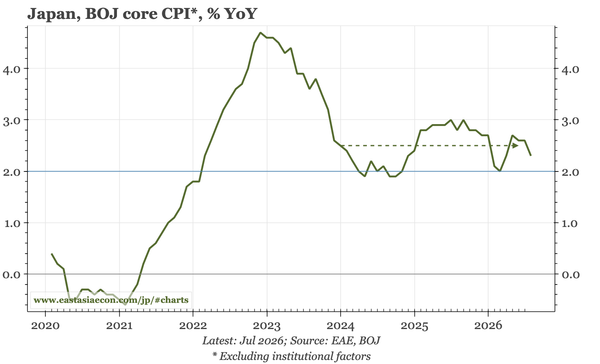
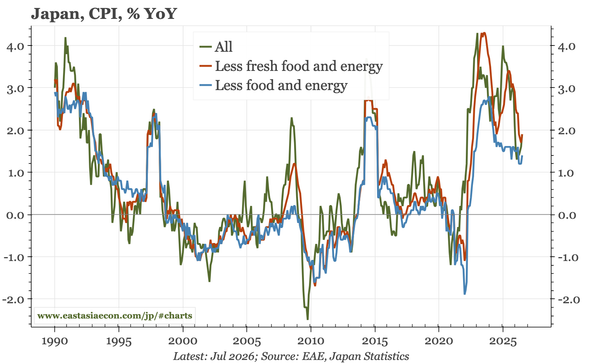
The BOJ's measure of core inflation adjusted for government policy measures eased in July. However, at 2.3%, it has now been above the bank's official target of 2% for 51 of the past 54 months. Moreover, leading indicators continue to point to inflation re-accelerating in the remainder of this year.
Taiwan – export orders at record
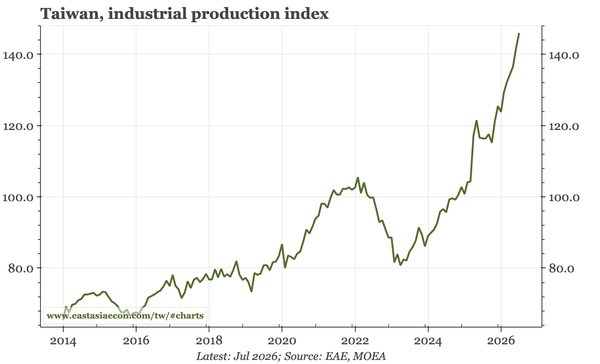
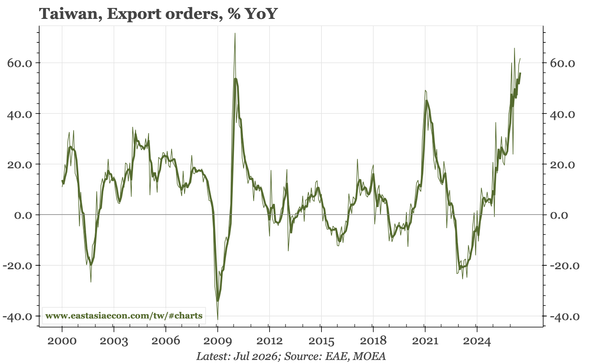
Export orders were strong in July, reaching a new record high in level terms, a rise that pushed YoY growth back above 60%. In an illustration that Taiwan's export growth isn't just about semiconductors, the government attributed the strength to demand for servers and cooling products from the AI…
Korea – 20-day exports up again
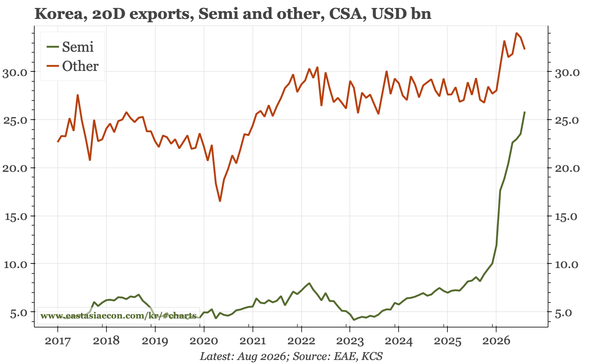
Export growth in the first 20 days of August ticked up again, a trend that unsurprisingly was led by semiconductors. That increase in turn pushed up the trade surplus. In other data today, YoY PPI inflation eased in July. For goods, that follows the modest decline in import price inflation.
Korea – net foreign assets falling
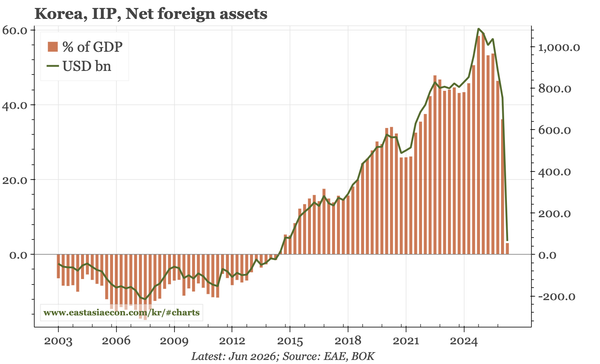
After increasing steadily for several years, Korea's net international investment over the course of a couple of quarters has dropped back to zero. That's because of the big rise in the Kospi, a rise which quadrupled the value of foreigner holdings of Korean equities.
China – upstream prices unchanged
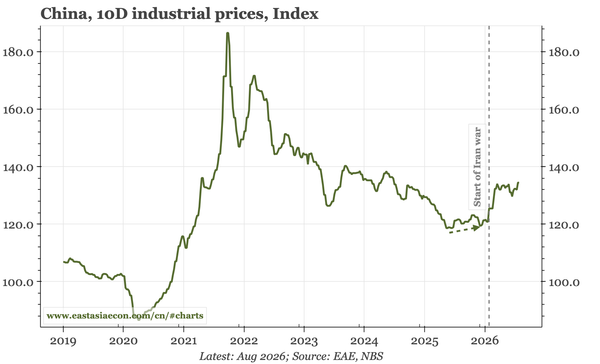
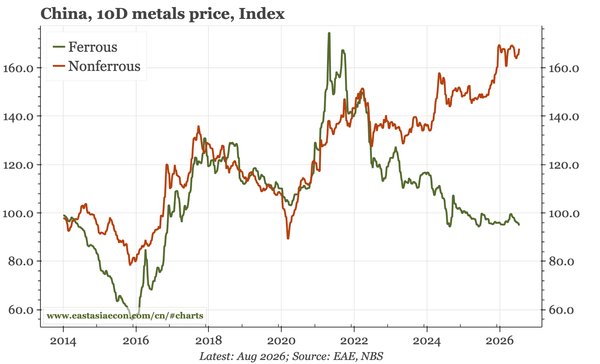
Data for upstream prices though the first 10 days of August show the overall price level remaining unchanged, with higher copper and energy prices offsetting weaker steel prices, as well as on the continuing sharp declines in building materials prices.
China – government bonds drive the impulse
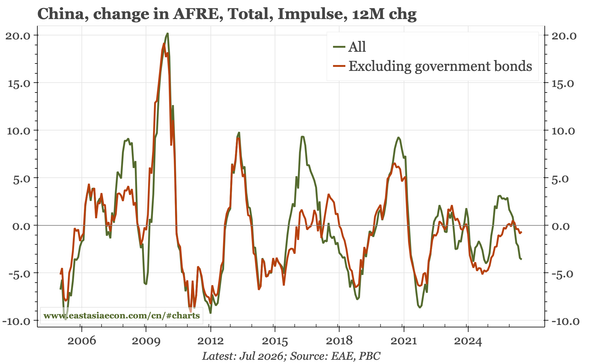
China's overall credit impulse has dropped in the last few months, but that is all because of government bonds. Household borrowing remains weak too, but there are some tentative signs of stabilisation (albeit not for the first time). Corporate lending has been firmer.
Korea – tax revenue boom
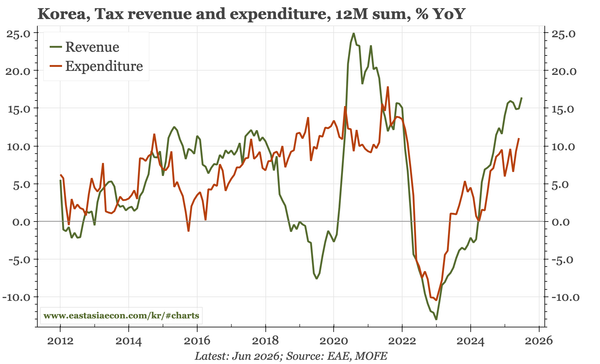
One of the transmission mechanisms by which commodity price booms affect local economies is fiscal policy. As nominal growth rises, so tax revenue grows more quickly, giving the government more money to spend. The first part of that is on track, with tax revenue up 20% YoY in June.