Last week, next week
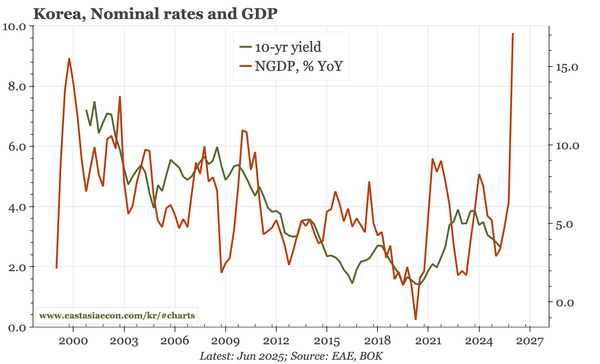
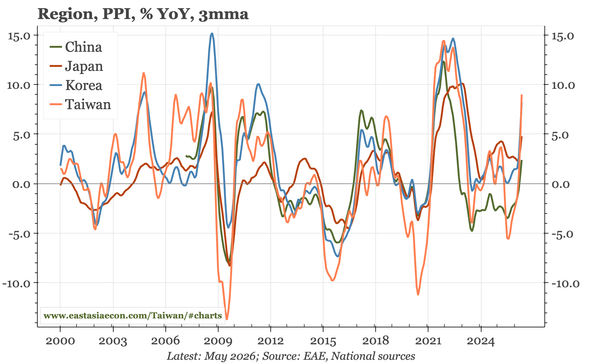
China macro is again a contrast between export strength and renewed deflationary pressure. Takaichi's sales tax cut doesn't look like the policy approach Bessent wants. For Korea, data an BOK analysis points to upside risks. In Taiwan, the key issue is lagged spillover from the 24-25 export boom.
Weekly: CMXT and JPY
The two big events this week are China's CXMT listing and the Bank of Japan meeting. The first matters because the outlook for chip demand is such a dominant regional theme. The BOJ meeting is important because of rates in Japan, but also implications for the JPY and regional currencies.
Weekly
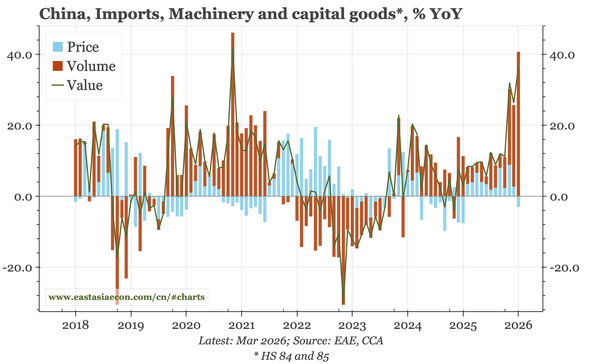
China's combination of recovering output, weak expenditure, and mixed monetary isn't great, but also doesn't suggest a big change in macro policy. I think it unlikely that Japan's bid for repatriation works without more BOJ normalisation. Korea and Taiwan cycles remain strong, implying rate hikes.
Last week, next week
China's cycle is weak, but I'm not yet convinced it is getting worse. Japan's cycle will now be improving, but the BOJ needs to show that it can keep up. The BOK's hawkish turn can go further still if the KRW remains so weak. I think inflation risks in Taiwan are broader than judged by the CBC.
Region – inflation risks
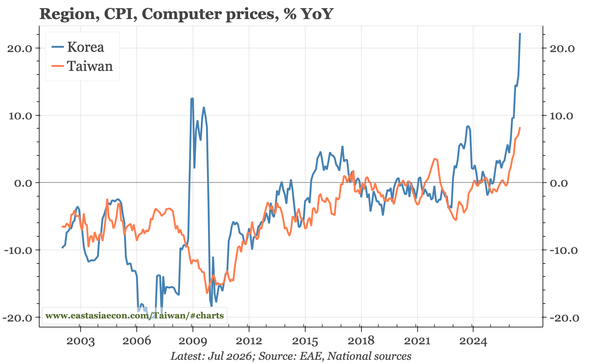
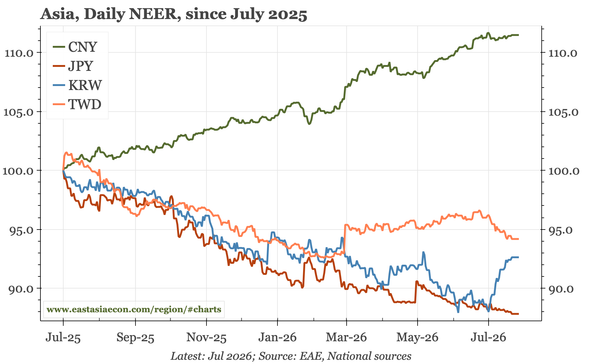
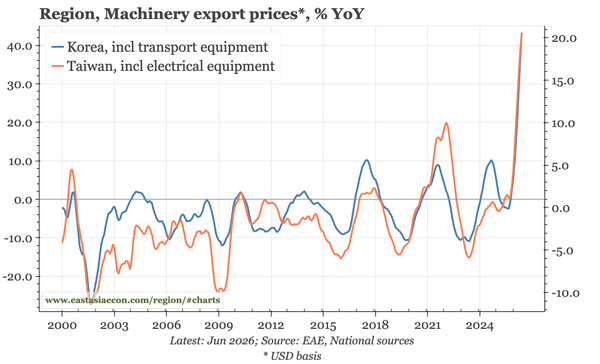
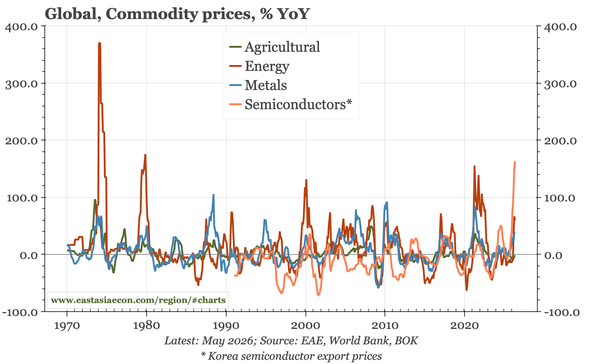
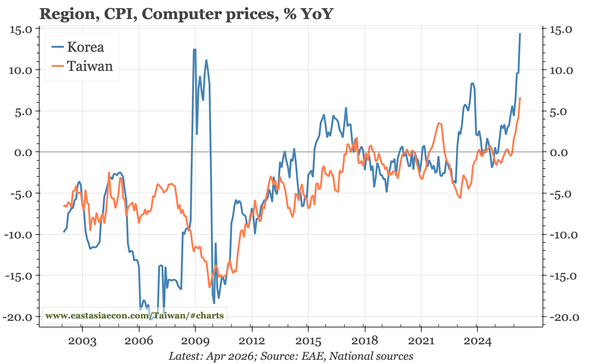
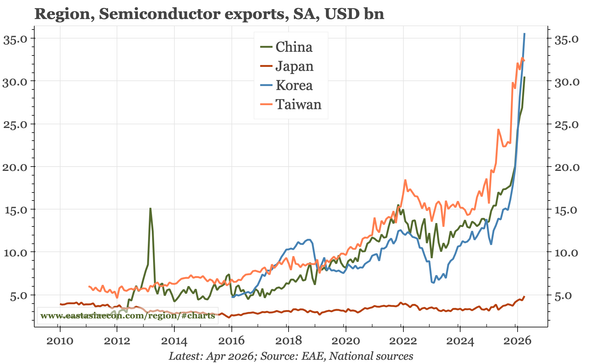
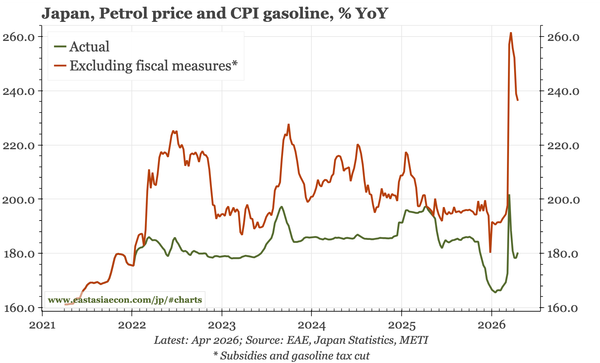
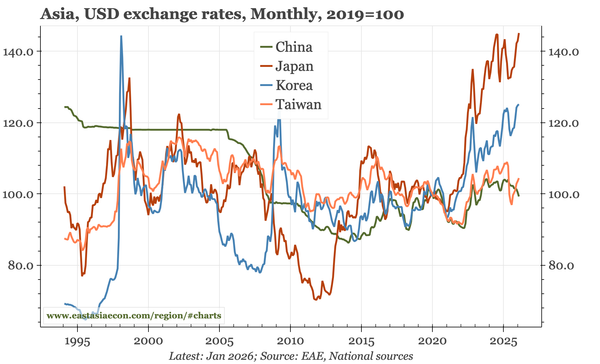
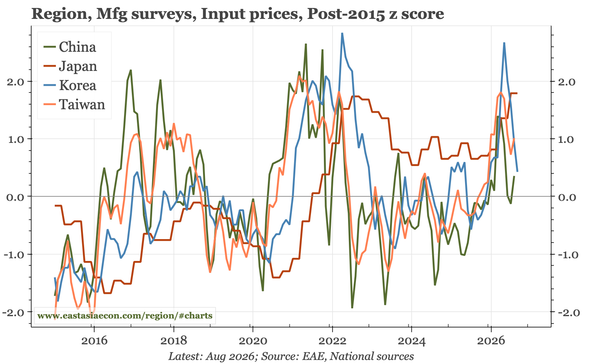
Big oil price hikes matter, but have been seen before. It is the rise in chip prices, and the gap between surging trade surpluses and weak currencies, that is unprecedented. If fx markets don't price these developments, central banks and fixed income will have to do so instead.
Last week, next week
Two of the cycle themes in the region are the strength of the AI trade, and macro stability in China. These in turn form the context for the third: the impact of the Iran war. If that conflict, finally, is near some kind of resolution, market confidence around rate hikes could actually increase.
Last week, next week
The main regional themes weren't challenged by events last week: macro stabilisation in China; upside risks to inflation, particularly in Japan; and upside risks to growth, a theme for both Taiwan and Korea as long as the energy crisis in the Middle East doesn't derail the semiconductor super cycle.
Last week, next week
Stabilisation in China seems to be becoming a more popular view. Hope is building for a BOJ hike in June, but one won't be enough. KRW should be strengthening, but likey needs more Middle East certainty. The big event for the region this week is the Xi-Trump meeting.
Region – slide pack
With the full consequences of the Iran War yet to be felt, the outlook remains uncertain. But so far, upside risks to inflation in the region are dominating the downside risks to growth. The big driver is the semiconductor cycle. The pack starts with regional themes, then 15 charts for each economy.
Last week, next week
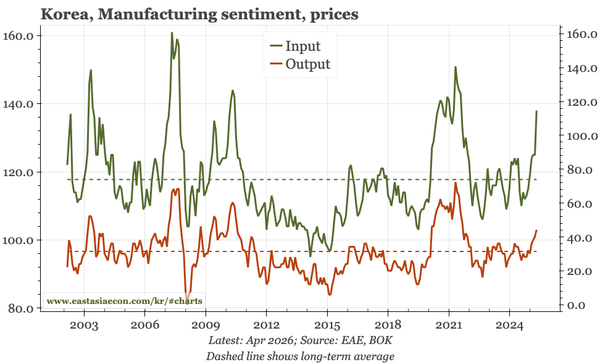
The themes around China as a relative safe haven, and firming inflation in Japan, are clear. The inflation picture in Japan supports rate hikes. Korea, by contrast, is messier: there are positive dynamics like the surging trade surplus and WGBI inclusion, but the KRW still can't stabilise.
Last week, next week
It isn't yet all about the war, given the real strength in semi demand. That backdrop is one reason to think underlying inflation will be lifted by the latest crisis. The durability of the AI cycle will also be the canary in the mine for a negative supply shock becoming a negative demand shock.
Last week, next week
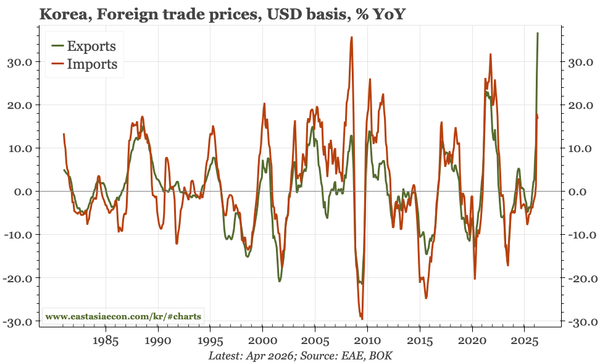
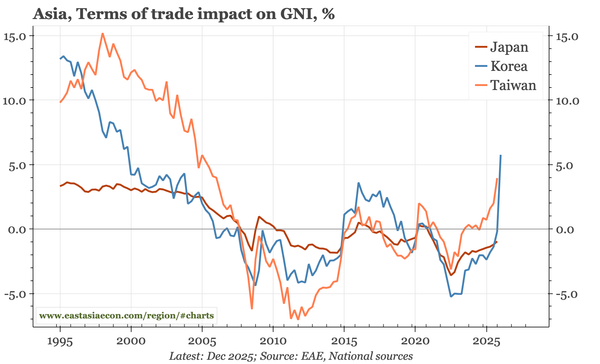
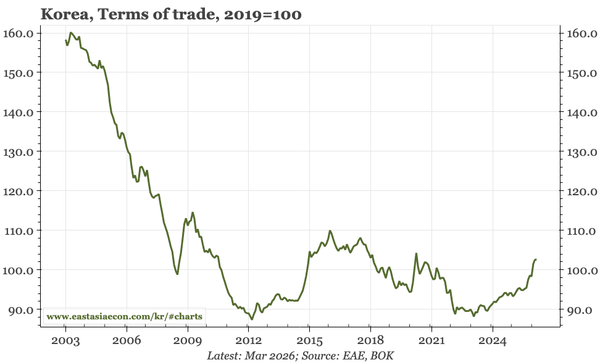
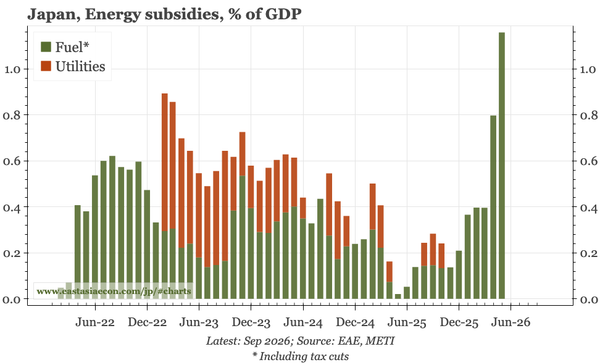
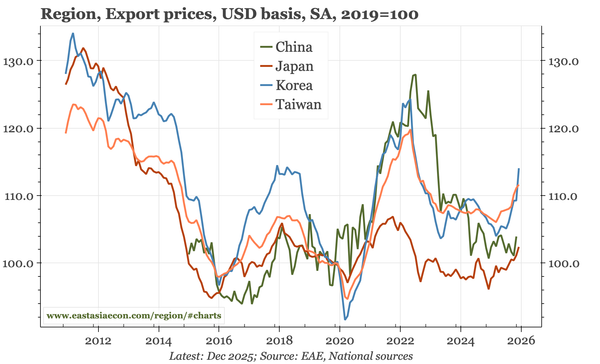
I spent time last week delving into export prices and terms of trade, dynamics that should be offering support for currencies. The data flow was all about Japan, and painted the picture of an economy in good shape. That could yet be undermined by policy choices, either at home, or in the US.
Last week, next week
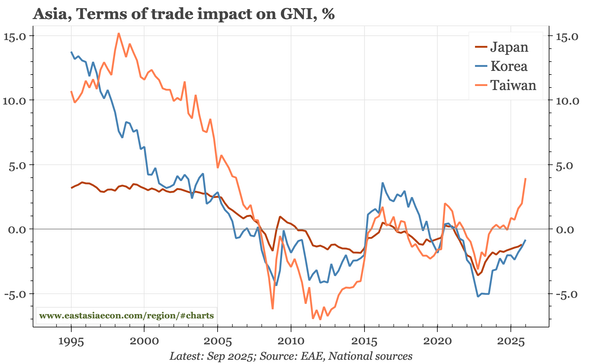
Three themes from last week: improving terms of trade, led by rising export prices; expanding current account surpluses; and growing optimism about the sustainability of AI-related hardware demand that is critical for cycles in Taiwan and Korea. Also, happy year of the (fire) horse.
Last week, next week
The fundamental themes for the region are rising external surpluses, improving manufacturing cycles, and lessening deflation in China. That mix should be helping currencies. The offsetting factors to be monitoring are politics in Japan, flows, and global dynamics around tech and the USD.
Last week, next week
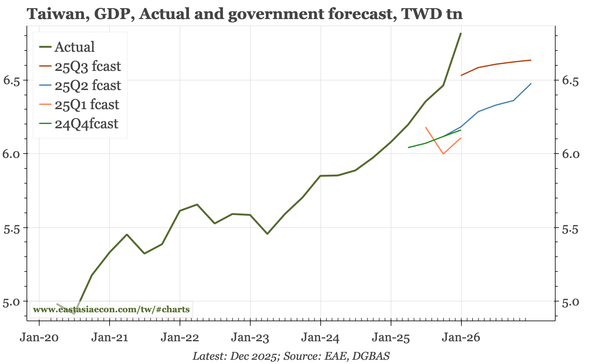
Regional themes: continuing (and under-appreciated) nominal improvement in China; election uncertainty in Japan; strengthening export momentum in Korea on the back of chips; which in turn looks significant given the huge outperformance of Taiwan through 2025, all because of AI and semiconductors.