Taiwan – finally, some recovery
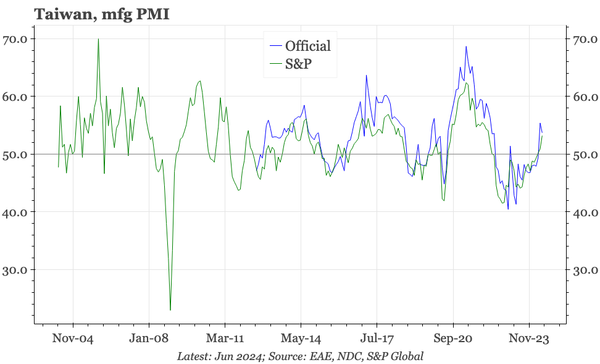
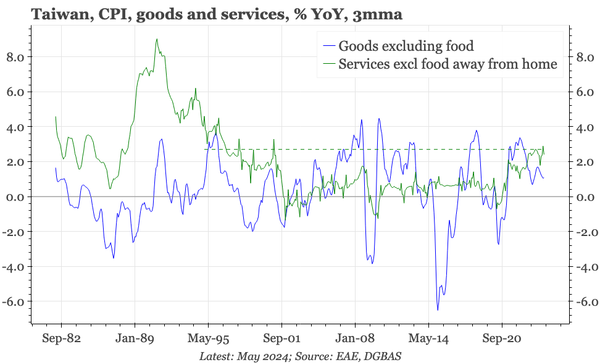
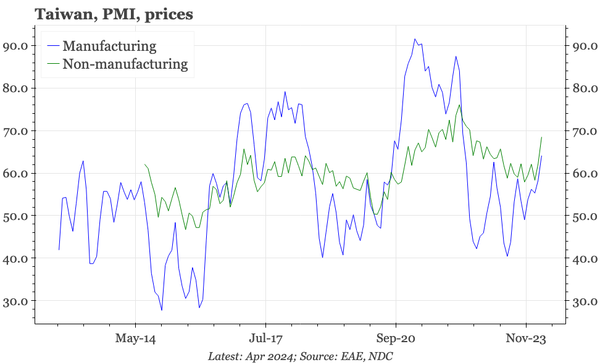
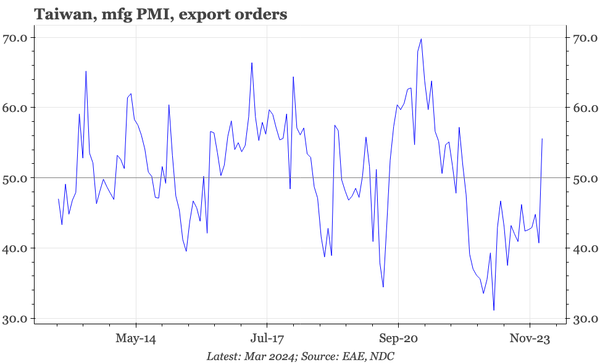
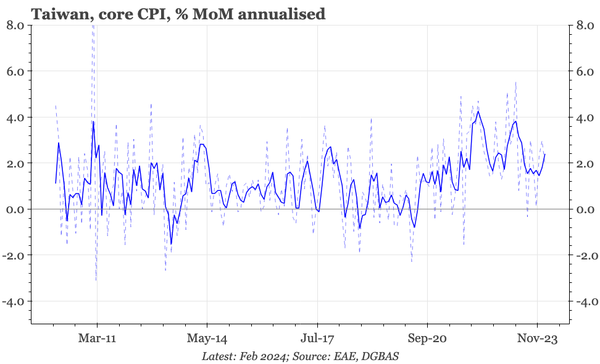
It has taken a long time, and still isn't powerful, but recovery is finally being seen in the manufacturing PMIs. At the same time, non-manufacturing isn't slowing down much, and price pressures are picking up again. Taiwan doesn't look like an economy where policy is too tight.
Region – the structural rise in wages
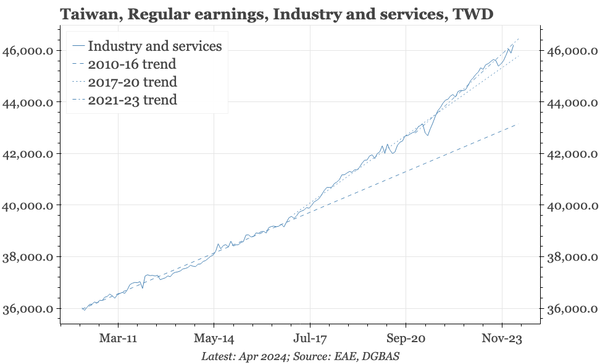
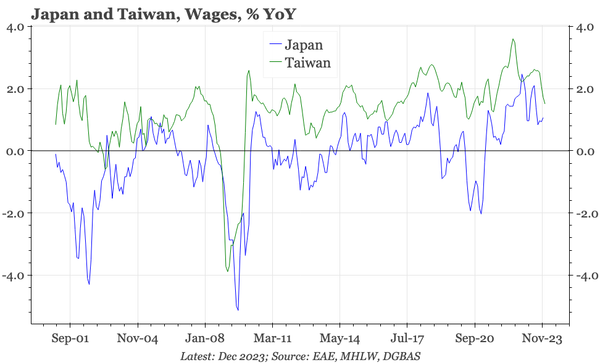
Not just in Japan but Taiwan too, there are signs of a structural break from persistently low wage inflation. The implication is that the gap between nominal monetary settings between both and the US is likely to be narrower in the future than it has been in the past.
Taiwan – everything but exports
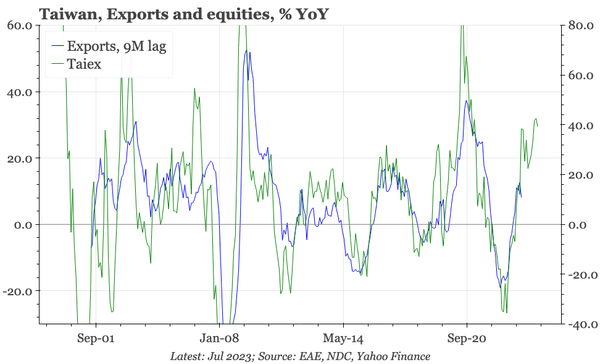
Exports and manufacturing remain sluggish, but the leading indicators look strong. At the same time, services activity remains firm, unemployment is at 20 year lows, and inflation at 20 year highs. If exports do kick in as the leads suggest, it is easy to imagine the central bank having to hike.
Taiwan – what voters should ask about the economy
This note is a bit different to our usual offering. It is still relevant to investors, but it is more of a guide to the economic issues that I would be thinking about if I were a voter in Taiwan. That includes one observation, and five questions that politicians should be answering.
Taiwan – still sluggish
We would have thought Taiwan would now be at the stage where exports were more clearly taking over from the domestic sector as a driver of growth. Instead, recent industrial data have been sluggish, while domestic momentum is holding up. Unemployment continues to fall.
Taiwan – firmly on hold
The CBC kept rates on hold at its quarterly meeting today, and doesn't look in a rush to make a move either up or down any time soon. It expects modestly stronger GDP growth in 2024. It forecasts inflation to fall, but the expected core rate of 1.8% would still be high relative to Taiwan's history.
Taiwan – wage growth still decent
Wage growth has slowed, but the three-year trend remains the highest in 20 years. The same is true of core CPI, and both make sense with unemployment being the lowest since the early 2000s. The labour market isn't yet pointing to a significant deceleration in inflation.
Region – KWD v TWD
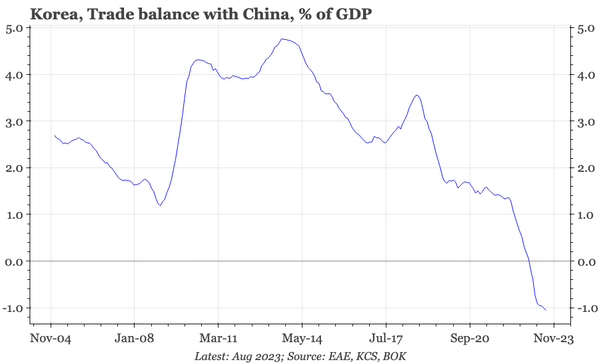
Exports look to be picking up, and if that continues, there isn't a convincing case for rate cuts. There are signs that the recovery is stronger in Taiwan, which makes sense given structural competitiveness. With ultra-robust external finances too, that makes prospects for the TWD look better.
Taiwan – inflation down, not yet out
Sequential inflation dropped back to zero in November, but average core over the last three months remains elevated. With the domestic economy holding up, and exports starting to rebound, there isn't a strong case for rate cuts. That will matter for the TWD if exports really do rebound from here.
Taiwan – weaker consumption, stronger exports
Desynchronisation is still the theme, but the components are changing. Momentum in consumption and services, which drove growth in the last 12M, is now fading, but the export recession is easing. The direction for CPI and the CBC will depend on how far exports now recover.
Taiwan – a touch slower
The tone of the releases this week was a little softer, but neither price nor wage growth look especially weak, especially versus the doveish stance of the CBC in September. That gap probably won't matter if exports don't get going, but there are signs that the tech cycle is now starting to improve.
Taiwan – chart pack
A chart pack summarising Taiwan macro
Taiwan – CBC on hold
The CBC kept policy rates unchanged yesterday, seeming confident that inflation will fall below 2% next year. That might be right, but the bank's forecast that export growth will rebound to 10% YoY in Q423 isn't the most obvious environment for a fading of inflation to occur.
Taiwan – the relevance of this week's CBC meeting
With exports still weak, our CBC model suggests very little probability of a hike this week. But that model doesn't capture the rise in inflation, which until 2020 was so low that it didn't seem to matter. At the least, the CBC should sound more hawkish, and that has relevance for Korea and Japan.
Taiwan – sideways, with upside risks
Taiwan's exports have bottomed, but haven't improved much. Likely, they continue to go sideways for the next couple of months. Beyond that, there are now some upside risks, and so we'd been looking for the soft data to improve from here.
Taiwan – inflation holding up
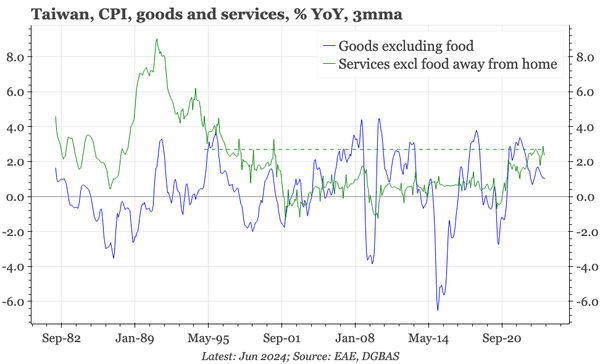
Inflation data in August Taiwan fit with the broader regional picture of a re-acceleration in price pressures. The difference in Taiwan is that this doesn't follow a period where core inflation has decelerated.
Taiwan – still holding up
The desynchronisation between weak exports and resilient domestic activity is continuing. Despite a couple of warning signs, we'd expect that remains the theme for the next 3M. For an upside surprise, however, export demand needs to recover.