

Subscribers Only

Taiwan – tight (!) policy?
The CBC last week claimed that even with the policy rate staying at 2%, its monetary stance "remains on the tight side". I am not persuaded, but it is worth studying the bank's argument.
Subscribers Only
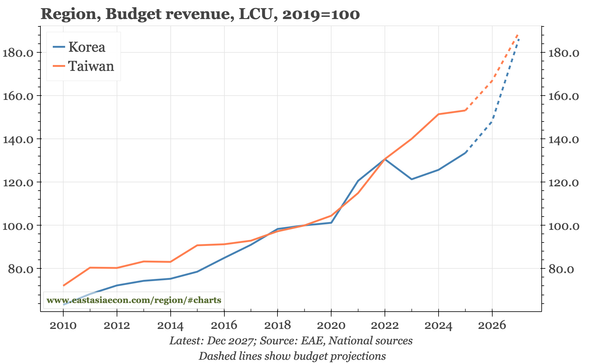
Region – lands of fiscal plenty
In many advanced economies, governments are drowning in debt. But in Korea and Taiwan they are floating up on the flood in revenue generated by the semiconductor boom. There is so much money that both economies plan looser fiscal policy while also paying back debt.
Subscribers Only

Taiwan – on hold
Consensus was right, and the CBC didn't change rates today. The vote wasn't unanimous, with two members voting for a hike. However, some of the property measures were loosened. To me, this suggests that policy is too loose, and thus that the gradual warming up of inflation will continue.
Subscribers Only
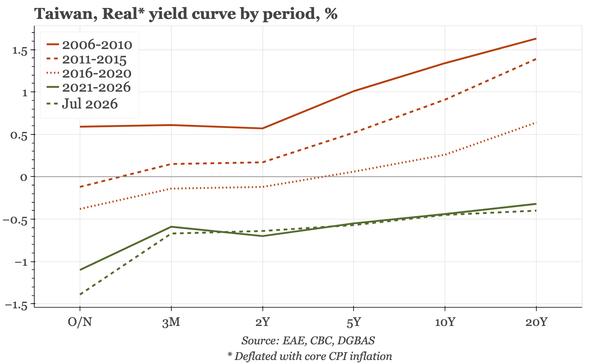
Taiwan – the fall in real rates
I expect the CBC to hike. That was also my view 3M ago, and then I was wrong, and the strong consensus is that I'll be wrong now too. Underlying my view is that the CBC can't be confident inflation has peaked. Instead, with real rates negative and the TWD weak, price pressures are likely to persist.
Subscribers Only
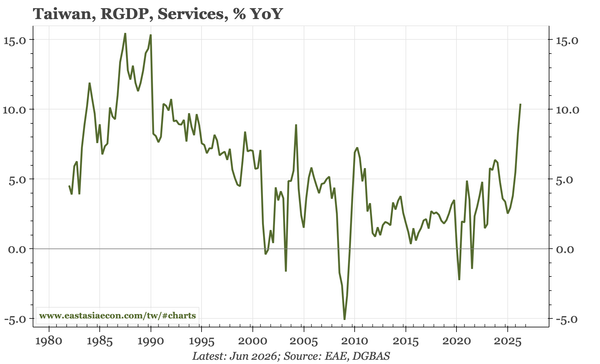
Taiwan – not over yet
Headline growth rates are slowing, but the government's qualitative assessment remains bullish, there are more signs of life in domestic demand and services, and while a 2026 inflation forecast of a bit over 2% isn't so high, it has been raised four quarters in a row, and is above the policy rate.
Subscribers Only
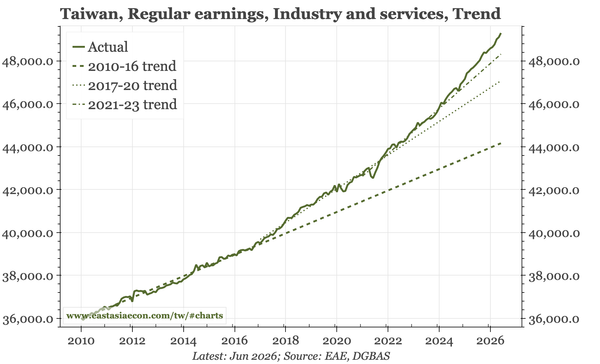
Taiwan – wage growth above 3%
Annualised regular wage growth in both manufacturing and services has been above 3% since 2024. In Q2 in manufacturing, it has been near 4%. The risk remains that the export cycle now slows, but TSMC's strong sales and elevated manufacturing overtime don't suggest that is happening yet.
Subscribers Only
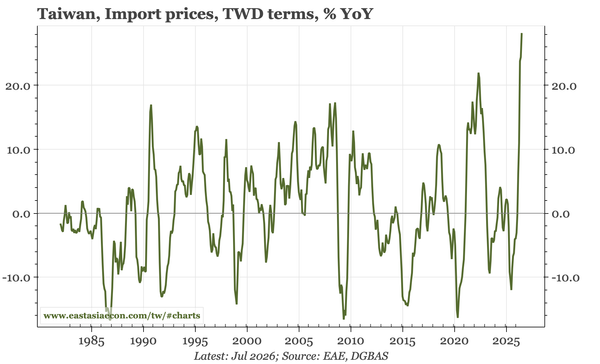
Taiwan – firm inflation pressure
Both headline and core CPI inflation ticked down in July as energy prices eased. However, underlying inflation feels firm, with sequential core failing to break below 2%; import price, PPI inflation and CPI computer price inflation rising to decade highs; and services inflation running at 2.6%.
Subscribers Only
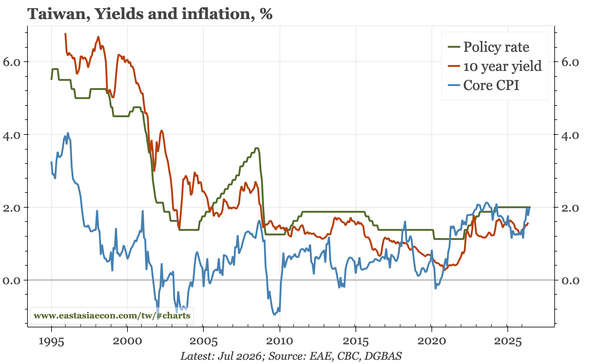
Taiwan – real rates universally negative
June's core inflation of 2.3% isn't high in an absolute sense. But outside LNY, it is the highest since the 1990s, and, remarkably, above both the policy rate and 10-year yields. Energy inflation will ease, but with wage growth of 2.7% and rising, and equity prices strong, rates really look too low.
Subscribers Only
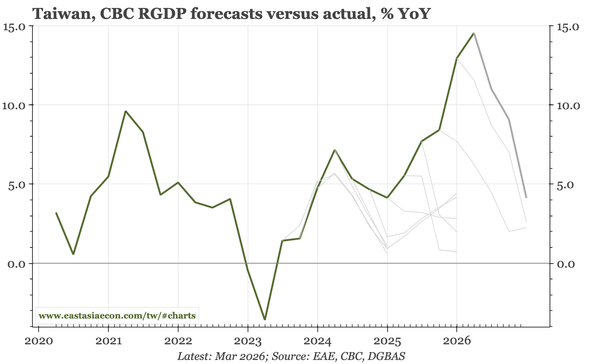
Taiwan – no excitement from the CBC
The CBC didn't change policy today. It increased its growth forecast, but didn't sound excited about the outlook. It warned about excesses related to equities, but didn't announce any remedial policies. Inflation is expected to remain below 2%.