Paul Cavey
Japan – part-time wage growth jumps in March
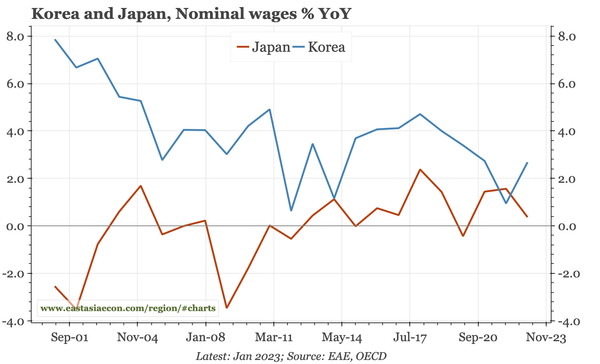
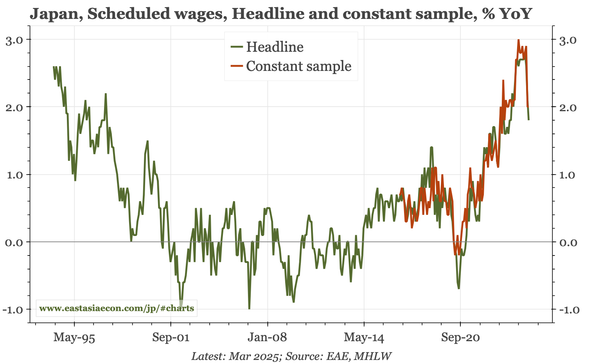
JBRC this week reported March part-time wage growth jumping to 5.6% YoY. Some of that looks like catch-up with the official data, but the commentary was interesting, with the rise being attributed in part to this year's shunto. The labour market continues to look very tight.
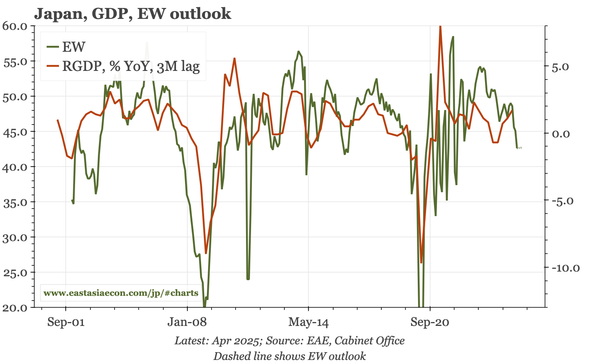
Japan – cycle holding up, so far
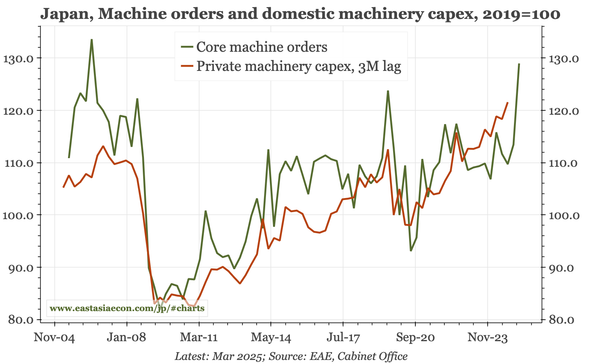
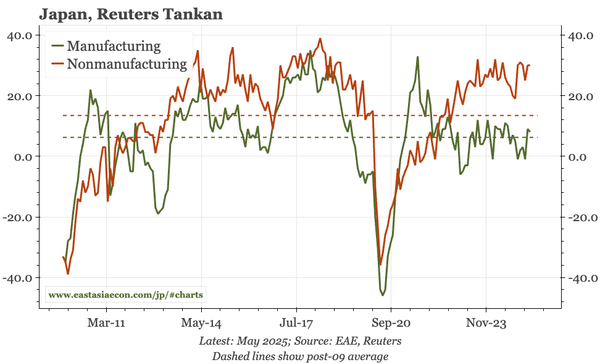
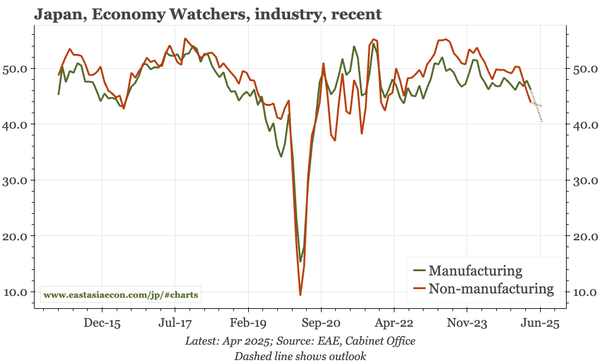
Bits and pieces today. Machine orders were stable in February. The April Reuters Tankan didn't show much deterioration, even though the survey was conducted after "Liberation Day". At least for services, one continued driver is tourism, with visitor numbers in Q1 surpassing 10m for the first time.
China – 5.4% isn't enough
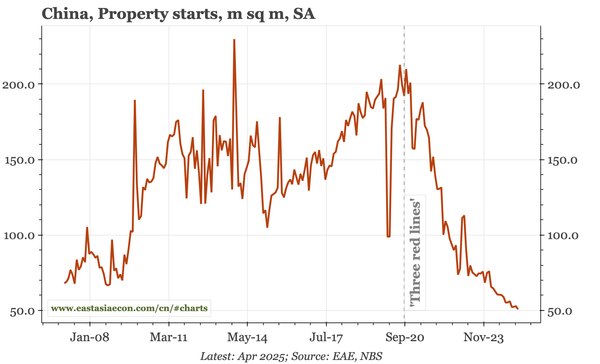
Since June last year, there has been a real inflection in retail sales and some construction indicators. In Q1, however, real estate remained as weak as ever. Manufacturing FAI is strong, but that has to be at risk from the trade war. Overall, the economy still isn't on a firm footing.
China – all-economy prices still falling
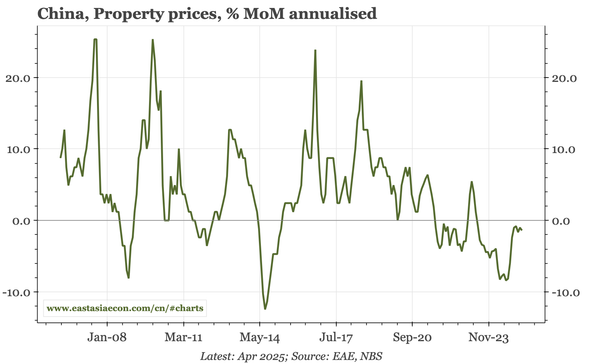
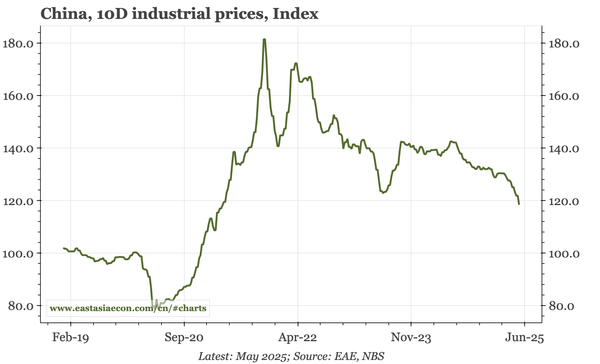
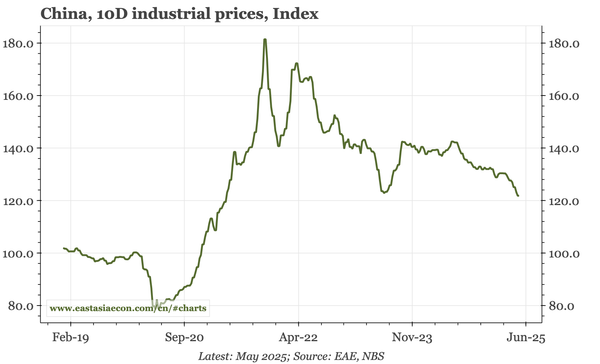
Today's property price data showed continued falls in March, though not as deep as the cuts late last year. Putting that with CPI, PPI and equities, and it is clear that all-economy prices remain in deflation, with little change following the government stimulus from September last year.
Korea – import price inflation and the KRW
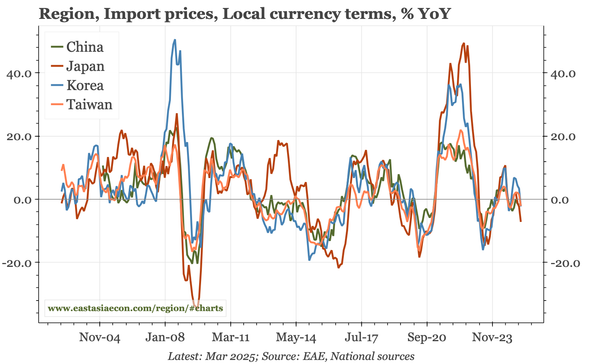
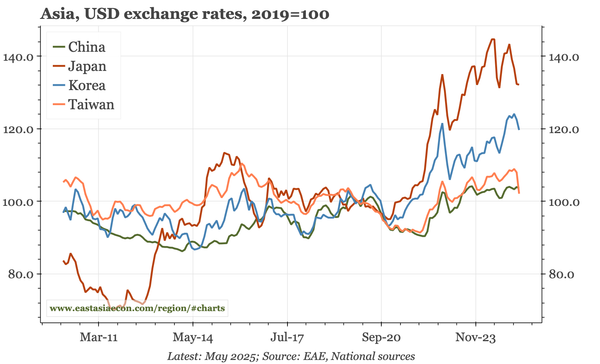
KRW import price inflation has slowed to 3.4% YoY. In USD terms, import prices are falling. The gap is the exchange rate, and that boost to inflation makes the KRW an issue for the BOK. The KRW has now recovered the drop triggered by the martial law declaration, easing some of the BOK's concern.
China – policies to boost consumption
The second of two videos on consumption, an issue that is even more important given the economic damage that will be inflicted on China by the tariffs. It is impossible to imagine Beijing supporting western-style consumerism. But there is still a way for economic policy to boost consumer spending.
Korea – cycle worsening, rates to fall
The economic environment for Korea is about as bad as it can get. Despite the short-term rebound in house prices, that suggests more rate cuts, starting at this week's meeting, that will ultimately take the policy rate below neutral. The one caveat I have is the stickiness of services inflation.
Taiwan – 4% wage growth
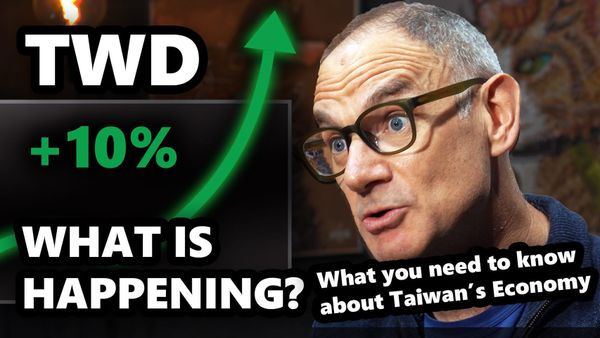
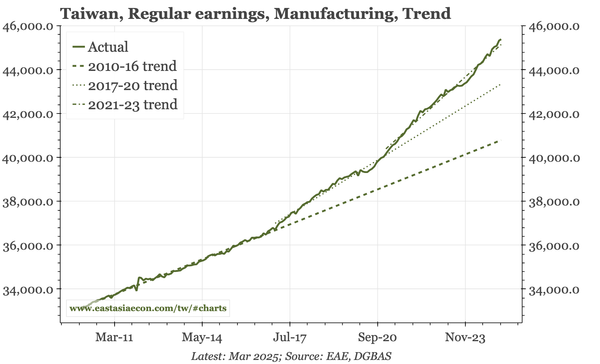
Wage growth in Taiwan has been famously low for years. But in manufacturing, there are signs of change, with growth averaging around 4% since 2024. Services isn't so strong, but the trend growth in economy-wide wages is now up to 2.5%, higher than any time in the 25 years.
China – import ratio now the lowest since the 1990s
Exports through March were solid, but not so strong as to suggest big front-loading. The real standout is the import ratio dropping to a new post-1990s low. The trade surplus upsets Trump. Equally though, weak imports limit China's appeal as a market for others looking for an alternative to the US.
China – recovery in credit growth continues
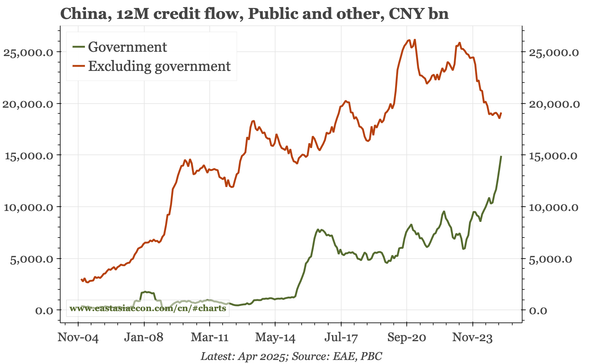
Credit and monetary data continue to suggest the monetary squeeze of 2023 and 1H24 has ended. The significance of the rebound is offset by three factors: it isn't incorporating non-government borrowing; mortgage lending isn't rising; and definitional changes to M1.
Japan – inflation expectations still strong in Q1
In today's BOJ quarterly consumer survey, inflation expectations remained strong, just as they had in the corporate Tankan last week. Given tariffs, this is not nearly as significant for the BOJ as it would have been, but it is better to be facing Trump's shock with inflation rather than deflation.
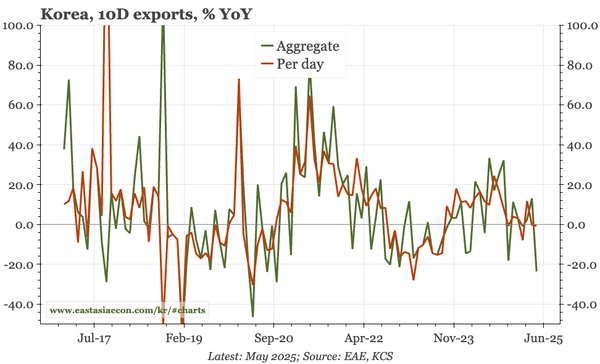
Korea – April exports flat 0% even before tariffs
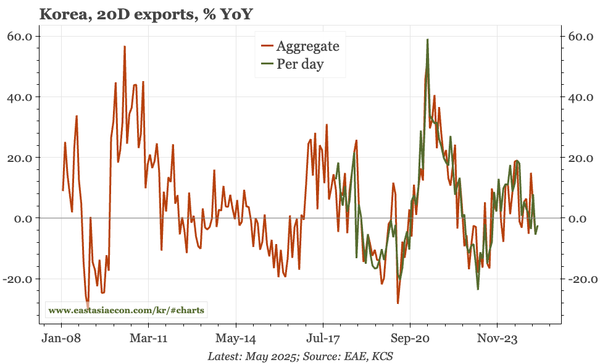
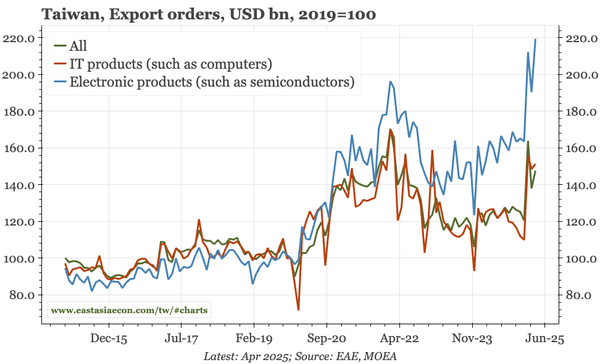
Exports in April didn't grow. The sluggishness of sales this year contrasts strongly with the surge in shipments from Taiwan. This isn't a great position from which to be drawn into a trade war, which for Korea is still very much alive: Trump's tariff reprieve doesn't extend to his auto tariffs.
Taiwan – trade surplus with US still rising
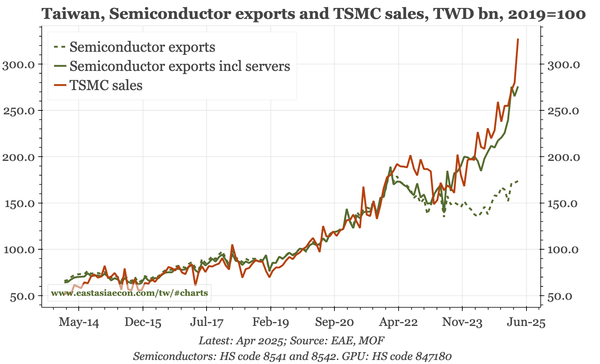
The slight moderation in March wasn't big enough to change the vertical trend rise in Taiwan's trade surplus with the US. Maybe the tariffs will cause a bigger change. At the least they will cause a slowdown in exports, which remained strong last month, led by another record month for TSMC.
Japan – inflation risk from PPI and consumer expectations
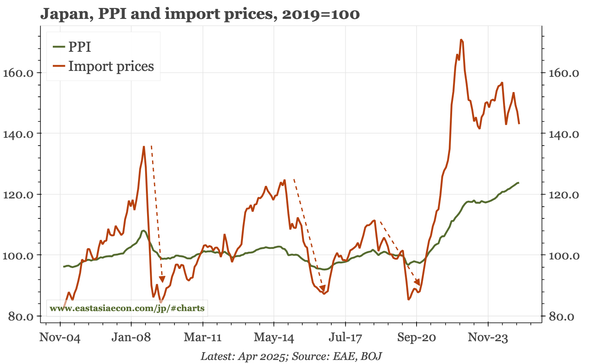
The gap between PPI and import prices shows pent-up inflationary pressure, a dynamic that is also showing up in a renewed rise in consumer inflation expectations. These trends probably have further to run, unless there is a global recession or JPY appreciation that causes import prices to fall.
China – stronger inflation not enough
The rise in core from Q424 sustained in Q125. But that isn't enough to suggest a turnaround in the GDP deflator, and Trump's tariffs mean that downside risks to inflation have grown again. Policy rates are likely to be cut, but that won't be enough to offset this latest shock.
Region – does low UE mean labour market tightness?
20 slides analysing structural labour market issues: the puzzle of low unemployment but weak wage growth; supply side changes that have deflected demographics; demand side strength as China offshoring ends; and the implications of the renewed trade war.
Korea – employment sluggish even before the trade war
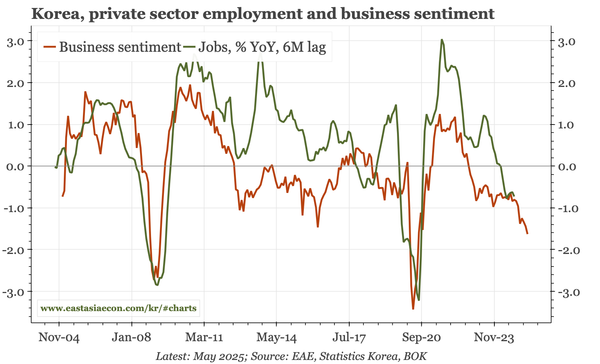
Unemployment in Korea remains low, but it is clear that the cycle low has been seen. Private sector business sentiment has been pointing to falling employment, and that even before the export recession that is highly likely in the next few months.
Taiwan – inflation receding, but growth is too
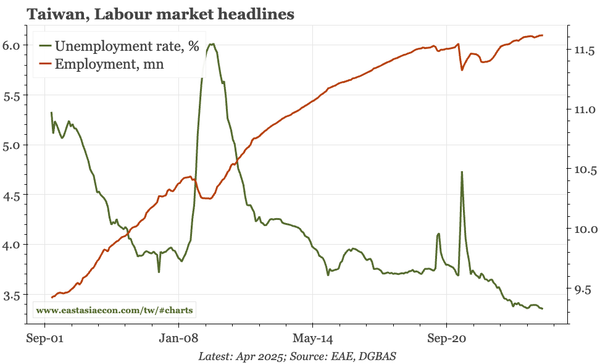
Core inflation eased in March, and is now down to a bit over 1%. The fall in oil prices should mean downside risk for headline from here too. That's important because of the likely recession that's now ahead. Equities are suggesting exports fall 10% in the coming months.
China – five consumption myths
The first of two videos on consumption. This one looks at recent trends, arguing spending has been stronger than often realised. It still isn't high enough, especially given the huge shock from Trump's tariffs. So the second discusses policies that would boost consumption further.
China – three post-tariff themes
Yesterday's tariffs are close to a worse case scenario for China, and are a big negative shock when the cycle is already weak. Three things strike me as important in what happens next, both for China's economy, and for its global influence: consumption, imports, and the currency.