*
East Asia Econ

East Asia Econ

The platform for tracking and understanding East Asia macro

Korea – UE down, but the BOK gets ready to cut

Korea – UE down, but the BOK gets ready to cut

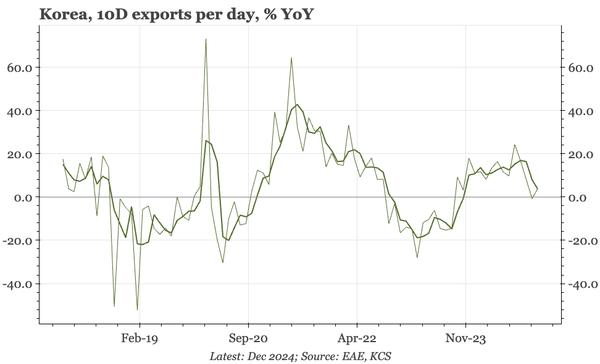
Data today show exports still growing, and UE still low. The BOK hasn't been ignoring exports, but the bank has been more focused on weak domestic demand. The labour market data don't suggest that weakness is disappearing, with strength in employment concentrated in state and part-time positions.

3 min read

Korea - inflation back at target

Korea - inflation back at target

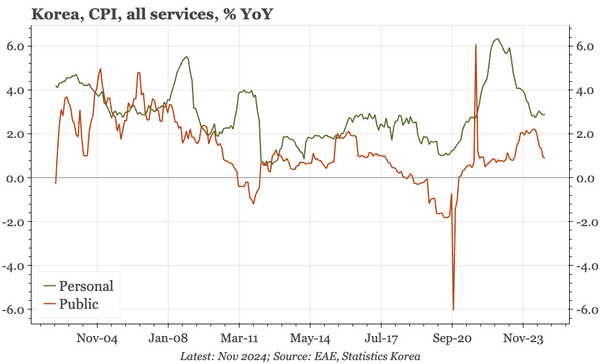
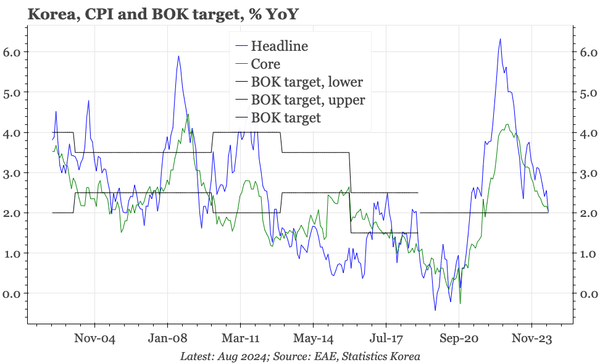
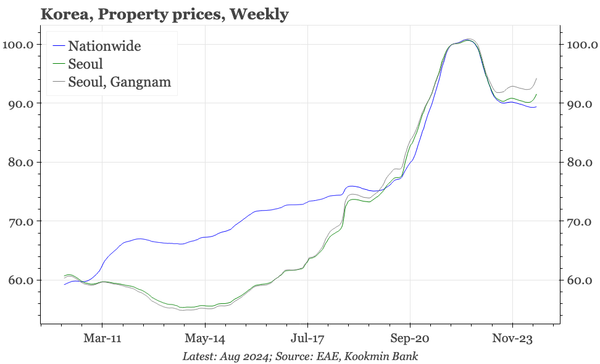
Inflation is now at the BOK's 2% target for the first time in 3 years. The BOK has been comfortable about inflation for a while already, but still, the latest drop will make it more difficult for the bank to further delay rate cuts. The wild card is if housing doesn't slow with the latest DSR rules.

2 min read

Korea – yet closer to a cut

Korea – yet closer to a cut

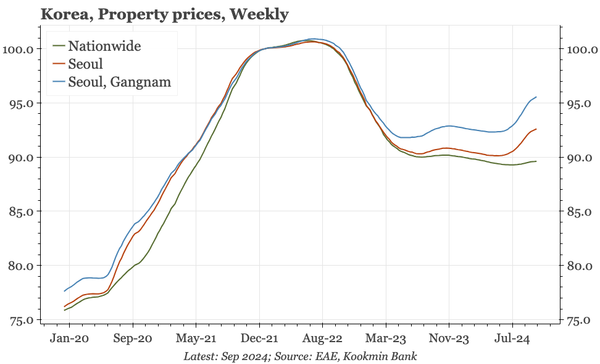
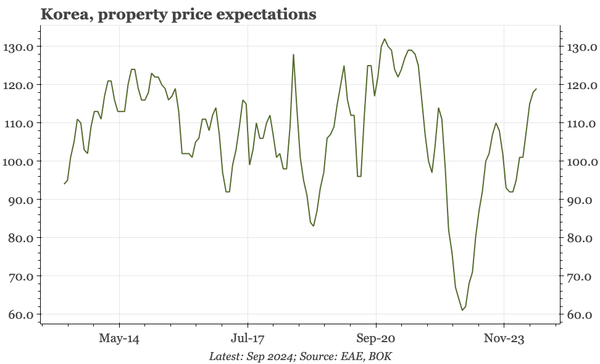
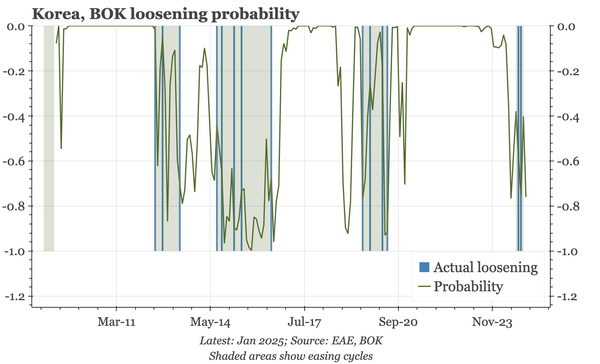
The BOK's slow journey to rate cuts continued today, with further shifts evident in both the statement and the governor's remarks. That makes a rate cut highly likely in Q4. But there are still risk scenarios, with the obvious one being that property doesn't slow in the way the BOK seems to expect.

1 min read

Korea – doveish macro data

Korea – doveish macro data

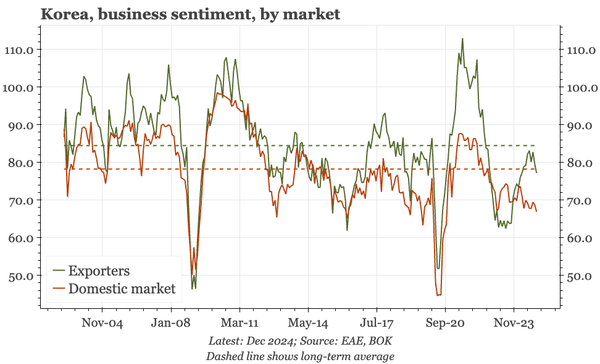
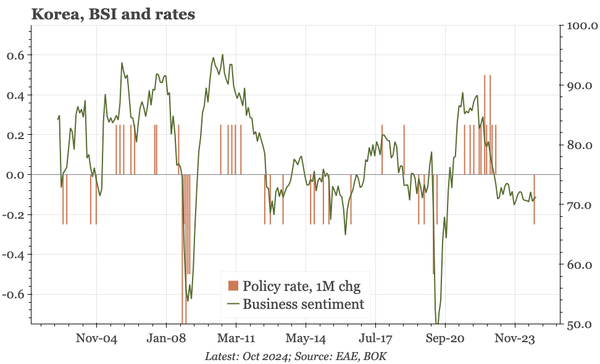
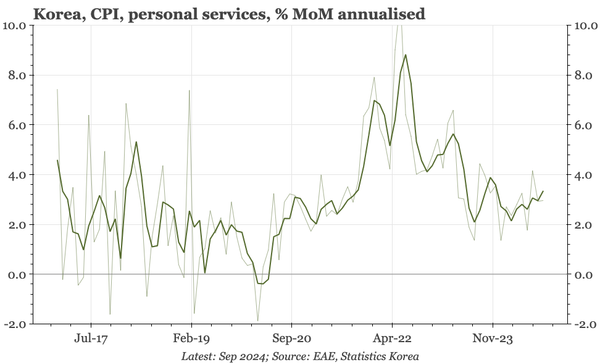
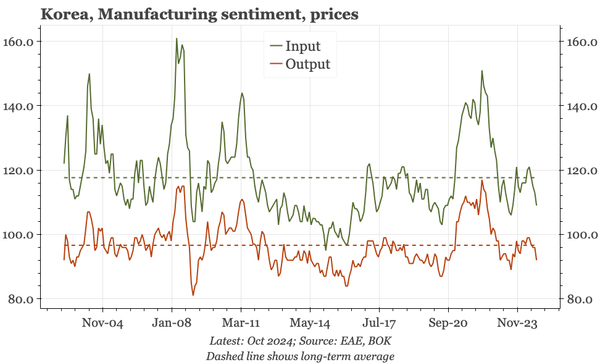
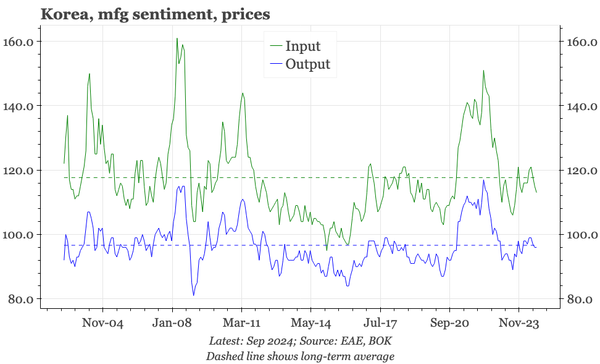
In today's data releases, business sentiment remained low, export growth stable, and prices soft. Overall, the macro data is giving the BOK more room to cut. The one obvious exception is the housing market, though we are also interested to see if the BOK mentions the resilience of service inflation.

2 min read

Korea – house price expectations up again

Korea – house price expectations up again

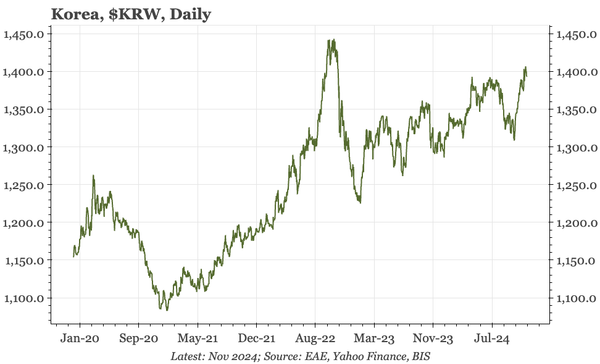
This year, the BOK has gradually put rate cuts on the agenda. That makes a near-term change in policy a risk, and the recent strengthening of the KRW gives the bank some justification. But in July, the BOK played up worries about a property rebound, and data show that has continued through August.

3 min read

Korea – labour market mildly doveish

Korea – labour market mildly doveish

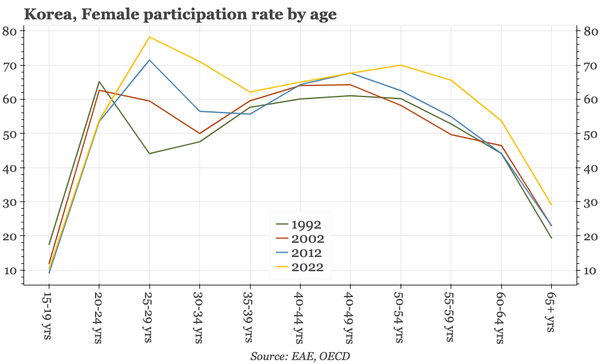
The labour market isn't as tight as the July fall in unemployment suggests. Employment didn't rise last month, with the only change being lower participation. That drop is unlikely to signal a reversal in the structural rise in the part rate, a trend that can be expected to restrain wage growth.

2 min read

Korea – taking stock

Korea – taking stock

Particularly if US policy action reflects a weaker economy, the BOK will likely cut if the Fed does. However, with the rebound in home price inflation that has been a focus for the BOK, and tentative signs of an upturn in services prices that so far hasn't, the BOK likely won't be in a rush.

4 min read

Korea – export recovery, domestic weakness

Korea – export recovery, domestic weakness

Recent data suggest an unchanged macro story: a slow moderation in inflation and a weak domestic economy, but export and property recoveries. The first two dynamics point to an interest rate cut, but the second two suggest that still isn't imminent.

3 min read

Korea – lower headline inflation

Korea – lower headline inflation

CPI inflation dropped more convincingly in July. Services CPI is though still running at a bit over 2%, and input prices have rebounded. With exports growing, we still aren't convinced that BOK cuts are imminent.

2 min read

Region – Korea and Taiwan chart pack

Region – Korea and Taiwan chart pack

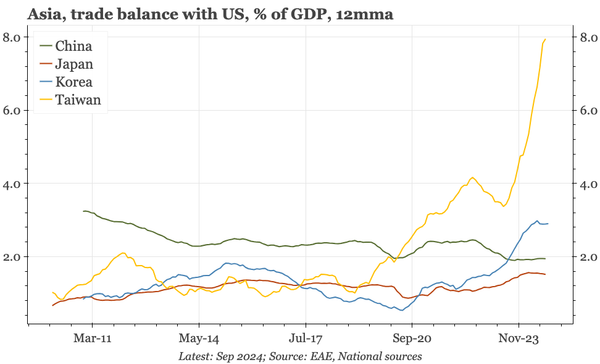
In slides laying out a comparison with Korea, we argue that Taiwan's macroeconomy is close to a structural break to the upside. An export recovery that is as strong as has been priced in by equities would likely be the tipping point.

2 min read

Korea – no change in the labour market

Korea – no change in the labour market

Headline developments in the labour market are consistent with the BOK's outlook for a moderation in tightness. However, the big structural changes – such as the rise in female part rate – mean these headline developments don't tell the whole story.

2 min read

Korea – headline inflation still at 3%

Korea – headline inflation still at 3%

Core inflation looks controlled, but headline continues to run around 3%. Leading indicators don't suggest that goods prices pressures are about to subside quickly. One reason is the weakness of the KRW and as a result, our model still isn't flashing the risk of a near term change in policy.

2 min read

Korea – incrementally weaker

Korea – incrementally weaker

Q1 GDP was solid, but the weakness in business sentiment in April makes us feel economic momentum is incrementally weaker. The consumer survey showed price expectations remaining elevated, which fits with weekly price data showing no big slowdown in food or energy price inflation through April.

3 min read

Korea – buying a bit more time

Korea – buying a bit more time

The BOK today sounded confident that core is coming down, but argued that headline is more uncertain. Of course, these two measures are different, but the distinction still feels disingenuous, and gives the impression that the bank is just trying to buy a bit more time.

3 min read

Korea – a weakening hold

Korea – a weakening hold

With headline CPI still above target and the US-Korean yield gap widening, we don't think the BOK is ready to cut yet. However, the weakness of economic activity and the softening of core inflation raise the likelihood of a dissenting vote.

3 min read

Korea – inflation slowing

Korea – inflation slowing

Headline inflation ticked up in March, but our measures of underlying inflation have now closed in on 2%. The central bank will be able to give more attention to the weakness of the domestic economy.

2 min read