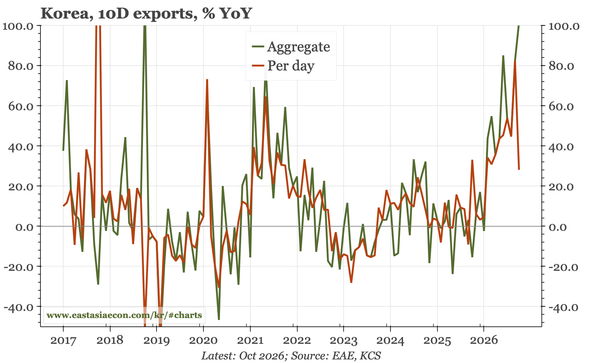
Korea – noisy early-October trade
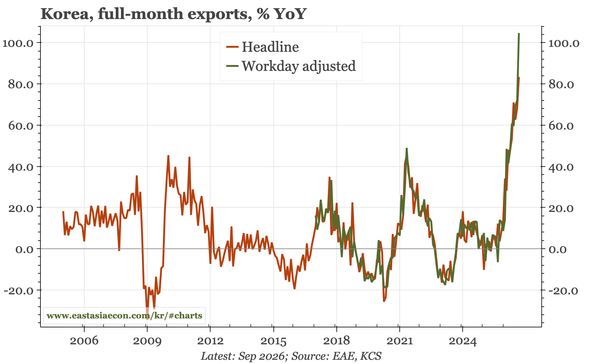
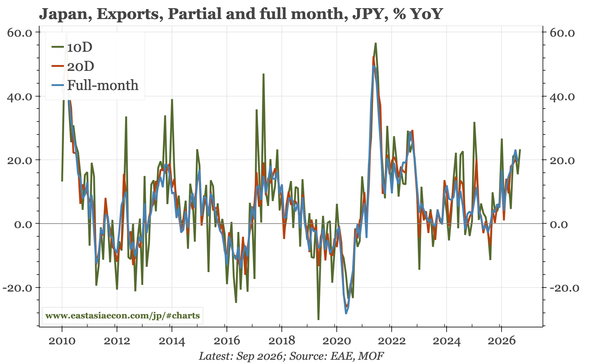
Trade data for the first 10 days of the month tend to be noisy, simply because the period is so short – today's data included only 5.5 working days, which is more than last year's 3.5 days, but still not a lot. So I wouldn't read too much into the fall-off in exports shown by today's data.
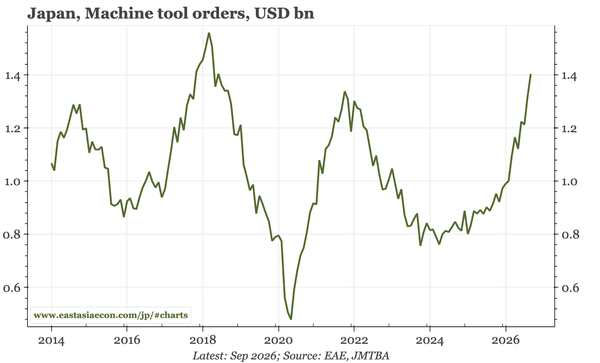
Japan – machine tool orders strong
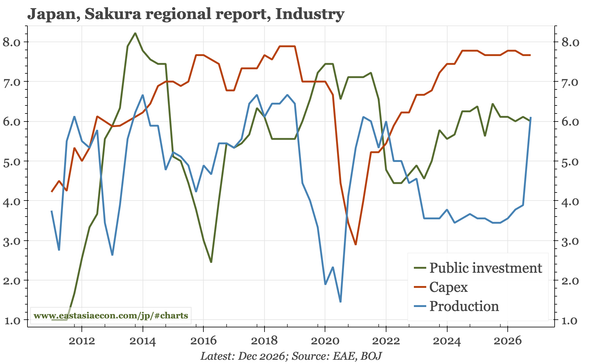
As I've commented several times in recent weeks, the big change in Japan's cycle dynamics this year has been the improvement in manufacturing momentum. The latest illustration was Friday's data for machine tool orders through September, which were strong, lifted by orders from overseas.
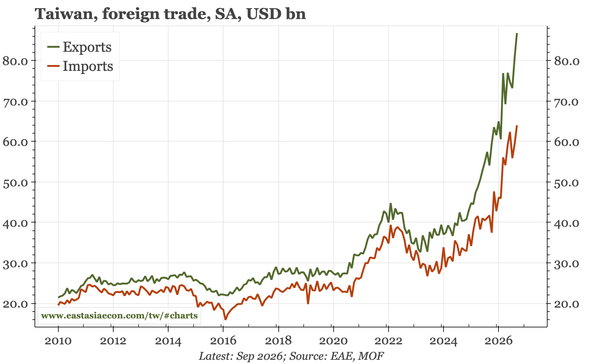
Taiwan – growth not slowing
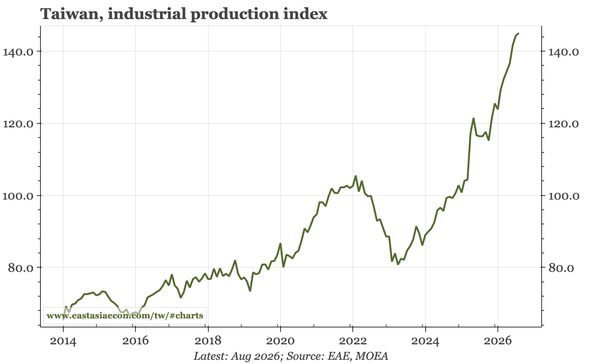
Given how exceptional growth was in 2025, there were good reasons to expect the economy to slow in 2026. But that isn't happening. Data released today show another surge in exports in September, taking growth over the first nine months of the year to its fastest pace since the 1970s.
Taiwan – FX reserves fall
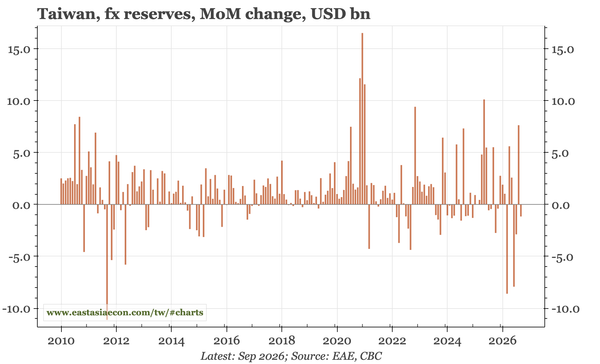
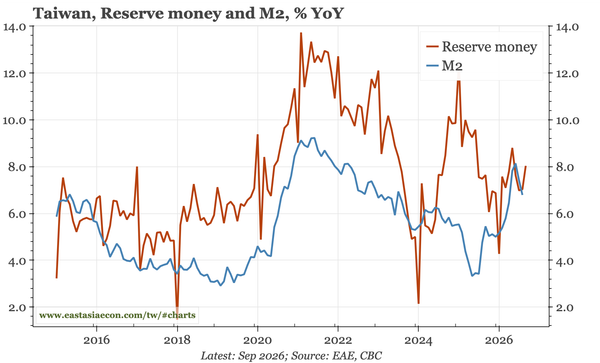
FX reserves fell in September, which is a huge contrast with the ongoing size of the trade surplus. With the currency remaining stable, this gap shows that the sectors other than the central bank that have become the main recyclers of Taiwan's external balance.
Japan – output gap widens again
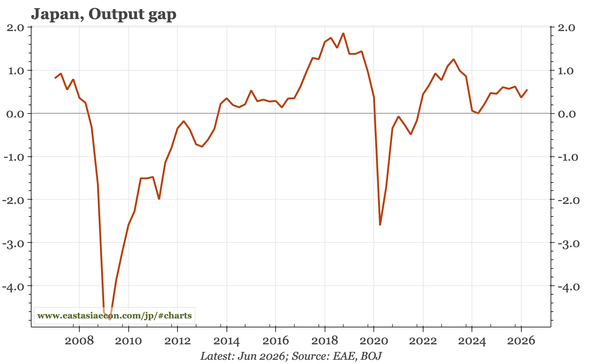
More signs of inflation pressure in today's data releases. The BOJ's latest estimates show a renewed rise in the positive output gap in Q2. Also today, the measure of inflation expectations in the Cabinet Office's consumer confidence survey, already elevated, ticked up in September.
Taiwan – property and macroprudential easing
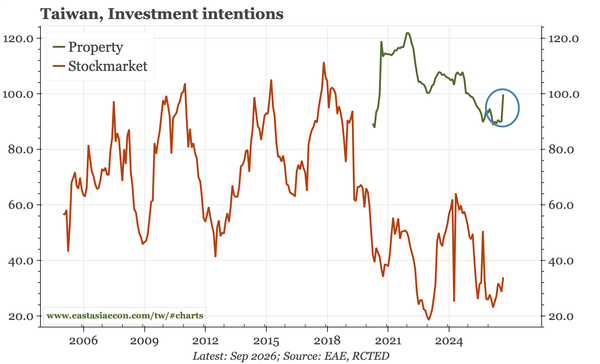
While it may have been seen in the September consumer confidence report, it is too soon to expect the CBC's easing of macro-prudential measures on property to be showing up in actual transactions. Consistent with that, sales did remain weak last month.
Taiwan – PMI new orders fall
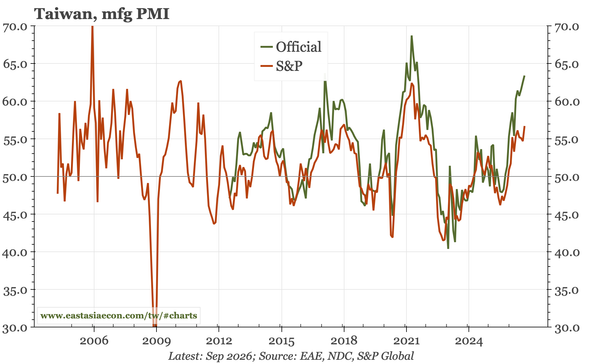
The cycle isn't quite as strong as the rise in headline PMIs in September suggest, with a sharp fall in new orders in the computer and electronics sector (covering chips and servers). It will be important if that weakness shows up in TSMC's earnings commentary later this month.
Japan – IP drops in August
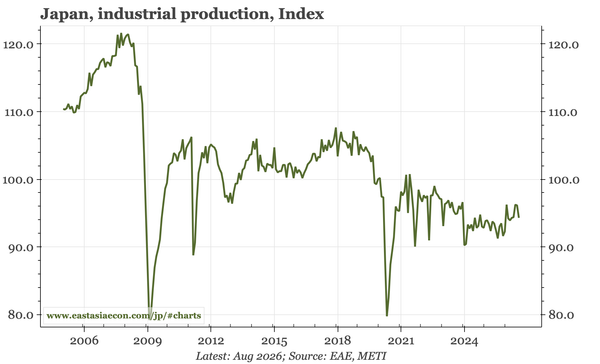
Industrial production was weak in August, dropping 1.7% MoM. The decline was fairly broad-based, with production affected in part by the Kumamoto earthquake and typhoons. Some of this weakness should prove temporary: manufacturers expect production to rebound 3.2% MoM in September.
China – services exports dip
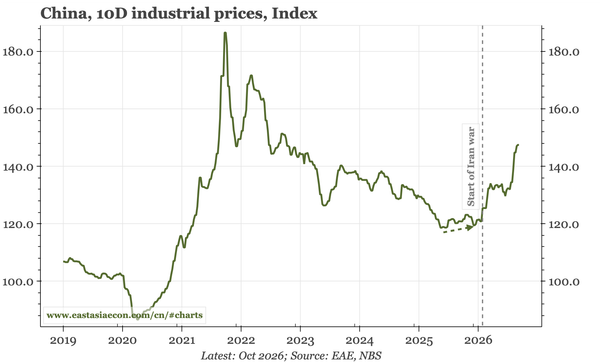
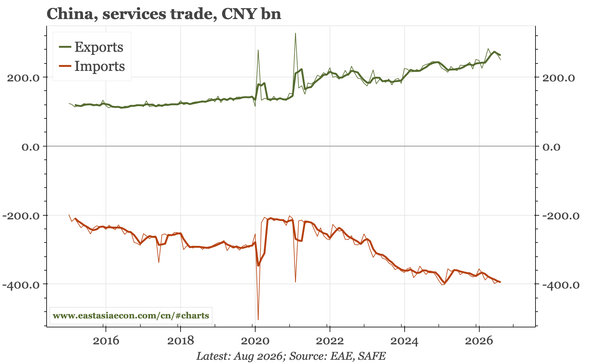
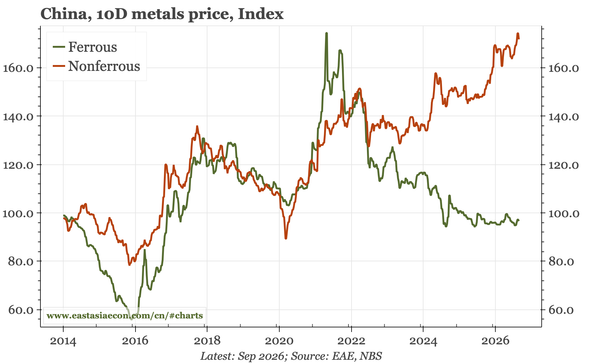
China's service exports ticked down in August, and continue to be smaller than imports. However, that deficit is dwarfed by the surplus in goods. That surplus in volume terms is even bigger than value, because most of the rise in goods imports this year is because of prices.
Taiwan – monitoring index at 41
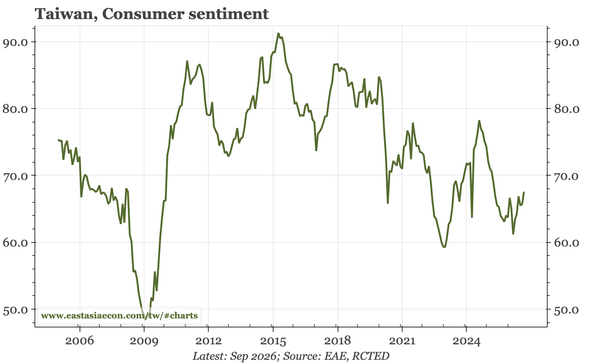
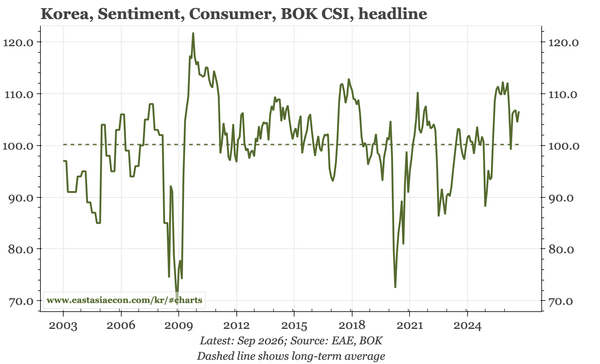
Taiwan's monitoring index remained at 41 in August, a level that has rarely been higher, and shows the economy continues to "boom". Adding to that sense is consumer confidence in September, which improved across most components. Some of the increases were quite sharp.
Korea – business sentiment softens
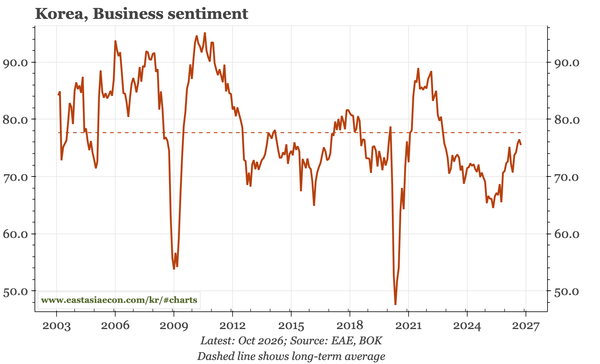
Business sentiment in today's survey for September, which includes a one-month outlook, softened. The easing was broad-based, though sentiment for large firms defied the drop, and capex intentions rose strongly. Price pressures eased, although not by as much as in the last survey.
Japan – services PPI back at record
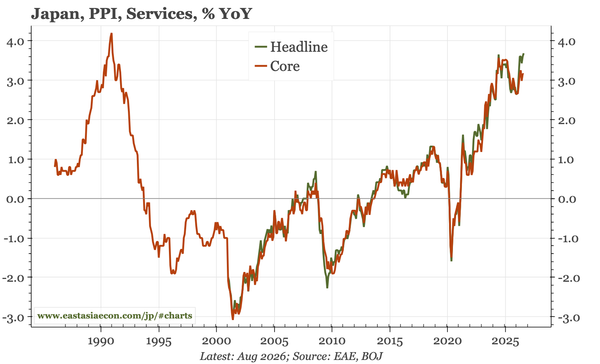
Headline services PPI inflation edged back up in August to 3.7% YoY, equalling the record high since the early 1990s that was first reached in mid-2024. With goods PPI inflation also higher last month, pipeline prices point to real upside risks for CPI inflation in the next 6M.
Japan – underlying inflation at target
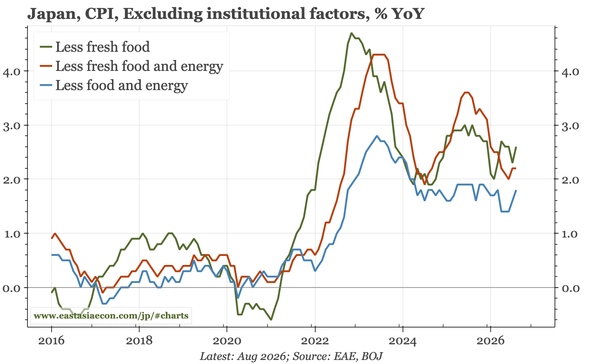
The BOJ's series for underlying inflation has now been at or above its target of 2% for 55 of the last 56 months. Nor is this period of excess inflation likely to be over yet. The data for August, released today, rebounded, as did then diffusion across items.
Japan – flash PMI a bit weaker
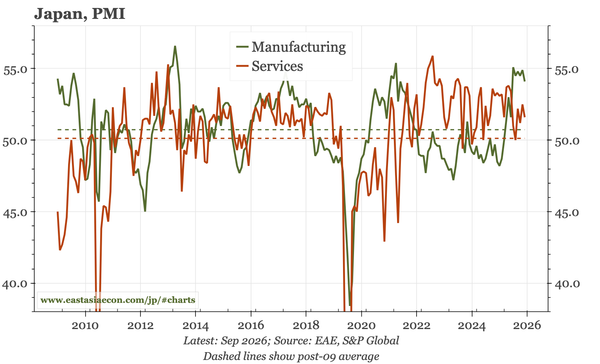
The flash PMI was a bit weaker in September. As has been the case in recent months, the manufacturing PMI was stronger than services, but in both sectors the scores dropped this month. Other surveys suggest services activity is stronger, but also report the same pick-up in the manufacturing cycle.