*
Paul Cavey

Paul Cavey

Taiwan – labour market still tight

Taiwan – labour market still tight

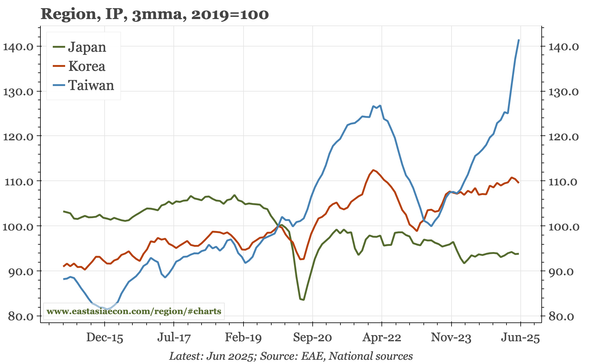
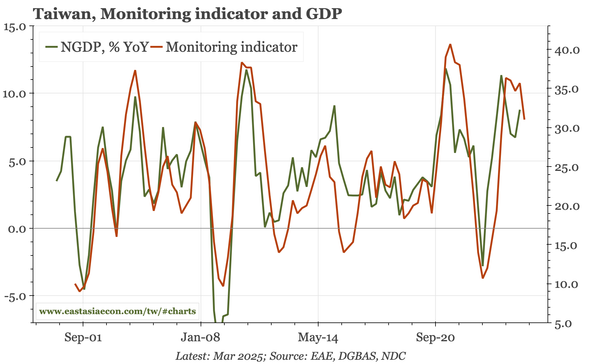
After a tick-up in mid-2024, unemployment is back at 3.4%, the lowest in 25 years. In Korea, low UE is offset by big supply-side shifts as the participation rate rises. That isn't happening in Taiwan, so the labour market really is tight, with the big risk being tariffs cause export recession.

1 min read

Japan – strong orders, weak sentiment

Japan – strong orders, weak sentiment

March machine orders surged, which could be tariff-related, but the strength was in domestic not foreign orders. Anyway, it seems unlikely to last, with today's flash May PMI repeating the downbeat message of the EW, with business confidence "the second-lowest recorded" since 2020.

1 min read

Japan – not bad, but still uncertain

Japan – not bad, but still uncertain

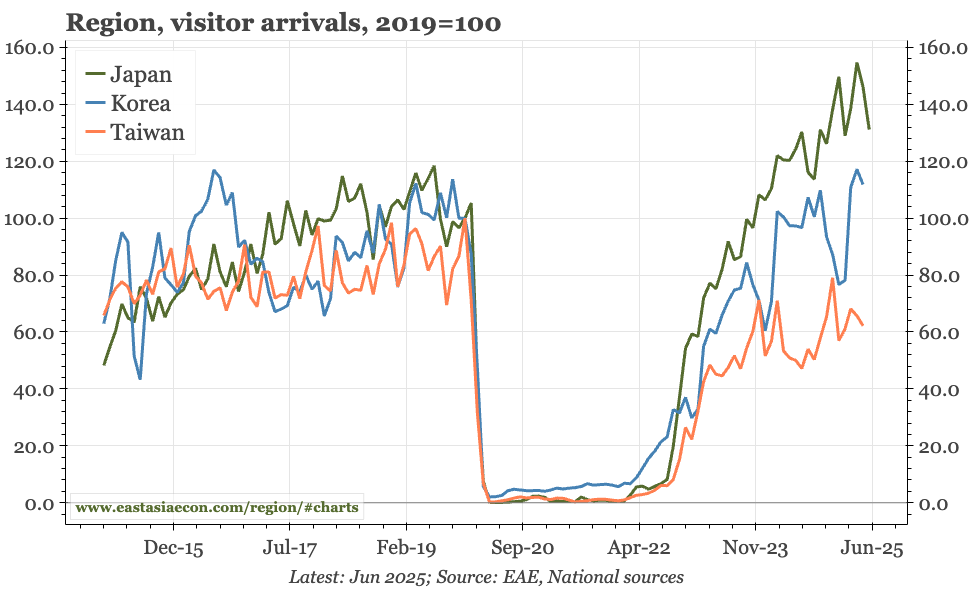
Data today don't darken the price- and tariff-driven pessimism painted by the April EW survey. In the May Reuters Tankan, non-manufacturing sentiment was firm, supported in part by record tourist inflows. Manufacturing sentiment didn't drop further, and separately, export volumes for April rose.

2 min read

Korea – becoming....East Asian

Korea – becoming....East Asian

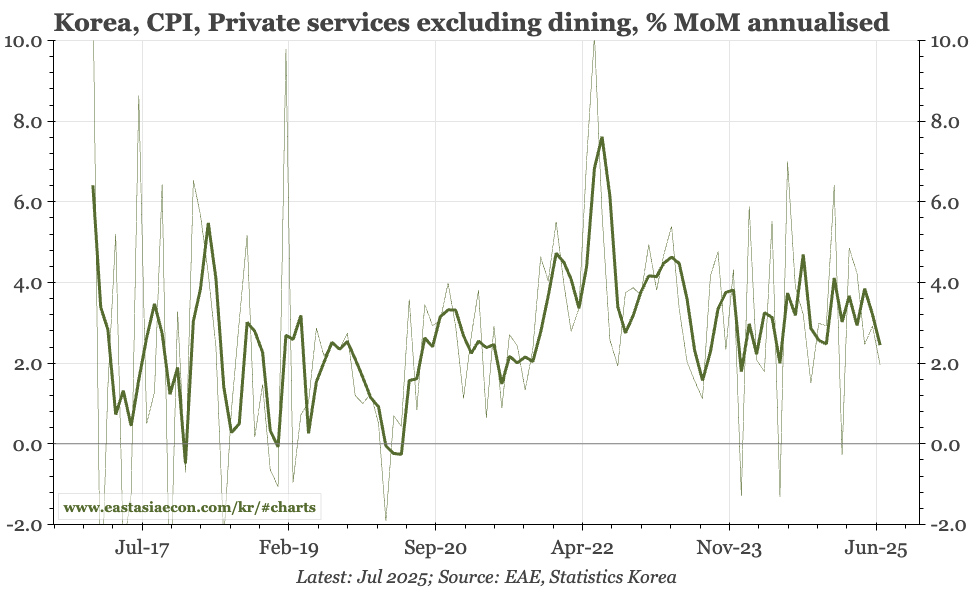
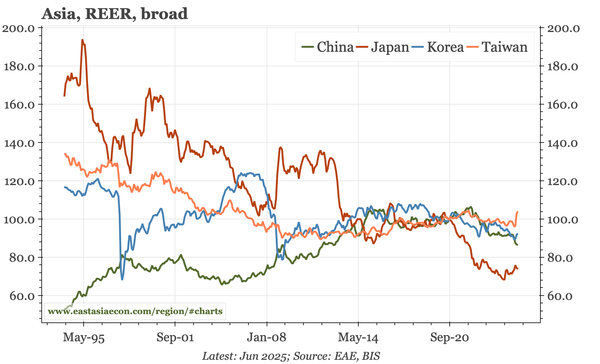
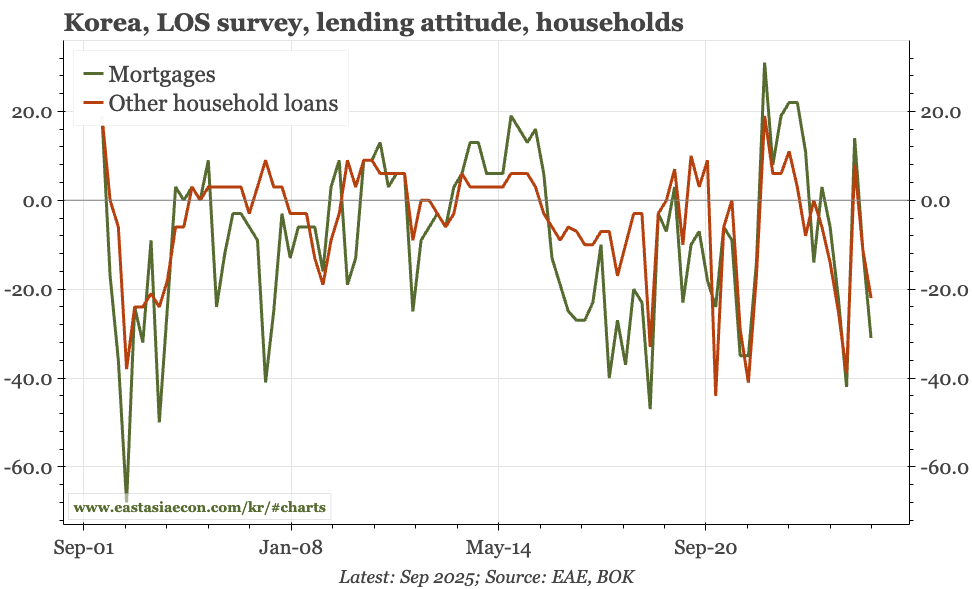
Historically, in terms of both savings and inflation, Korea has looked different from the other East Asian economies. But that is now changing. In recent years, Korea has become a clear external creditor, and labour market developments warn of a structural slowdown in inflation.

8 min read

Korea – no tariff shock yet

Korea – no tariff shock yet

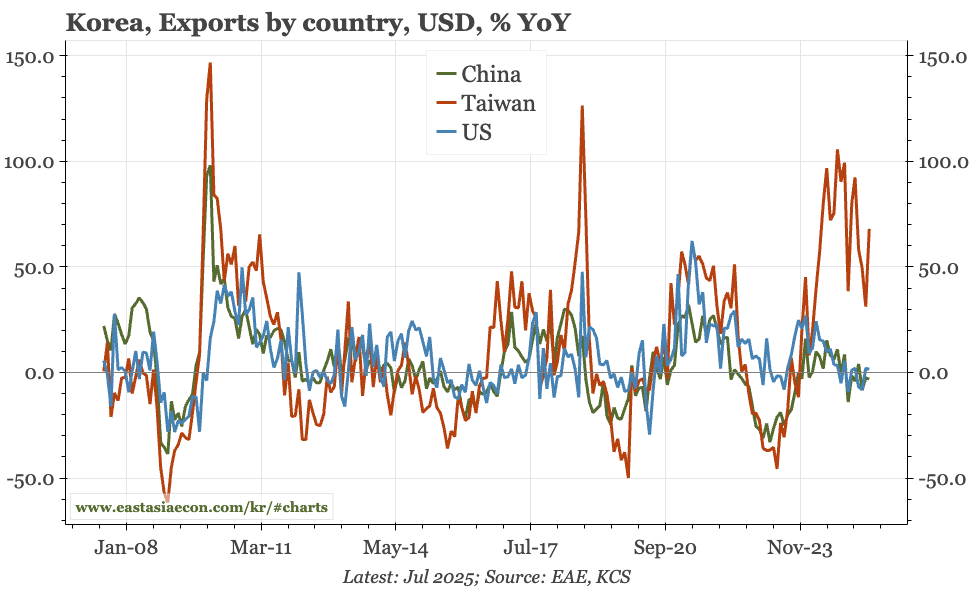
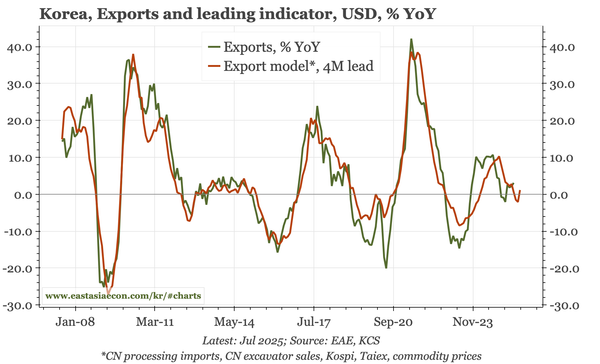
After adjusting for days worked, Korea's exports in the first 20 days of May fell YoY for the second consecutive month. But this isn't a tariff shock: in level terms, exports peaked back in mid-2024. If anything, May was a bit stronger, led by a rebound in semiconductor shipments.

1 min read

Taiwan – export orders still flying

Taiwan – export orders still flying

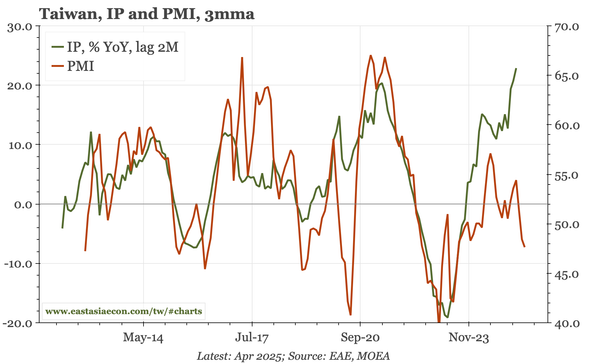
This year's surge in export orders continued in April, but the drop in the diffusion is warning of a pullback. For the current account, the strength in exports this year has been offset by rising imports and a smaller income surplus. For the TWD, export inflows have been offset by equity outflows.

2 min read

China – Q4 pick-up already fading

China – Q4 pick-up already fading

Headline YoY data are still benefiting from the Q4 pick-up, meaning another 5% growth quarter is likely. But sequentially, growth is slowing again, with no sign of any turnaround in construction that might put a sustainable floor under the overall economy.

2 min read

China – still no sign of property momentum

China – still no sign of property momentum

After a clear improvement from September, property price deflation since December has settled at an annualised pace of around -1.5%. Sluggish mortgage lending isn't pointing to a further recovery from here. On these official data, average prices are now down 6% from the peak in 2021.

1 min read

Taiwan – the macro case for the TWD

Taiwan – the macro case for the TWD

A video bringing together the arguments I have been making for the last few months on how the economic factors that that helped anchor the TWD in its tight 28-33 range from the late 1990s are now changing.

2 min read

China – no upside surprise in monetary data

China – no upside surprise in monetary data

Today's monetary data continue to suggest that the economy has bottomed, but don't point to a big recovery. Non-state and mortgage lending have stopped deteriorating, but don't show signs of the sort of recovery that would lift economic activity.

1 min read

China – faster PPI deflation

China – faster PPI deflation

Optimistically, you could argue that the sharper drop in upstream prices though May is driven by the falling global oil price, a decline that is good news for China. But the details show the prices of other products are dropping too, and the upshot will be a yet faster pace of PPI deflation.

1 min read

Korea – structural labour market looseness

Korea – structural labour market looseness

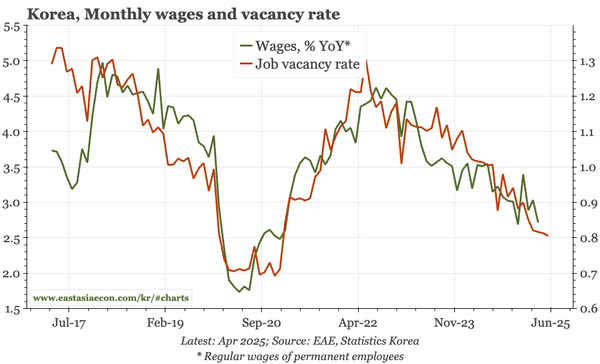
Unemployment remains low, but wage growth isn't accelerating. The reason is the big structural changes in the labour market of recent years, which have increased the number of part-time jobs. That shift is likely to reduce the bargaining power of labour, and generate a structural slowdown in wages.

2 min read

Japan – import prices versus PPI

Japan – import prices versus PPI

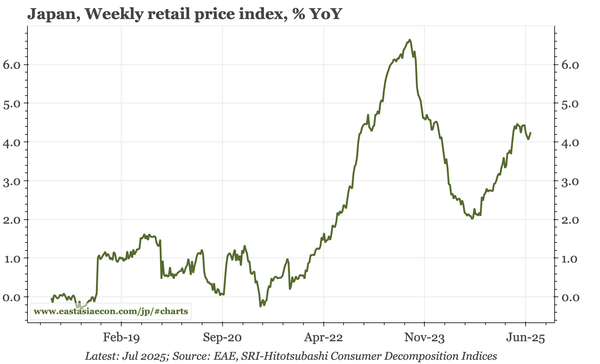
The gap between PPI and import prices is a useful way of thinking about inflation and the BOJ. Usually, the gap is closed as import prices are cut by a combination of global recession and JPY strength. If neither happens, PPI inflation isn't likely to recede, and BOJ hikes will remain on the table.

1 min read

Japan – sentiment takes another step down

Japan – sentiment takes another step down

Tariffs are reinforcing the hit from rising prices, causing a sharp fall in corporate confidence in the April EW survey. Household sentiment was stable, but USDJPY rising back to 150 means downside risk. That keeps rate hikes on the agenda, though the BOJ would clearly like tariffs to fall first.

3 min read

Taiwan – manufacturing lifts overall wage growth

Taiwan – manufacturing lifts overall wage growth

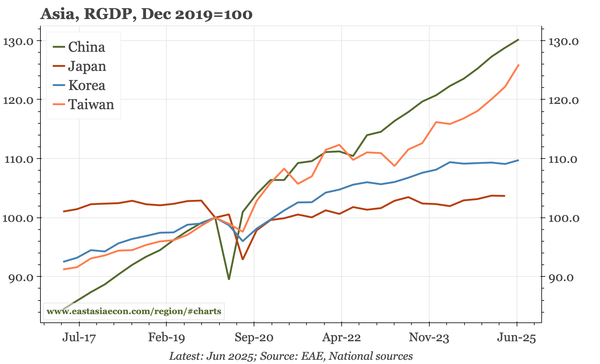
A key component of the structural shift in the economy is rising wages. That continued in March, with signs of another acceleration in manufacturing wage growth on the back of strong exports. As a result, overall wage growth is once again over 3%, as quick as during the recovery out of covid.

1 min read

Taiwan – structure, cycle and the TWD

Taiwan – structure, cycle and the TWD

The market sees TWD moves as a function of US pressure and lifers. The CBC says it is all about exporters. I see a step-change in exports from 2020 that has ended deflation and exacerbated the CA surplus. The TWD consequences of that shift are stronger if US tariffs don't trigger a global recession.

6 min read

Korea – minutes show cuts ahead

Korea – minutes show cuts ahead

Today's 10D May export data were stable, but that won't ease the growth concerns visible in last week's minutes of the BOK April meeting. It seems the member who voted for a cut was weighing more than 25bp. But another member warned against being "bold", saying that monetary easing wasn't working.

3 min read

Korea – exports not collapsing, but still weak

Korea – exports not collapsing, but still weak

The sharp drop in exports in the first 10 days of May doesn't show tariffs are having an impact. Rather, the decline was because of a fall in the number of working days. But the data do show that Korea's export cycle remains weak, with shipments in level terms treading water for a year.

1 min read

China – inflation stuck

China – inflation stuck

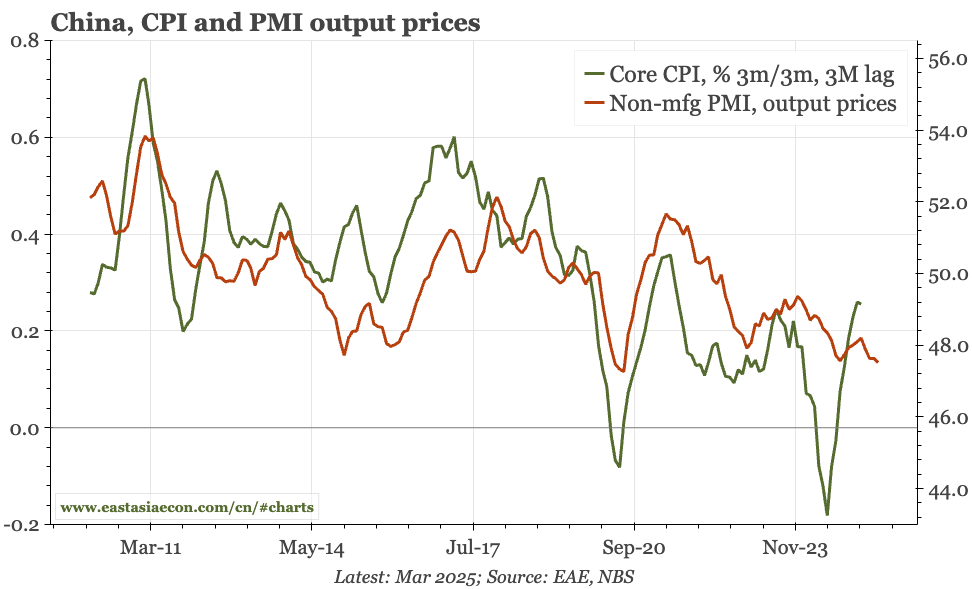
After the deflation of much of 2024, core sequential inflation has now been positive for six months. But it is now still only +0.2% annualised, and doesn't look to be going higher. Indicators for PPI suggest even more deflation ahead, with the one exception being the decline in the USD.

2 min read

Japan – wage growth down, waiting for April

Japan – wage growth down, waiting for April

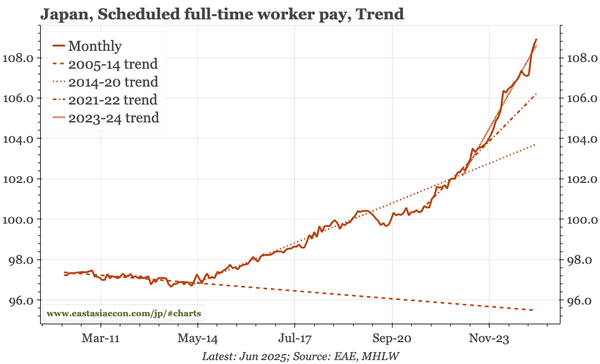
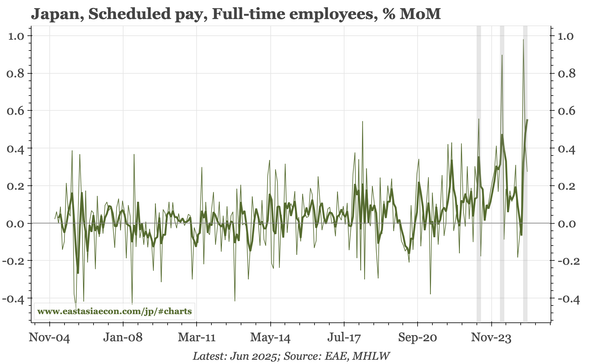
With the slowdown in official wage growth in the last couple of months being so sharp, and so at odds with other labour market developments, I would assume it is due to technical factors. I'd be more concerned if the new shunto isn't reflected in this month's SPPI print, and wages next month.

1 min read

Taiwan – can exports be stronger still?

Taiwan – can exports be stronger still?

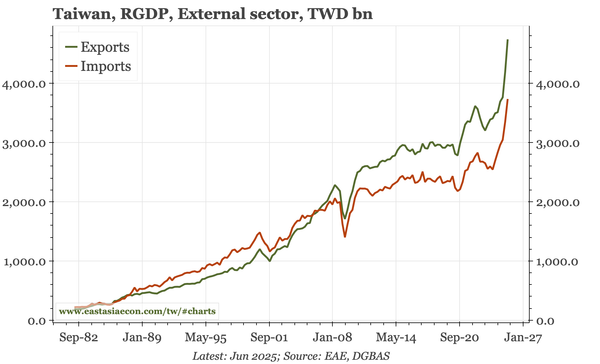
Data released yesterday showed April as being another boom month for Taiwan exports. TSMC's sales today suggest exports might be stronger still, with TSMC's revenue rising even more quickly than in the 2020-21 post-covid recovery. That's remarkable, even allowing for front-loading.

1 min read