
Paul Cavey
East Asia Today
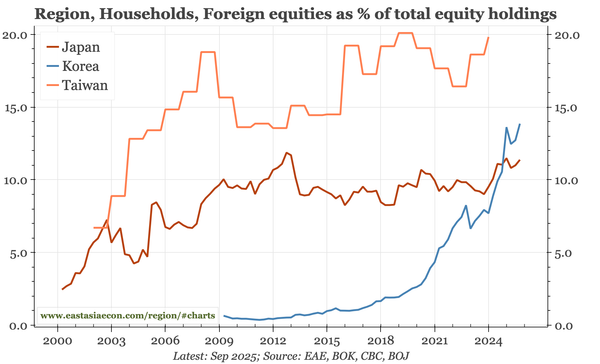
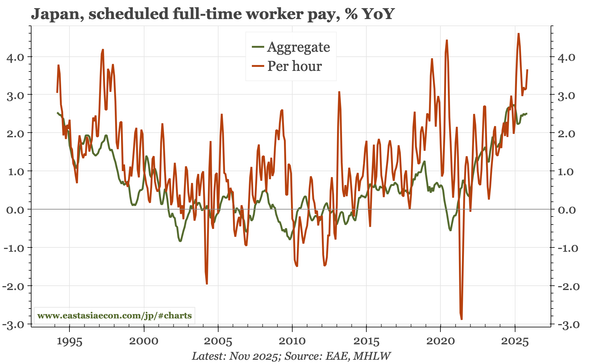
More charts than usual on Japan today, with the Q3 sakura report and output gap from the BOJ, November wages, and December consumer confidence. Also, Q3 flow of funds data for Korea, which offers another perspective on the outflows that have been weighing on the KRW.
Japan – wage data mixed, but sentiment firm
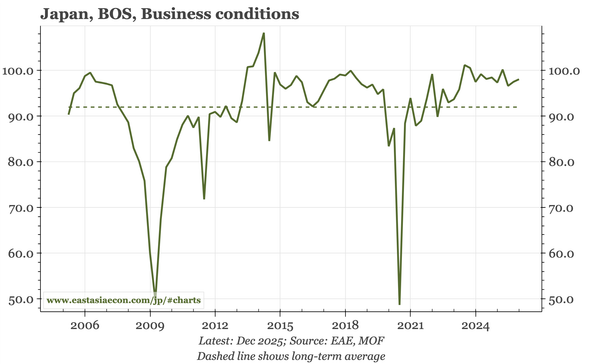
The BOJ's quarterly regional sakura report shows conditions holding up, and the dip in consumer confidence in December isn't concerning given the post-March bounce. Wage growth in November was mixed, but can be expected to rebound in December on stronger bonuses.
East Asia Today
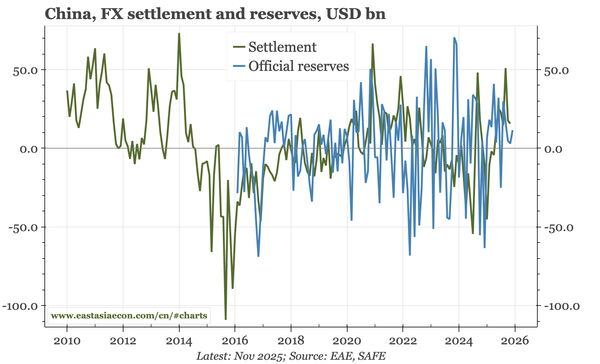
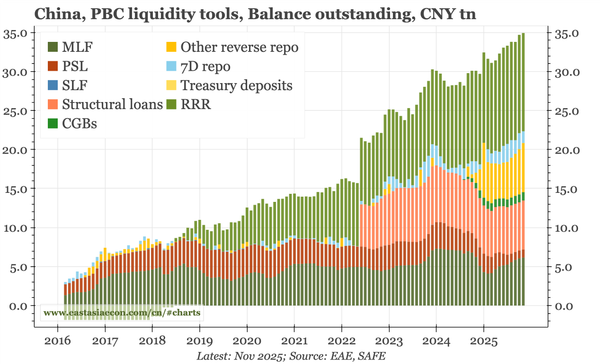
Data on FX reserves and PBC liquidity operations in December suggest the PBC balance sheet has become more supportive for growth. The Japan services PMI was weaker, but the commentary doesn't suggest a real change in direction. Services prices suggest core inflation in Taiwan has bottomed.
Japan – a big budget...but also a budget surplus
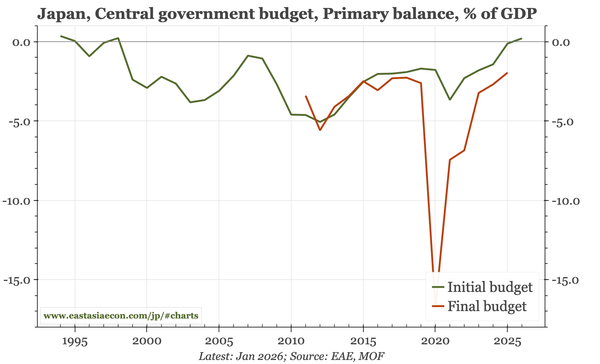
Headlines that the FY2026 budget is the biggest ever suit the idea of Takaichi as an Abe-style loosener. However, government expenditure is stable relative to GDP, revenue is rising more, a primary surplus is planned, and though Q125, the government received more in interest than it paid out.
East Asia Today
Looking through the data releases over the two weeks I've been away, and two themes stand out: rebounding activity, and firmer inflation. Both trends are most obvious in Korea. The picture is more mixed in China, but even there it looks like less deflation through to Chinese New Year.
East Asia Today
In today's daily: China monetary developments, Japan CPI, Korea PPI, highlights of the BOJ meeting, and a link to my latest podcast. From today, I am taking a couple of weeks off. Thanks for your interest this year, I hope you've found the content useful. Happy Christmas, and best wishes for 2026.
Korea – PPI inflation picking up
The mild rise in PPI goods inflation reflects the continued strength of import prices. Services PPI inflation is picking up too, reversing the sharp fall of 1H25. Neither development yet suggests CPI inflation is about to accelerate, but the bounce in services PPI removes downside risk for CPI.
East Asia Today
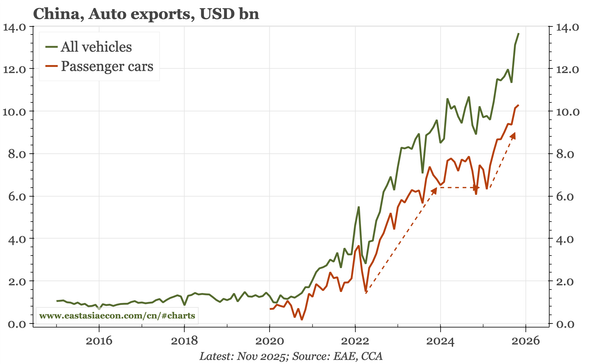
Detailed trade data show hybrids becoming the big driver of China's auto export surge. The political tensions with China have yet to derail Japan's tourism industry. In no surprise to anyone, Taiwan's central bank kept policy on hold in its Q4 monetary policy meeting.
Japan – strong cycle and savings
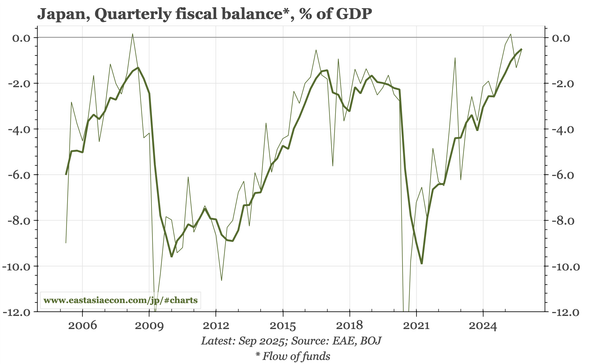
Data releases the last couple of days give more evidence that tariffs haven't derailed exports or capex. Even so, the flow of funds for Q3 show corporates remain net savers. With the fiscal deficit now also now narrowing to the lowest level since the 1990s, the result is a growing CA surplus.
Korea – BOK optimistic on exports, and consumption
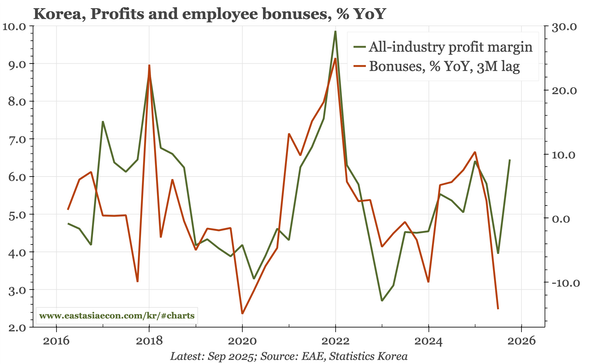
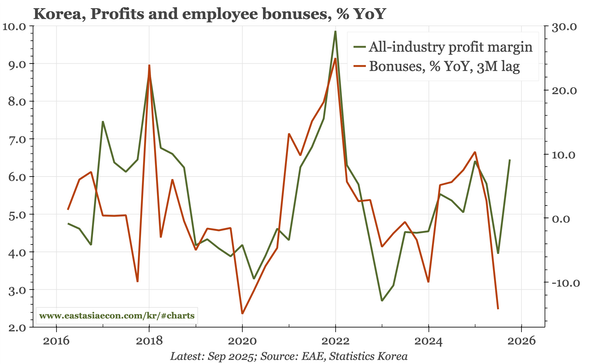
The BOK minutes shed more light on the improvement in cycle optimism that was clear at the November meeting. In terms of exports, that appears justified, because of strong semi exports and firmer profits. I am less sure about consumption, even though corporate earnings will lift bonuses.
Japan – strong Tankan details
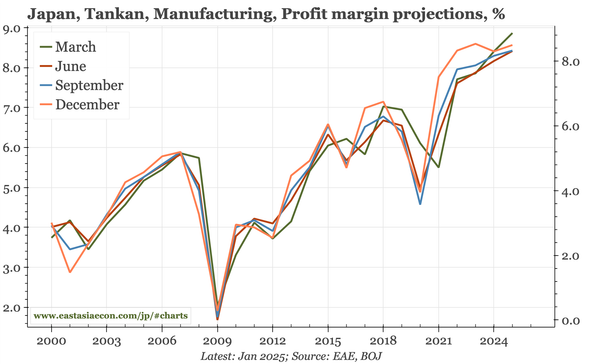
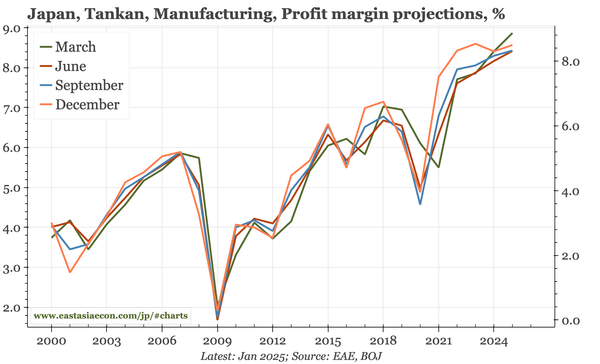
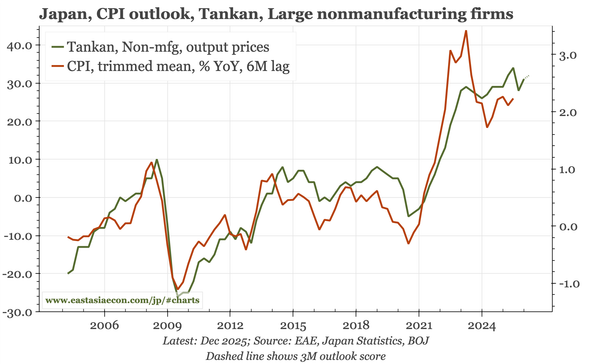
The BOJ has been concerned that tariffs would reduce profits, cutting into wages and capex. The Tankan shows no evidence of that: profit and investment expectations remain firm, as do inflation expectations, with the backdrop being a labour market that is tight for all industries.
East Asia Today
In addition to all today's data from China, some comments on Friday's monetary release and yesterday's high-frequency price data. In Japan, in addition to the Tankan, the BOJ today released the results of a special wage survey. Taiwan FDI data show investment in the US this year falling to USD4bn.
Japan – a strong Tankan
In Q4 business sentiment improved, the labour market tightened, price pressures picked up, and capex intentions stayed elevated. The BOJ is set to hike on Friday. Today's survey, like other recent data, raise the risk that the bank can also send a clearer message about the outlook for rates in 2026.
Last week, next week
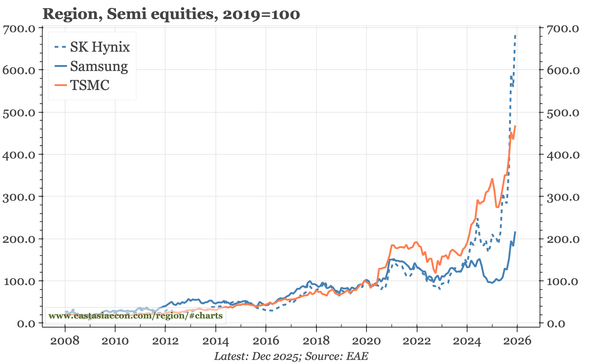
China: the nominal stabilisation is fragile. Japan: with the cycle looking good, the risk of a BOJ upside surprise is the highest since July 2024. Korea: the upside scenario from the semi cycle still isn't the base case. Taiwan: macro becomes more interesting if the chip cycle sustains into 2026.
East Asia Today
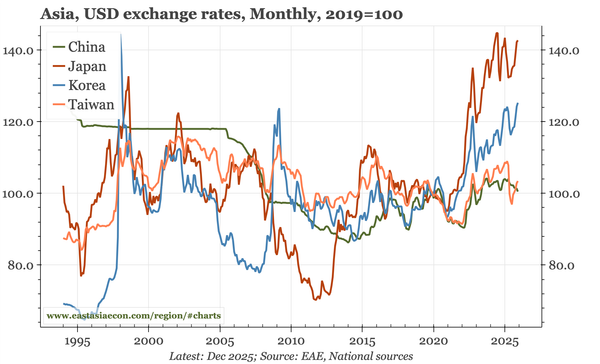
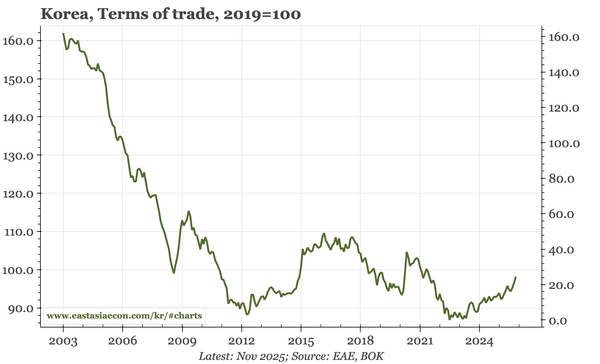
Some of the language in China's CEWC communiqué was encouraging. In Korea, while auto prices remain weak, overall export prices are rising and pushing up the terms of trade. Japan's monetary base is shrinking more quickly than any time since 2007. And my latest video, discussing Japan and the JPY.
China – three positive monetary dynamics
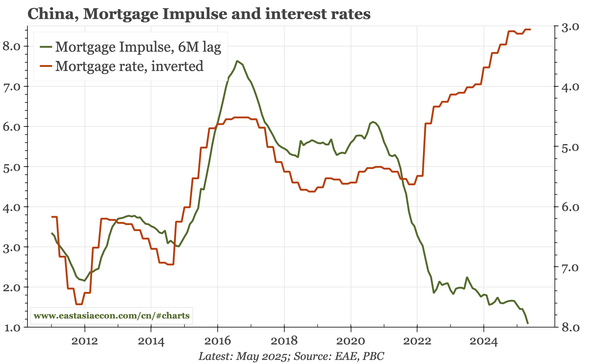
Real economy developments still look negative for inflation. That the deflator nonetheless looks to be turning can be partly attributed to local food prices and global commodity prices. However, I think monetary factors are also playing a role, with three dynamics in particular worth highlighting.
East Asia Today
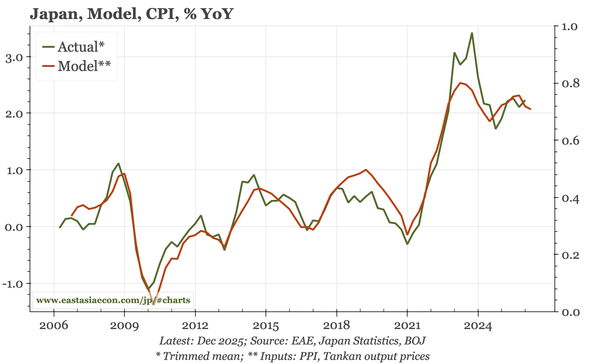
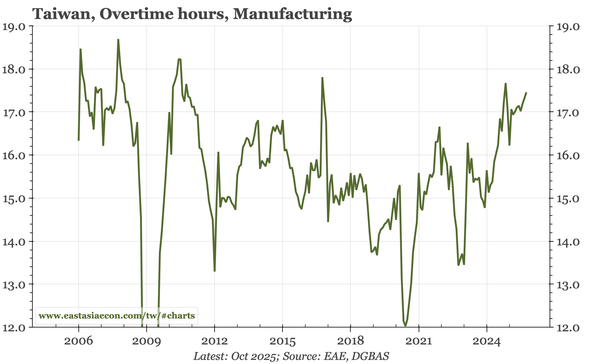
Goods PPI shows upstream inflation pressure in Japan remaining firm, while today's CPI and PPI releases in China point to a further lessening of deflation. Korea's labour market is complicated by supply-side changes. In Taiwan the message is simpler, with wage growth continuing to trend up.