Paul Cavey
China – five consumption myths
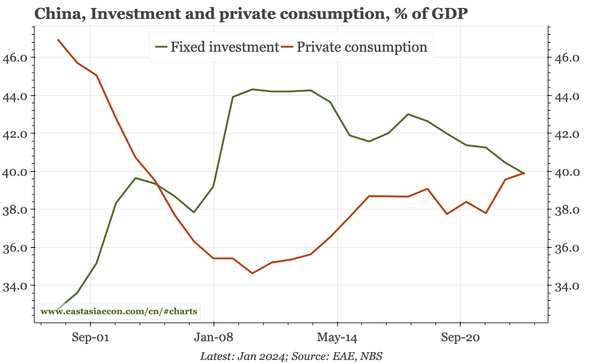
The first of two videos on consumption. This one looks at recent trends, arguing spending has been stronger than often realised. It still isn't high enough, especially given the huge shock from Trump's tariffs. So the second discusses policies that would boost consumption further.
China – three post-tariff themes
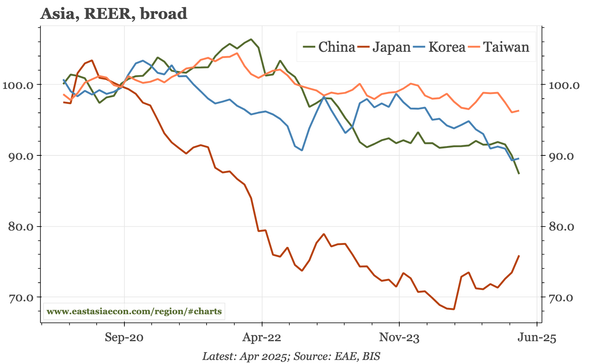
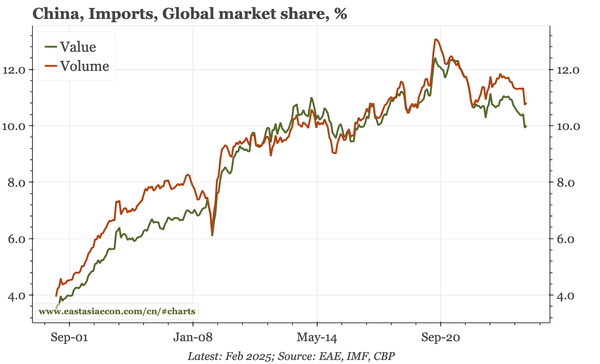
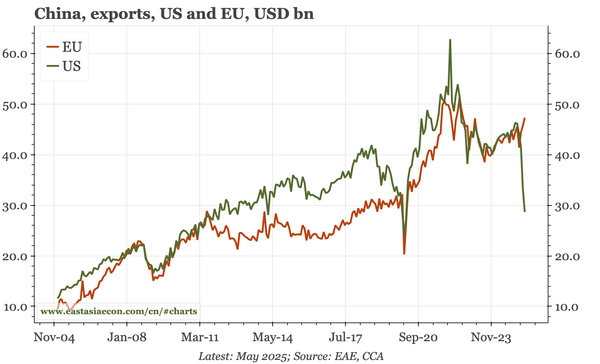
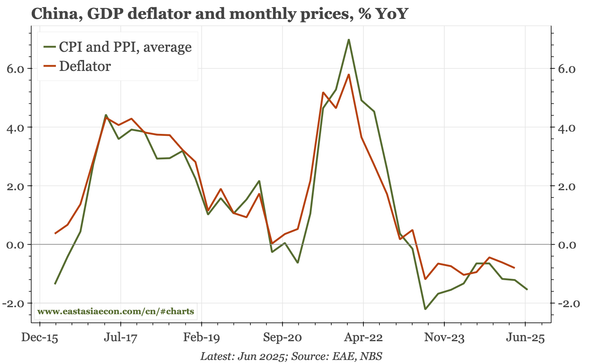
Yesterday's tariffs are close to a worse case scenario for China, and are a big negative shock when the cycle is already weak. Three things strike me as important in what happens next, both for China's economy, and for its global influence: consumption, imports, and the currency.
Korea – core inflation up again
With public services prices rising in March, the upwards drift in private services prices of recent months is now showing in core inflation. It still isn't high, but with business surveys suggesting some pressure on goods prices too, inflation is becoming more of a constraint on BOK action.
Region – weak activity, but firm pricing in Korea and Japan
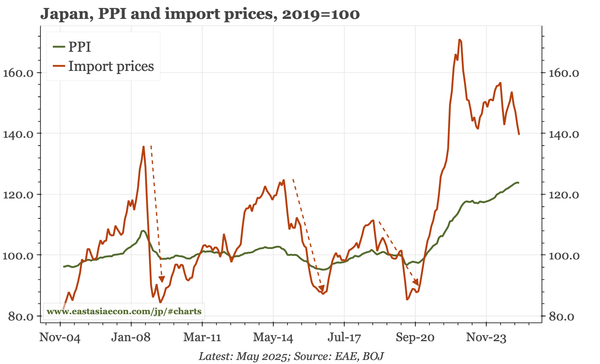
The picture painted by the PMIs isn't uniform, either for the region, or for particular economies. Overall, however, for activity there are more signs of weakness than strength. But inflation looks firm in Korea, and continues to have even stronger momentum in Japan.
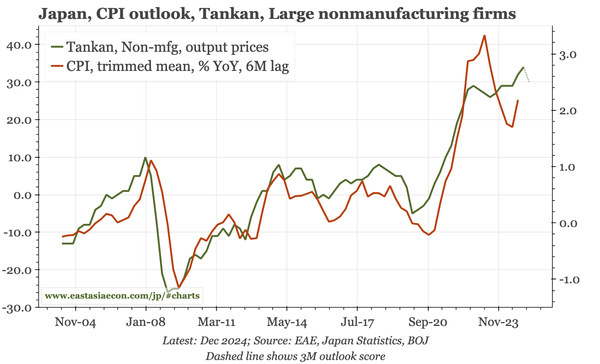
Japan – Tankan keeps May alive
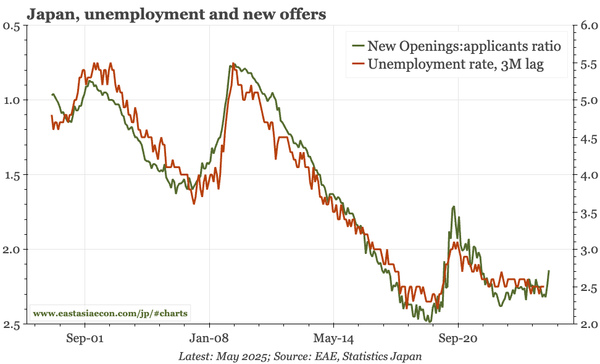
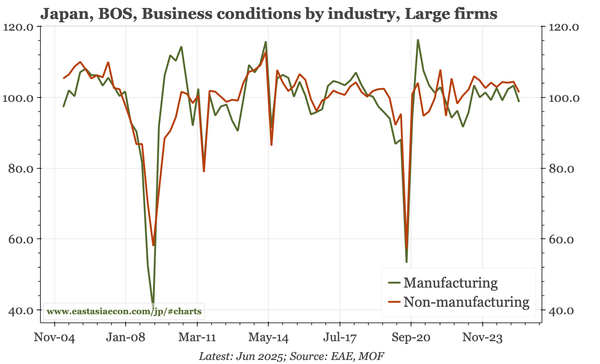
The Tankan showed another rise in price pressures, particularly in non-manufacturing, the sector where labour market conditions are also the tightest and sentiment the strongest. The details of Trump's plans could change things, but domestic dynamics keep the BOJ on track to hike again.
China – muddling through at risk from tariffs
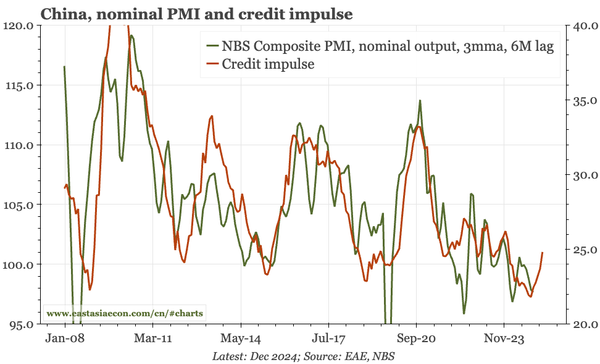
The PMIs suggest the economy, once again, is muddling through. The better momentum after the policy announcements that started from September has faded, but isn't reversing. However, that probably isn't enough, given the new shock from tariffs that is about to hit.
Korea – and now the hit from auto tariffs
Pulled by the policies of previous US administrations and pushed by rising China competition in EM, Korea has focused more on the US market. As a result, US tariffs will hurt more than they would have a few years ago, and with domestic demand weak, there's not much else to support the local economy.
Japan – more talk of upside risks to inflation
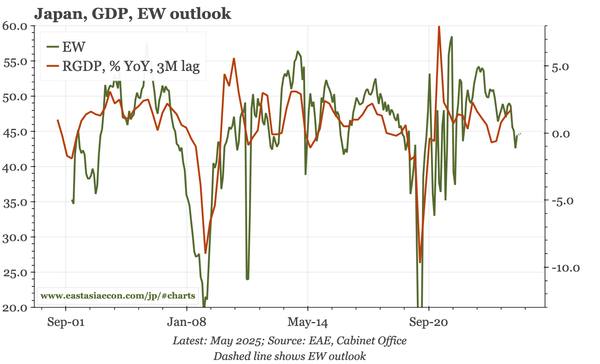
As would be expected, the summary of the March MPC meeting shows more concern about US policy. But this isn't a repeat of summer 2024 when the BOJ got cold feet on new rate hikes. Inflation data remain solid, and the meeting talked about upside risks for prices, driven by domestic factors.
China – profits subdued, especially in heavy industry
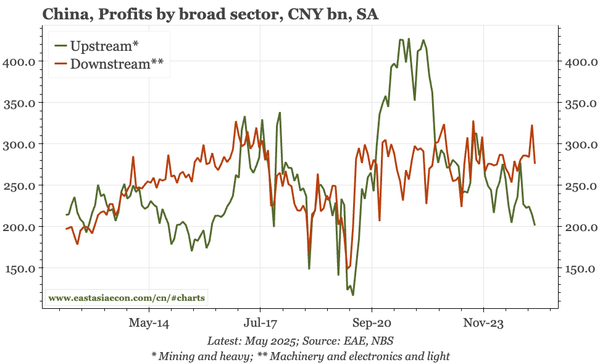
Profits rebounded YoY in Jan-Feb, but in level terms remain subdued. That overall picture, however, masks big sectoral differences. Aggregate profits in heavy industry have fallen, and are no higher than in 2013. Earnings in machinery and electronics are more stable.
China – still difficult to get excited
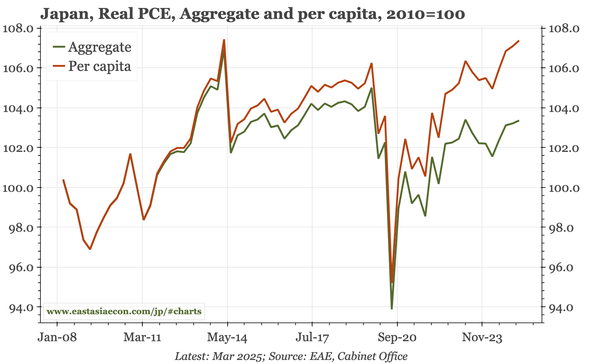
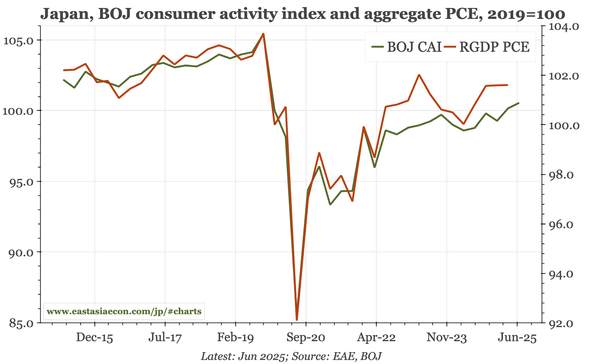
The PBC sentiment surveys suggest again an economy that is muddling through. One reason is that consumer spending hasn't fallen, with the big shifts instead being a further move away from consumption on goods to spending on services, and more saving in bank deposits rather than investments.
Japan – Services PPI inflation slower, at least until FY25
Sequential momentum in services PPI has eased in recent moths. However, the data have been volatile since covid, and in 2023 and 2024 there was a big re-acceleration at the beginning of the new fiscal year. Given continued wage growth, a rebound seems likely in April 2025 too.
Korea – sentiment drops again
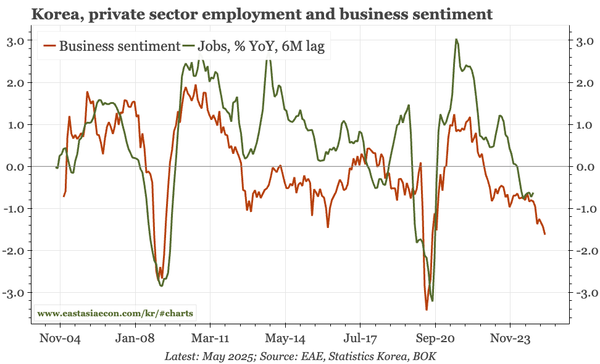
Business confidence remains extremely weak, and consumer confidence isn't a whole lot better. That being the case, the BOK is going to want to cut further, but inflation readings in the sentiment surveys aren't giving the all-clear for an aggressive loosening.
Korea – no consumer stagflation
Consumer confidence fell back again in March, and remains well below the long-term average. However, general inflation expectations were stable, and while house price expectations ticked up, the change isn't enough to suggest a big acceleration in the real estate market.
Taiwan – unemployment rate stable at 3.4%
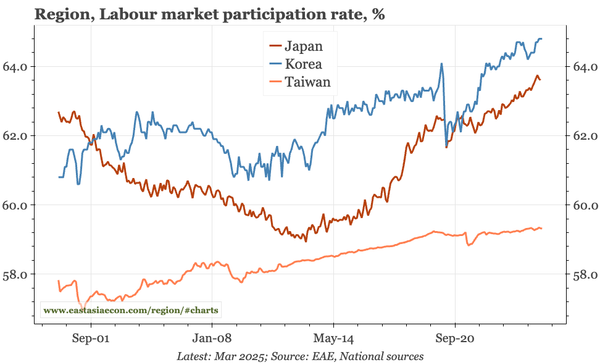
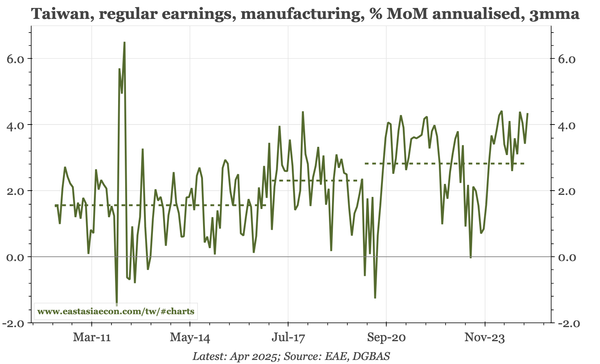
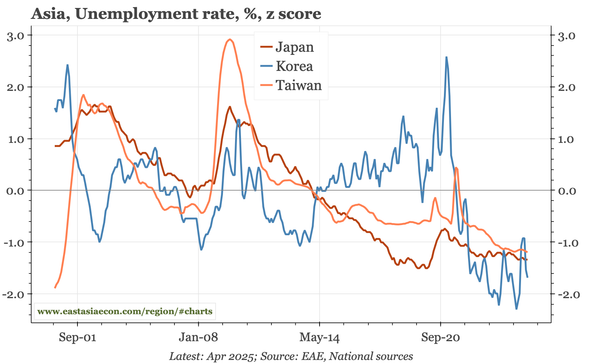
There's really not much change happening in Taiwan's labour market. But right now, that's what makes it interesting. Taiwan's unemployment rate is holding at lows not seen in 20 years. That in turn forms the backdrop for wage and core CPI rises which are the highest in 20 years.
Japan – PMI shows continued inflation pressure
Today's flash shows no change from recent themes: manufacturing is weak, services rather volatile, and inflation pressure everywhere is holding up, with manufacturing prices "comfortably above their long-run trend levels", and input costs in services "increasing at the fastest pace in 25 months".
Japan – manufacturing under pressure, services holding up
The standout feature of the Tankan Reuters remains the unusual strength of services relative to manufacturing. Today's march survey shows that this gap isn't expected to close in the next few months, and is one reason for the higher rate of inflation that Japan is experiencing.
Korea – BOK remains dovish
Tuesday's minutes of the February meeting show concern about weak growth. The impact of higher $KRW on inflation was played down, and the committee didn't discuss the rising services prices that have worried me. Perhaps not surprisingly given rates were cut, household debt was back on the agenda.
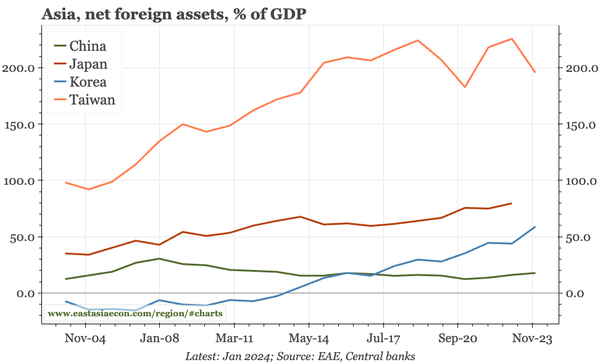
Taiwan – TSMC, Trump and the TWD
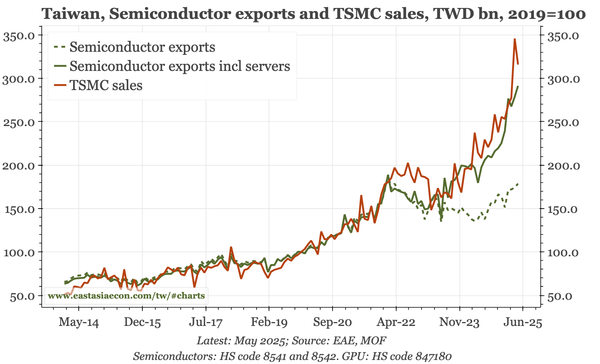
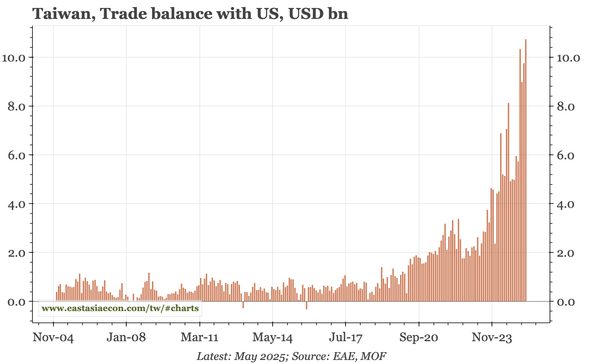
In advance of the CBC meeting this week, a short slide pack on the key themes in Taiwan. In particular, the rise in inflation (I took the photo at my favourite bread shop here today) and Trump's agenda keep the TWD in play for a structural realignment stronger.