*
Paul Cavey

Paul Cavey

China – when will commodity exporters feel the pain?

China – when will commodity exporters feel the pain?

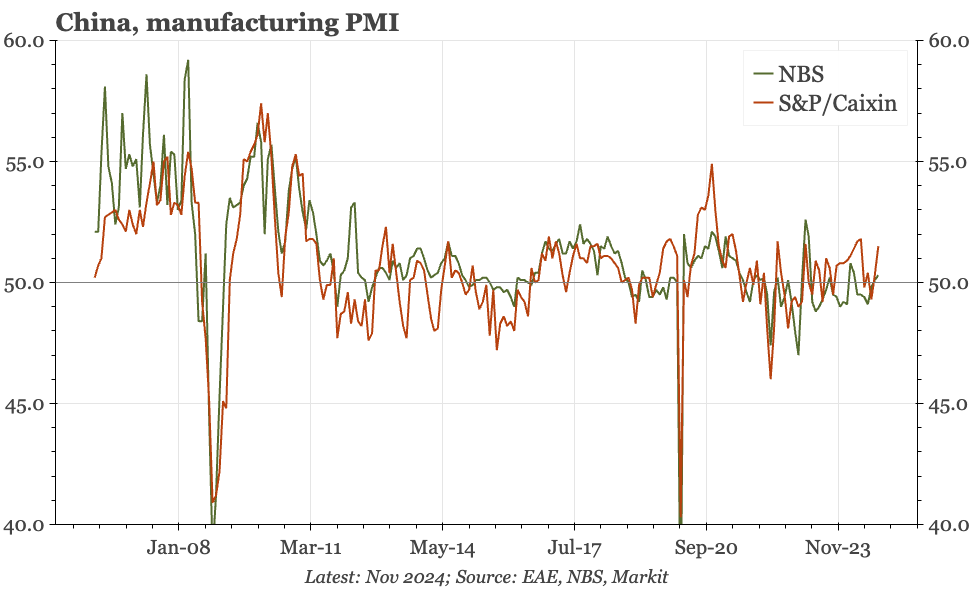
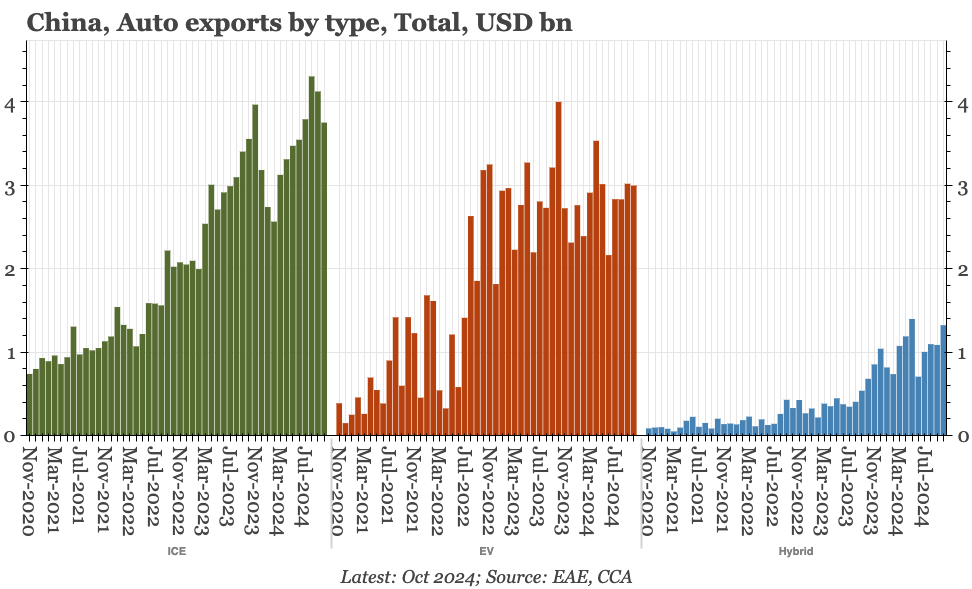
China's imports are two-speed. That's like the economy, but with a big difference: whereas for macro it is property that is weak while mfg is strong, for imports it is commodities that are more resilient than capital goods. Like the overall macro muddle through, that resilience likely can't last.

5 min read

Japan: still no lift in export volumes

Japan: still no lift in export volumes

Japan's exporters haven't reacted in standard fashion to JPY weakness, not cutting prices to increase volumes. Indeed, volumes fell YoY in August. That contrasts with the clear recovery in the rest of the region. It means higher JPY earnings for exporters, but less incentive for domestic capex.

1 min read

Taiwan – no slowdown in property prices

Taiwan – no slowdown in property prices

Exports feel a bit peaky, and CPI inflation has eased. But property price inflation isn't cooling. Perhaps an export slowdown changes that – the fastest price gains are in Hsinchu, home of TSMC. But unless and until that happens, it is very difficult for the central bank to turn doveish.

1 min read

China – GDP growth tracking 4%

China – GDP growth tracking 4%

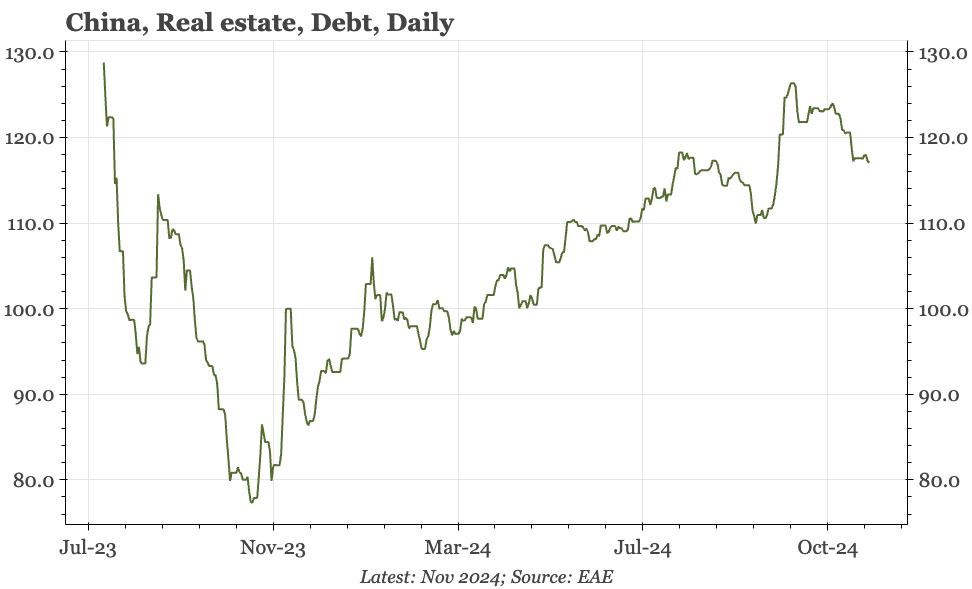
August data suggest GDP is now only growing by around 4% YoY. The headwinds remain property activity, which dropped again in August to new lows, and retail sales, which has now contracted MoM in five of the first eight months of 2024. Sustaining muddle through is getting much more difficult.

2 min read

China – still stuck in deflation

China – still stuck in deflation

Today's industrial price data for the first 10 days of September and property prices for August show intensified deflationary pressure. Yesterday's monetary data were weak. The PBC said yesterday that it will focus on price stability, but it also said it has plenty of other things to do as well.

3 min read

China – rates still have downside

China – rates still have downside

More than 12M ago, we argued yields should fall. In that respect, today's drop to record lows isn't a surprise. We don't see anything fundamental yet to cause a change in direction. That's based on four factors: the PBC's reaction function, inflation, household savings, and the CNY.

2 min read

Japan – still on track

Japan – still on track

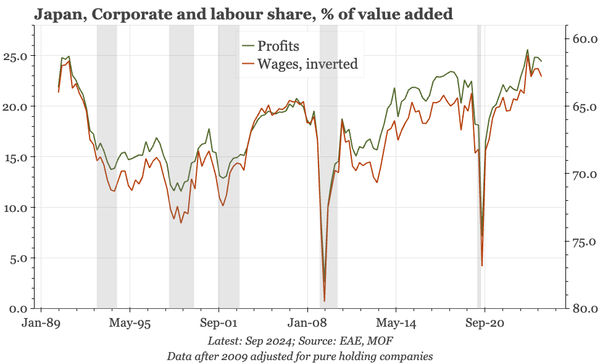
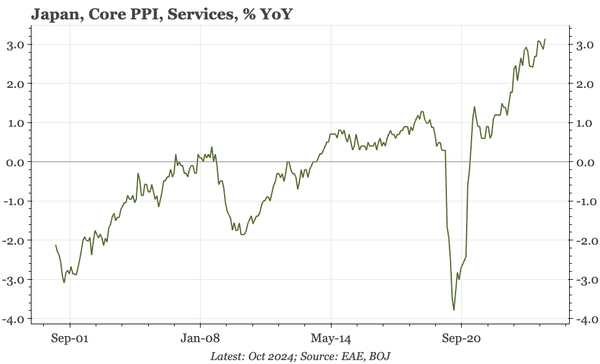
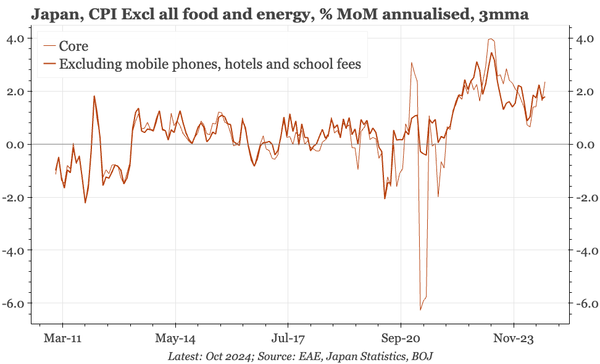
It is clear that the market moves that accompanied the BOJ's July policy changes are impacting prices. But it isn't obvious that they have derailed the underlying path for the economy. It seems to us the door remains open for an October hike, with the obvious risk being events in the US.

6 min read

QTC: Japan – import prices falling

QTC: Japan – import prices falling

The shift in $JPY is clearly having an impact, with JPY import price inflation dropping from July's +10.8% YoY to just 2.6% in August. But BOJ officials suggest they remain confident in the underlying outlook, which isn't unreasonable given the resilience of survey data such as today's BSI.

1 min read

QTC: Japan – labour market still tightening

QTC: Japan – labour market still tightening

A critical part of the BOJ's positive narrative is the labour market tightness shown by the Tankan. That survey will be released next in early October, but early signs are positive, with today's BSI survey from the MOF, also quarterly, showing tightening over all three of its measurement periods.

1 min read

Korea – UE down, but the BOK gets ready to cut

Korea – UE down, but the BOK gets ready to cut

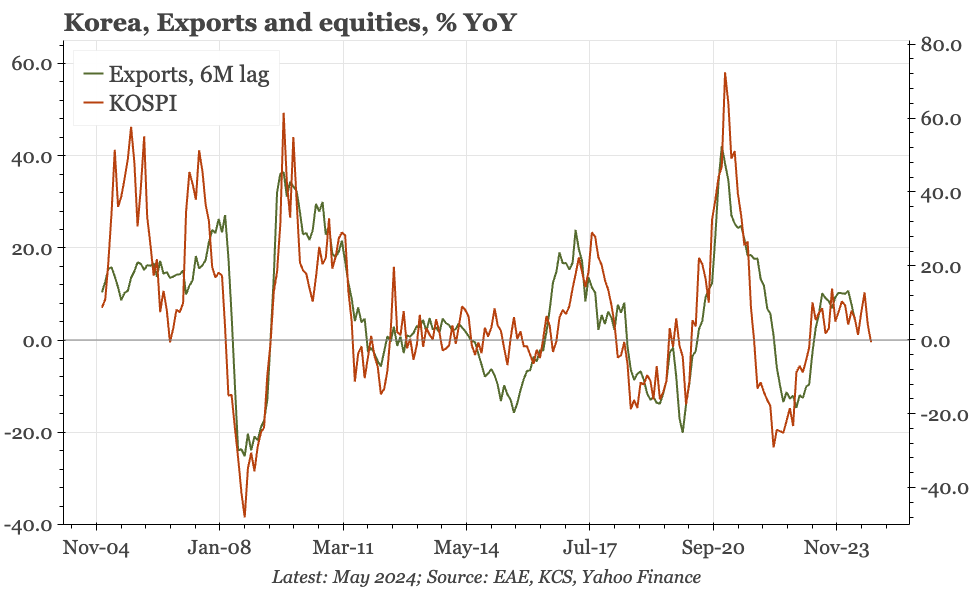
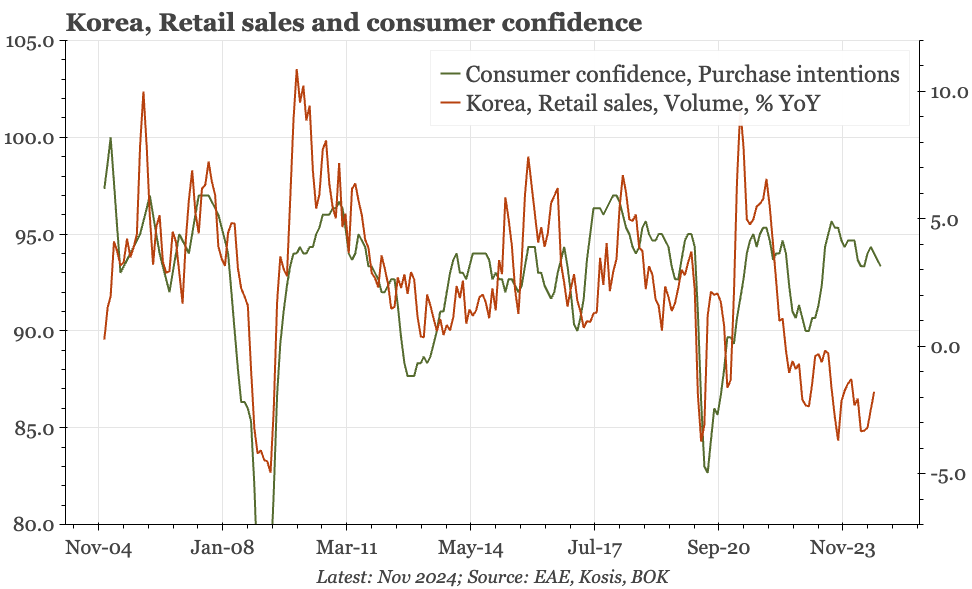
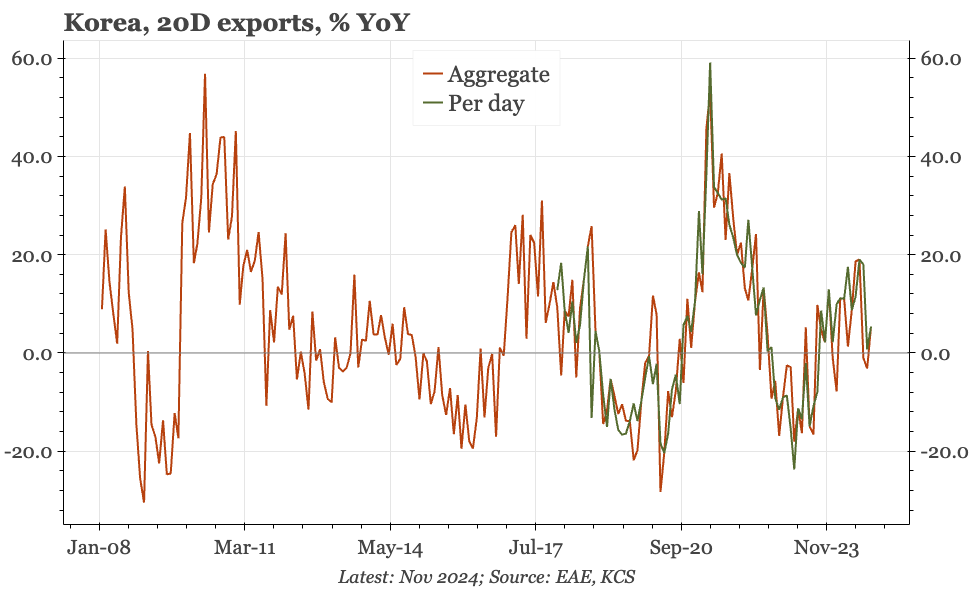
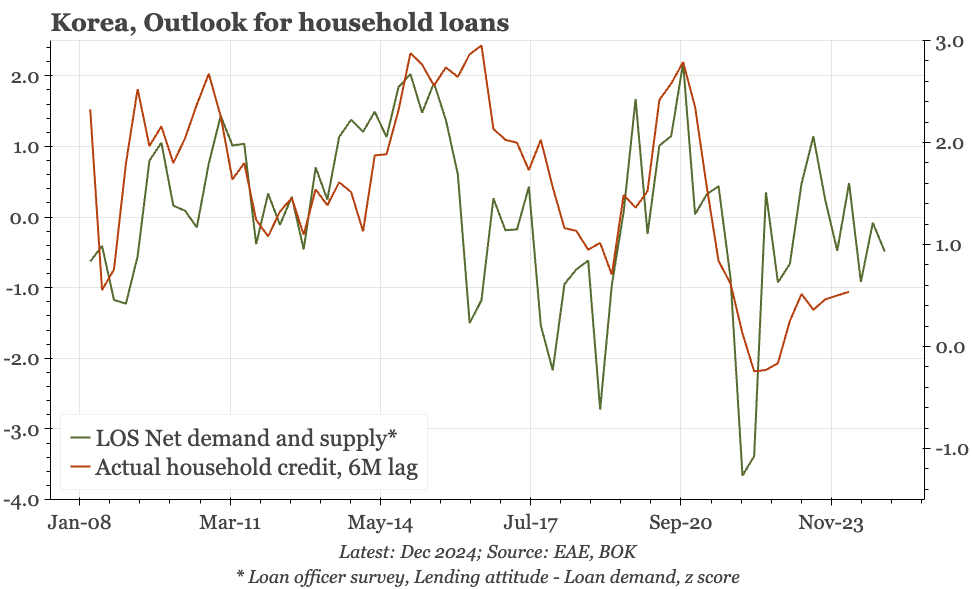
Data today show exports still growing, and UE still low. The BOK hasn't been ignoring exports, but the bank has been more focused on weak domestic demand. The labour market data don't suggest that weakness is disappearing, with strength in employment concentrated in state and part-time positions.

3 min read

QTC: Korea – unemployment drops again

QTC: Korea – unemployment drops again

Just looking at the headline labour market data, and it would be difficult to know that the BOK is moving steadily towards a rate cut. Data released today show that in August, the unemployment rate fell to a new multi-decade low of just 2.4%!

1 min read

QTC: Taiwan – have TSMC's sales peaked?

QTC: Taiwan – have TSMC's sales peaked?

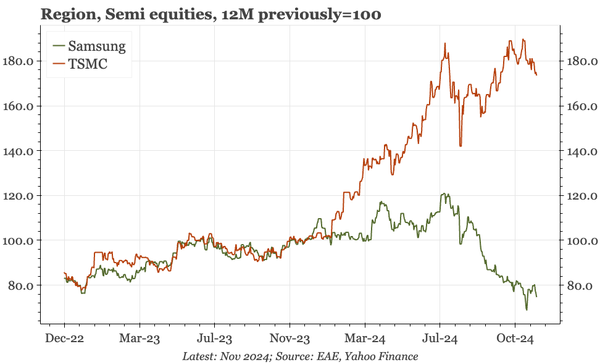
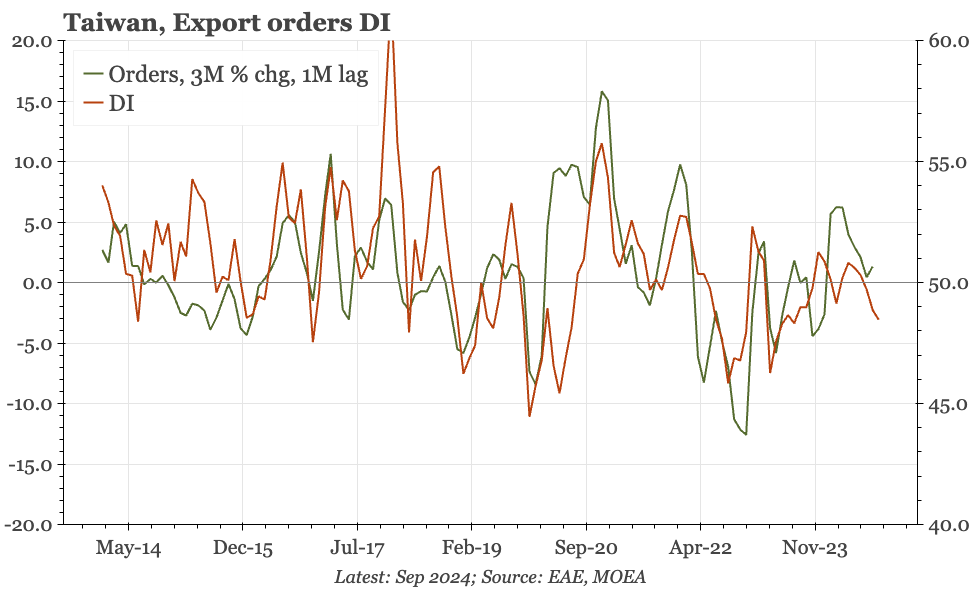
TSMC's sales were softer in August (especially after adjusting for seasonality), and with sentiment towards the sector starting to weaken, it seems possible that the best of the cycle is now in the past. That will limit further improvement in Taiwan's overall exports.

1 min read

China – exports flat-lining

China – exports flat-lining

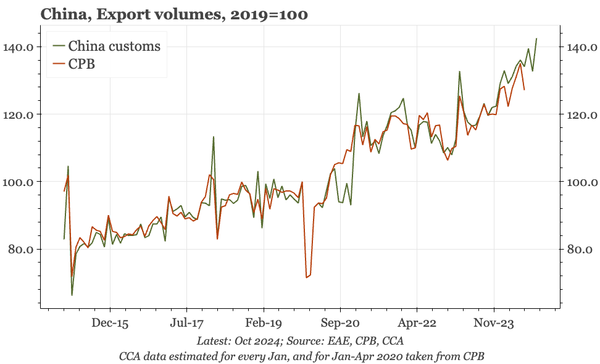
It seems increasingly unlikely that exports can offset the weakness of domestic demand. Today's export data for August weren't strong. Volumes might be better, but the regional export cycle is likely peaking, and that at a time when China's domestic demand seems to be weakening further.

2 min read

Taiwan – belated export strength

Taiwan – belated export strength

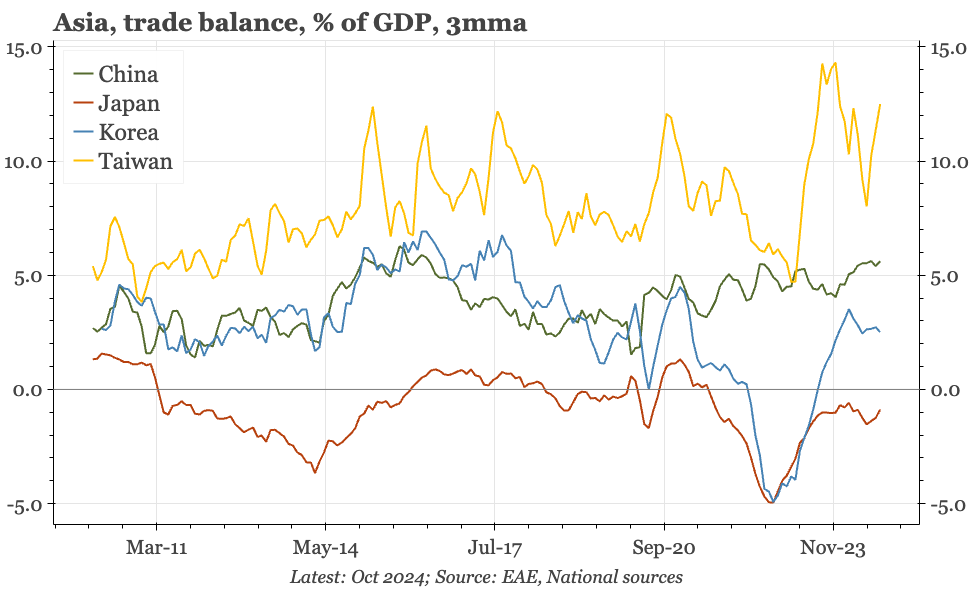
While exports jumped in August, with signs that the semi upswing is losing steam, it still seems likely that the export peak is near. Pretty much all the growth is coming from the US, which is propelling a surge in the bilateral trade surplus. That makes Taiwan vulnerable if Trump wins re-election.

2 min read

Japan – activity still solid

Japan – activity still solid

The Economy Watchers survey improved in August. That matters, as if the market vol around the BOJ meeting in July had caused damage to the cycle, it should be showing up by now. The rise in the household score is particularly important, given the previous weakness of consumption.

2 min read

China – core CPI in deflation

China – core CPI in deflation

MoM core CPI fell again in August, and while perhaps a bit too early to pronounce that China is definitively in core deflation, it is getting close. PPI deflation also worsened, and the leads suggest that will continue. Despite stronger food prices, it is likely interest rates continue to fall.

2 min read

China – it isn't just Japan

China – it isn't just Japan

Last week I gave a short conference presentation updating the framework I've been using to think about China today versus Japan in the 1990s. The slides focus on deflation, manufacturing, currencies, and household consumption.

1 min read

QTC: Japan – slightly softer capex

QTC: Japan – slightly softer capex

In today's second release, Q2 GDP growth was revised down, from 3.1% QoQ annualised to 2.9%. The driver was weaker capex, which, like consumption, has yet to rise back above pre-covid levels.

1 min read

QTC: Japan – consumption grows again

QTC: Japan – consumption grows again

The recovery in Q2 GDP was driven by consumption, and the BOJ's monthly proxy for PCE suggests growth has continued into Q3. Today's data show consumption grew in both June and July, the first two consecutive months of growth in almost a year.

1 min read

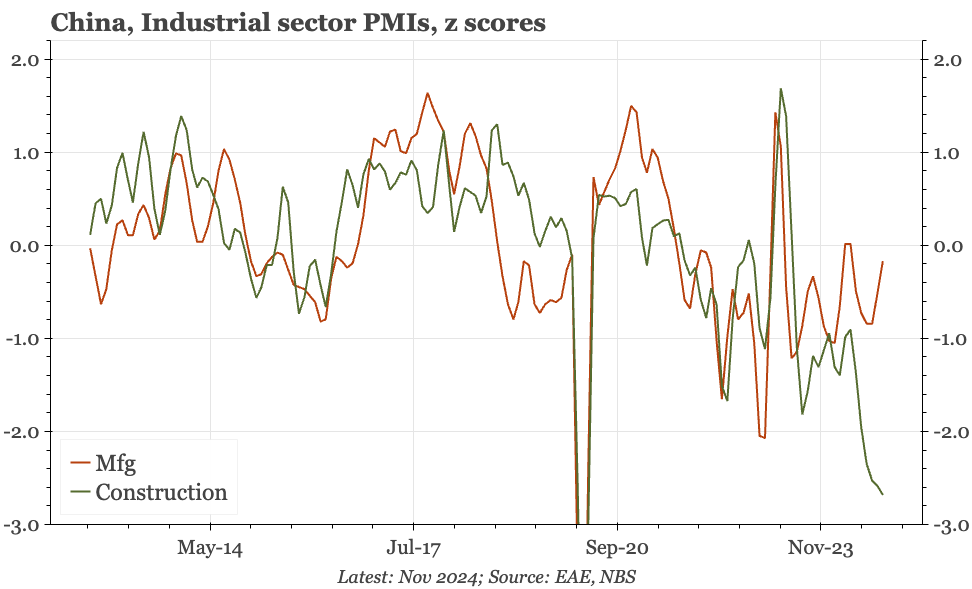
QTC: China: PPI rolling over again

QTC: China: PPI rolling over again

It can be seen in the PMI and 10-D upstream prices: the mild firming of PPI of 1H24 is now rolling over. It is also evident in global commodity prices, so this isn't a China-specific phenomenon. But when inflation is already so low, it matters more for macro in China. Click to see the other charts.

1 min read

QTC: Taiwan – inflation eases

QTC: Taiwan – inflation eases

There's probably some noise in today's data showing a big fall in August, but the general decline in core inflation in the last few months will be allowing the CBC, like the BOK, to become more relaxed about the outlook for prices.

1 min read

China – CNY: be careful what you wish for

China – CNY: be careful what you wish for

Rather than thinking a weaker USD will be a catalyst for a stronger Chinese cycle, we worry more that a stronger CNY means even more downside risk, being another reason to conclude that the muddle through of the last 18M is running out of road.

8 min read