*
East Asia Econ

East Asia Econ

The platform for tracking and understanding East Asia macro

Taiwan – export surge continues

Taiwan – export surge continues

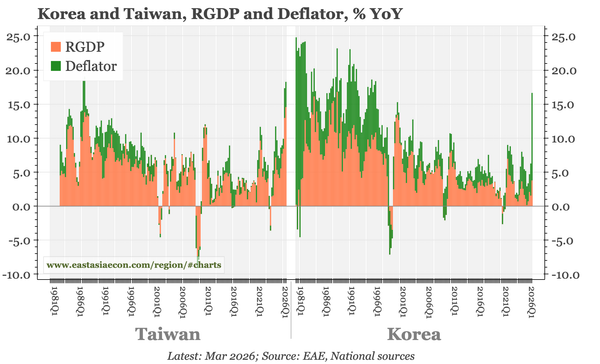
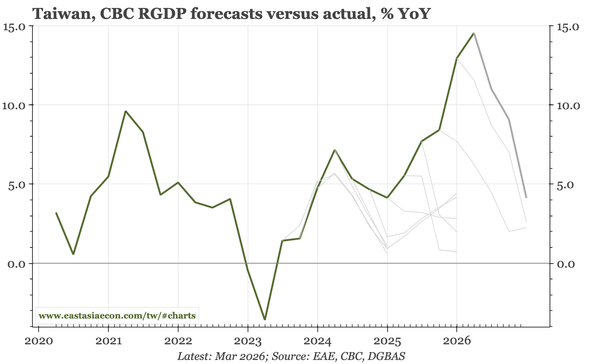
Exports in March were strong again. There aren't yet signs of the Iran war derailing the chip cycle, and while energy imports will increase more quickly, the impact on the trade surplus will be limited. The outlook for Taiwan as of now is resilient growth and higher inflation.

2 min read

Korea – uncertain, but with conviction

Korea – uncertain, but with conviction

For me, the tone of today's BOK meeting was a surprising mix of uncertainty and conviction. On the one hand, the bank stressed that the outlook is unclear, depending on events in the Middle East. On the other, it seems very sure that inflation will be quite a lot higher than 2%, and growth lower.

3 min read

China – inflation returns

China – inflation returns

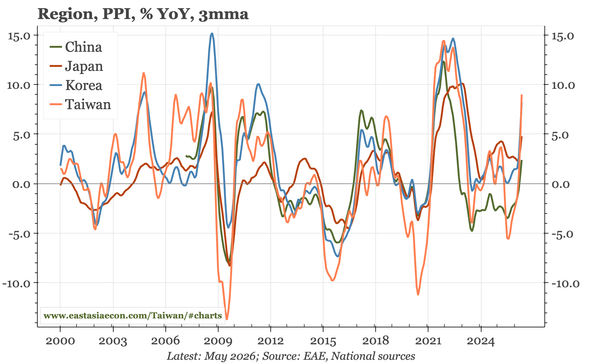
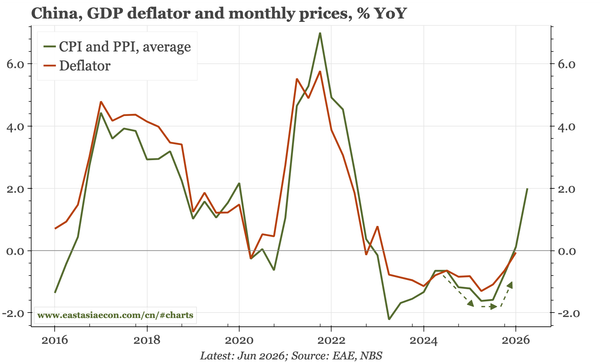
That the return of PPI inflation in March was driven by an energy price shock isn't positive. In fact, though, the recovery in PPI pre-dates the Iran war, beginning in June last year. Positive inflation reinforces the macro narrative that China's cycle is more stable, supporting rates and the CNY.

2 min read

Korea – why is inflation so high?

Korea – why is inflation so high?

GDP growth has been below the BOK's estimate of potential almost continually since 2022. And yet core inflation hasn't dropped below target, and private services inflation – a proxy for domestically generated inflation – has picked up to above 3%. Just what is going on?

9 min read

Last week, next week

Last week, next week

The themes around China as a relative safe haven, and firming inflation in Japan, are clear. The inflation picture in Japan supports rate hikes. Korea, by contrast, is messier: there are positive dynamics like the surging trade surplus and WGBI inclusion, but the KRW still can't stabilise.

6 min read

Japan – output prices rise more than input

Japan – output prices rise more than input

The inflation risks evident in the Tankan can be blamed on energy prices, but output prices actually rose more than input, suggesting that firms think they can pass costs through. That's important, when the BOJ has been warning that changes in firm behaviour mean upside risks to inflation.

2 min read

Korea – inflation constrained, for now

Korea – inflation constrained, for now

Government measures are restraining energy prices and so headline CPI. But the war still increases upside risks for inflation. Rising oil prices are pushing up energy and intermediate prices, export growth is strong, and core inflation has been resilient.

3 min read

Japan – more signs of higher inflation

Japan – more signs of higher inflation

Today's summary release of the BOJ Tankan shows output prices rising, inflation expectations up, and the labour market tight. At the same time, business sentiment – at least for now – remains solid. Upside risks to inflation are growing again.

2 min read

Japan – more hints of upside risks to inflation

Japan – more hints of upside risks to inflation

More interesting than today's data releases were yesterday's BOJ documents, on trends in underlying inflation, and the summary of opinions of the March MPB meeting. The BOJ is concerned about the negative TOT shock from the Middle East, but sounds more worried about upside risks to inflation.

6 min read

China – back to rising PPI

China – back to rising PPI

The sharp rise in input prices in today's PMIs move China back towards rising YoY PPI for the first time since 2022. Usually, higher prices would boost PMIs too. With the rise in prices externally-driven, that is less likely now. But, I think some inflation does improve the macro cycle for China.

2 min read

Region – policies to control energy prices

Region – policies to control energy prices

Some charts on regional energy supply and government attempts to cushion the impact of rising energy prices since 2022. Rough rule of thumb: spending 1% of GDP on energy subsidies leads to a reduction in headline CPI inflation of around 1ppt.

3 min read

Last week, next week

Last week, next week

This week's three themes: 1) rising inflation despite government attempts to hold prices down; 2) growth that might be starting to wobble but hasn't clearly turned down yet; and 3) huge uncertainty about the direction of events in the Middle East.

6 min read

Korea – prices up, sentiment down

Korea – prices up, sentiment down

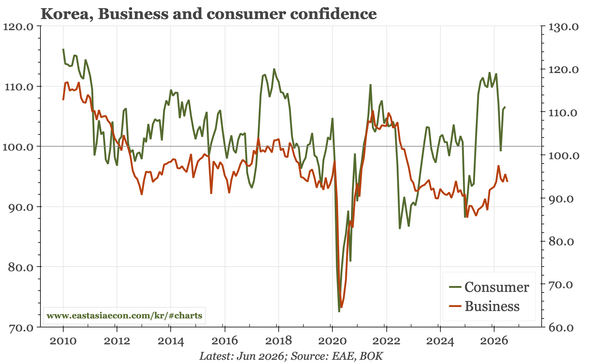
The easy takeaway from the rise in prices and fall in sentiment in the BOK's business sentiment survey for March/April is stagflation. I think there are reasons as yet to discount the idea that activity has slowed, but if that is right, then the rise in inflation makes BOK rate hikes more likely.

3 min read

Japan – underlying dynamics still solid

Japan – underlying dynamics still solid

Headline inflation data continue to be affected by policy measures to control energy and public services prices. The underlying picture is more stable, with core private services inflation of around 2%, PT wage growth of 5%, and PMIs above 50. The big risk, of course, is the impact of the Iran war.

3 min read

Last week, next week

Last week, next week

In the first stage of the Iran War, China has been the relative winner, and Japan the loser. The next stage would be yet higher energy prices that challenge the sustainability of efforts to control inflation for consumers, and mean economies start to face a negative demand shock too.

5 min read

East Asia Today

East Asia Today

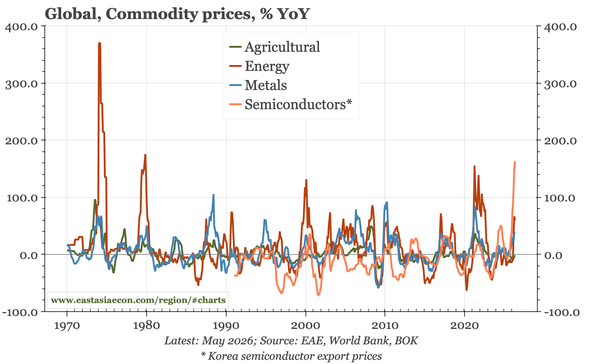
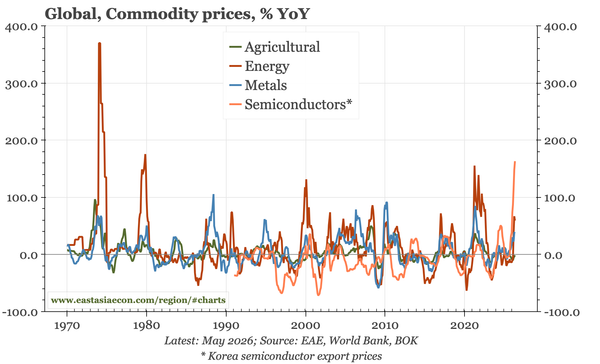
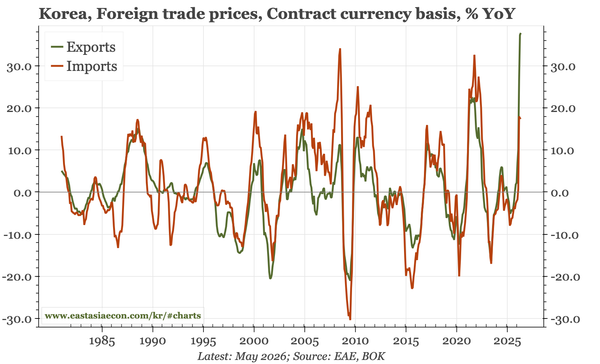
This cycle in Japan continues to stand-out for the strength in services activity. In Korea, export prices rose in February. Import prices will now increase more quickly, but the net impact of the energy price shock will depend on whether the surge in semiconductor demand and prices now holds or not.

2 min read

China – stronger nominal momentum

China – stronger nominal momentum

1) Goods and services output growing ~5% is enough for Beijing; 2) money and credit growth don't suggest a lot of change in that underlying trajectory; 3) nominal momentum is improving, with an end of PPI deflation now a real possibility; 4) the likelihood of further monetary easing is falling.

3 min read

Last week, next week

Last week, next week

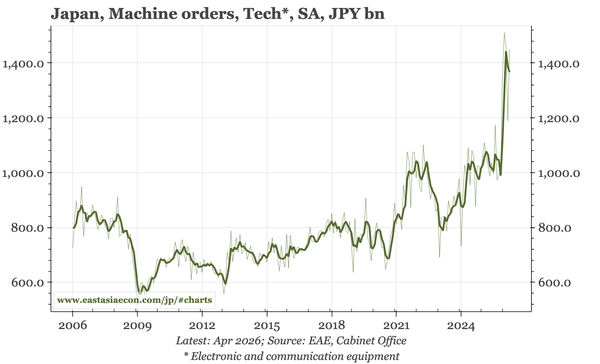
It isn't yet all about the war, given the real strength in semi demand. That backdrop is one reason to think underlying inflation will be lifted by the latest crisis. The durability of the AI cycle will also be the canary in the mine for a negative supply shock becoming a negative demand shock.

6 min read

Japan – underlying inflation expectations up

Japan – underlying inflation expectations up

Expected inflation rose in the Cabinet Office's annual firm survey. The backdrop is stable growth, and strong capex and hiring intentions – and rising wages. This is different from when the Ukraine war started in 2022, and suggests there is a real inflationary risk for Japan from the Iran conflict.

2 min read

China – semiconductors lift exports

China – semiconductors lift exports

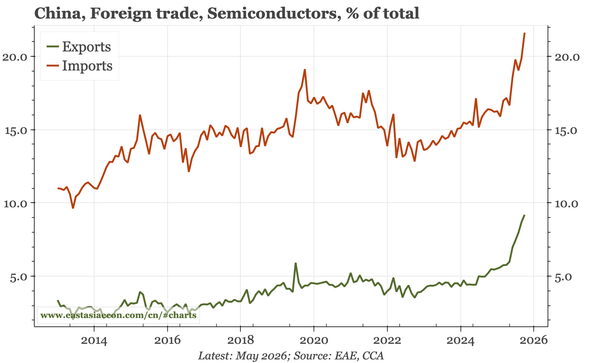
Exports in YoY and SA terms were strong in Jan-Feb. That looks too good to be true, and I'd expect new year distortions won't totally disappear until March. Still, one trend that looks real is the rise in chip exports, as China benefits from the same semi super cycle lifting the rest of the region.

2 min read

Japan – solid GDP and wage growth

Japan – solid GDP and wage growth

The backdrop to the latest oil price surge is different to that of 2022. Then, wages were barely rising. This time, wage growth is at least 2%, and not slowing. With cycle momentum picking up too, there is more of a risk that a Middle East war (if it is short) further raises nominal momentum.

3 min read

China – the end of deflation

China – the end of deflation

Deflation momentum continued to lessen in February, a trend that will now be given a further boost by global oil prices. But with this shift in the direction of deflation being driven by external factors, it isn't based on the sort of improvement in domestic growth that is needed for sustainability.

2 min read

Last week, next week

Last week, next week

With activity and inflation in East Asia picking up before the war started, the extra push to prices from the conflict will be important for the near-term policy outlook if tensions subside quickly. Right now, the bigger risk seems to be a real supply shock that causes a demand shock too.

6 min read

Korea – no change in BOP or CPI...yet

Korea – no change in BOP or CPI...yet

The CA surplus was strong in January, but while NPS outflows eased, retail buying of offshore equities remained high. Core inflation ticked up to 2.3% YoY, but that was related to holiday spending. The impact of the Middle East war will only start to be seen from March data.

2 min read