*
East Asia Econ

East Asia Econ

The platform for tracking and understanding East Asia macro

Last week, next week

Last week, next week

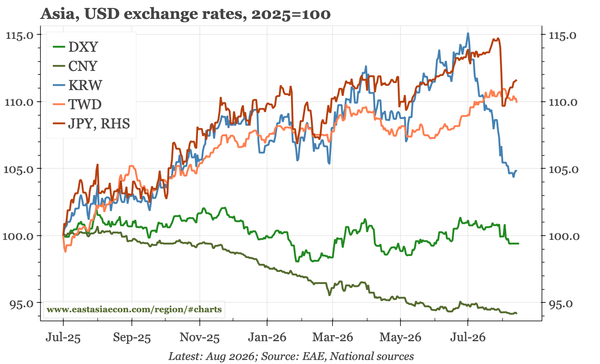
Events in Japan in the next couple of weeks will likely be critical for the region. If a combination of a strong US jobs report and equivocal BOJ meeting push $JPY through 160, KRW and TWD will likely be dragged higher too. The implication would be higher inflation, and more pressure for rate hikes.

6 min read

Taiwan – services inflation back at 2.5%

Taiwan – services inflation back at 2.5%

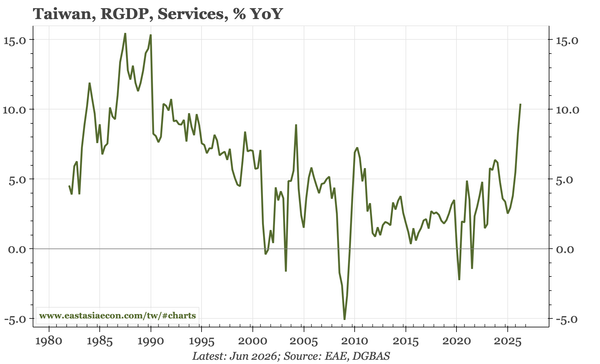
Services inflation averaged 0.7% in the 20 years before 2020. In the last five years it has been 2.3%, and is now rising again. Some of that reflects energy prices, with air fares rising 10% YoY in May. But there is also the backdrop of a strong economy, rising stockmarket and rising wage growth.

2 min read

Korea – the all-weather weakness of the KRW

Korea – the all-weather weakness of the KRW

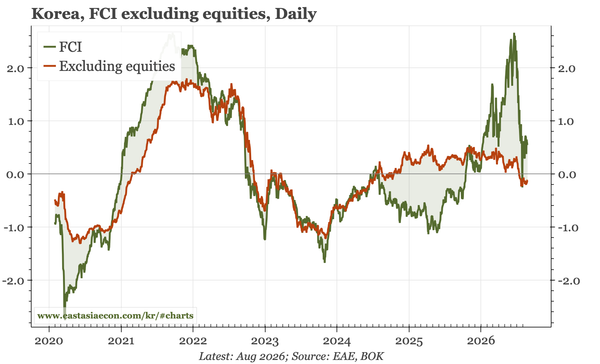
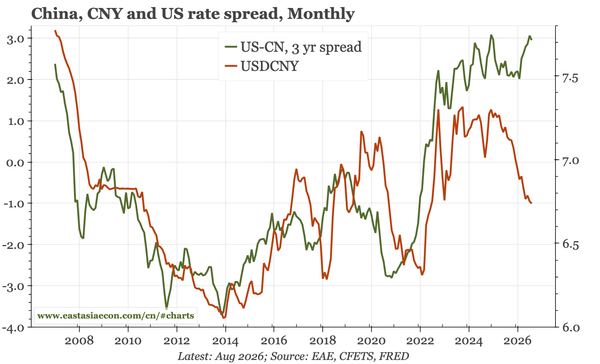
KRW weakness was blamed on USD strength, then CNY weakness, then JPY weakness. Flows have gone from NPS, to domestic retail, to foreigner institutional. These rationalisations feel a bit like moving the goalposts. But weak KRW does have implications, one likely being a more hawkish BOK.

3 min read

Region – three themes in auto

Region – three themes in auto

China's auto export surge has been less painful for Asia than for the EU. Japan's domestic market is more protected, and Korean exporters have little dependence on the China market. In third markets, exports have also held up, with tentative signs that China's exports are creating new demand.

4 min read

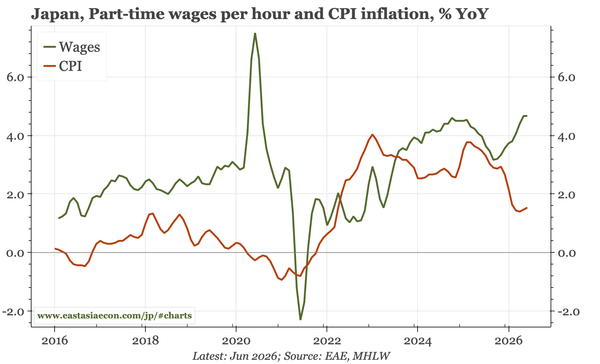
Japan – Ueda stresses inflation risks

Japan – Ueda stresses inflation risks

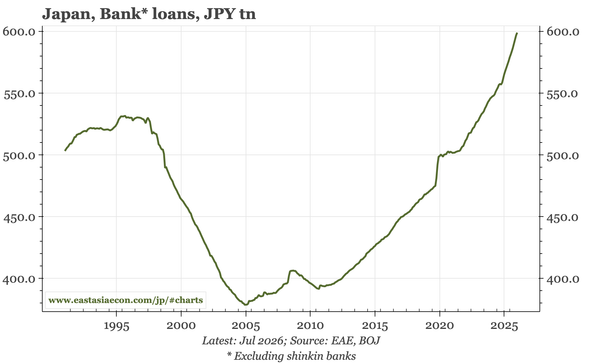
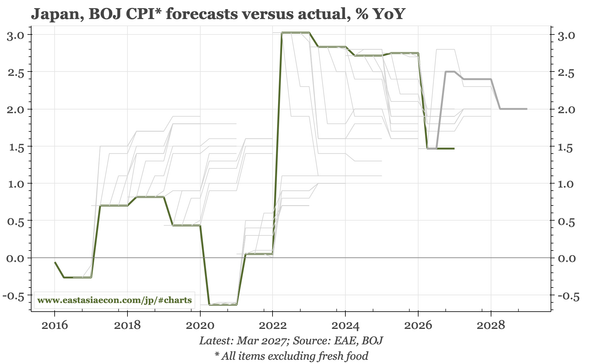
Some highlights from governor's speech today: his remarks about strong bank lending, higher prices being a bigger burden to firms than rising rates, the link between low policy rates and the rise in market yields, and the upside risks to prices now that the "deflationary mindset has been dispelled".

3 min read

Region – understanding Asia's chip cycle

Region – understanding Asia's chip cycle

My latest video, a discussion of everything you need to understand the macro implications of the huge chip cycle – what's driving it, why prices and volumes matter, the role of China, the growth and inflation consequences, and what it all means for markets.

1 min read

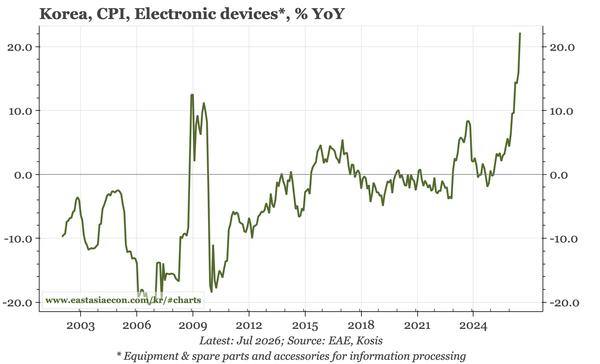
Korea – CPI still mainly energy

Korea – CPI still mainly energy

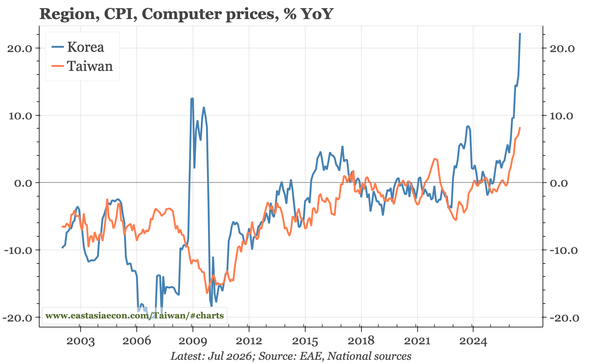
The rise in inflation is mainly about energy. But that headline inflation is now above 3% YoY – and private services over 4% – also reflects two other drivers: a high starting point, and the rise in chip prices that via cost-push is showing up in the CPI in higher prices for electronic devices.

2 min read

Last week, next week

Last week, next week

Four themes: broader inflation risks, for the region and world; feedthrough from exports to domestic demand; semi cycle rather than energy as the dominant dynamic; likelihood of monetary tigtening.

7 min read

China – no big change in PMIs

China – no big change in PMIs

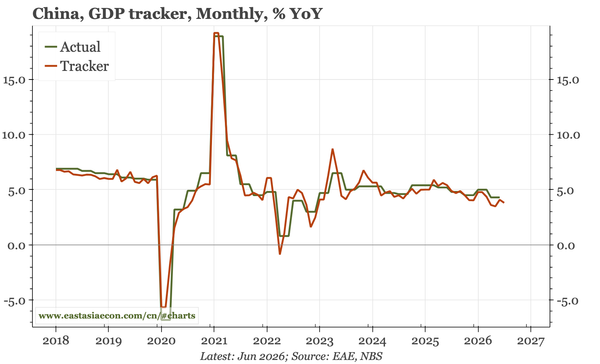
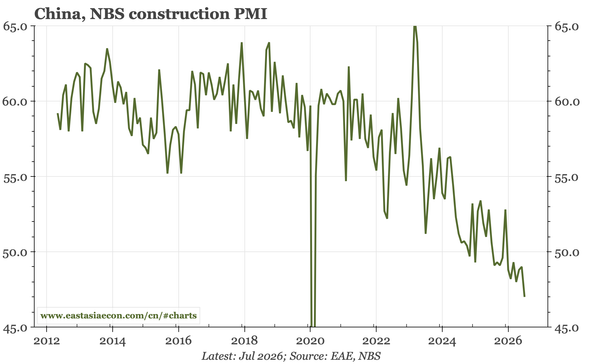
In today's official data, headline PMIs for both manufacturing and services remain around 50. The details of the manufacturing PMI don't suggest much Middle East disruption. The run-up in prices that pre-dated Iran is, however, sustaining. On the other hand, employment remains weak.

2 min read

Taiwan – growth up, now inflation too

Taiwan – growth up, now inflation too

Today's Q1 GDP data show the economy growing more quickly than any time in over 40 years. The government thinks that continues: in the forecast, downside risk from Iran isn't mentioned, but trickle down from semi to the real economy is. CPI was also revised up, even if it remains (just) below 2%.

3 min read

Korea – mixed month-end data

Korea – mixed month-end data

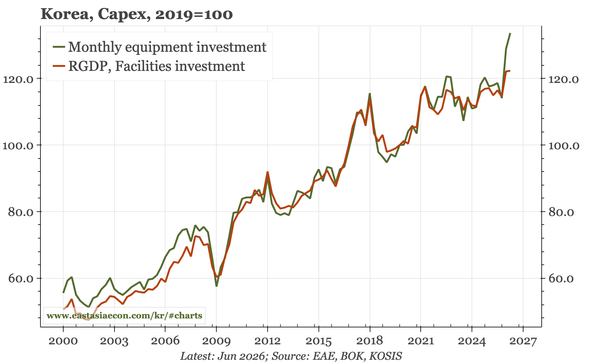
Two of the key issues for the economy are whether the chip boom trickles down, and what damage the Iran war will cause. April data show a bit of both. ICT capex rose for the third month, and there were more signs of a floor in the labour market. Overall output fell, but remained above the Q1 average

2 min read

Region – inflation risks

Region – inflation risks

Big oil price hikes matter, but have been seen before. It is the rise in chip prices, and the gap between surging trade surpluses and weak currencies, that is unprecedented. If fx markets don't price these developments, central banks and fixed income will have to do so instead.

5 min read

Korea – everything but a hike

Korea – everything but a hike

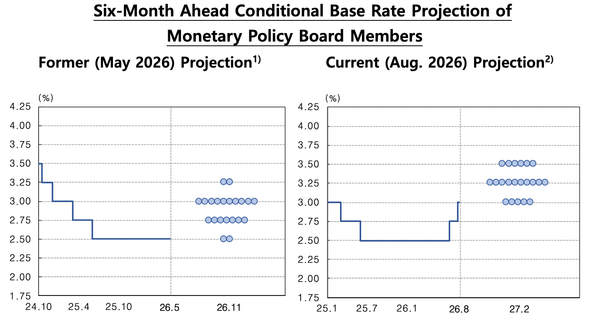
The BOK didn't change rates today, but signalled that despite continued uncertainty, higher rates are coming. The pace will depend on dynamics in the energy and chip markets. I would also be watching for how core CPI performs against the BOK's modest forecast of 2.4%

2 min read

China – underlying profits a bit better

China – underlying profits a bit better

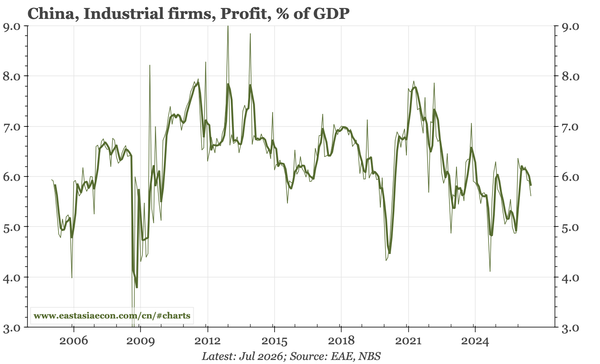
The bounce in headline profits in April was largely base effect, but there are signs of underlying improvement: revenues have started to rise, the increase in PPI is boosting profits in heavy industry, and hasn't yet derailed the post-2024 increase in total downstream manufacturing earnings.

3 min read

Korea – ticking four boxes for a hike

Korea – ticking four boxes for a hike

The BOK's main considerations for policy are growth, inflation, KRW and housing. Three were already pointing to hikes, and tomorrow the bank is likely to raise expected growth above potential too. That makes a rate hike likely. The risk is it still just a bit too early.

7 min read

China – consequences of the semi surge

China – consequences of the semi surge

The surge in semiconductor exports that is such an import theme across the region is also an important dynamic in China. But in China, the semiconductor trade has broader implications: for the trade surplus, import demand, the export outlook, and inflation, both in the region and ROW.

5 min read

Last week, next week

Last week, next week

Two of the cycle themes in the region are the strength of the AI trade, and macro stability in China. These in turn form the context for the third: the impact of the Iran war. If that conflict, finally, is near some kind of resolution, market confidence around rate hikes could actually increase.

6 min read

Japan – offsets to Iran

Japan – offsets to Iran

Tuition as well as energy subsidies make inflation look particularly low relative to the likely upside from the Iran war. The conflict will also slow growth. However, both export data for April and Koeda's speech yesterday indicate that growth downside will be limited if global tech demand sustains.

3 min read

Taiwan – Trump shifts position

Taiwan – Trump shifts position

My initial interpretation of the Xi-Trump meeting looks wrong. While in the official talks neither side gave much, in a subsequent interview with Fox news, President Trump softened US support for Taiwan. Over the medium-term, that could be significant for politics in Taiwan, and currency valuations.

3 min read

China – cycle weaker in April

China – cycle weaker in April

Most of the headline activity data in April weakened, with goods retail sales being particularly bad. So, clearly no macro recovery. But services retail sales picked up, and the stability in home sales and household liquidity preference, and firmer pricing, continue to suggest broad stabilisation.

3 min read

Last week, next week

Last week, next week

The main regional themes weren't challenged by events last week: macro stabilisation in China; upside risks to inflation, particularly in Japan; and upside risks to growth, a theme for both Taiwan and Korea as long as the energy crisis in the Middle East doesn't derail the semiconductor super cycle.

7 min read

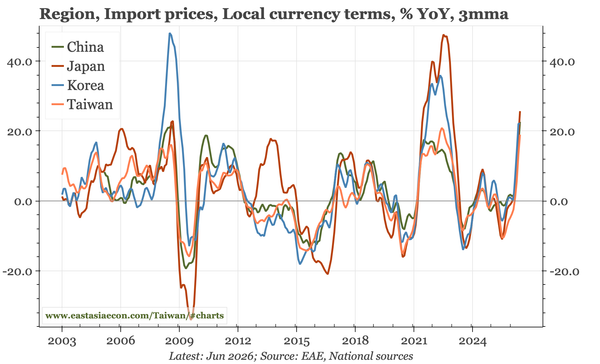
Region – import prices up, export prices up more

Region – import prices up, export prices up more

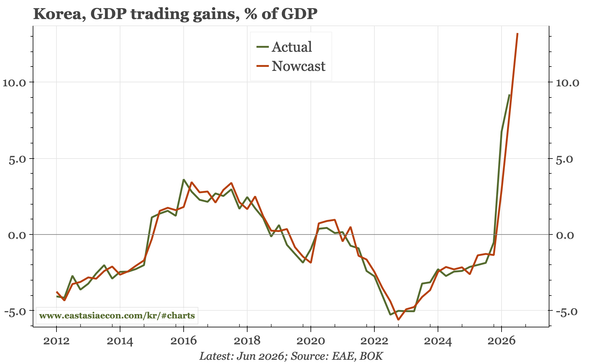
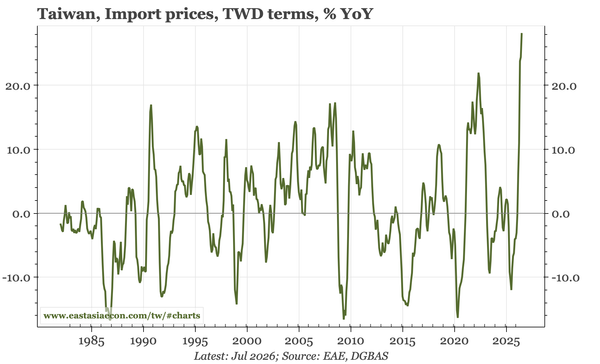
Data today for Japan and Korea show the inflationary impact of the War, with import prices in both economies rising at double-digit rates. However, such rises have been seen before. By contrast, export price inflation is setting records, offsetting the hit from energy prices to domestic growth.

3 min read

China – why are imports so strong?

China – why are imports so strong?

The big trade story this year is the sudden rise in imports. There are some signs of firmer domestic demand. But 80% of the increase is from two categories alone: precious metals and semiconductors. And most of the semi strength is volumes, which is puzzling when global IC prices are rising so much.

5 min read

Region – the other terms of trade shock

Region – the other terms of trade shock

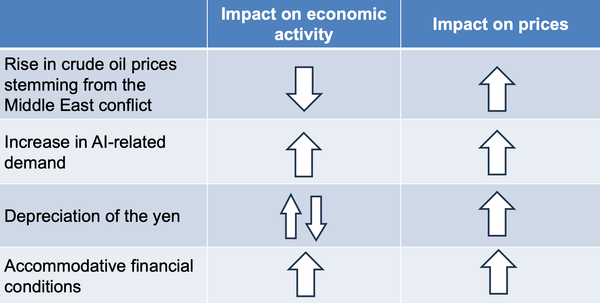
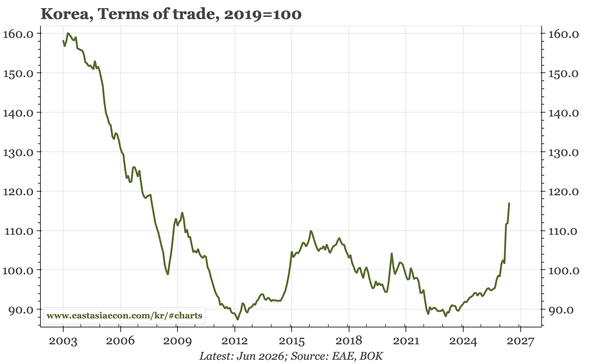
The Iran War will push up inflation. But for growth, transmission is via the terms of trade, and higher import prices are being offset by historical rises in export prices, increases that are unlikely to be just cyclical. That supports growth in Asia, at the expense of even more inflation for ROW.

8 min read